

Senate panel advances bill to tighten Colorado sports betting rules amid youth addiction concerns

A divided panel of lawmakers on Tuesday narrowly advanced a bill to impose new restrictions on Colorado’s booming sports betting industry, as lawmakers cited worries about youth gambling and addiction, while online operators warned the changes could drive bettors to unregulated markets and slash state revenue.
Senate Bill 131 would limit customers to five deposits within 24 hours and restrict the use of credit cards for sports betting.
The bill — sponsored by Sens. Matt Ball, D-Denver, and Byron Pelton, R-Sterling — would also prohibit proposition bets, which are wagers on specific events or milestones within a game, such as passing yards or the first team to score.
Additionally, the proposal would prohibit sports betting companies from sending certain push notifications or texts to account holders in Colorado and set guardrails on the language that can and cannot be included in certain sports betting advertisements.
Finally, the bill would require sports betting operators to provide annual transactional data and metrics reports to the Colorado Department of Revenue’s Gaming Division. The division will publish a report on the data every three years beginning in 2029.
Colorado voters approved Proposition DD in 2019, legalizing sports betting statewide. The majority of the state’s sports betting revenue goes to the Colorado Water Plan Grant Program, which funds water conservation, storage, and supply projects.
According to the Colorado Department of Revenue, sports betting has generated more than $100 million for the state’s water programs. Last week, the department announced a record $5 million in revenue for January of 2026.
According to Ball, the industry has grown sixfold since it began operating in the state five years ago.
That revenue spike has come at a cost, Pelton and Ball said.
In the first year after legalization, calls to the state’s problem gambling hotline rose by 45% and nearly three-quarters of Coloradans say legalized sports betting has worsened problem gambling, according to backers.
“Every indicator that we have right now is that the rates of gambling addiction in this country and in this state have skyrocketed because of the rise of online sports betting,” Ball said.
Sports betting — particularly mobile sports betting — has become increasingly common among young men, Pelton added.
While he and Ball want to honor the will of the voters, they also want to ensure protections for kids who are not legally allowed to gamble, Pelton said.
“This bill takes a balanced approach,” he said. “It does not undo what voters approved. It preserves a legal market for adults who choose to participate, but it also puts in place reasonable, common-sense guardrails, because freedom and responsibility go hand-in-hand.”
Online operators: Bill will push gamblers to unregulated markets, diminish state revenue
Sports betting companies, such as FanDuel and DraftKings, argued the bill would push gamblers to the unregulated market and cost the state millions of dollars in revenue for water projects.
“Preventing unauthorized access to our platform, particularly by underage users, is central to our mission,” said Jennifer Anderson of FanDuel, adding that the company invests significant amounts of money into tools, research, policies and partnerships to promote safe gambling.
Stanton Dodge of DraftKings urged lawmakers to pursue “evidence-based solutions” that provide protections for kids without driving adults to the unregulated market.
Dodge and other opponents pointed to the bill’s proposed ban on proposition bets, which Dodge said account for over a third of DraftKings’ revenue.
Sports betting is generating more revenue than expected in Colorado, Dodge said, and if the proposed legislation is passed, there could be as much as a 50% reduction in tax revenue.
“At a time where Colorado faces an $850 million structural budget deficit and no replacement revenue source, we do not believe now is the time to divert revenue to illegal, unregulated markets,” he said.
“There’s no single act of government that inflicts more harm on the financial, mental health, and social well-being of the people of Colorado than the institution of predatory gambling,” countered Les Bernal, director of the national nonprofit Stop Predatory Gambling.
Less than 5% of sports bettors are profitable in the long run, Bernal said, adding that, last year alone, Coloradans lost nearly $2 billion from gambling, sports betting, and the lottery combined.
Bernal argued that Proposition DD was driven by “powerful financial interests” from the gaming industry that spent millions of dollars on the campaign, with no paid opposition.
“This is a con,” he said.
Up to one-sixth of gamblers may be at risk for problem gambling, according to Josh Ewing of Healthier Colorado.
When voters approved Proposition DD, sports betting looked very different. Over five years later, sports betting companies have adopted an approach similar to social media platforms, using algorithms to maximize user engagement, according to Ewing.
“The technology has advanced, the scale and speed of betting have increased, and we are seeing early indicators of real public health impacts,” Ewing said. “That raises the stakes in a very real way. When systems are designed for continuous engagement, we have a responsibility to ensure that there are appropriate safeguards. That is exactly what Senate Bill 131 does.”
The bill passed on a 5-4 vote Senate Finance Committee, with all Republicans and Sen. Janice Marchman, D-Loveland, voting in opposition. Marchman and several other lawmakers expressed worries about going against the will of the voters, particularly in banning proposition bets.
Several legislators said they are also concerned about the requirements for broadcast advertisements, which broadcasters said they may not be able to comply with.
The bill now moves on to the Senate Appropriations Committee.


Farmworker overtime bill advances after lengthy debate in Colorado Senate
Marianne Goodland
marianne.goodland@coloradopolitics.com
Updated 12 hours ago
The Colorado Senate on Tuesday narrowly advanced a bill to raise the overtime threshold for agricultural workers, defeating more than a dozen amendments from its leading opponent aimed at rewriting the measure. As introduced, Senate Bill 121 would raise the threshold for...

Colorado Agriculture Day: A feast for the ears, eyes and stomachs
Marianne Goodland
marianne.goodland@coloradopolitics.com
Updated 10 hours ago
Gov. Jared Polis, legislators and friends of agriculture gathered at the state Capitol on Tuesday to celebrate Colorado Agriculture Day. The annual recognition of the contributions of Colorado farmers, ranchers and agribusiness drew hundreds to the Capitol’s west foyer, where...

Pueblo man held in Afghanistan for more than a year released, Taliban says
The Associated Press
the-associated-press@coloradopolitics.com
Updated 10 hours ago
KABUL, Afghanistan — Afghanistan’s Taliban authorities on Tuesday released American academic Dennis Coyle after holding him for over a year, with the foreign ministry saying the release came on the occasion of Eid al-Fitr, the Muslim holiday that marks the end of the...
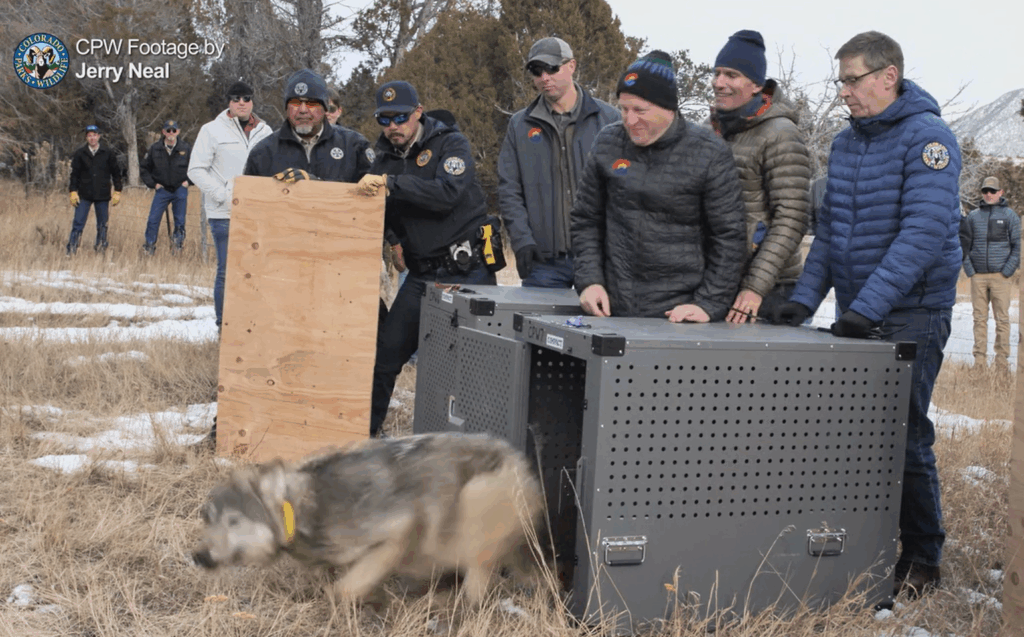
Wildlife agency asks for $450,000 to bring more wolves to Colorado
Marianne Goodland
marianne.goodland@coloradopolitics.com
Updated 8 hours ago
The panel of legislators charged with crafting the budget on Monday rejected a proposal that proponents said would increase transparency around how much Colorado Parks and Wildlife spends to bring additional wolves into the state. At the same time, the...
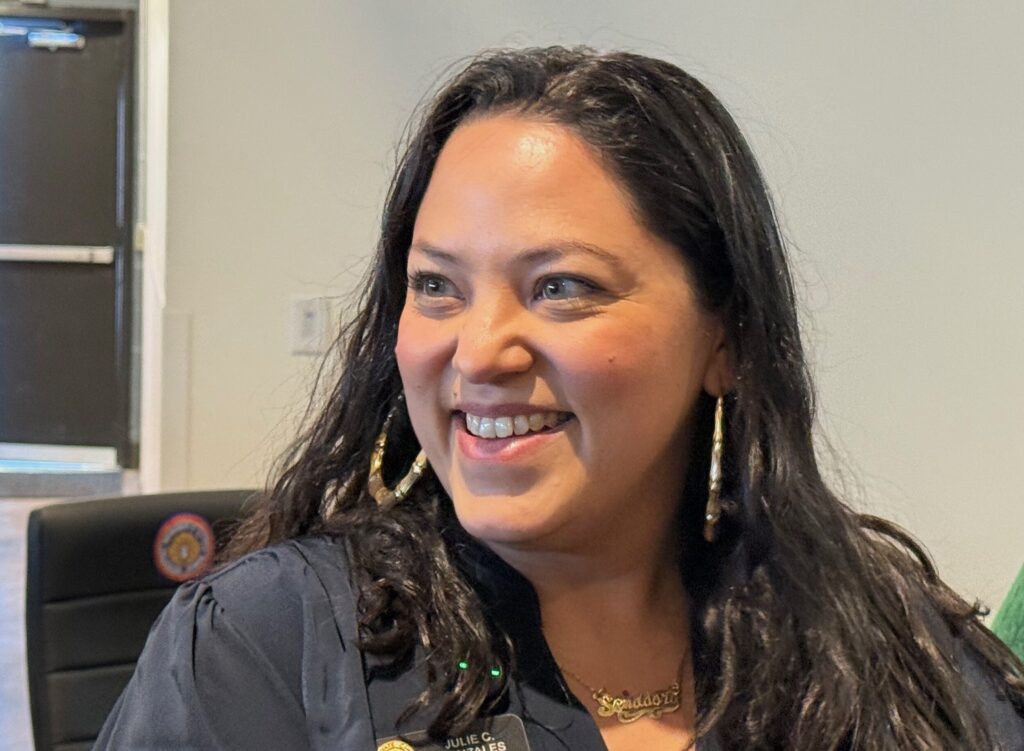
Hickenlooper primary challenger Julie Gonzales endorsed by national progressive group Indivisible
Ernest Luning
ernest.luning@coloradopolitics.com
Updated 9 hours ago
State Sen. Julie Gonzales’ bid to challenge U.S. Sen. John Hickenlooper in Colorado’s Democratic primary got a boost Tuesday from Indivisible when the national arm of the progressive grassroots group endorsed the Denver lawmaker. The national group’s endorsement comes less...
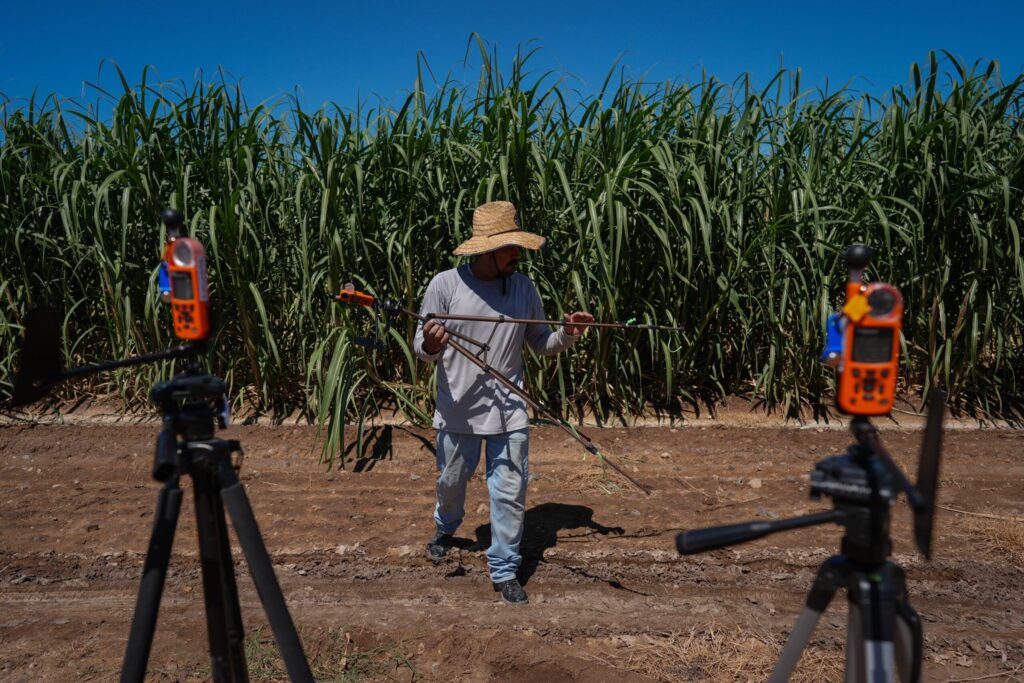
Colorado lawmakers mull renaming César Chávez Day to Farm Workers Day
Marianne Goodland
marianne.goodland@coloradopolitics.com
Updated 17 hours ago
A Colorado House committee has voted to rename the March 31 state holiday from César Chávez Day to Farm Workers Day, following a national shift prompted by sexual abuse allegations against the labor leader. The State, Civic, Veterans, and Military...
Colorado Sen. Mike Weissman calls for cold water on heated hate speech
Marianne Goodland
marianne.goodland@coloradopolitics.com
Updated 11 hours ago
Likening the recent record-setting warm temperatures to hot political rhetoric, Colorado Sen. Mike Weissman, D-Aurora, pleaded for an end to death threats and other hate speech directed at lawmakers of both parties. “The increasingly tragic reality of our politics, however, like...

Ethics panel dismisses complaint against Colorado agency chief Dan Gibbs
Marianne Goodland
marianne.goodland@coloradopolitics.com
Updated 1 day ago
A state ethics panel has dismissed a complaint against Dan Gibbs, executive director of the Colorado Department of Natural Resources. The complaint, filed in December 2021 by the Republican-affiliated group Defend Colorado, alleged Gibbs awarded the think tank Keystone Policy...

Denver airport hasn’t had notice ICE agents will assist TSA yet. Wait times are short, though
Bernadette Berdychowski
bernadette.berdychowski@denvergazette.com
Updated 2 days ago
As President Donald Trump deployed immigration agents to help U.S. airports manage hours‑long security lines during the partial government shutdown, Denver International Airport remained relatively calm on Monday. At the nation’s third‑busiest airport, TSA PreCheck lanes remained open to start...
It’s time to let unaffiliated voters caucus | Vince Bzdek
Vince Bzdek
vince.bzdek@gazette.com
Updated 2 days ago
There’s no getting around it: Colorado’s 3,000 county caucuses, which just wrapped up recently, left half the electorate out in the cold. Since unaffiliated voters now make up 51% of all Colorado voters, a majority of Colorado electors are barred...
PREV
PREVIOUS

Federal judge green-lights trial against Denver officer over race-based enforcement
A federal judge green-lit a jury trial last week on a man’s claim that a Denver police officer engaged in racially selective enforcement of the law by arresting him for video recording at a police station, while not arresting a White man who filmed in the same spot. U.S. District Court Judge Philip A. Brimmer […]
Colorado Title Board advances competing redistricting proposals, revised Pinnacol measure
With just two meetings left before an April 15 deadline, the state’s Title Board on Wednesday pushed through a slate of ballot measures, including a revised proposal to privatize Pinnacol Assurance and dueling plans to redraw Colorado’s congressional map. The measures set the stage for potential legal fights and a crowded November ballot. Any ballot […]