

Appeals court finds no requirement for different judge to handle attorney-client conflict hearings
Colorado’s second-highest court rejected a defendant’s argument on Thursday that a judge improperly heard about a potential conflict between himself and his lawyer right before sentencing, and the man’s reaction could have “tainted” the sentencing decision.
In September 2023, Anthony Palermo pleaded guilty in Huerfano County to harassment and assault. Before his sentencing hearing, Palermo filed a motion asking for a new lawyer and alleging his public defender coerced him into the plea.
The day of the sentencing hearing, Chief Judge John “Clay” McKisson held a “Bergerud hearing.” Named for the 2010 Colorado Supreme Court decision People v. Bergerud, the purpose is to allow a judge to assess whether a conflict exists between a defendant and his court-appointed lawyer. The prosecution is excluded from the hearing because it involves the airing of confidential attorney-client information.
McKisson heard from Palermo and his attorney and concluded Palermo was experiencing “some buyer’s remorse,” but that there was no conflict.
“I think that’s a really unfair and unjust decision,” said Palermo. “I think that you’re disgusting for that, personally.”
McKisson then proceeded to sentencing. He gave Palermo 15 years in prison, which was one year below the maximum in the plea agreement.
On appeal, Palermo argued different judges should have presided over the conflict hearing and the sentencing.
“This keeps the information revealed at the hearing from tainting the sentencing court’s view of the Defendant,” wrote attorney Rachel C. Funez. Handling the Bergerud hearing “could have tainted the court’s sentencing decision, because Palermo was upset that the court did not find a conflict and appoint new counsel, and his reaction may have tainted the judge’s view of him.”
The “fact that a judge may learn some information about a defendant during a hearing on an allegation of conflict generally does not preclude the court from subsequently sentencing that defendant,” responded Assistant Attorney General Brenna A. Brackett.
Case: People v. Palermo
Decided: March 12, 2026
Jurisdiction: Huerfano County
Ruling: 3-0
Judges: Pax L. Moultrie (author)
Ted C. Tow III
Katharine E. Lum
A three-judge Court of Appeals panel acknowledged that, in some jurisdictions around the state, a different judge routinely is brought in to handle conflict hearings. Judge Pax L. Moultrie noted the Supreme Court’s Bergerud decision was silent about the practice.
“Nothing in Bergerud prohibits this, and we don’t mean to suggest that a Bergerud hearing must be heard by the judge presiding over the case,” she wrote in the March 12 opinion.
Judges should recuse themselves if their impartiality could be reasonably questioned, Moultrie continued.
“But, generally, what a judge learns in their judicial capacity alone isn’t sufficient to support a finding of bias that requires recusal,” she wrote.
Because Palermo failed to allege McKisson was biased against him for any reason other than his handling of the conflict hearing, the appellate panel rejected his challenge.
The case is People v. Palermo.


Federal judge formalizes injunction blocking USDA’s ‘pilot project’ for Colorado food assistance
Michael Karlik
michael.karlik@coloradopolitics.com
Updated 12 minutes ago
A federal judge formalized his order on Monday to prevent the U.S. Department of Agriculture from requiring Colorado to participate in a food assistance “pilot project,” finding that it violates the law, the U.S. Constitution, and “the bounds of reasoned...

Colorado justices speak about inner workings of court, analysis of appellate opinions | COURT CRAWL
Michael Karlik
michael.karlik@coloradopolitics.com
Updated 34 minutes ago
Welcome to Court Crawl, Colorado Politics’ roundup of news from the third branch of government. Members of the state Supreme Court provided an inside look at the workings of their institution, and a Colorado Politics analysis found that some appellate...
The influencers? Some Colorado appeals judges outpace colleagues in setting legal precedent
Michael Karlik
michael.karlik@coloradopolitics.com
Updated 1 hour ago
A handful of judges on Colorado’s second-highest court are producing substantially more precedent-setting opinions than their colleagues, which create binding interpretations of the law that reach beyond individual cases. The Court of Appeals issues approximately 1,700 opinions each year. A...
Colorado justices weigh fairness concerns after defendant prevailed despite ghosting case
Michael Karlik
michael.karlik@coloradopolitics.com
Updated 19 hours ago
Members of the Colorado Supreme Court struggled on Tuesday to balance the need for one defendant to shield itself against a plaintiff’s claim that its employee sexually assaulted her child, and the fact that the employee legally admitted the allegations...
Colorado justices skeptical of appellate court’s limitation on prosecution’s appeal
Michael Karlik
michael.karlik@coloradopolitics.com
Updated 4 days ago
The Colorado Supreme Court seemed skeptical on Tuesday that Denver prosecutors should be barred from appealing a trial judge’s permanent dismissal of a criminal case, based upon the sequence of events after the original ruling. Prosecutors charged Quinn M. Jebe...
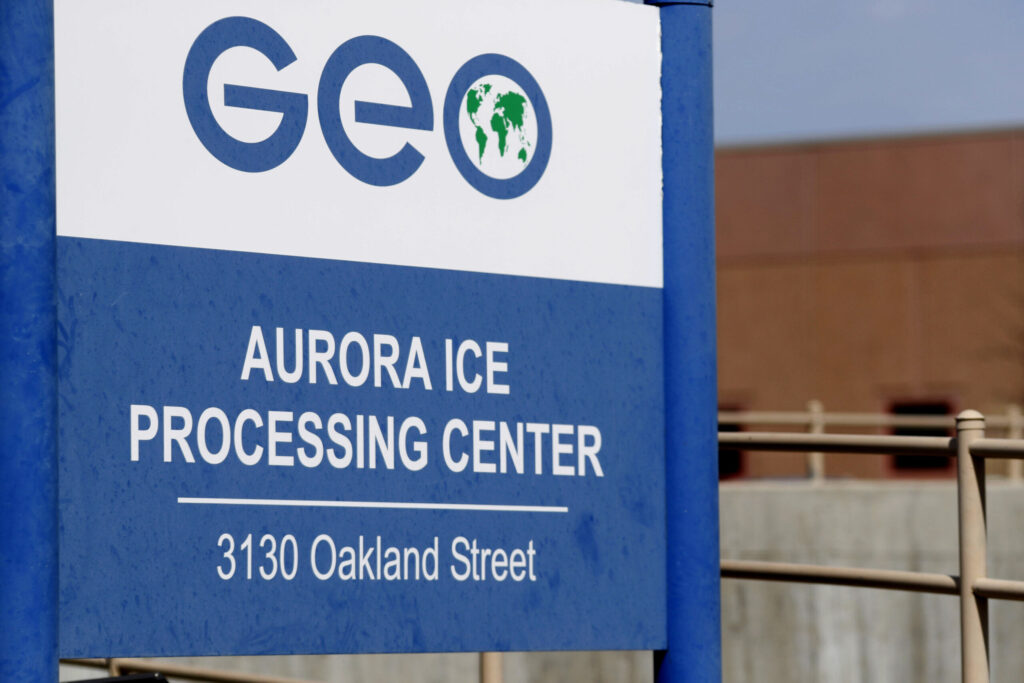
Federal judge: Government violated order shielding man from deportation in ‘one-off mistake’
Michael Karlik
michael.karlik@coloradopolitics.com
Updated 2 days ago
A federal judge acknowledged on Thursday that the government violated his order by deporting a man in immigration detention during his pending court case, but it “serves nobody’s interests” to require the government to return him. On Feb. 18, Tesfami...
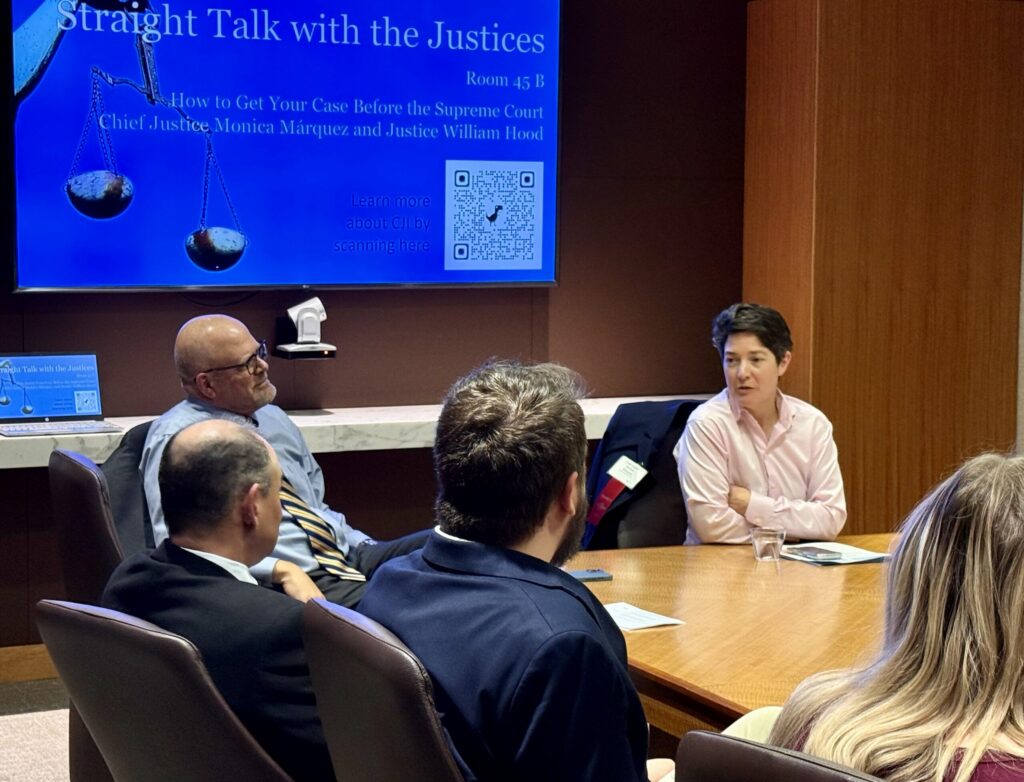
Colorado Supreme Court lifts curtain on decision-making at legal event
Michael Karlik
michael.karlik@coloradopolitics.com
Updated 4 days ago
Members of the Colorado Supreme Court sat down with lawyers on Wednesday to answer questions about behind-the-scenes topics, including what happens immediately after an appeal is argued, why they might intervene in an ongoing case, and the consequence of a...
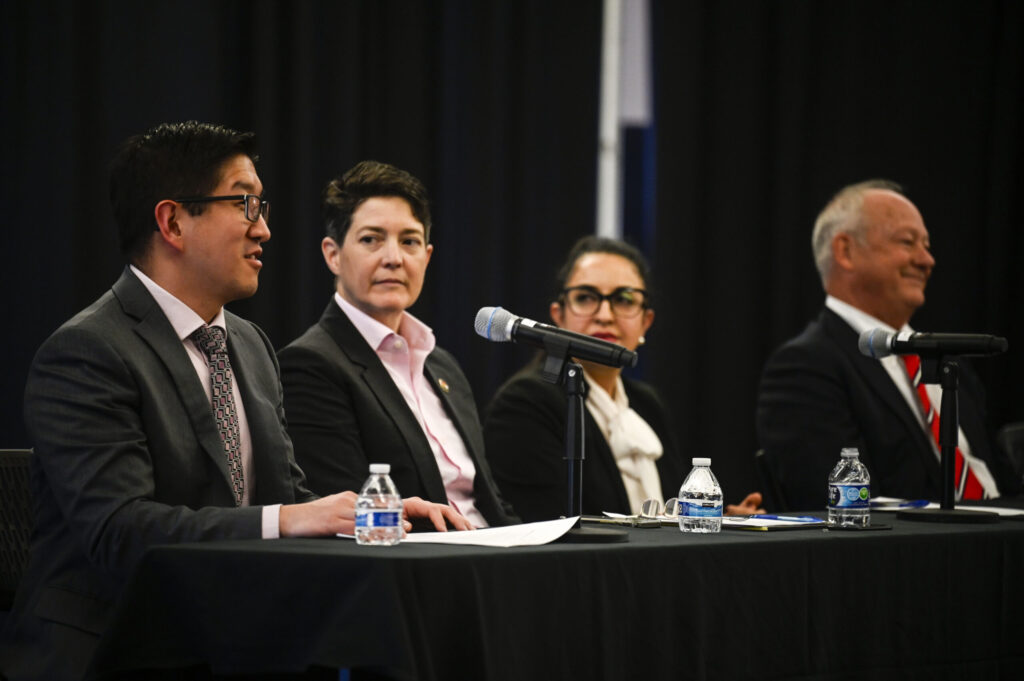
Colorado’s newest federal judge speaks about techniques for advancing cases
Michael Karlik
michael.karlik@coloradopolitics.com
Updated 20 hours ago
U.S. Magistrate Judge Cyrus Y. Chung described on Wednesday the various tactics he employs to resolve court cases, summing up his role with a laxative-based metaphor. “Someone told a group of us federal magistrate judges that magistrate judges are the...

Federal judge hears ICE agents’ confusion about law, injunction on warrantless arrests
Michael Karlik
michael.karlik@coloradopolitics.com
Updated 6 days ago
A federal judge heard testimony on Tuesday from U.S. Customs and Immigration Enforcement agents in Colorado, who had trouble describing the requirements of his recent injunction and the training they received on making warrantless arrests pursuant to the law. On...

10th Circuit dismisses challenge to Colorado legislature’s decorum rules
Michael Karlik
michael.karlik@coloradopolitics.com
Updated 2 days ago
The Denver-based federal appeals court concluded on Tuesday that Colorado lawmakers cannot be sued for creating and enforcing rules of decorum that circumscribe the public commentary allowed at legislative committee hearings. A three-judge panel of the U.S. Court of Appeals...
PREV
PREVIOUS

The influencers? Some Colorado appeals judges outpace colleagues in setting legal precedent
A handful of judges on Colorado’s second-highest court are producing substantially more precedent-setting opinions than their colleagues, which create binding interpretations of the law that reach beyond individual cases. The Court of Appeals issues approximately 1,700 opinions each year. A small number receives state Supreme Court review, but the appellate court is otherwise the final […]

Colorado justices speak about inner workings of court, analysis of appellate opinions | COURT CRAWL
Welcome to Court Crawl, Colorado Politics’ roundup of news from the third branch of government. Members of the state Supreme Court provided an inside look at the workings of their institution, and a Colorado Politics analysis found that some appellate judges are producing many more precedent-setting opinions than their colleagues. Colorado Supreme Court update • By […]