

Is work flex slowing downtown’s recovery? | ANALYSIS
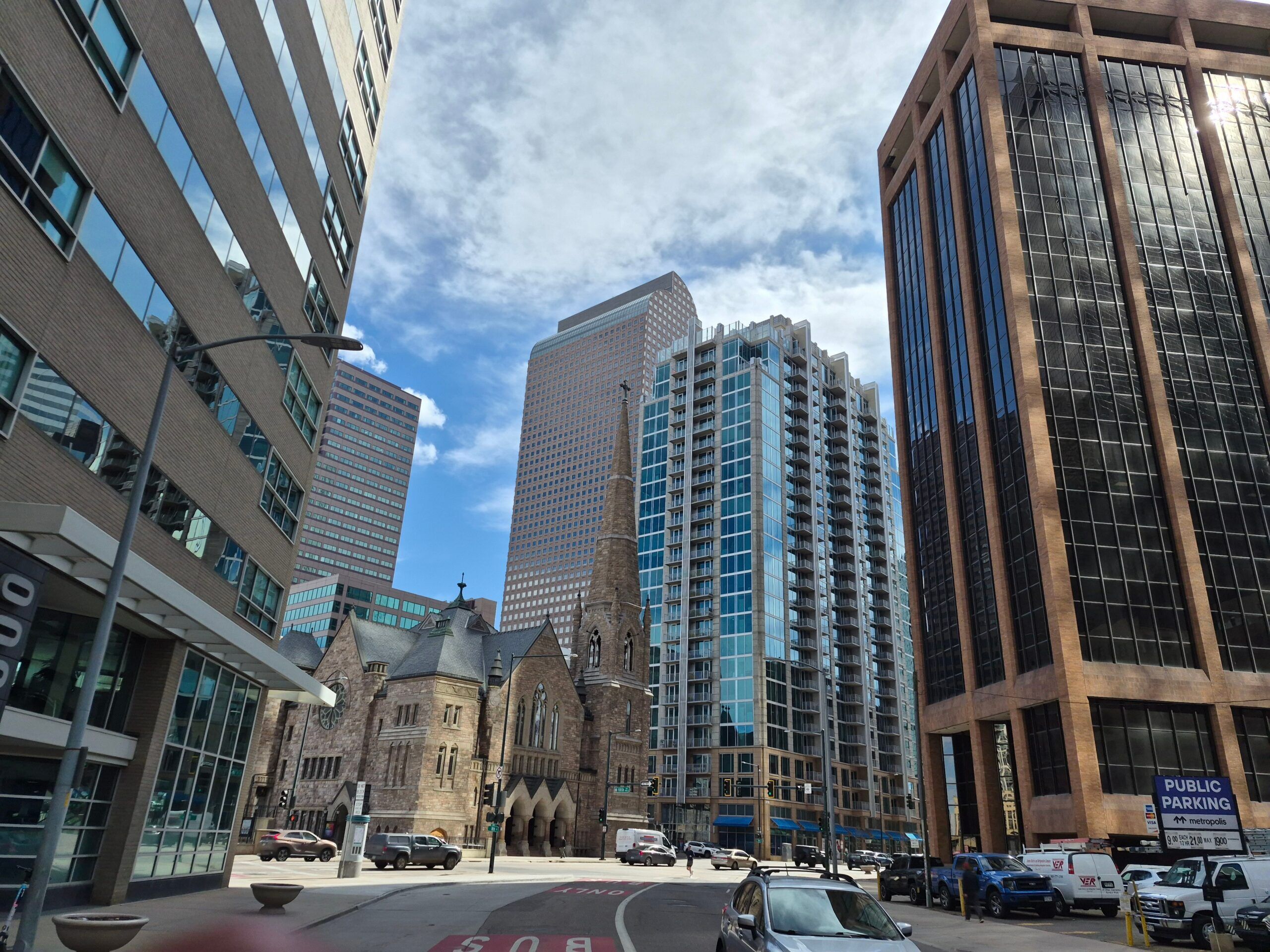
Work-from-home and “flex work” policies, widely adopted five years ago as a hedge against the spread of the COVID-19 pandemic, have lingered on well after the virus retreated.
But flex work may be running counter to downtown Denver’s efforts to bring the core city back into full life, after its streets largely emptied from 2020 to 2022.
Now, tracking suggests that foot traffic is back up in parts of downtown — good news for restaurants and retailers that hung on through the pandemic, or that returned with the reopening of its 16th Street promenade linking upper and lower downtown.
But beyond the reach of 16th Street, other corridors of the city’s corporate and financial life remain starkly vacant, echoing with less vehicle traffic.
Pedestrians are few.
Bike lanes are empty for minutes at a time.
More evident, corners that were alive with the hottest restaurants and bars back when the city was a model of urban reinvestment appear colorless and quiet.
“We want to get 4,000 units into upper downtown to eliminate some static vacancies,” Denver’s Chief Projects Officer Bill Mosher told The Denver Gazette for a recent story. He had added that he views downtown’s growth as a neighborhood to be essential to its wider success.
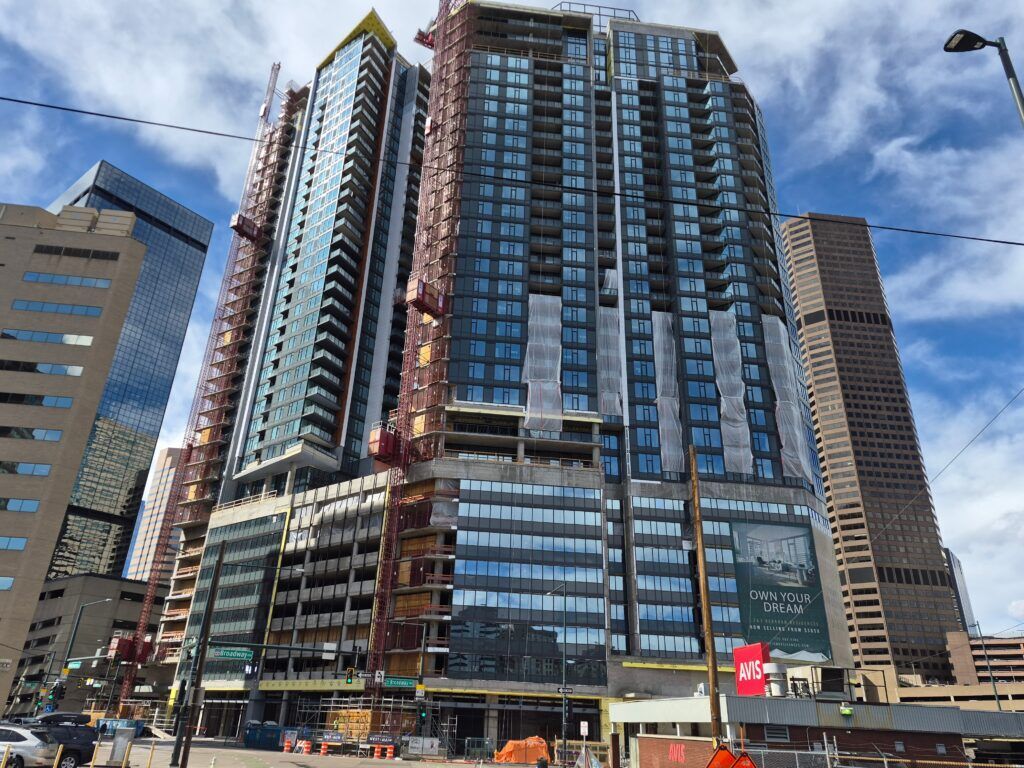
Mosher, who presided over the Downtown Denver Partnership’s hugely successful campaign to create neighborhoods in the central business district in the 1990s, hopes to see another 1,000 to 1,500 units underway in the nearer term. Several developers have acquired older office towers, which they envision as residential conversions, that could work toward that goal.
But the pandemic was not the only factor slowing a full return now.
According to an analysis by strategic consultants at SB Friedman for a city project management team meeting last year, the 3-square-mile area of downtown hosts around 156,000 jobs that represent around 30% of the city’s total workforce.
Some of those jobs are hosted in 44 million square feet of office space downtown, but most recent development has gone toward residential, with a total of 9 million feet, half of which arrived after 2015.
That continues to be true, as the most prominent construction downtown now is centered in apartment projects, including the mammoth Upton Residences, set for 461 new units, at 18th and Glenarm Streets.
Even though the number of jobs downtown has recovered from a 2021 low of around 134,000, office absorption was a negative 5 million feet from 2020 through 2023. Commercial real estate firm CBRE put recent vacancies at a whopping 38.2% at the end of 2025. (The figure includes some space that doesn’t appear un-leased on owners’ books but is nonetheless vacant.)
What effect is the continuing work-from-home phenomenon — popular among workers and accepted by many employers — having on office vacancies?
City, state and federal agencies that comprise a sizable piece of the downtown workforce keep no uniform records on the trend, according to personnel management officers who spoke with The Denver Gazette. That’s in spite of an effort reportedly made during Mayor Michael Hancock’s term to encourage a return to the office.
However, the Downtown Denver Partnership has data showing that return to office (RTO) has largely stalled in downtown. Weekday RTO rates have largely held at around 65% or 66% from 2023 through to early 2026.
The stall, agencies said, reflects the popularity of flexible work schedules, including with employers and their managers. That includes state agencies, working to support a governor’s initiative adopted in 2019 to reduce the footprint of state government as a cost saving measure.
Work-from-home and flex-place policies also allow government to hire and hold onto talented employees who don’t want to deal with a daily commute into downtown or its limited parking, said Doug Platt, communications manager for the Colorado Division of Human Resources.
Platt, who told The Denver Gazette he works from home several days a week, said that the department doesn’t track how many people work remotely. However, he added that the majority of employees who apply the flex-place policy work a combination of hours onsite and remote.
“I’m working from home, but not a week goes by that I don’t spend time downtown,” Platt added.
At last count, Platt noted, 20,121 state employees worked in the metro area. Agencies vary, he added, by how important onsite work is to their function.
Meanwhile, the governor’s initiative has reduced the state government’s office and other footprint statewide by 660,766 square feet.
“Our responsibility is to the entire state of Colorado, to run more efficiently,” Platt said, adding that state employees, whether downtown or not, are economically supporting Colorado areas where they reside.
“They may not be in downtown, but they’re spending money in their own communities,” he said.
A Denver city employment official, who declined to be named, said that RTO is a challenge post-pandemic.
“I think it’s not unlike any large employer — it’s been tough since Covid,” the official said, adding that commuting downtown itself is perhaps more difficult, as some RTD routes served before the outbreak have never been reallocated.
“Parking is at a premium downtown,” the official added. “It’s made it more challenging to commute.
“The mayor could say, ‘I want all employees in three days a week,’” the official suggested, but added that the tracking such would be difficult.
However, even before the first warnings of a pandemic in late 2019, workers were trending away from occupying seats in leased space, according to SB Friedman. Even back then, in-person work accounting for only 60%-to-75% of total jobs. That number still stands at around 66%, according to estimates.
“Downtown Denver is, and will always be, an epicenter for jobs for the Rocky Mountain region,” Kourtny Garrett, president and CEO of the Downtown Denver Partnership said in a statement to The Gazette.
“In 2025,” she added, “Downtown Denver retained over one million square feet of tenants whose leases were expiring, a proof point of the confidence in this market.”
“Recent transformational improvements in public safety, the reopening of 16th Street, 72 new ground floor businesses and the investment of the Denver Downtown Development Authority have reignited interest and excitement in the center of our city,” she said.
Garrett went on to note that a new Downtown Area Plan has been adopted by City Council, outlining a 20-year roadmap for building downtown’s future.
“That said, like cities across the country, trends related to office flexibility and remote work have shifted many companies’ square footage requirements, the output of which is overall market contraction and the widely-reported high vacancy rates concentrated in one downtown submarket,” she said. “However, in Q4 2025 and continuing into 2026 we are hearing from more and more of our members that in-office policies are shifting back toward an in-person preference.”
Meanwhile, as tech jobs have grown in proportion to the total workforce, tech workers show the lowest rates of having returned to the office. SB Friedman’s study showed them working on site around half the week on average, compared to closer to three days a week for financial service workers.
Analysts at CBRE and other observers have viewed the newer vacancy rates as “stabilizing” — but the Friedman study showed vacancies in Denver trending 7% beneath other downtowns nationally.
A sizable portion of those, the study showed, are in upper downtown, an area that has continued to struggle before and after the pandemic.


Supreme Court to hold oral arguments, discipline commission releases report | COURT CRAWL
Michael Karlik
michael.karlik@coloradopolitics.com
Updated 5 minutes ago
Welcome to Court Crawl, Colorado Politics’ roundup of news from the third branch of government. The state Supreme Court is holding oral arguments this week, plus Colorado’s judicial discipline commission released its annual report. Colorado Supreme Court news • The Supreme...
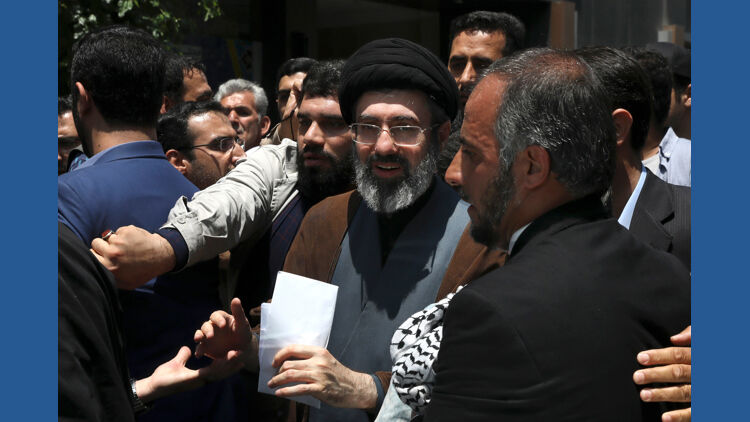
Iran names Khamenei’s son to succeed him, signaling no letup in war as oil prices surge
Jon Gambrell
jon.gambrell@associatedpress.com
Updated 2 hours ago
DUBAI, United Arab Emirates (AP) — Iran named the hard-line Ayatollah Mojtaba Khamenei to succeed his late father as supreme leader on Monday, signaling no letup in the war launched by the United States and Israel. Oil prices surged as...

‘Larger than life’ and ‘logistically challenging:’ Getting to know wolverines and Colorado’s restoration plan
Seth Boster
seth-boster@coloradopolitics.com
Updated 2 hours ago
Last month inside a Denver conference room, as the Colorado Parks and Wildlife Commission moved to the next agenda item, a whisper could be heard. “I’m excited for this one.” Bob Inman stepped to a microphone. “Colorado has many remarkable...

Colorado’s GOP at its best — and worst | Dick Wadhams
Dick Wadhams
dick-wadhams@coloradopolitics.com
Updated 2 days ago
By Dick Wadhams Colorado Republicans are fighting to be relevant in the face of gross mismanagement by Democrats who totally control state government. While the Colorado Republican Party is mired in controversy, several Republican elected officials and candidates represent the...

Someone’s lying in latest activist embarrassment for Polis’ CPW Commission | Rachel Gabel
Rachel Gabel
rachel-gabel@coloradopolitics.com
Updated 2 days ago
Either Samantha Miller is lying, or Gov. Jared Polis is. If Miller is lying, she is so secure in the red carpet rolled out for animal activists by this administration she is willing to put words in the governor’s mouth....

Therapy dog task force grows to meet hardship and disaster in Colorado and beyond
Seth Boster
seth-boster@coloradopolitics.com
Updated 2 hours ago
On an upper level of the Colorado Springs Police Department, the calls never stop. The people here stand before screens displaying maps of the city and other urgent information, and they respond through headsets. “Are you safe? Are you out...

Ask Secretary of State candidates if they’re in favor of independent election audits | Jon Caldara
Jon Caldara
jon-caldara@coloradopolitics.com
Updated 4 days ago
This part will disappoint angry people on Twitter: Relax. Put the pitchforks down. I am not relitigating the 2020 election or mail ballots or even Tina Peters. But I am saying people don’t trust elections like they used to. And...
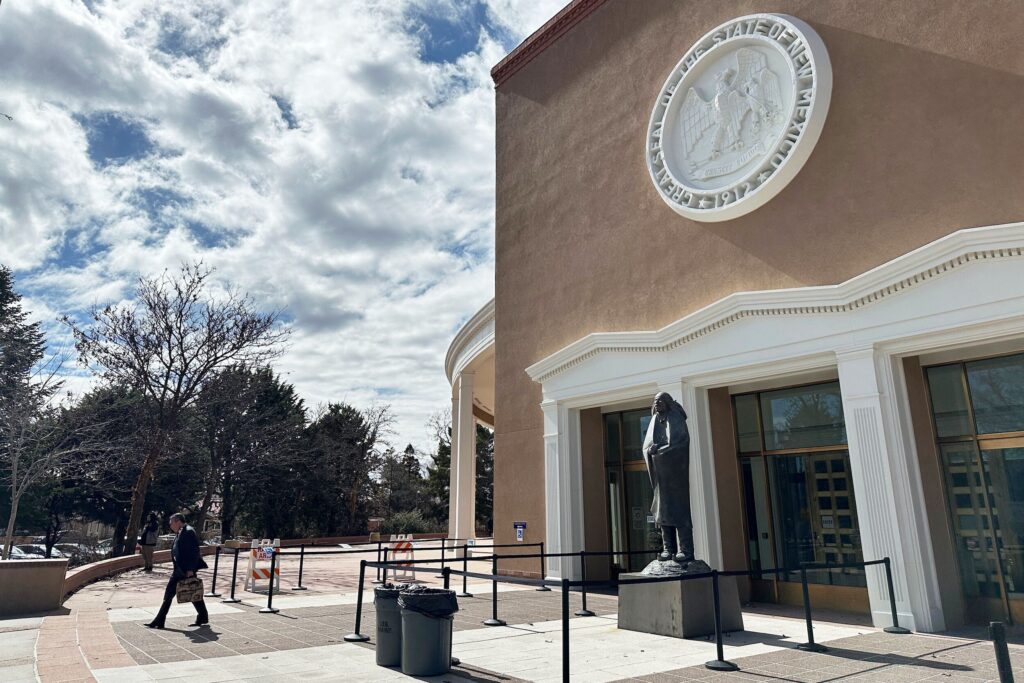
Unsalaried legislature in New Mexico asks voters to reconsider volunteer status | OUT WEST ROUNDUP
The Associated Press
the-associated-press@coloradopolitics.com
Updated 4 days ago
NEW MEXICO Voters to decide on paying legislators SANTA FE — Members of the nation’s only unsalaried legislature are asking voters to reconsider their volunteer status that has endured for 114 years since statehood in New Mexico. The state Senate...
Redistricting plan to give Colorado Dems 7 members of the U.S. House will split El Paso County | Bob Loevy
Bob Loevy
bob-loevy@coloradopolitics.com
Updated 2 days ago
A proposed redistricting plan, which would give Colorado seven Democratic members of the U.S. House of Representatives and only one Republican, will split El Paso County into two parts and thereby weaken the county’s influence in Congress. El Paso County,...
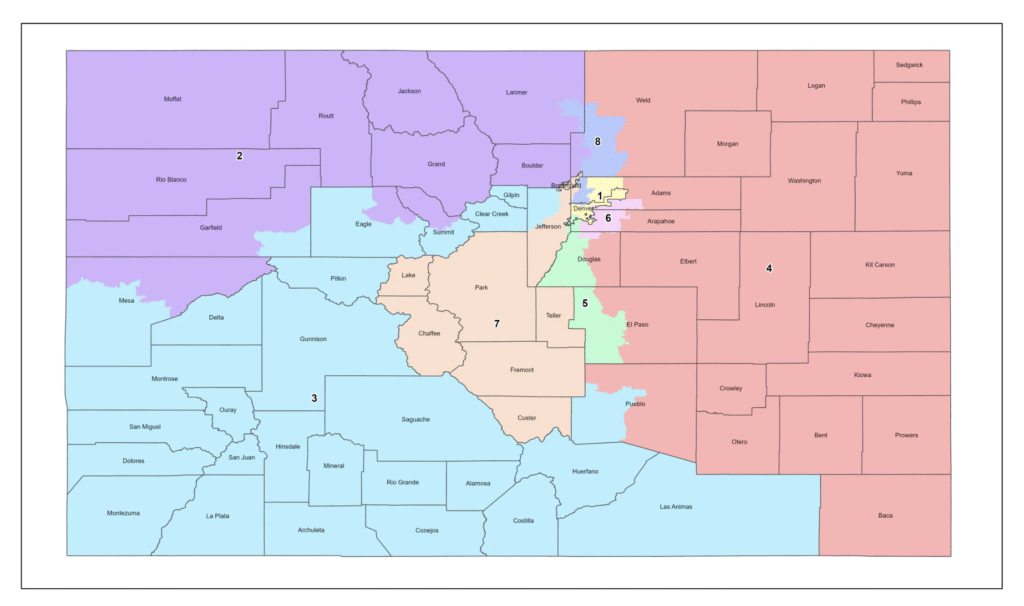
Redistricting scheme would give Colorado Democrats seven House members, split El Paso County | Bob Loevy
Bob Loevy
bob-loevy@coloradopolitics.com
Updated 1 day ago
A proposed redistricting plan, which could give Colorado seven Democratic members of the U.S. House of Representatives and only one Republican, would split El Paso County into two parts and thereby weaken the county’s influence in Congress. El Paso County,...