

Unsalaried legislature in New Mexico asks voters to reconsider volunteer status | OUT WEST ROUNDUP
NEW MEXICO
Voters to decide on paying legislators
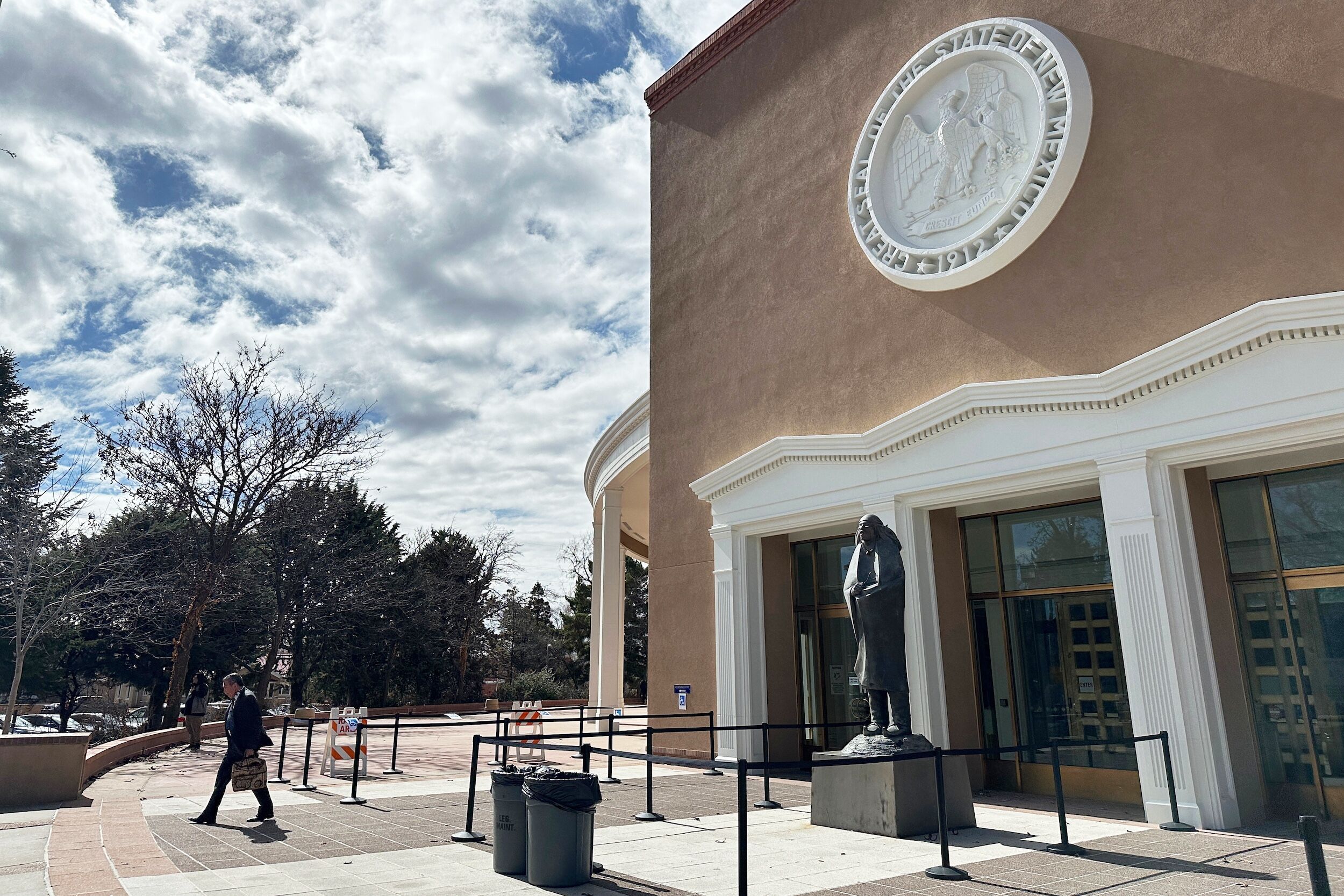
SANTA FE — Members of the nation’s only unsalaried legislature are asking voters to reconsider their volunteer status that has endured for 114 years since statehood in New Mexico.
The state Senate on Feb. 17 narrowly endorsed a constitutional amendment that would do away with the state’s prohibition on legislative direct compensation. That allows voters to decide in November whether to tie legislative salaries to the median income level in New Mexico — about $67,000 currently.
After stalling for years, the initiative was promoted successfully this time by a group of young female legislators who have talked about the challenges of balancing work, family and legislative duties.
New Mexico taxpayers already foot the bill for travel expenses, and an allowance for meals and lodging, when the Legislature is in session. Many lawmakers also have access to public pension benefits.
New Mexico’s “citizen legislature” of volunteer politicians has long been a source of civic pride in the state. But advocates for professionalizing the New Mexico Legislature say the current system discourages young, working class candidates from serving and can inhibit progress on complex policy issues as legislators juggle separate paid and political careers.
In New York and California, legislative salaries exceed $100,000, while New Hampshire opts for a nominal $100 annually per lawmaker. Colorado legislators are paid about $44,000.
UTAH
Court rejects request to block House map
New Utah voting districts that give Democrats an improved shot at winning a U.S. House seat can be used in this year’s election, a federal court ruled on Feb. 23 while turning aside a Republican request to block the new map.
The ruling marked the second setback in recent days for Republicans, who also lost an appeal at Utah’s state Supreme Court.
A Utah judge imposed the new districts last November after striking down the congressional districts that the Republican-led legislature had adopted after the 2020 census. The judge ruled that the legislature had circumvented standards against partisan gerrymandering that were approved by voters in 2018.
The judge’s ruling thrust Utah into a national redistricting battle being waged among states ahead of the midterm elections. President Donald Trump has pressed Republican-led states such as Texas, Missouri and North Carolina to redraw their districts to give the GOP an advantage in the November elections, prompting Democratic-led states such as California and Virginia to respond with their own redistricting plans.
Republicans currently hold all four of Utah’s U.S. House seats.
The new map imposed last fall by Judge Dianna Gibson improves Democrats’ chances of winning a seat by keeping Salt Lake County almost entirely within one district, instead of dividing the heavily Democratic population center among all four districts, as was previously the case.
Republican U.S. Reps. Celeste Maloy and Burgess Owens joined with nearly a dozen local officials to file a federal lawsuit arguing that the state judge did not have legal authority to enact a map that wasn’t approved by the legislature.
But a panel of three district court judges denied their request for a preliminary injunction against using the new map in this year’s election. The federal court said they weren’t likely to prevail in their argument, and said it was too late for judges to intervene in the election.
MONTANA
Court tosses asbestos judgment
BILLINGS — A federal appeals court has overturned a judge’s finding that BNSF Railway contributed to the deaths of two people in a Montana mining town where thousands have been sickened by asbestos exposure.
Following a civil trial, a jury in 2024 awarded $4 million each to the estates of the two people who died in 2020. Their families blamed the railroad for allowing asbestos-contaminated mining material to accumulate in a rail yard in downtown Libby, Montana.
But the 9th U.S. Circuit Court of Appeals in an opinion issued on Feb. 24 sided with BNSF, which argued it was required under law to accept the vermiculite material for shipment and had been told it was safe. BNSF is considered a “common carrier” under federal law because its services are offered to the general public, a status that shields it from some legal liabilities.
“The dangerous condition here — accumulated asbestos dust — arose solely from BNSF’s operation as a common carrier executing its federally mandated duty to transport vermiculite,” Judge Morgan Christen wrote in the opinion.
Attorneys for the estates of the two people who died, Joyce Walder and Thomas Wells, said they disagreed with the decision and that it misapplied the law and were considering an appeal. They had sought to have the case decided by the Montana Supreme Court, but were denied.
A BNSF spokesperson declined to comment on the ruling.
U.S. District Judge Brian Morris had instructed the Helena jury that it could find the railroad negligent based on its actions in the Libby Railyard. The jury did not find that BNSF acted intentionally or with indifference, so no punitive damages were awarded.
After being extracted from a mountaintop outside town, vermiculite containing high concentrations of asbestosl was loaded onto rail cars that sometimes spilled the contents in the Libby rail yard. Residents have described piles of vermiculite being stored in the yard and dust from the facility blowing through downtown Libby.
WYOMING
Contributions on state property banned
Gov. Mark Gordon signed an executive order on Feb. 17 banning the solicitation, delivery or acceptance of campaign contributions on state property.
The order does not apply to areas of the Capitol managed by the judicial or legislative branches, including the Senate and House Chambers.
The Laramie County Sheriff’s Office announced on Feb. 14 it would be launching an investigation stemming from public reports and photographs showing checks being distributed in the House chamber.
The checks were distributed by a “self-identified ‘conservative political activist” while lawmakers were set to consider legislation supported by the individual, according to a news release from the governor’s office.
“Our Capitol belongs to the people of Wyoming, and even the appearance of inappropriateness should never be ignored,” Gordon said in the news release. “I, like most Wyomingites, believe the House and Senate floors are hallowed places for doing the People’s business, and should never serve as a campaign headquarters.”
Until the governor, as chairman of the State Building Commission, can bring the matter before the commission to be considered a permanent rule, the executive order will remain in effect, according to the new release.


Supreme Court to hold oral arguments, discipline commission releases report | COURT CRAWL
Michael Karlik
michael.karlik@coloradopolitics.com
Updated 33 minutes ago
Welcome to Court Crawl, Colorado Politics’ roundup of news from the third branch of government. The state Supreme Court is holding oral arguments this week, plus Colorado’s judicial discipline commission released its annual report. Colorado Supreme Court news • The Supreme...

‘Larger than life’ and ‘logistically challenging:’ Getting to know wolverines and Colorado’s restoration plan
Seth Boster
seth-boster@coloradopolitics.com
Updated 3 hours ago
Last month inside a Denver conference room, as the Colorado Parks and Wildlife Commission moved to the next agenda item, a whisper could be heard. “I’m excited for this one.” Bob Inman stepped to a microphone. “Colorado has many remarkable...

Can deliberation save democracy? | Vince Bzdek
Vince Bzdek
vince.bzdek@gazette.com
Updated 2 days ago
In September 2019, 523 Americans traveled to Dallas for an experiment called “America in One Room.” The gathering was designed to test a theory: Could representative citizens deliberate productively even in an era of intense polarization? The event took place...

Colorado health equity funder’s redirection debated
DEBBIE KELLEY
debbie-kelley@coloradopolitics.com
Updated 3 days ago
A redirection in grantmaking that began two years ago for The Colorado Trust, a 40-year-old Denver-headquartered funder, has led some employees to now voice concerns, which has reportedly put their jobs in jeopardy. The vice president of communications for the...
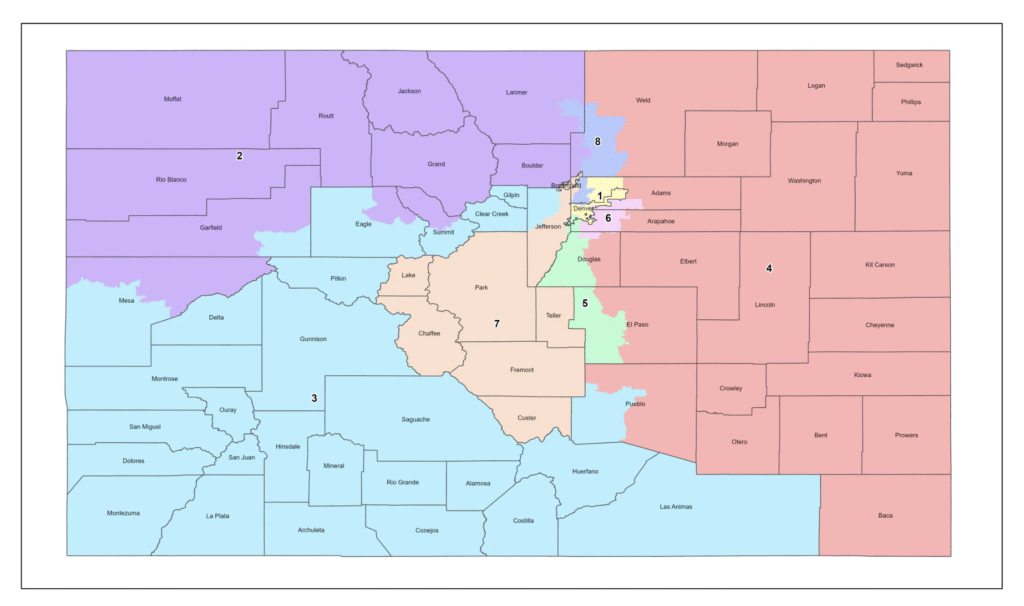
Redistricting scheme would give Colorado Democrats seven House members, split El Paso County | Bob Loevy
Bob Loevy
bob-loevy@coloradopolitics.com
Updated 1 day ago
A proposed redistricting plan, which could give Colorado seven Democratic members of the U.S. House of Representatives and only one Republican, would split El Paso County into two parts and thereby weaken the county’s influence in Congress. El Paso County,...

Is Trump a builder or just a latter-day headhunter? | SONDERMANN
By Eric Sondermann
by-eric-sondermann@coloradopolitics.com
Updated 4 days ago
It was well under 100 hours after President Donald Trump’s overly long, overly theatrical State of the Union speech that he unleashed American bombers across Iran. As I write, it is now less than 100 hours since those bombers started...
LDS activist excommunicated from the church speaks out on women’s rights across Colorado | A LOOK BACK
Rachael Wright, Special to Colorado Politics
rachael.wright@coloradopolitics.com
Updated 4 days ago
Forty-Five Years Ago This Week: “Women must demand — now and if necessary at the peril of our lives — that we be granted civil rights in the same way rich white men in this country were granted them: constitutional...
Democrats eye new taxes on alcohol, marijuana to fund Colorado mental health spending
Marissa Ventrelli
marissa.ventrelli@coloradopolitics.com
Updated 10 minutes ago
Facing hundreds of millions in budget shortfall, Colorado lawmakers are searching for ways to fund mental health services in a state that consistently ranks among the worst in the nation for mental health outcomes. Several proposals this session aim to...

Hopes and fears: Colorado Iranians speak out on widening war
Mark Samuelson Special to The Denver Gazette
mark.samuelson@denvergazette.com
Updated 2 days ago
Group talks about young people protesting against the Islamic Republic, and Reza Pahlavi and the monarchy When Denver area real estate agent Fara Novin dined out for her birthday Friday night, Feb. 27, she blew out a candle on a...
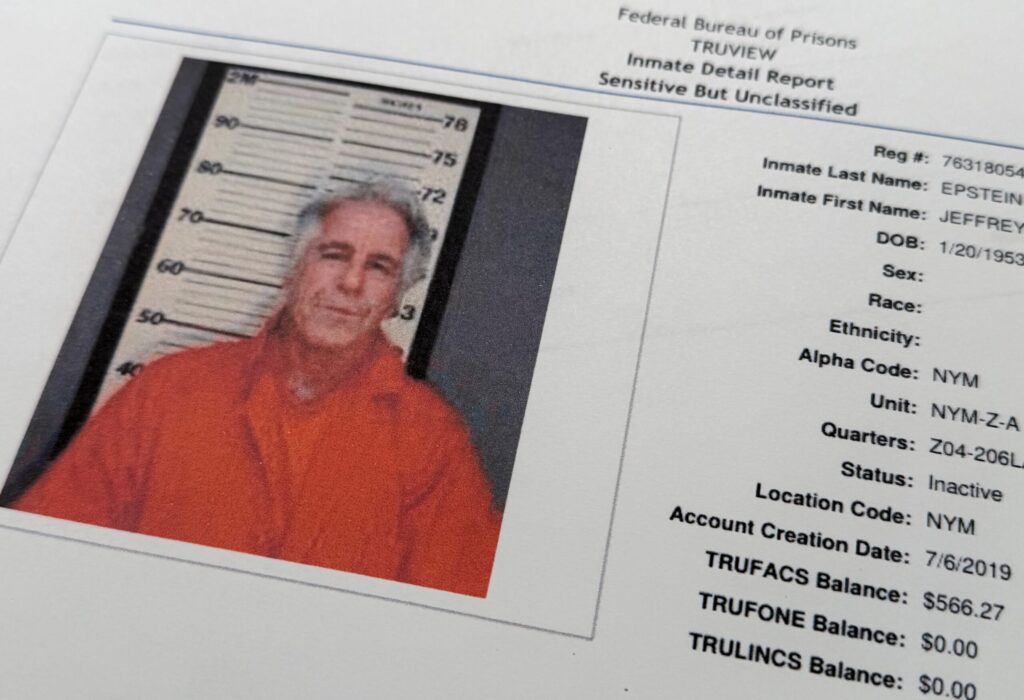
DOJ publishes more Epstein documents mentioning Trump after initial omission
Rena Rowe, Washington Examiner
rena.rowe.washington.examiner@gazetteedit.wpenginepowered.com
Updated 3 days ago
The Justice Department released additional Epstein files on Thursday, including uncorroborated accusations from a woman claiming she was sexually assaulted by President Donald Trump. Last week, Rep. Robert Garcia (D-CA), the top Democrat on the House Oversight and Government Reform...
PREV
PREVIOUS
Redistricting scheme would give Colorado Democrats seven House members, split El Paso County | Bob Loevy
A proposed redistricting plan, which could give Colorado seven Democratic members of the U.S. House of Representatives and only one Republican, would split El Paso County into two parts and thereby weaken the county’s influence in Congress. El Paso County, which contains all of Colorado Springs, currently is mainly in the 5th Congressional District. The […]

'Larger than life' and 'logistically challenging:' Getting to know wolverines and Colorado’s restoration plan
Last month inside a Denver conference room, as the Colorado Parks and Wildlife Commission moved to the next agenda item, a whisper could be heard. “I’m excited for this one.” Bob Inman stepped to a microphone. “Colorado has many remarkable species of wildlife,” he said, “but it’s been missing one of its most mysterious and […]