

Thoughts on President Trump’s State of the Union address | Cronin & Loevy

The U.S. Constitution’s Article Two states “He (the president) shall from time to time give to the Congress Information of the State of the Union, and recommend to their Consideration such Measures as he shall judge necessary and expedient….”
On Jan. 8, 1790, our first president, George Washington, appeared in Federal Hall in New York City and gave a short, less than 10 minutes, formal and humble talk to Congress. He spoke about the importance of a strong defense and the need for fiscal discipline and offered general recommendations such as “nothing can better serve your patronage than the promotion of science and literature.”
Washington and our second president, John Adams, continued the practice of coming personally to Congress and sharing their thoughts and recommendations. President Thomas Jefferson was a gifted writer but less gifted as a speaker and he decided just to share a written report to Congress. Jefferson also worried the personal delivery of this report too closely resembled the British monarch’s speech from the throne.
Jefferson’s practice of a written report was continued for more than 100 years. Woodrow Wilson, a gifted writer and orator, revived the early tradition of delivering his State of the Union remarks in person.
Radio and television gradually transformed this report into a much-hyped and increasingly theatrical event, with the president center stage in one of our national shrines and members of Congress expected to stand and applaud their leader. Supreme Court justices, the cabinet and military leaders add gravitas to the event. The State of the Union address is now a presidential Super Bowl. More than 32 million Americans, mostly older people, viewed last Tuesday’s talk.
President Trump loves the limelight and loves rallies. He thrives when being the center of attention, and he is relaxed before the national cameras.
On his address to Congress and the nation this past Tuesday, he spoke for 1 hour and 47 minutes (most recent presidents have talked for an hour or less).
He praised and honored a score or more of “Gallery Guests,” including the U.S. men’s hockey team, fresh from their Olympic Milan triumph, military servicemen and activist Charlie Kirk’s widow. Trump basked in the reflected glory of these heroes, and saluted his movie-star wife, and his Secretary of State Marco Rubio.
Four members of the U.S. Supreme Court were just a few feet in front of Trump. They sat stoically as he chastised their recent tariff decision as “unfortunate.” A few days earlier he condemned several of them as “unpatriotic.” Trump defiantly announced he would continue to implement his tariffs relying on other executive emergency powers and future help from Congress. It had taken months for the court to make their decision. It took merely a few hours for the White House to decide Trump could largely ignore their ruling.
Trump briefly noted international trouble spots. Notably, he said little or nothing about putting pressure on Putin to end Russia’s invasion of Ukraine. He spent more time boasting NATO nations now fully pay the U.S. for weapons to fight on behalf of Ukraine. He again praised himself as the world’s best peacemaker.
President Trump claimed justified credit for securing the country’s southern border. He called for national resolve in deporting illegal immigrants and the need for fighting foreign drug cartels.
The president declared the State of the Union was strong, boasting he presided over the biggest economic turnaround in history. He said we are winning and that this is the beginning of a golden age. He dismissed as fake news reports of an “affordability crisis” even though affordability was one of his issues in his 2024 campaign. He said the price of eggs and gas have come way down and his tariffs are bringing in billions of dollars.
Polls indicate the public is very concerned about the economy. But Trump offered an upbeat account and Republicans in Congress gave him rousing applause for his claims.
Trump said his new initiatives — no taxes on tips, “Trump” stock accounts for babies, and tax breaks on social security — will help the average American. He said he is negotiating with tech firms to pay for the electricity their data centers use, so as not to burden average homeowners.
Trump and his strategists know he has lost support from independents. The strategy on Tuesday was “bash and shame” Democrats. Congressional Democrats, at least those who showed up, sat there and couldn’t figure out what to do. A few shouted retorts, but this looked unbecoming.
Trump called Democrats “crazy” and put them on spot with a trick “gotcha” question. “Stand up,” he said “if you believe the first duty of the American government is to protect American citizens and not illegal aliens.”
Democrats, caught by surprise, sat in silence, slouching in their seats. Here was Trump, accusing them of being unpatriotic or worse, just as he accused the Supreme Court a few days earlier. The Democrats, who did not stand up, looked bad, yet in the end, Trump will be faulted for misusing his “throne” for partisan trickery.
It was not a good night for Democrats. Many boycotted the event. The occasion calls for respect for the office of the president, yet if the president lies, exaggerates or unfairly attacks and tricks you — what do you do??
Presidents of both parties have benefitted from the occasion of a State of the Union address, usually gaining a little support for their issues. However, research shows the speech usually doesn’t change the minds of most voters.
And not many young people or “low-information “citizens listen to these long addresses. Few people stay tuned for the opposition party’s televised response.
Virginia Gov. Abigail Spanberger gave an adequate-yet-forgettable 12-minute response to Trump’s nearly two hours, but she gave out no Purple Hearts, no Presidential Medals of Freedom and no Congressional Medals of Honor.
This format of the State of the Union address gives the president a great theater stage and makes the other two branches look passive and un-equal.
The Supreme Court is already, by its mandate, a passive branch. Few people pay attention to the end-of-the-year annual report by the Chief Justice. Congress, with its two chambers and two parties (plus some independents) rarely speaks with one voice.
We are, more than we want, a nation with an increasingly centralized federal government. And we are a presidency-dependent nation — more than the founders wanted and more than we would like. The same dependence on the chief executive is true today around much of the world. Globalization explains some of this, national security issues dictate some of it. And by design, Congress and the justice system are decidedly slower than the executive.
Would the founders approve of what has become the rally/theater ritual (even filibuster) of our State of the Unions?
Probably not. They would most likely suggest we should revisit Washington’s model of brevity, humility and nonpartisanship.
Wishful thinking.
Tom Cronin and Bob Loevy are news analysts who write regularly about politics.


Could Weiser or Bennet as governor each be an improvement over Polis? | Miller Hudson
Miller Hudson
miller-hudson@coloradopolitics.com
Updated 11 hours ago
The weekend before last was a forerunner to numerous forums and debates where U.S. Sen. Michael Bennet and Attorney General Phil Weiser will jostle for position in the Democratic primary for governor. The victor seems certain to be headed to...

Poison, poultry and prostitution — the Colorado legislature marches on | Rachel Gabel
Rachel Gabel
rachel-gabel@coloradopolitics.com
Updated 11 hours ago
Many weeks my search history is odd but the past two weeks might worry our county sheriff if he didn’t know me as well as he does. This week has been the week of poison, poultry and prostitution. Not to...
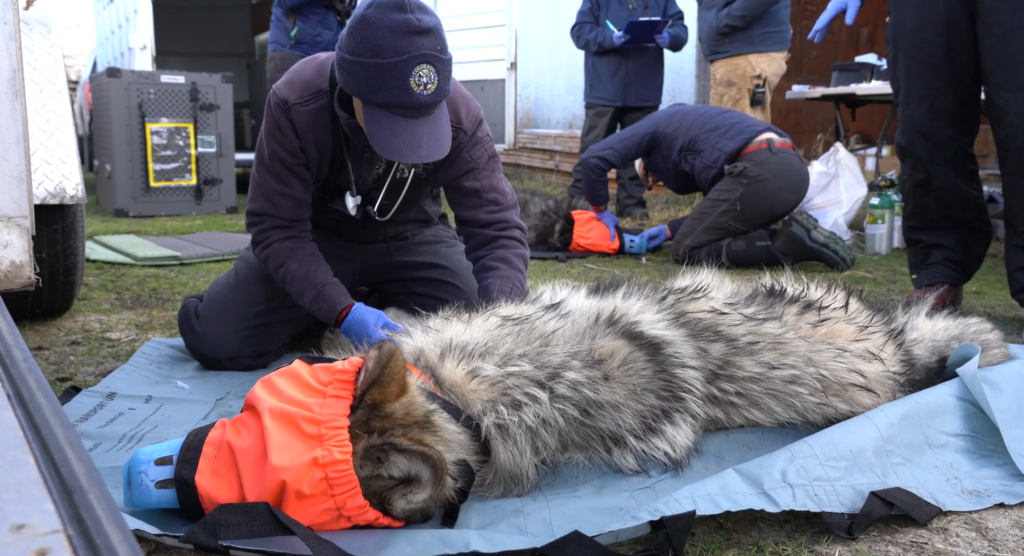
Male wolf dies after capture attempt in Colorado
Marianne Goodland
marianne.goodland@coloradopolitics.com
Updated 11 hours ago
One of the original wolves brought to Colorado from Colorado has died after an attempt to capture it, the’s state wildlife agency said. The Colorado Parks and Wildlife identified the wolf as No. 2305 — meaning it was one of...

Are Colorado businesses leaving or evacuating? | Jon Caldara
Jon Caldara
jon-caldara@coloradopolitics.com
Updated 4 days ago
At this point, if you hear beeping downtown, it’s not a construction crew. It’s a company backing out. And look, I get it. Businesses relocate for all sorts of reasons: taxes, regulations, labor costs, office space, crime, commute times, the...

Democrat Michael Bennet turns in petitions for Colorado’s gubernatorial primary, plans to skip caucuses
Ernest Luning
ernest.luning@coloradopolitics.com
Updated 15 hours ago
U.S. Sen. Michael Bennet, a Democratic candidate for governor, submitted nominating petitions for Colorado’s June primary ballot on Friday, his campaign and the Colorado Secretary of State’s Office said. Bennet plans to rely on his petitions to get on the...

Colorado Republicans, Democrats clash over Iran military operation
Thelma Grimes
thelma.grimes@coloradopolitics.com
Updated 1 day ago
Colorado’s congressional delegation split sharply along party lines Saturday after the U.S. and Israel attacked Iran, triggering a fresh debate in America over presidential war powers. Trump announced early Saturday morning that U.S and Israeli forces had begun “Operation Epic...

Competing overtime bills for agriculture workers split Colorado Democrats
Marianne Goodland
marianne.goodland@coloradopolitics.com
Updated 3 days ago
Competing bills setting the overtime threshold for farmworkers have split legislators at the Colorado state Capitol, with one group saying a law passed in 2021 has harmed, rather than helped, farming operations and workers alike, while the other side insists...
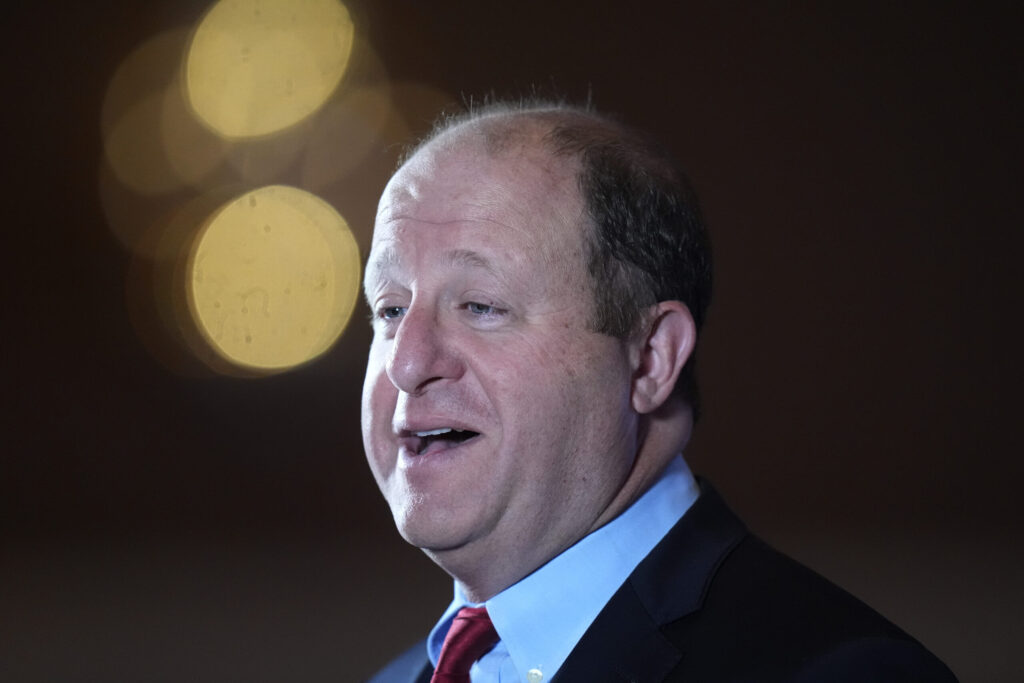
Gov. Jared Polis moves to end ICE subpoena fight over Colorado workers’ personal data
Marianne Goodland
marianne.goodland@coloradopolitics.com
Updated 2 days ago
The effort by Gov. Jared Polis to comply with an administrative subpoena from U.S. Immigration and Customs Enforcement for information held by several state agencies is over. Polis, in a motion filed Feb. 20, asked for a permanent injunction and...

Ex-Colorado Sen. Sonya Jaquez Lewis avoids prison, gets probation for forged ethics letters
Marianne Goodland
marianne.goodland@coloradopolitics.com
Updated 2 days ago
Former state Sen. Sonya Jaquez Lewis, D-Longmont, was sentenced Friday to two years of supervised probation and 150 hours of community service, and a $3,000 fine, to be waived if she completes an additional 100 hours of community service. The...

Bipartisan bill aims to launch Colorado ‘Cradle to Career’ anti-poverty grant program
Marissa Ventrelli
marissa.ventrelli@coloradopolitics.com
Updated 3 days ago
The bill’s sponsors say it will help Colorado families living in poverty, and the organizations that support them have cleared their first hurdle, but they will need to raise just over $1 million before things get off the ground. Senate...
PREV
PREVIOUS
Male wolf dies after capture attempt in Colorado
One of the original wolves brought to Colorado from Colorado has died after an attempt to capture it, the’s state wildlife agency said. The Colorado Parks and Wildlife identified the wolf as No. 2305 — meaning it was one of the original 10 animals that came from Oregon. The wolf, the male of the breeding […]

Poison, poultry and prostitution — the Colorado legislature marches on | Rachel Gabel
Many weeks my search history is odd but the past two weeks might worry our county sheriff if he didn’t know me as well as he does. This week has been the week of poison, poultry and prostitution. Not to be confused, of course, by brodifacoum, beavers and butorphanol. In other words, the Colorado legislature […]