

Rubio visits Caribbean to talk with leaders unsettled by Trump’s policies
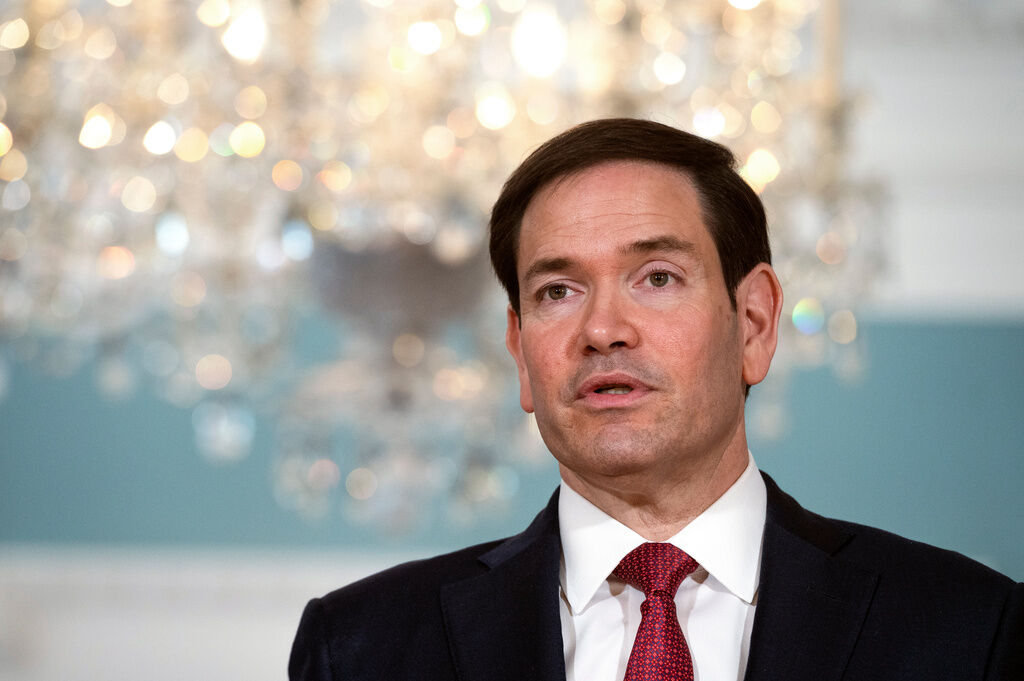
BASSETERRE, St. Kitts and Nevis (AP) — U.S. Secretary of State Marco Rubio is meeting on Wednesday with Caribbean leaders for talks expected to center on regional concerns and uncertainty about Trump administration policies in the Western Hemisphere.
Rubio addressed leaders of 15-nation Caribbean Community bloc behind closed doors in the country of St. Kitts and Nevis before beginning a series of separate one-on-one meetings, which will include the prime ministers of St. Kitts, Trinidad and Tobago, and others.
They will debate pressing issues in a region that President Donald Trump has targeted for a 21st-century incarnation of the Monroe Doctrine to ensure Washington’s dominance in the hemisphere. The Republican administration has declared a focus closer to home even as Washington increasingly has been preoccupied by the possibility of a U.S. military attack on Iran.
A buildup of U.S. warships and aircraft in the Middle East has exceeded the surge of assets in the Caribbean Sea before the American military raid last month that captured Venezuela’s then-leader, Nicolás Maduro. Trump called that operation “an absolutely colossal victory for the security of the United States” during his State of the Union address Tuesday night.
Trump also has stepped up aggressive tactics to combat alleged drug smuggling and turned up the pressure on Cuba. Caribbean leaders have complained about administration demands for nations to accept third-country deportees from the U.S. and to chill relations with China.
Godwin Friday, newly elected prime minister of St. Vincent and the Grenadines, echoed the fears of many European leaders when he said the Caribbean is “challenged from inside and out.”
“International rules and practices that we have become used to over the years have changed in troubling ways,” Friday said.
Caribbean leaders point to shifting global order
Trump said during the State of the Union that his administration is “restoring American security and dominance in the Western Hemisphere, acting to secure our national interests and defend our country from violence, drugs, terrorism and foreign interference.”
During Tuesday’s opening ceremony, Terrance Drew, prime minister of St. Kitts and Nevis and CARICOM chair, said the region “stands at a decisive hour.”
“The global order is shifting,” he said. “Supply chains remain uncertain, energy markets fluctuate and climate shocks intensify.”
Like other leaders, Drew spoke about changing geopolitics and said the humanitarian situation in Cuba must be addressed and taken seriously, something also stressed by Jamaican Prime Minister Andrew Holness.
“It must be clear that a prolonged crisis in Cuba will not remain confined to Cuba,” Holness warned. “It will affect migration, security and economic stability across the Caribbean basin.”
Holness said that Jamaica “stands firmly for democracy” and that his country also “supports constructive dialogue between Cuba and the U.S. aimed at de-escalation, reform and stability.”
The U.S. Treasury Department on Wednesday slightly eased restrictions on the sale of Venezuelan oil to Cuba, which instituted austere fuel-saving measures in the weeks after the U.S. raid in Venezuela.
Rubio was intending to discuss ways to promote regional security and stability, trade and economic growth with Caribbean leaders, the U.S. State Department said.
Caribbean leaders also are expected to talk about other issues such as security, reparations, climate change and financing, and a single market economy.
US policy in the Caribbean
Rubio’s visit comes more than a month after the U.S. captured Maduro and took him to the U.S. to face drug trafficking charges. Maduro has pleaded not guilty, protesting his capture and declaring himself “the president of my country.”
The U.S. also has killed at least 151 people in strikes targeting small boats accused of smuggling drugs since early September. The latest attack Monday killed three people in the Caribbean Sea. The U.S. has not provided evidence that the targeted boats are ferrying drugs.
Prime Minister Kamla Persad-Bissessar of Trinidad and Tobago has previously praised the attacks. On Tuesday, she repeated that sentiment, thanking Trump, Rubio and the U.S. military “for standing firm against narcotrafficking” and for their cooperation in national security matters.
“The crime is so bad, I cannot depend on just my military, my protective services,” she said.
___
Coto reported from San José, Costa Rica. Associated Press reporters Bert Wilkinson in Georgetown, Guyana, and Andrea Rodríguez in Havana contributed to this report.

State of the Union: Here’s what Trump didn’t say
W. James Antle III Washington Examiner
wjamesantleiiiwashingtonexaminer@wpstage.coloradopolitics.com
Updated 58 minutes ago
President Donald Trump made the case that happy days are here again in the first State of the Union of his second term, but there was little talk of transition or pain. “The state of our union is strong,” he...
Colorado lawmakers react along partisan lines to Donald Trump’s State of the Union address
Ernest Luning
ernest.luning@coloradopolitics.com
Updated 8 hours ago
President Donald Trump could have been describing two different countries in Tuesday’s State of the Union address — one entering a “Golden Age” and the other enduring daily stress under a “lawless” regime — at least as far as the...
‘We’re winning so much.’ Trump delivers State of the Union address
Michelle L. Price
michelle.l..price@associatedpress.com
Updated 16 hours ago
WASHINGTON • President Donald Trump said America has been “winning so much” during Tuesday’s State of the Union, touting a jobs and manufacturing boom at home and promising a “Golden Age” as the U.S. prepares to celebrate the 250th anniversary of its...
Watch Live: 2026 State of the Union Address
Will Weissert
will.weissert@associatedpress.com
Updated 19 hours ago
WASHINGTON (AP) — President Donald Trump will use Tuesday’s State of the Union address to champion his immigration crackdowns, his slashing of the federal government, his push to preserve widespread tariffs that the Supreme Court just struck down and his...
5 questions heading into Trump’s State of the Union address
Steven Sloan
steven.sloan@associatedpress.com
Updated 1 day ago
WASHINGTON (AP) — President Donald Trump says he has a lot to talk about tonight. He’s returning to Congress to deliver a State of the Union address at a consequential moment in his presidency, with his approval ratings near an...

Colorado senators hold heated debate on latest immigration bill
Marianne Goodland
marianne.goodland@coloradopolitics.com
Updated 1 day ago
A bill that would allow individuals who get injured during an immigration action to sue federal agents in state court won preliminary approval from the Colorado Senate on Monday. The bill would permit a “cause of action” by such individuals...
Trump pulls endorsement from Jeff Hurd over tariffs, backs Colorado Republican’s primary challenger
Ernest Luning
ernest.luning@coloradopolitics.com
Updated 1 day ago
President Donald Trump on Saturday rescinded his endorsement of U.S. Rep. Jeff Hurd and threw his support behind the Colorado Republican’s primary challenger, Hope Scheppelman, citing the first-term incumbent’s “lack of support” for the administration’s tariff policy. The move comes...
Supreme Court agrees to hear from oil and gas companies trying to block climate change lawsuits
Lindsay Whitehurst
lindsay.whitehurst@associatedpress.com
Updated 2 days ago
WASHINGTON (AP) — The Supreme Court said Monday that it will hear from oil and gas companies trying to block lawsuits seeking to hold the industry liable for billions of dollars in damage linked to climate change. The conservative-majority court...
In a meeting Colorado GOP chair Brita Horn calls ‘illegal,’ Republicans vote to demand her resignation
Ernest Luning
ernest.luning@coloradopolitics.com
Updated 4 days ago
Roughly half the membership of the Colorado Republican Party’s state central committee on Saturday voted overwhelmingly to approve a resolution expressing “no confidence” in state GOP Chairman Brita Horn’s leadership and calling for her immediate resignation in an online meeting...
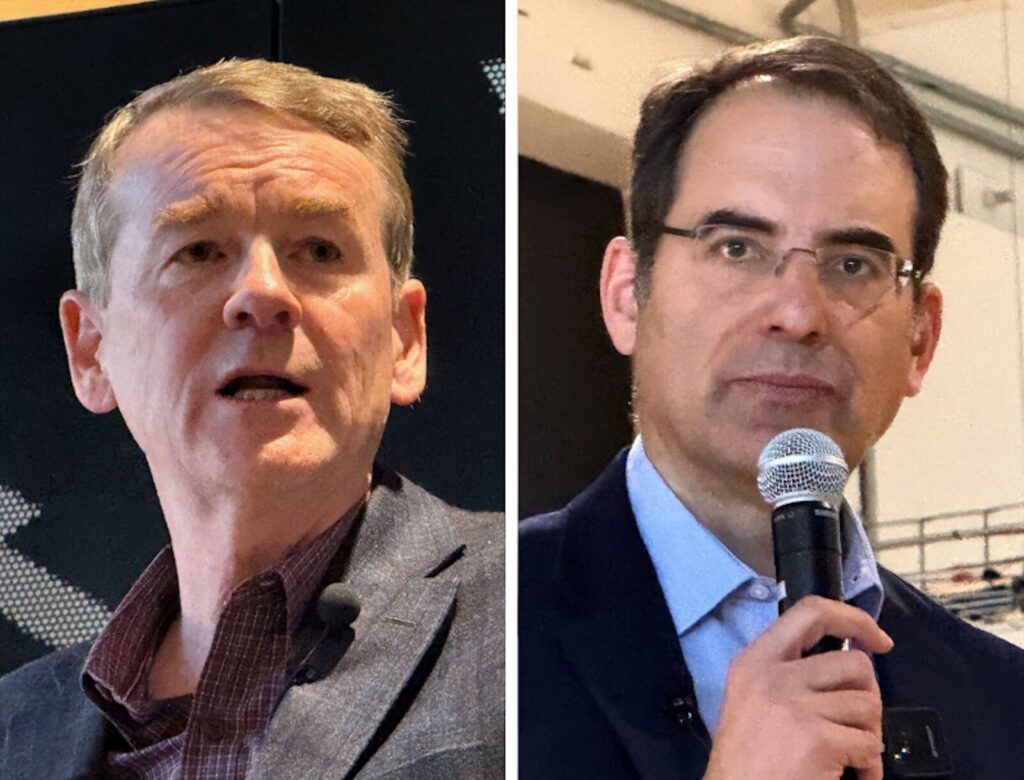
Democrats Michael Bennet, Phil Weiser make their cases to be Colorado’s next governor ahead of primary
Ernest Luning
ernest.luning@coloradopolitics.com
Updated 2 days ago
Nearly eight months before ballots will be counted in Colorado’s race for the its open gubernatorial seat, voters are lining up behind two of the state’s leading Democrats, who are facing off in a primary that will likely determine which...
PREV
PREVIOUS
State of the Union: Here’s what Trump didn’t say
President Donald Trump made the case that happy days are here again in the first State of the Union of his second term, but there was little talk of transition or pain. “The state of our union is strong,” he declared. “Our country is winning again. We’re winning so much we really don’t know what […]

Bipartisan opposition sinks eviction reform bill in Colorado House committee
Two Democrats sided with Republicans on the House Judiciary Committee to kill a bill that would have made several changes to eviction filings and proceedings, including requiring judges to suppress court records. Sponsored by Rep. Junie Joseph, D-Boulder, House Bill 1047 would also have required landlords to provide tenants with an additional rent payment option […]