

Colorado’s Medicaid crisis was years in the making | OPINION

By Greg D’Argonne
As the Joint Budget Committee meets to finalize spending decisions for the coming fiscal year, one truth should guide the conversation: Colorado’s health care budget strain did not appear overnight — and it is not the fault of hospitals, doctors, or any medical provider.
Health care spending itself is at the heart of Colorado’s current financial situation. For several cycles, the state has dealt with expected shortfalls on its budget proposals, as detailed in its own communications and output.
This health care spending growth goes a long way in explaining why the state’s budgetary situation is at it is. The Department of Health Care Policy and Financing (HCPF), which administers Health First Colorado, now commands nearly 37% of the state’s operating budget — more than any other line item, including education.
That spending mushroomed in a very short time, more than doubling in just 10 years. In fiscal year 2025, HCPF spending reached almost $16 billion. A decade ago, it was just under $8 billion.
This outpaced state spending at every other level. During the same period, the rest of the state budget grew by 64%.
This was not a feature of health care becoming more expensive or more expansive, which is the usual explanation for Colorado’s health care spending growth. Between 2015 and 2025, HCPF’s spending growth outpaced the combined growth of Medicaid enrollment and medical inflation. Even after enrollment declined sharply following the expiration of pandemic-era protections, spending continued to climb.
If HCPF’s budget had followed those items, in fact, the state would have saved more than $5 billion. According to my analysis with the Common Sense Institute, where I serve as a health care fellow, if HCPF’s budget had simply tracked caseload, inflation, and public health trends, it could have spent roughly $10.8 billion in fiscal year 2025.
Instead, it spent $16 billion.
That gap is not driven by patient need. It is driven by policy decisions.
Between 2019 and 2025 alone, lawmakers enacted 182 new health care-related bills. Many bills expanded coverage mandates, increased administrative requirements, or added regulatory layers to providers. These policy additions now cost at least $858 million annually in state funds, not counting the additional federal matching dollars they trigger.
Those regulatory barriers and layers of bureaucracy stack up.
The proof for this is in HCPF’s growth relative to Medicaid’s in the last few years. Medicaid enrollment rose by just 7.6% between 2018 and 2024. During that same period, HCPF’s full-time employment increased by 72%, and administrative spending doubled.
This is not an argument against Medicaid. It is, however, a plea for Medicaid to be managed responsibly at the state level.
Hospitals do not drive the state’s budget instability. In fact, many have been operating under growing pressure from HCPF policies.
Consider the Recovery Audit Contractor (RAC) program. Over five years, Colorado’s RAC auditors recovered $84 million in alleged overpayments. At the same time, Colorado has been the only state that does not fully reimburse hospitals when underpayments are discovered.
The administrative burden on hospitals remains significant even after reforms.
The Hospital Transformation Program (HTP), a well-intentioned but complex initiative that many providers say duplicates existing federal and accreditation requirements. Hospitals report heavy documentation burdens, shifting performance standards, and limited alignment with other quality initiatives. For rural facilities operating on thin margins, these administrative requirements divert resources away from patient care.
The strain is compounded by Medicaid disenrollment trends, as hospitals eat the costs of the uninsured.
Between 2023 and 2025, about 500,000 Coloradans were removed from Medicaid rolls as pandemic-era eligibility protections expired. Colorado’s disenrollment rate was 48% of redeterminations, far above the national average of 31%.
Many of those individuals became uninsured.
In the first quarter of 2025 alone, Colorado hospitals delivered $140 million in uncompensated care. This is double the level of 2023. Emergency room visits by uninsured patients have surged, particularly in metro Denver.
When Medicaid administration falters, costs do not disappear. They shift to hospitals, privately insured families, and rural communities least able to absorb them.
The Joint Budget Committee has an opportunity for course correction.
Federal Medicaid changes under the One Big Beautiful Bill Act will not take effect until 2027. The immediate challenge facing the General Assembly is state-level spending discipline.
Lawmakers should examine where HCPF has grown past necessity. They should revisit regulatory expansions that add cost without improvement in care. They should ensure audit systems are balanced and collaborative. They should consider whether the Hospital Transformation Program, now up for reauthorization, should be restructured or allowed to sunset.
Containing costs does not mean abandoning care. It means focusing dollars on patients and taking careful steps to ensure they don’t get soaked up by new layers of bureaucracy and administration.
Lawmakers should consider whether to continue expanding bureaucracy, or recalibrate toward sustainability.
Greg D’Argonne is the Common Sense Institute’s health care fellow and former chief financial officer for HCO Continental Division.


Threats inside and out loom for Colorado’s Republicans | Dick Wadhams
Dick Wadhams
dick-wadhams@coloradopolitics.com
Updated 15 hours ago
Colorado Republicans made strides in 2024 despite an insidious state chairman who tried to defeat successful Republican candidates. Newly elected U.S. Reps. Gabe Evans, Jeff Hurd and Jeff Crank fought off unethical opposition from their own state party chairman, making...
Is it time for both parties to bail on Colorado’s political nominating system? | Miller Hudson
Miller Hudson
miller-hudson@coloradopolitics.com
Updated 15 hours ago
Cracks are beginning to appear in Colorado’s political nominating system. Recently, Mario Nicolais, a formerly Republican-leaning pundit, and Doug Friednash, former Democratic legislator, have opined regarding the imminent demise of the caucus/assembly framework which controls partisan candidate selection. There has...

Recognizing the value of generational work | Rachel Gabel
Rachel Gabel
rachel-gabel@coloradopolitics.com
Updated 15 hours ago
The Lesser Prairie Chicken habitat in southeastern Colorado is a swath of prairie that begins in Cheyenne and far-southeastern Lincoln counties and moves south and east into Kiowa, Prowers and Baca counties. This is cattle country where the short grass...

Why the controversy with mail-in ballots? | Cronin & Loevy
Tom Cronin Bob Loevy
tom-cronin-bob-loevy@coloradopolitics.com
Updated 15 hours ago
Most Coloradans enjoy the right to vote “by mail” at election time. Most Americans favor this process. But U.S. President Donald Trump is trying to federalize (nationalize) this practice and shift the supervision of voting from county clerks to the...

Who are the kings being crowned here in Colorado? | Jon Caldara
Jon Caldara
jon-caldara@coloradopolitics.com
Updated 3 days ago
Though most of us celebrate “No Kings Day” on July 4, the Trump-deranged got a head start last weekend with rallies around the state. Attendees bravely fought oppression by blocking traffic for people with jobs. Rally-goers demanded freedom from tyranny,...
An April Fool’s Day to remember | Capitol M | Week of April 4, 2026
Marianne Goodland
marianne.goodland@coloradopolitics.com
Updated 4 days ago
The lighter side of the Capitol, and if light were weight, the Capitol would have lifted off better than the Artemis II rocket on April Fool’s Day. There was a plethora of Fools at the Capitol for April Fool’s Day...
Kentucky Gov. Andy Beshear set to headline Colorado Democrats’ annual fundraising dinner
Ernest Luning
ernest.luning@coloradopolitics.com
Updated 2 days ago
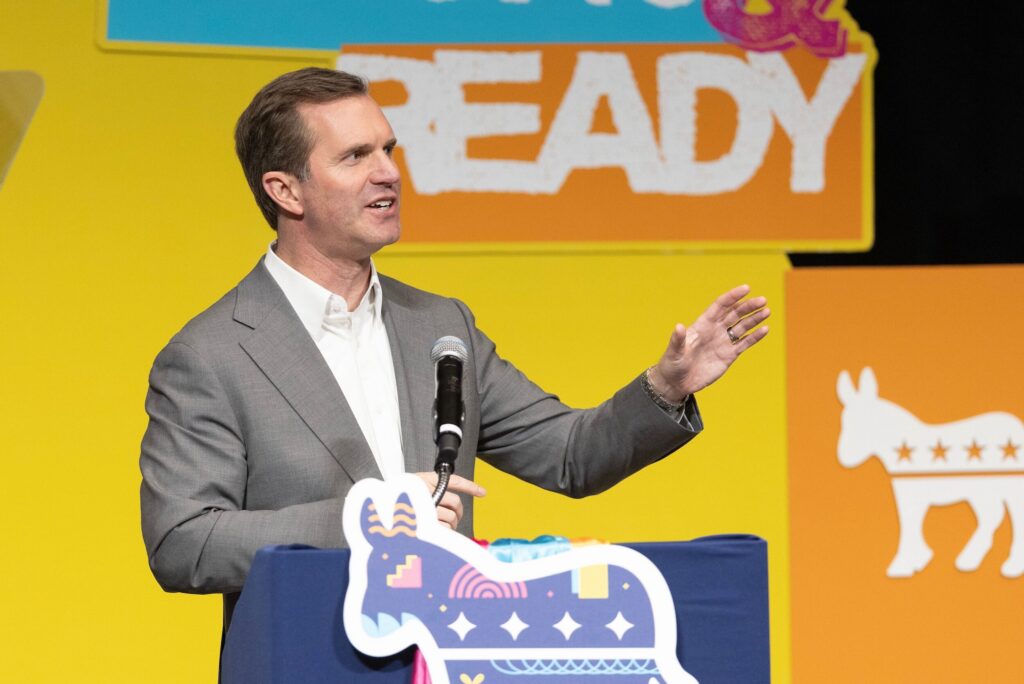
Kentucky Gov. Andy Beshear, one of the Democrats’ top 2028 presidential prospects, is scheduled to deliver the keynote address at the Colorado Democratic Party’s annual fundraising dinner in June in Denver, the party said Friday. Serving his second term as...
Gov. Polis names new leaders for Colorado health agencies in wake of Medicaid turmoil
Marianne Goodland
marianne.goodland@coloradopolitics.com
Updated 3 days ago
Gov. Jared Polis, on Thursday, announced he was appointing Gretchen Hammer to serve as acting executive director of the Colorado Department of Health Care Policy and Financing, and deputy executive director Stephanie Beasley to become the next commissioner of the...
Colorado sues Trump administration, calling new election order ‘unconstitutional’
Marissa Ventrelli
marissa.ventrelli@coloradopolitics.com
Updated 2 days ago
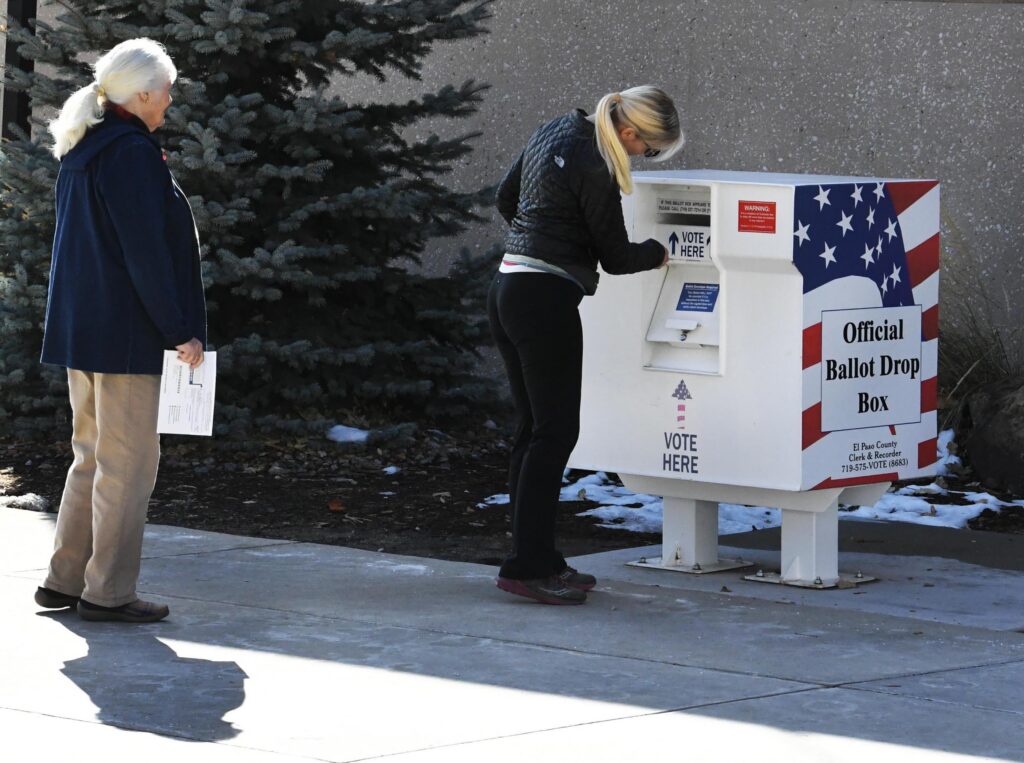
Colorado Attorney General Phil Weiser has joined a multistate coalition suing President Donald Trump over a new executive order on elections, arguing the directive unlawfully intrudes on states’ authority to run their own voting systems and threatens access to mail...
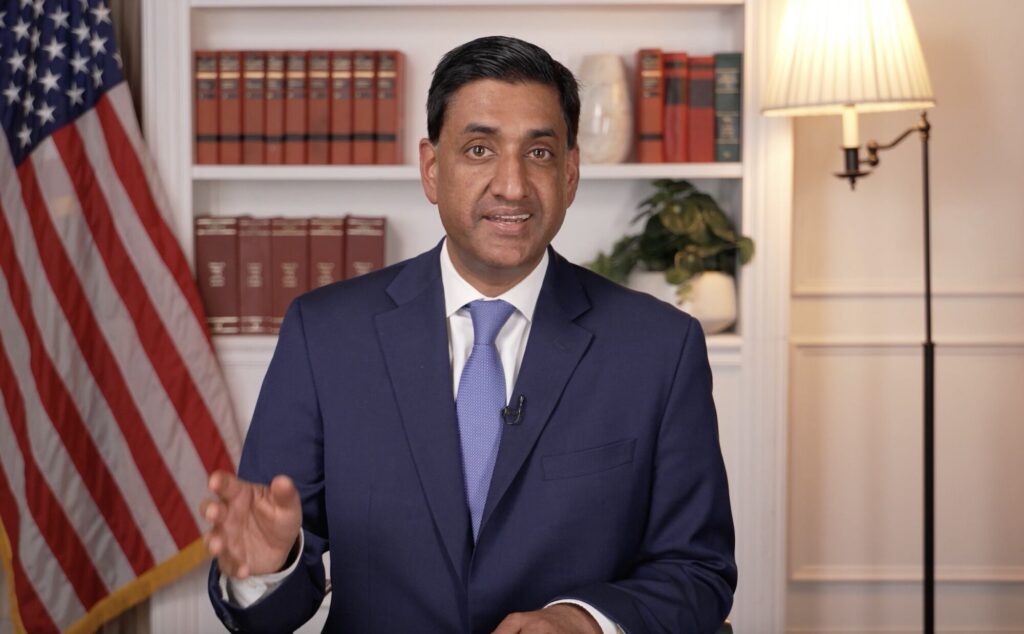
Denver Democrat Neal Walia lands endorsement from Ro Khanna in Colorado’s state House District 9
Ernest Luning
ernest.luning@coloradopolitics.com
Updated 2 days ago
California Rep. Ro Khanna on Friday endorsed legislative candidate Neal Walia in the race for an open state House seat, praising the Denver Democrat’s commitment to public service and progressive goals. Walia, who mounted an unsuccessful challenge against U.S. Rep....
PREV
PREVIOUS

Metro district legislation provides pragmatic, meaningful solution | OPINION
By Sam Nizam Colorado needs more transparency and accountability in government… at all levels. And during the 2025 legislative session, one such bill made it through the process, improving transparency at the closest local level: metro districts. House Bill 25-1219, sponsored by Reps. Jacque Phillips and Carlos Barron and Sens. Kyle Mullica and Lisa Frizell, […]
Will President Trump's emissions 'progress' turn into pollution regression? | Paula Noonan
Will President Donald Trump allow gasoline producers to put lead back in petrol? Will he declare by executive order fuel engines no longer need catalytic converters? Just wondering how far he will take his environmental policies before his four years in office are up. Trump’s 2025 executive order to reconsider the Environmental Protection Agency’s (EPA) […]