

Two weeks after rejection, Colorado Springs City Council marks Black History Month

Colorado Springs City Council announced a proclamation recognizing February as Black History Month at Tuesday’s meeting, two weeks after a first attempt at a proclamation was rejected by the body.
After the delay, it had appeared that the recognition might not take place. Shirley Martinez, outgoing president of the MLK Legacy Committee, said that this year made it especially important for the month to be recognized.
“As we reflect on 250 years of America and 150 years of Colorado statehood, we acknowledge that Black history has shaped every chapter of that story,” Martinez said. “But today is not only about looking back, it is also about looking forward. Our youth are the future authors of this story.”
Councilmember Kimberly Gold had requested a proclamation take place during a Jan. 27 council meeting but it was not supported by other councilmembers. That led to the president of the Colorado Springs NAACP branch and other community members taking issue with the decision at that meeting.
According to Colorado Springs records, the City Council had approved a resolution or issued a proclamation for Black History Month in eight of the past nine years.
A local governmental body that is not explicitly recognizing Black History Month is the Pikes Peak Library District. Library spokesperson Denise Abbott said that, beginning in 2019, the district had tried to recognize about 90 cultural and national holidays throughout the year with programs or specialized displays.
“We found, however, that regardless of how determined we were to acknowledge everyone, we were either forgetting special groups or alienating others. That is not the Library’s objective. We want to make sure that everyone feels they are part of the Library District,” Abbott said.
Abbott said that in 2024, PPLD cultural recognitions were channeled into the Rising Voices event, which celebrates a mix of different nationalities.
At this City Council meeting, Terrance Beasley appeared in Civil War garb to talk about historical reenactments and presentations his group did as the Colorado Front Range Buffalo Soldiers. Minister Earl Shaffer Jr. listed prominent Black residents of Colorado Springs and inventors from across the country.
Councilmember Roland Rainey spoke about the history of Black residents rising from slavery to the Voting Rights Act and the Civil Rights Act. Rainey also talked about his personal journey from a farm in the South to being elected to the City Council.
Rainey said Black History Month is not about the qualities of a specific ethnicity but about celebrating the generations of work that it took to get to the current level of progress.
“As a collective whole, never allow us to allow the celebration of Black history to be the pawn of a chess game of self-serving political ideology. It is truly about the history, about us and about what makes us great as a country.”
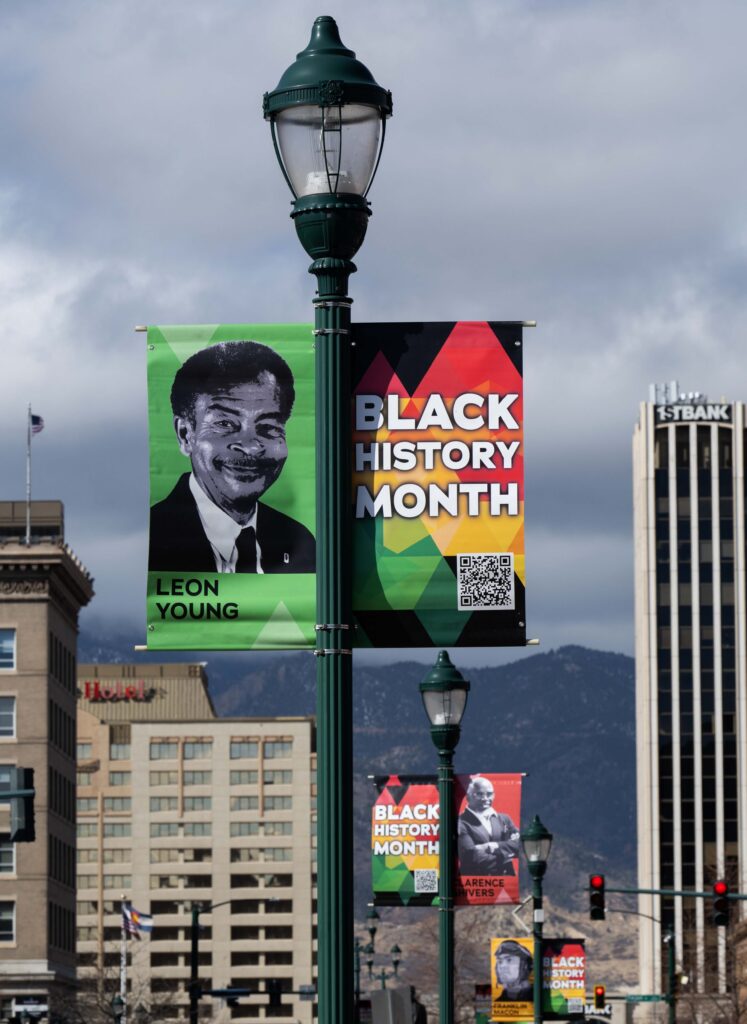
u003ca href=u0022https://gazette.com/2026/02/01/after-public-questioning-colorado-springs-city-council-may-recognize-black-history-month/u0022u003eu003cstrongu003eAfter public questioning, Colorado Springs City Council may recognize Black History Month – Colorado Springs Gazetteu003c/strongu003eu003c/au003e: Two weeks after rejection, Colorado Springs City Council marks Black History MonthOther events for Black History Month are taking place across the city. The Colorado Springs Pioneers Museum and the Downtown Ventures nonprofit hung up banners for the month along Pikes Peak Avenue downtown as part of the recurring Cultural Corridor program. Martinez promoted an upcoming screening of “I’m Carl Lewis!” by the Rocky Mountain Women’s Film Festival.

Untraditional education platform makes fool out of state ed department | Paula Noonan
Paula Noonan
paula-noonan@coloradopolitics.com
Updated 10 hours ago
It’s April Fool’s week and ERBOCES, Education Re-envisioned BOCES, is one of the state’s biggest jokers. This untraditional education platform authorized through five founding school districts including Falcon School District 49 in El Paso County has played the Colorado Department...
Judge rules that Colorado law makes it too hard for parties to bar unaffiliated voters from primaries
Ernest Luning
ernest.luning@coloradopolitics.com
Updated 10 hours ago
A federal judge ruled in favor of the Colorado Republican Party late Tuesday, saying that a portion of the state law that allows unaffiliated voters to cast ballots in party primaries is unconstitutional because it imposes an unrealistic burden on...

10th Circuit upholds regulator’s methodology for Tri-State exit fees
Michael Karlik
michael.karlik@coloradopolitics.com
Updated 12 hours ago
The Denver-based federal appeals court upheld a regulatory agency’s methodology for calculating the fee owed by entities seeking to withdraw from Tri-State Generation and Transmission Association last week. Tri-State is a Westminster-based cooperative that provides and transmits electricity to member...
Federal judge proposes sanctions against Mike Lindell’s lawyers for continued fake citations
Michael Karlik
michael.karlik@coloradopolitics.com
Updated 13 hours ago
A federal judge is once again pursuing sanctions against lawyers for MyPillow CEO Mike Lindell for continuing to cite to court cases that do not exist, likely based on the faulty output of artificial intelligence tools. Last year, a jury...

Front Range cities oppose Democratic proposal to permit lot‑splitting as a path to affordable housing
Marianne Goodland
marianne.goodland@coloradopolitics.com
Updated 13 hours ago
Colorado lawmakers are pressing ahead with a plan to let homeowners split their lots to make room for smaller, more affordable houses. The proposal has drawn sharp opposition from Aurora, Colorado Springs, Denver and other Front Range cities that argue...

Catalyst for Girls Award recipients to be honored at luncheon | NONPROFIT REGISTER
Thelma Grimes
thelma.grimes@coloradopolitics.com
Updated 14 hours ago
GIRLS, INC. OF METRO DENVER Denver News: Girls, Inc. of Metro Denver is in final preparations for its annual My Bold Future luncheon, a May 13 fundraiser honoring the 2026 Catalyst for Girls award recipients. They are: Corporate Catalyst, Crocs, Inc.; Community Catalyst,...
Susan Blanco signals views on role of appellate courts in first opinion as Colorado justice
Michael Karlik
michael.karlik@coloradopolitics.com
Updated 17 hours ago
Justice Susan Blanco’s first solo opinion as a new member of the Colorado Supreme Court made clear her view of the guardrails that keep the state’s highest court tethered to the issues it is asked to decide. On Monday, the...

Hegseth features Fort Carson soldiers after returning from Middle East, gives warning on Iran war
Reuters
reuters@gazette.com
Updated 17 hours ago
Defense Secretary Pete Hegseth said on Tuesday the next few days in the war against Iran would be decisive and warned Tehran that the conflict would intensify if it did not make a deal. Hegseth also highlighted his trip to the Middle...

Colorado leaders say Trump’s executive order targeting mail voting violates state election authority
Marissa Ventrelli
marissa.ventrelli@coloradopolitics.com
Updated 12 hours ago
Colorado leaders criticized President Donald Trump’s new executive order issued Tuesday, arguing that its creation of a national voter‑eligibility list and new limits on mail voting violate states’ constitutional authority to run their own elections. President Donald Trump has frequently...
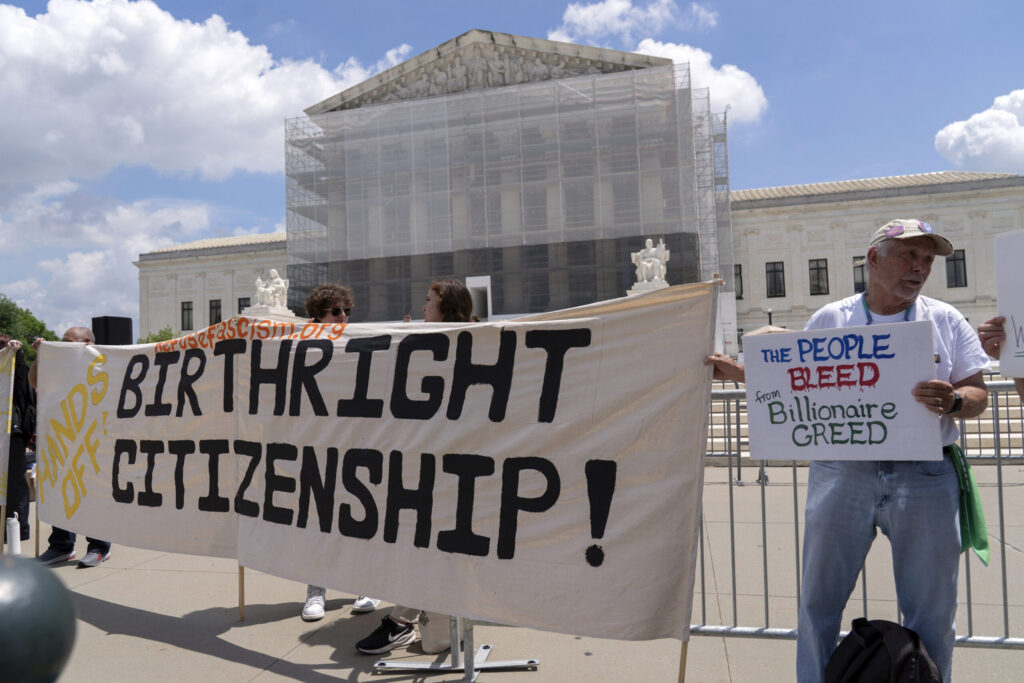
The Latest: Supreme Court to hear arguments over Trump’s birthright citizenship order
The Associated Press
the-associated-press@coloradopolitics.com
Updated 21 hours ago
WASHINGTON (AP) — The U.S. Supreme Court is hearing arguments at 10 a.m. ET over the constitutionality of President Donald Trump’s order to end birthright citizenship for children born in the United States to someone in the country illegally or...