

Farmers know a bad investment when we see one — forced coal is one of them | OPINION
By Jan Kochis
If you work in agriculture long enough, you learn to judge things by how they perform over time. Not by promises. Not by nostalgia. But by whether they keep working, keep costs predictable, and don’t create more problems than they solve.
That’s how I look at the U.S. Department of Energy’s decision to force Unit 1 at the Craig coal plant to keep running under highly suspect “emergency” orders issued Dec. 30, one day before it was scheduled to begin decommissioning.
From where I stand — literally out in the fields — this doesn’t make much sense.
Coal units like Craig 1 are scheduled to close for a reason. They’re old, expensive to maintain and increasingly don’t perform reliably under stress. That’s not politics — that’s basic math and mechanics. When equipment reaches the end of its useful life, you can patch it up for a while, but the costs go up and the risks accumulate. Similar to a tractor that breaks down every harvest season; you don’t call it “reliable” just because it used to be. You start planning for what comes next, and Craig’s owners have been making those plans for a decade.
The Craig plant is operated and partly owned by Tri-State Generation and Transmission, which provides electricity to member rural electric cooperatives like mine, Mountain View Electric Association.
Farmers and ranchers in the Mountain View service territory all operate on razor-thin margins. The last thing we need is for energy costs to go up because of petty politics in Washington. Tri-State has worked hard during the past seven years to blaze a path toward more affordable clean energy, and this made-up emergency order is a giant step backward. It will cost an estimated $85 million annually to keep Unit 1 open — a cost ultimately borne by farmers, ranchers and the rural communities served by Tri-State.
We’re told these emergency orders are about reliability and affordability, but the track record tells a different story. Craig Unit 1 broke down at the end of last year. Where we live, reliability means something works when conditions aren’t perfect. Coal plants don’t have that track record anymore. And when something goes wrong — which happens even more often with older plants — ratepayers end up covering the bill.
For farmers and ranchers, electricity costs matter. We use power to support water, livestock, crop production, storage and modern farm operations, and forcing utilities to keep old coal plants running doesn’t stabilize costs — it adds uncertainty and expense.
On our own property, we host wind turbines. That wasn’t a decision we made lightly. Like most farmers and ranchers, we asked a lot of questions first. Would it interfere with operations? Would it affect the land? Would it actually work?
Years later, the answer is pretty simple: the turbines do what they’re supposed to. They produce energy. They don’t require fuel shipments. They don’t break down every time there’s a heat wave. They coexist with farming and ranching in a way that doesn’t disrupt day-to-day work. And perhaps most importantly, they provide steady added revenue, a god-send in a sector as volatile as agriculture. It’s been our best “cash crop.”
That experience shapes how I view claims about energy reliability. Wind doesn’t solve everything on its own, but I‘ve seen firsthand modern renewable infrastructure is dependable, predictable and compatible with rural life. And it’s significantly more affordable than coal.
There’s also the bigger picture. Hotter summers, longer droughts and more extreme weather affect crops, water availability and planning decisions every year. These conditions are real, and they’re getting worse. Continuing to rely on coal only makes those challenges harder to manage.
What bothers me most is the fabricated use of “emergency” authority to justify all of this. Emergency powers are supposed to be rare and temporary. They’re meant for moments when there truly is no alternative. But alternatives exist. From where I sit, forcing uneconomic coal plants to keep operating past their prime looks more like politics than an honest emergency.
In agriculture, stewardship matters. You don’t exhaust the land or the equipment just because it’s familiar. You plan for the long term. You adapt when conditions change.
Energy policy should work the same way.
Farmers and ranchers and our rural communities need energy systems that make sense for the long haul — ones that work, one we can plan around and ones that don’t leave us paying the price for someone else’s reluctance to move on.
The DOE should rescind this emergency order and let Craig Unit 1 retire as planned. Congress should ensure these emergency powers aren’t abused to prop up failing infrastructure at ratepayers’ expense. And utilities should focus their resources on building the reliable, affordable energy systems rural America actually needs — not prolonging the life of facilities that no longer serve us.
That’s not ideology. It’s experience talking.
Jan Kochis is a farmer and rancher in Elbert County served by Mountain View Electric Cooperative and Director/Treasurer of the Rocky Mountain Farmers Union.


‘Steel for fuel’ — but bill consumers for both | PODIUM
Colorado Politics
colorado-politics@coloradopolitics.com
Updated 8 hours ago
By Sarah Montalbano In 2018, Xcel Energy, an investor-owned utility serving millions of customers across eight states, was the first U.S. utility to pledge to deliver 100% carbon-free electricity by 2050. Eight years later, Xcel is pleading with Colorado...

Mental health education for coaches can help young athletes on and off the field | OPINION
Colorado Politics
colorado-politics@coloradopolitics.com
Updated 8 hours ago
By Erin Harrop Youth athletics have become significantly more intense and competitive. The physical effects of training or injury can be grueling — but so are the mental health effects, particularly as performance pressure increases. As leaders and mentors, coaches...

Colorado leaders weigh next steps after Supreme Court rejects state ban on ‘conversion therapy’
Marissa Ventrelli
marissa.ventrelli@coloradopolitics.com
Updated 9 hours ago
Colorado leaders said they are weighing next steps after the U.S. Supreme Court on Tuesday rejected the state’s ban on “conversion therapy” for children, as critics and supporters cheered or lambasted the ruling. The court’s near-unanimous decision called the Colorado...
Colorado lawmakers push legislation to shrink RTD board, increase pay as ridership struggles continue
Marissa Ventrelli
marissa.ventrelli@coloradopolitics.com
Updated 14 hours ago
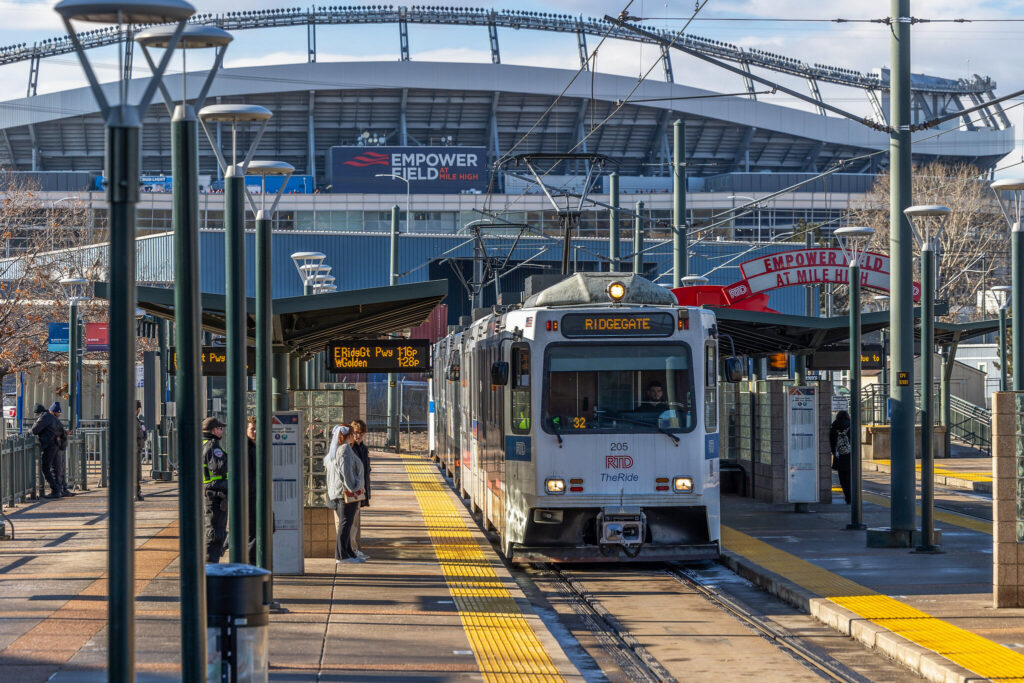
Colorado lawmakers are advancing a new push to overhaul the Regional Transportation District, proposing to shrink the board, raise member pay, and boost ridership back to pre-pandemic levels. While some stakeholders see the effort as a step forward, others warn...

Colorado legislators drove up cost of Medicaid program
Marissa Ventrelli
marissa.ventrelli@coloradopolitics.com
Updated 16 hours ago
Some of Colorado’s spending woes in Medicaid can be traced to lawmakers who had approved new or expanded programs in the last few years, driving up state costs to the tune of tens of millions of dollars. Just three measures...
Legislature busy sending lots of minor bills for governor’s signature | Hal Bidlack
Hal Bidlack
hal-bidlack@coloradopolitics.com
Updated 1 day ago
One of the benefits of being, well, I guess technically, some type of journalist writing here on Colorado Politics, isI get on interesting mailing lists. A while back, some kind soul in the governor’s office added me to the daily...
SB26-140 will protect access to rare disease treatments | OPINION
Colorado Politics
colorado-politics@coloradopolitics.com
Updated 1 day ago
By Amanda Boone There are moments in life that leave an indelible mark on your soul. For me, one came in the middle of the night when I took a full breath for the first time in over a decade....
Lawmakers hold the key to solving Colorado’s mental health crisis | OPINION
Colorado Politics
colorado-politics@coloradopolitics.com
Updated 1 day ago
By Ryan M. Burkhart The U.S. is currently in the midst of a mental health crisis, and here in Colorado, more than 28% of residents live with a mental health condition. Unfortunately, a majority of Colorado residents are currently locked...
‘Change the terrain’ for deliberative democracy | FEEDBACK
Colorado Politics
colorado-politics@coloradopolitics.com
Updated 1 day ago
Vince Bzdek’s Gazette piece on James Fishkin’s experiments in deliberative democracy is an interesting read, though the very factors that produced its results — balanced information, expert moderation, and structured discussion — are what everyday politics lacks, and precisely what...

Colorado Gov. Polis signs social media warrant bill after last year’s veto
Marissa Ventrelli
marissa.ventrelli@coloradopolitics.com
Updated 1 day ago
Colorado law enforcement will soon have faster access to digital evidence after Gov. Jared Polis signed a pared‑down bill requiring social media companies to acknowledge and respond to search warrants on a tight timeline, a shift from a broader proposal...
PREV
PREVIOUS

Trump administration plans to hold back grant money from Colorado, 3 other states
The Trump’s administration is planning to withhold some public health and transportation money from a group of Democratic-led states, including Colorado. The other states are California, Illinois and Minnesota. Full details have not been released, including whether the states could take any steps to avoid losing the funding. Colorado has sued the White House or […]

SB 26-066 will make patient care harder, not safer | OPINION
By Kristen Youngdahl As a pharmacist in Colorado, I am proud of the opportunity I have to work with patients consulting them on their specific medical situation and serving as a valuable partner to their overall health. As a trusted partner, I recognize every patient’s needs are uniquely their own. This is why I am […]