10th Circuit orders lawyer to pay $1,000 for faulty AI citations

The Denver-based federal appeals court ordered a lawyer on Monday to pay $1,000 to the opposing side for submitting a legal filing with fake case citations generated by artificial intelligence.
A three-judge panel of the U.S. Court of Appeals for the 10th Circuit acknowledged Kusmin Linda Amarsingh had expressed remorse over using unverified ChatGPT citations. Although the panel declined to dismiss her appeal, it nonetheless concluded her inclusion of non-existent case law ran afoul of the prohibition on frivolous arguments.
“Amarsingh’s failings are quite serious and warrant a significant sanction,” wrote Judge Harris L Hartz in the Feb. 9 order. “Although there is nothing inherently problematic with the use of GenAI in the practice of law, careless use of the tool can waste both judicial resources and the opposing party’s time and money, and it can damage the credibility of the legal system.”
Case: Amarsingh v. Frontier Airlines
Decided: February 9, 2026
Jurisdiction: U.S. District Court for Colorado
Ruling: 3-0
Judges: Harris L Hartz (author)
Nancy L. Moritz
Veronica S. Rossman
In recent months, federal and state judges in Colorado have begun cautioning lawyers explicitly about the pitfalls of using generative AI in legal filings without verifying the output. The Colorado Supreme Court recently amended the rules of professional conduct to warn about the potential violations lawyers may trigger with improper AI use. Within weeks of each other last fall, two federal judges also called out fake citations that appeared in legal filings.
Amarsingh’s case appears to be the second involving false, AI-generated material that the 10th Circuit has addressed. In December, a three-judge panel dismissed the appeal of a self-represented plaintiff for her inclusion of 11 fictitious cases in her written brief.
Amarsingh, who described herself as a military lawyer with some state court experience, represented herself in suing Frontier Airlines for discrimination. Her lawsuit alleged that she was flying from Philadelphia to St. Louis, with a connection through Orlando, in June 2023, but Frontier had overbooked her flight.
When no one willingly gave up their seat, Amarsingh and others without assigned seats waited to see if there was room for them. She alleged the Frontier employees were rude and dismissive. Amarsingh did not get a seat on the flight, resulting in significant inconvenience for her.
She alleged that the Frontier employees, who were Black, allowed a large group of Black travelers onto the plane, but did not allow her because she was not Black. Among the other passengers bumped from the flight were multiple people who appeared Hispanic, another person who appeared Indian, one White man, and one man who appeared Black.

In August 2024, U.S. Magistrate Judge Kathryn A. Starnella recommended dismissing Amarsingh’s lawsuit because she had not plausibly alleged racial discrimination.
“By Plaintiff’s own admission, no matter which combination of passengers had been boarded and no matter which six passengers had been left behind, each group would have been racially diverse,” Starnella wrote. “Even if Defendant’s gate agents were unprofessional or rude to Plaintiff and other passengers, that does not demonstrate an intent to discriminate based on her race.”
Amarsingh objected to Starnella’s recommendation, but U.S. District Court Judge Gordon P. Gallagher agreed that dismissal was warranted.
“What Mrs. Amarsingh alleges happened is absolutely awful,” he wrote. But “it is plain from the alleged circumstances that there were legitimate permissible criteria for the selection of passengers allowed to board.”
On appeal to the 10th Circuit, the panel upheld Gallagher’s conclusion. If anything, wrote Hartz, Amarsingh’s allegations suggested “that the airline treats everyone poorly, which would undermine her claim that the poor treatment she received was because of race.”
The panel’s order also addressed an issue that Frontier mentioned in passing in its response to Amarsingh’s appeal. After the airline’s lawyers noted they were “unable to locate several cases cited by Plaintiff,” the panel issued an order in September asking Amarsingh to explain herself.

Specifically, wrote Hartz, the panel could not find seven cases Amarsingh had cited. Moreover, Amarsingh included a non-existent quote from a case, and there were “other anomalies” suggesting AI was the culprit.
“The court is hard-pressed to think of any reason other than the use of generative artificial intelligence that accounts for the peculiarities,” wrote Hartz. “Although there is nothing inherently problematic with the use of generative artificial intelligence in the practice of law, its careless use can waste both judicial resources and the opposing party’s time and money, and it can damage the credibility of the legal system. We therefore consider whether sanctions may be in order.”
Amarsingh responded, saying she took full responsibility for bringing “great discredit” upon herself and the practice of law. The seven nonexistent cases “were, regrettably, the result of my reliance on generative AI tools, specifically ChatGPT, to assist in legal research and drafting,” she wrote.
Amarsingh explained that the sophistication of AI tools and the prevalence of attorneys using them led her to believe the citations “seemed accurate at the time.”
“For instance, I made an argument and requested a 10th Circuit case to support it. AI returned a 10th Circuit sounding case name and made up a supporting argument attributed to the made-up case,” she wrote. “I mistakenly assumed that ChatGPT’s output was accurate and failed to cross-reference the quotations with the actual case texts.”
In the 10th Circuit’s decision, Hartz wrote that the panel appreciated Amarsingh’s honesty and her commitment to being more careful going forward. Nonetheless, the panel ordered her to pay Frontier $1,000 for its attorneys’ expenses in responding to the fake citations. It also directed the clerk to forward the order to the attorney regulators in Maryland, where Amarsingh is licensed.
“Amarsingh’s actions were reckless because of her complete failure to perform an attorney’s fundamental duty to the court — confirming that all the cited cases exist and stand for the propositions for which they are cited, and accurately quoting from the cited authorities,” Hartz wrote.
The case is Amarsingh v. Frontier Airlines, Inc.


Supreme Court finalists selected, federal judges slash backlogs | COURT CRAWL
Michael Karlik
michael.karlik@coloradopolitics.com
Updated 4 hours ago
Welcome to Court Crawl, Colorado Politics’ roundup of news from the third branch of government. Coloradans learned who the three finalists are for a state Supreme Court vacancy, and new data show that Colorado’s federal trial judges reduced their backlog...
Federal judge blasts government for violating court order, confiscating man’s property
Michael Karlik
michael.karlik@coloradopolitics.com
Updated 1 day ago
A federal judge gave the government three hours on Friday to return the property of a man released from immigration detention, which it allegedly retained in violation of her previous order. “At its most benign, this failure is an unforced...
DA’s withdrawal from veterans treatment court not judge’s problem, ethics panel says
Michael Karlik
michael.karlik@coloradopolitics.com
Updated 3 days ago
There are no ethical concerns from a judge continuing to participate in a specialty veterans treatment court if the district attorney’s office has withdrawn from the program, the Colorado Supreme Court’s ethics committee advised on Wednesday. Colorado law permits chief...
Divided appeals court orders insurance company to pay $35,600 for delayed disclosure of policy
Michael Karlik
michael.karlik@coloradopolitics.com
Updated 3 days ago
Colorado’s second-highest court concluded on Thursday that an insurance company violated state law when it refused to disclose an automobile policy to an injured motorist for nearly one year after she requested it. By 2-1, a three-judge Court of Appeals...
Judge expected to decide Monday whether to accept latest plea agreements for Hallfords
Mackenzie Bodell
mackenzie-bodell@coloradopolitics.com
Updated 3 days ago
An El Paso County judge is expected to decide Monday whether to accept new negotiations that would extend the prison sentence for Jon and Carie Hallford, coming on the heels of the court rejecting the original plea agreements for the...
Who are the 3 finalists for the Colorado Supreme Court?
Michael Karlik
michael.karlik@coloradopolitics.com
Updated 4 days ago
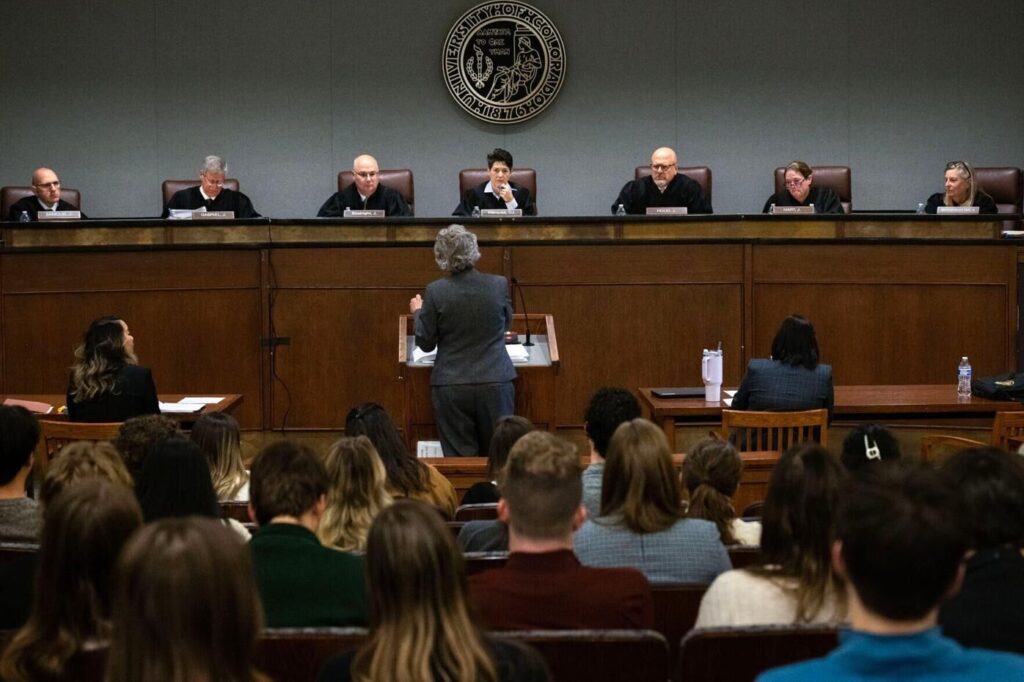
A citizen-led nominating commission has chosen the finalists for a vacancy on the Colorado Supreme Court, the first opening in five years on the seven-member court. The vacancy arose after the unexpected resignation of Justice Melissa Hart, who formally departed...
Christopher Zenisek, trial judge experienced with high-profile cases | SUPREME COURT FINALISTS
Michael Karlik
michael.karlik@coloradopolitics.com
Updated 4 days ago
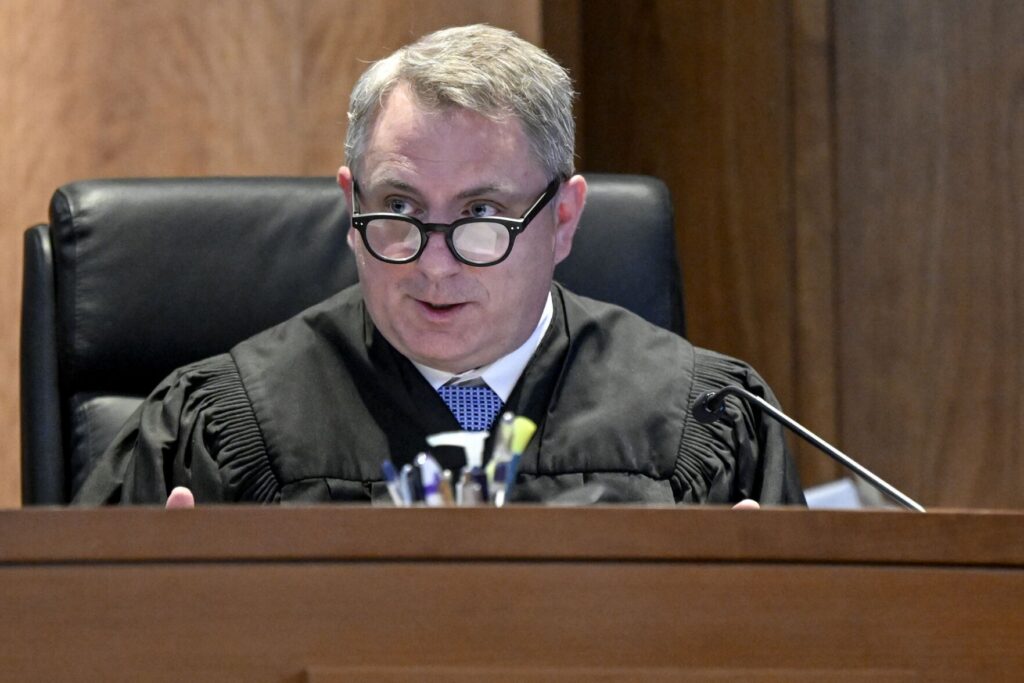
After the Marshall fire burned through Boulder County in the final days of 2021 and wound up destroying more than 1,000 homes, the sprawling 4,000-plaintiff litigation was assigned to District Court Judge Christopher Zenisek of Jefferson County. Zenisek would go...
Andrea Wang, water and energy expert | SUPREME COURT FINALISTS
Michael Karlik
michael.karlik@coloradopolitics.com
Updated 4 days ago
When the late Chief Justice Mary Mullarkey authored a 2002 opinion in the complex and long-running Taylor Ranch case involving landowners’ claims to access a 77,000-acre tract in the San Luis Valley, she worked with her law clerk, Andrea S....
Susan Blanco, innovator in the judiciary | SUPREME COURT FINALISTS
Michael Karlik
michael.karlik@coloradopolitics.com
Updated 4 days ago
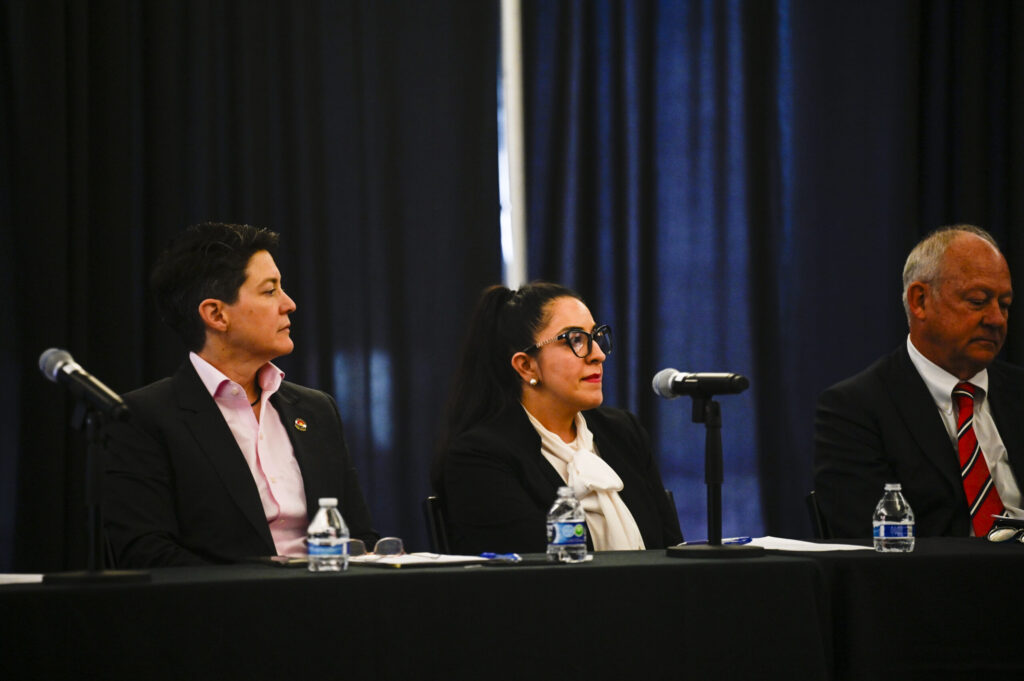
Less than 24 hours after her selection as a finalist for a Colorado Supreme Court vacancy, Chief Judge Susan Blanco was back on the bench in Fort Collins, moving methodically through the variety of complications she encountered. “Your goatee might...

Colorado joins lawsuit against Trump energy emergency order
Scott Weiser
scott.weiser@gazette.com
Updated 5 days ago
Colorado Attorney General Phil Weiser joined a multistate lawsuit challenging an executive order invoking the National Emergencies Act that President Donald Trump issued on the day of his inauguration. The order fast-tracks fossil fuel projects by bypassing or shortening environmental...