

Union dues proposal clears first hurdle, but its fate is murky at Colorado Capitol
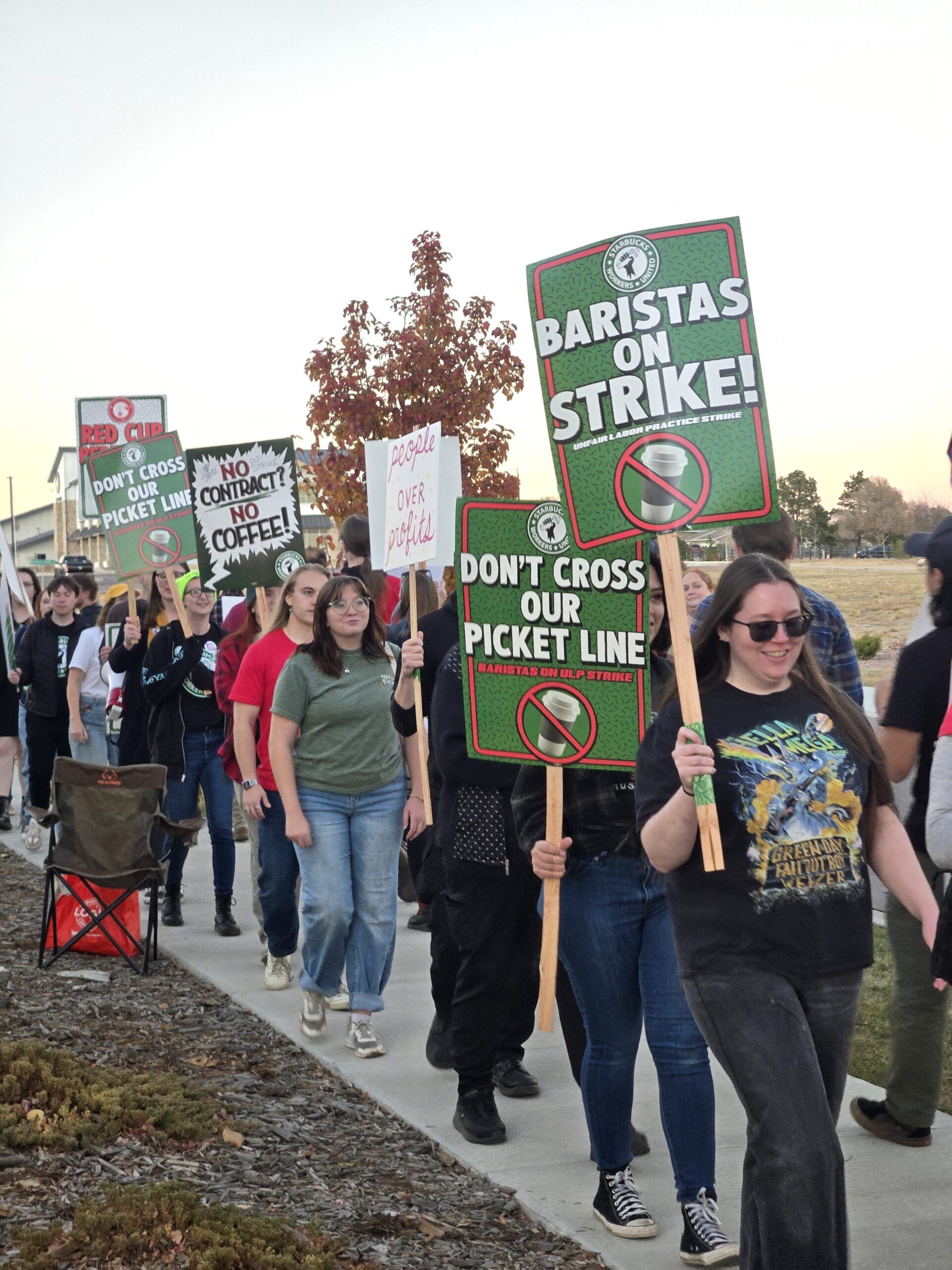
A proposed to repeal a key requirement in a nearly century-old law has cleared its first committee hearing, but it faces a long road ahead.
And its fate remains uncertain, particularly since Gov. Jared Polis vetoed a similar proposal last year and he indicated this year he intends to do so again, unless business and labor can secure an agreement.
Still, House Speaker Julie McCluskie said she has perceived a willingness from the parties to try again.
At issue is this year’s House Bill 1005, which would repeal the Labor Peace Act’s second election requirement for unionized workplaces to form a union security agreement, which requires all employees to pay for “union representation,” whether they are members or not.
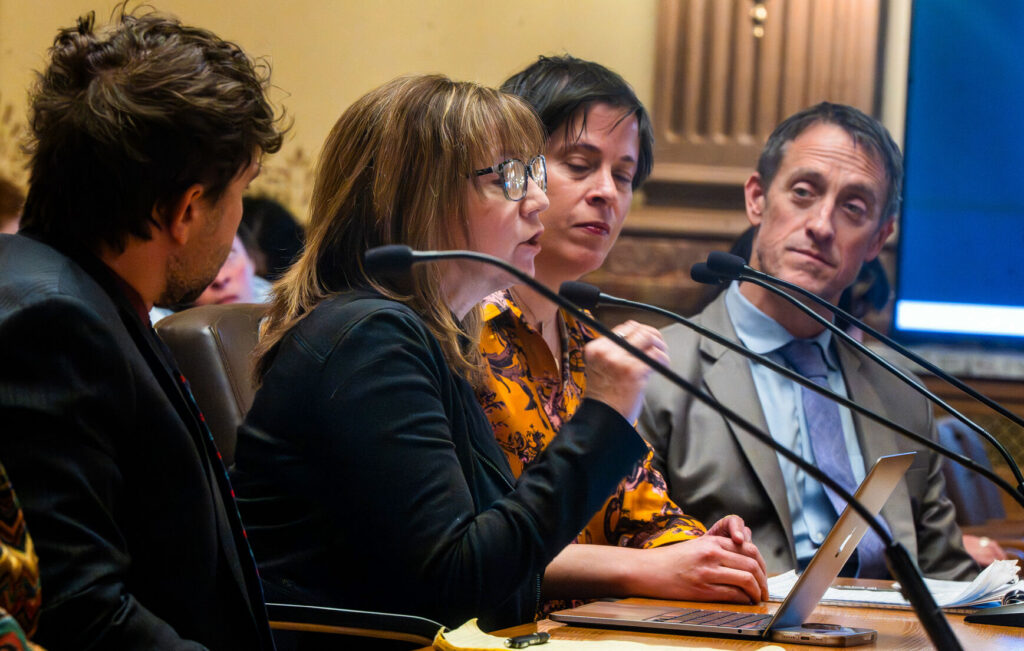
The bill passed through the House Business Affairs and Labor Committee on an 8-5 party-line vote on Thursday. It is now headed to the Finance Committee for debate.
Last year’s iteration of the bill, Senate Bill 005, also successfully passed through both the House and the Senate. Polis vetoed the bill — he had promised to reject the measure unless labor and business groups found a compromise.
The two sides did not. Polis’ office also sought to broker a deal, which also did not produce an agreement.
When HB 1005 was introduced last month, a spokesperson for Polis said the governor was “frustrated and surprised” that sponsors are bringing the bill back despite “last year’s outcome and that nothing has changed.”
The spokesperson said Polis will continue to urge business and labor groups to “come together to work on a solution together that is right for Colorado.”
The bill’s sponsors and Speaker of the House Julie McCluskie, D-Dillon, disagreed with the governor’s statement that “nothing has changed.”
“In my conversations with business leaders and with our labor partners, I am hearing a willingness to try again,” McCluskie said, adding that both groups have several months to resume discussions.
“This bill was introduced on opening day, so we are still early in the session,” she said. “I have confidence that with that commitment and with the experience of last year. I think there were some challenging moments in listening and understanding each other, but I was really impressed with the integrity and honesty of that process, and I hope we can pick up with the same players sitting down at a table and trying.”
The bill is even more relevant now than last year, according to Rep. Javier Mabrey, D-Denver, one of the sponsors.
He tied the legislation to wages and cost of living.
“The most important thing here is that the affordability crisis didn’t go away,” he said. “We are providing a clear opportunity to the governor to pass a bill that will lead wages to increase in his state.”
Mabrey said he and labor advocates are “totally willing” to continue having conversations with business groups and the Governor’s Office — whether that be Polis or his successor.
“I want to work on this until we get it done,” he said. “I want to give the governor, whether it’s Polis or the next governor, the chance to do the right thing and pass this law, and I think it’s important for us to force the issue every single year.”
Last year, supporters of the legislation sought to frame it as an issue over unionization. Business groups countered that the bill had nothing to do with unionization, which is governed by federal law.
‘The Colorado compromise’
Sonia Riggs, president and CEO of the Colorado Restaurant Association, said she had to tell her members not to testify on this year’s bill due to the “significant backlash” they received last year for opposing it.
Restaurant owners and workers who spoke out against the legislation last year were “threatened and harassed” both online and in person, Riggs said, and someone even threw a rock through the window of one establishment during dinner service.
“Workers and owners in our industry are now afraid to speak out,” she said.
“This bill does not protect Colorado restaurant workers. Instead, it directly harms them by eliminating their right to a second union vote.”
Leslie Oliver of the Denver Metro Chamber of Commerce called the Labor Peace Act — the roughly 80-year-old statute — the “Colorado compromise,” adding that it has been essential to the state’s “economic competitiveness and labor stability.”
“At a time when Colorado’s cost of living continues to rise, and workers are living paycheck-to-paycheck, the Denver Metro Chamber believes policies enabling mandatory deductions from an employee’s pay against their expressed wishes are wrong,” she said. “We believe in the principle should remain simple: your pay, your choice.”
The bill’s other sponsors are Rep. Jennifer Bacon, D-Denver, and Sens. Jessie Danielson, D-Wheat Ridge, and Iman Jodeh, D-Aurora.

As federal vaccine guidance shifts, Colorado Senate backs recommendations from pediatric groups
Marianne Goodland
marianne.goodland@coloradopolitics.com
Updated 5 hours ago
At least 20 states have said they are using guidance from the American Academy of Pediatrics and other medical associations when setting vaccine policies and immunization schedules, in some cases supplementing or diverging from recommendations issued by the Trump administration...
Proposal targets dual office-holding by Colorado legislators | Bills in brief
Marianne Goodland
marianne.goodland@coloradopolitics.com
Updated 13 hours ago
Colorado lawmakers introduce hundreds of bills each year. Bills in Brief cuts through the noise by explaining which proposals matter, what’s at stake, and how decisions at the Capitol could affect everyday life across the state. A bill set for...
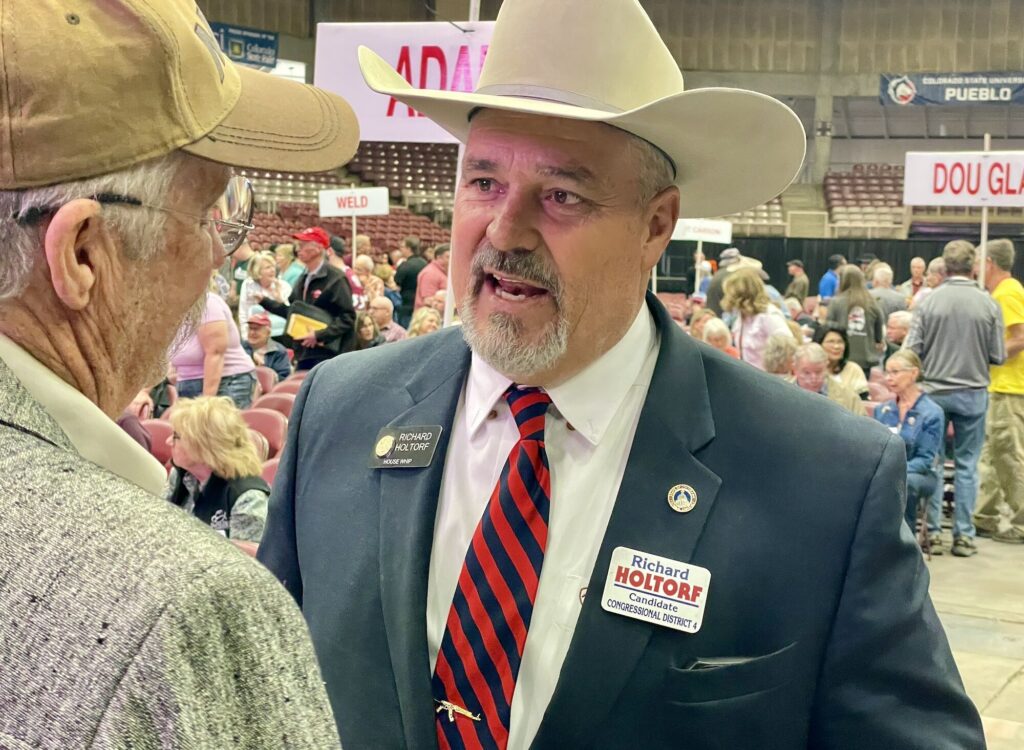
Colorado GOP vice chair Richard Holtorf resigns, says it’s ‘impossible’ to work with chair Brita Horn
Ernest Luning
ernest.luning@coloradopolitics.com
Updated 2 days ago
Colorado Republican Party Vice Chair Richard Holtorf notified GOP officials on Tuesday that he will step down from the party position at the end of the month, citing his inability to work with state chair Brita Horn. Holtorf, a third-generation...
Colorado legislators advance proposal allowing lawsuits against federal immigration agents
Marianne Goodland
marianne.goodland@coloradopolitics.com
Updated 3 days ago
A divided panel of Colorado legislators on Monday advanced a proposal to give individuals injured during an immigration enforcement operation the ability to sue federal agents in state court. The measure comes amid speculation that Colorado could be next on...
More people are now leaving Colorado than moving here from other states | Vince Bzdek
Vince Bzdek
vince.bzdek@gazette.com
Updated 6 days ago
By Vince Bzdek It’s finally happened. Buried in all the self-congratulatory reports about Colorado reaching the 6 million mark in population last year was news that should be keeping our political leaders up at night. For the first time in...
Colorado House launches ethics review of Rep. Ron Weinberg filed by fellow GOP legislator
Marianne Goodland
marianne.goodland@coloradopolitics.com
Updated 4 days ago
The Colorado House will convene an ethics committee to review a complaint filed by Rep. Brandi Bradley, R-Roxborough Park, against fellow Republican Rep. Ron Weinberg, R-Loveland. It will be the first time since 2012 that the House has formed an...

Party-line vote sends ‘red flag’ law expansion to Colorado Senate
Marissa Ventrelli
marissa.ventrelli@coloradopolitics.com
Updated 1 week ago
A panel of Colorado state senators voted along party lines Tuesday to advance a bill that would further expand who can ask a judge to temporarily restrict a person’s access to firearms under Colorado’s extreme risk protection order law. The...
Colorado Republicans plan to return to Pueblo for 2026 state GOP assembly | TRAIL MIX
Ernest Luning
ernest.luning@coloradopolitics.com
Updated 1 week ago
The Colorado Republican Party plans to hold its 2026 state assembly in Pueblo in April, marking a return to the largest city in the only county in the state that’s flipped from Democrat to Republican to Democrat to Republican in...

Colorado lawmakers roll out bipartisan plan aimed at lowering home insurance risk
Marianne Goodland
marianne.goodland@coloradopolitics.com
Updated 1 week ago
Rising homeowners’ insurance rates prompted a group of lawmakers to introduce a bill Wednesday aimed at reducing damage from hail and wildfire. The measure would encourage homeowners and homeowner associations to take additional mitigation steps and, in turn, could allow...

From child actors to ‘kidfluencers’: Colorado lawmakers consider digital-age Coogan Act
Marissa Ventrelli
marissa.ventrelli@coloradopolitics.com
Updated 1 week ago
Jackie Coogan had been an actor since birth, or just about. His first acting gig was as a toddler in the 1917 silent film, “Skinner’s Baby,” where he played the titular infant. At age 7, he starred alongside Charlie Chaplin...
PREV
PREVIOUS

This Feb. 21 fundraiser is all heart | NONPROFIT REGISTER
CHICANO HUMANITIES AND ARTS COUNCIL Denver News: Approximately 500 “art hearts” that have been created by seasoned artists and the general public will be for sale at Milagros del Corazon, a Feb. 21 fundraiser hosted by the Chicano Humanities and Arts Council, or CHAC. The 6 p.m. event takes place at the Space Annex, 95 S. Cherokee St., Denver, and admission is free. […]
Divided appeals court orders insurance company to pay $35,600 for delayed disclosure of policy
Colorado’s second-highest court concluded on Thursday that an insurance company violated state law when it refused to disclose an automobile policy to an injured motorist for nearly one year after she requested it. By 2-1, a three-judge Court of Appeals panel held that Esurance Property & Casualty Insurance Company had an obligation to hand over […]