

Federal judge blasts government for violating court order, confiscating man’s property

A federal judge gave the government three hours on Friday to return the property of a man released from immigration detention, which it allegedly retained in violation of her previous order.
“At its most benign, this failure is an unforced error of preventable dimension. At its worst, this is unjustifiable intransigence, where retention of Petitioner’s belongings is tantamount to imposition of an additional and illegal condition the immigration judge didn’t and hasn’t imposed,” wrote U.S. District Court Judge Charlotte N. Sweeney in a Feb. 6 order.
Sweeney has been unusually involved in the case of Javier Andres Garcia Cortes as a result of the government’s actions. Last year, she issued one of the first orders in Colorado finding the government was unlawfully detaining people like Garcia Cortes without considering his suitability for release.
“That’s wrong,” wrote Sweeney, a Joe Biden appointee, in a Sept. 16 order. “Respondents were wrong to detain him without an opportunity to seek release on bond.”
An immigration judge then released Garcia Cortes on a $15,000 bond. However, U.S. Immigration and Customs Enforcement required Garcia Cortes to wear a monitoring device and submit to check-ins. After he allegedly did not, ICE again took him into custody in January.
Turning to Sweeney once more, Garcia Cortes argued ICE could not impose conditions on him that the immigration judge did not order. In response, Sweeney pointed to other judges, including U.S. District Court Judge Gordon P. Gallagher in Colorado, who have rejected ICE’s authority to effectively keep people in custody by disregarding the terms of release set by immigration judges.
In citing the government’s “undaunted efforts to improperly detain” people like Garcia Cortes, Sweeney warned that she would not reach a different conclusion until a higher court said otherwise.
“While Respondents get to repeat themselves, they don’t get to repeatedly violate Petitioner’s due process rights,” she wrote on Feb. 2, ordering the immediate removal of ICE’s monitoring restrictions.
Finally, on Feb. 6, Garcia Cortes returned to Sweeney again. The government had eliminated its restrictions, he said, but failed to return his driver’s license, employment authorization, and passport.
“Petitioner’s motion raises two obvious points. First, that documents such as these are of paramount importance to him — as, the Court notes, they would be to anyone,” wrote Sweeney. “And second, that consistent with the Court’s prior order, Respondents were and are obviously wrong to not return such items to Petitioner upon his release from custody.”
She added that the government’s conduct was a violation of her prior order because it released Garcia Cortes under conditions that were inconsistent with what an immigration judge had imposed.
Sweeney gave the government until 5 p.m. on Friday to return all of Garcia Cortes’ property to him and to notify Sweeney that it had done so.
The case is Garcia Cortes v. Guadian et al.


Denver judge denies Gov. Polis request to dismiss ICE-related records case
Marianne Goodland
marianne.goodland@coloradopolitics.com
Updated 2 hours ago
A year after blocking the release of state records to federal immigration agents, a Denver judge has now denied Gov. Jared Polis’ effort to end the lawsuit at the center of the dispute. The lawsuit filed against the governor in...

10th Circuit grants rare all-judges’ review of Colorado banking regulation
Michael Karlik
michael.karlik@coloradopolitics.com
Updated 4 hours ago
The Denver-based federal appeals court announced on Thursday that it will hold a rare all-judges review of a recent decision that permits Colorado to require out-of-state banks to abide by the state’s maximum interest rates when they lend to in-state...
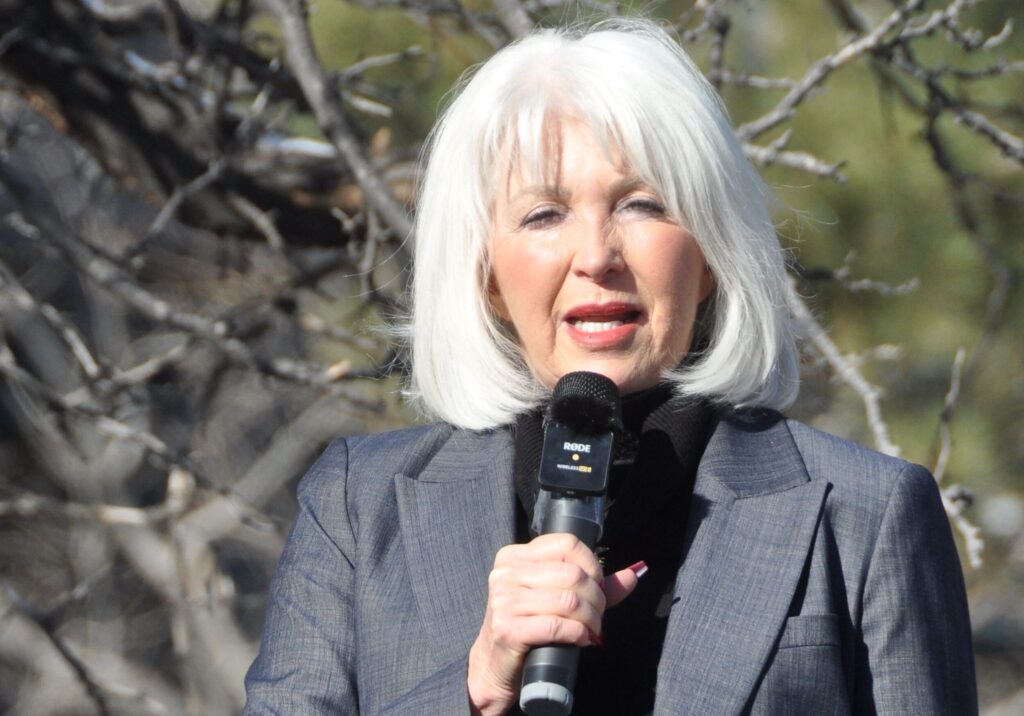
Colorado appeals court orders new sentencing for Tina Peters, upholds convictions
Michael Karlik
michael.karlik@coloradopolitics.com
Updated 5 hours ago
Colorado’s second-highest court determined on Thursday that a trial judge improperly sentenced former Mesa County clerk Tina Peters based upon her exercise of protected speech, while at the same time upholding her convictions. The three-judge Court of Appeals panel also...

Judge rules that Colorado law makes it too hard for parties to bar unaffiliated voters from primaries
Ernest Luning
ernest.luning@coloradopolitics.com
Updated 6 hours ago
A federal judge ruled in favor of the Colorado Republican Party late Tuesday, saying that a portion of the state law that allows unaffiliated voters to cast ballots in party primaries is unconstitutional because it imposes an unrealistic burden on...
10th Circuit upholds regulator’s methodology for Tri-State exit fees
Michael Karlik
michael.karlik@coloradopolitics.com
Updated 6 hours ago
The Denver-based federal appeals court upheld a regulatory agency’s methodology for calculating the fee owed by entities seeking to withdraw from Tri-State Generation and Transmission Association last week. Tri-State is a Westminster-based cooperative that provides and transmits electricity to member...
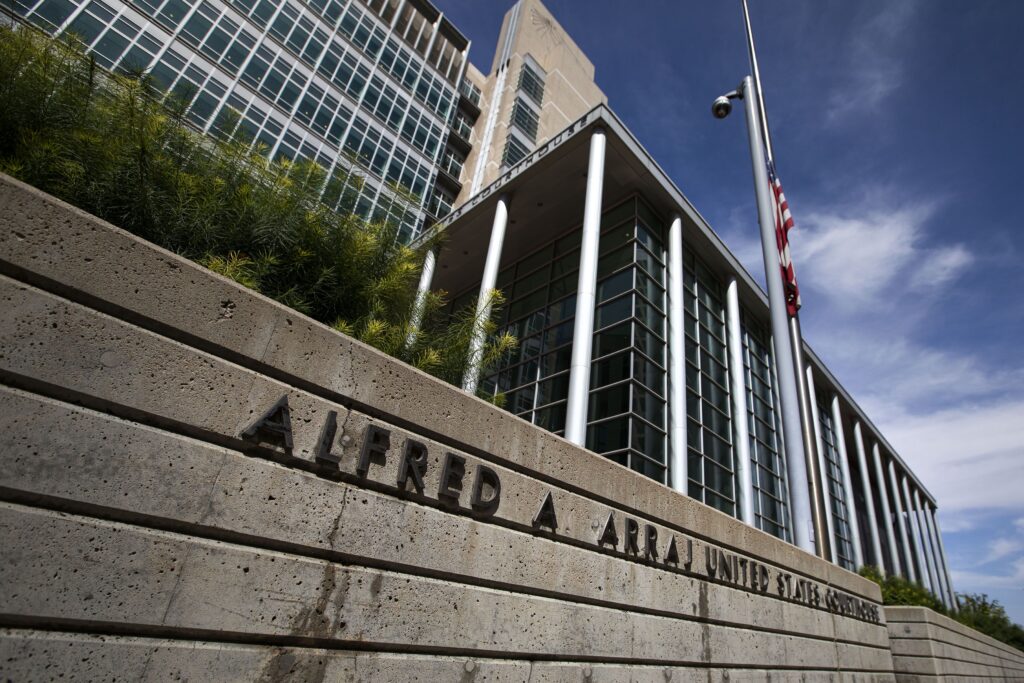
Federal judge proposes sanctions against Mike Lindell’s lawyers for continued fake citations
Michael Karlik
michael.karlik@coloradopolitics.com
Updated 1 day ago
A federal judge is once again pursuing sanctions against lawyers for MyPillow CEO Mike Lindell for continuing to cite to court cases that do not exist, likely based on the faulty output of artificial intelligence tools. Last year, a jury...

Susan Blanco signals views on role of appellate courts in first opinion as Colorado justice
Michael Karlik
michael.karlik@coloradopolitics.com
Updated 1 day ago
Justice Susan Blanco’s first solo opinion as a new member of the Colorado Supreme Court made clear her view of the guardrails that keep the state’s highest court tethered to the issues it is asked to decide. On Monday, the...

Colorado leaders weigh next steps after Supreme Court rejects state ban on ‘conversion therapy’
Marissa Ventrelli
marissa.ventrelli@coloradopolitics.com
Updated 2 days ago
Colorado leaders said they are weighing next steps after the U.S. Supreme Court on Tuesday rejected the state’s ban on “conversion therapy” for children, as critics and supporters cheered or lambasted the ruling. The court’s near-unanimous decision called the Colorado...
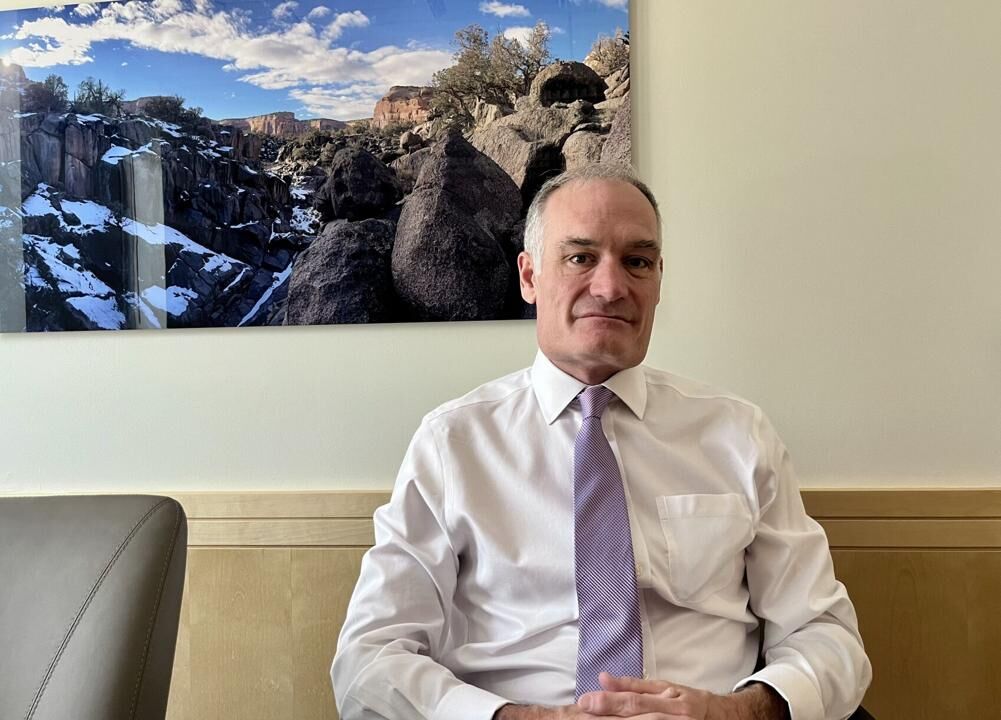
Federal judge dismisses U.S. government lawsuit against Colorado, Denver’s ‘sanctuary’ laws
Michael Karlik
michael.karlik@coloradopolitics.com
Updated 2 days ago
A federal judge dismissed the U.S. government’s lawsuit against Colorado and Denver on Tuesday, which alleged that various local policies impermissibly infringed on federal immigration enforcement. U.S. District Court Judge Gordon P. Gallagher followed the lead of judges in Illinois...

Federal judge finds DOJ adequately searched for, disclosed records related to Bidens
Michael Karlik
michael.karlik@coloradopolitics.com
Updated 2 days ago
A federal judge determined on Friday that the U.S. Department of Justice adequately searched for and disclosed records to a Colorado attorney in response to his request for documents related to former President Joe Biden’s son and brother. In November...
PREV
PREVIOUS

DA's withdrawal from veterans treatment court not judge's problem, ethics panel says
There are no ethical concerns from a judge continuing to participate in a specialty veterans treatment court if the district attorney’s office has withdrawn from the program, the Colorado Supreme Court’s ethics committee advised on Wednesday. Colorado law permits chief judges of judicial districts to establish an “appropriate program for the treatment of veterans and […]

Colorado Politics Calendar Feb. 9-15
CoPo’s weekly political calendar will help you find political and public-policy events throughout Colorado. It includes candidate and issue campaign events, public policy meetings, court hearings, state and local party conventions, assemblies, debates, rallies, parades, speaking engagements, traveling dignitary appearances, water meetings, book signings, county commission hearings, city council meetings and more. As a subscriber, […]