

Eagle County leads the way in fire mitigation as winter drought deepens
In 2011, Eagle County had what it considered a robust Community Wildfire Protection Plan (CWPP), which it developed and then discussed with community leaders.
But after the devastation wrought by the 2020 fire season, in which three fires — Cameron Peak, East Troublesome, and Pine Gulch — consumed nearly half a million acres, Eric Lovgren, community mitigation officer for Eagle County, said it was clear that the plan needed immediate overhaul.
“The old plan, which was true of many other plans, was developed and then we sought the buy-in. With the new plan, we did stakeholder interviews at the beginning and then set goals for their concerns,” Lovgren said. “We were able to develop a truly collaborative CWPP.”
Eagle County’s CWPP has four goals: Reduce the risks to public health and safety posed by wildfires, reduce structural ignitability and improve community wildlife resilience, protect critical infrastructure, and protect ecosystems and natural resources from high severity events.
Under those goals, the CWPP put in place specific strategies and action items, including unified building codes for all new development, fuel breaks around structures, forest thinning projects and increasing firefighting capacity and response time.
Given that February has rolled around with much of the state still in winter drought, those goals are coming even more into focus. According to the U.S. Department of Agriculture, as of Jan. 1, statewide snow water equivalent in Colorado was only 56% of median snowpack levels. The U.S. Drought Monitor shows the northwestern part of Colorado in deep drought and the dry spell is predicted to last weeks on the Western Slope.
Peter Goble, assistant state climatologist with the Colorado Climate Center at CSU, said this magnitude of snow deficits is unlikely to be made up for with more rain in the coming months. Goble warned that Colorado is at risk of spring and summer fires in 2026, adding, “Historically, most of our worst fire seasons are following very poor snowpack years.”
Eagle County’s Community Wildfire Protection Plan also considered the changing development landscape. The county’s 1,700 square miles is mainly mountainous and rapid population growth meant that much of the new development is outside the reach of fire protection services.
“Our agencies usually respond to fires with 1-2 structures at risk,” Lovgren said. “They’re not set up to deal with conflagrations of thousands of structures, nor are our water systems.”
To address this, Eagle County worked in tandem with both the Wildfire Collaborative, originally formed in 2009, a group of stakeholders who work to mitigate wildfire threats through collaboration and partnership, and the Eagle Valley Wildland Partnership.
“We began to share resources and expertise and eventually funding and people,” Lovgren said. “They helped to design, implement, and oversee things like forest thinning projects, tactical fuel break construction or begin to make available resources for homeowners like free home assessments so they know what to do on their property to reduce the risk of to their structure and the surrounding area.”
The coordinated collaborative effort across all expertise areas is what Lovgren says how the “needle is moved collectively across all fronts.”
The public reaction has been incredible, Lovgren said. The pace and scale of the work has grown apace, especially with the community curbside chipping program where all the material from mitigation efforts can be taken away free of charge. While the public is concerned about prescribed burns or changes, Lovegren said people are now beating the path to their door and taking an active role in protecting their communities.
While Eagle County is proud to be a leader mitigation efforts in Colorado, the scale of its programs isn’t something all counties are capable of matching. This isn’t a reason to not begin, Lovgren argued.
“We are a community of means,” Lovgren said. “Not all counties have the same type of means available but one place everyone can start is by empowering your residents, start a neighborhood ambassador program, coordinate with your fire districts and ask how you can support them to make their job easier. Start with small projects that are scalable.”
The investment in fire mitigation or full-time project management positions like a community mitigation officer is well worth the funds, Lovgren said. The return on investment for forest restoration is about $7 for every $1 spent and $4 in avoided losses for $1 spent on mitigation.
An example of just how effective mitigation efforts are is the Forest to Faucets Program.
Denver Water and the Rocky Mountain Region of the Forest Service partnered in 2010 and carried out fuel reduction projects across 900 acres above Silverthorne. The project saved an estimated $1 billion worth of homes and infrastructure from the 2018 Buffalo Fire.
Local response mechanisms and partnerships are more important than ever as the Trump administration has pulled some federal grants, and, according to Lovgren, longstanding projects aren’t getting funded anymore.
The Trump administration has initiated a campaign to shrink the size of the federal bureaucracy, defending its actions as a means to stamp out fraud and bloat. Additionally, it has pulled, suspended or threatened to stop the flow of federal dollars to programs it deems anathema to its preferred policies, particularly targeting funding for diversity, equity and inclusion (DEI) and climate-related initiatives.
During the federal government shutdown in October 2025, the U.S. Department of the Interior announced plans to fire thousands of employees, including 200 in Colorado who worked in land management and research, leaving critical positions unfilled.
“It’s why we added the lodging tax increase on the ballot,” Lovgren said. “We need to add more local response mechanism in case the federal response changes. It’s a monumental change.”
Lovgren added: “I never thought it was a possibility … that people in Colorado could lose emergency support.”

Colorado Title Board advances competing redistricting proposals and revised Pinnacol measure as April ballot deadline nears
Marianne Goodland
marianne.goodland@coloradopolitics.com
Updated 10 hours ago
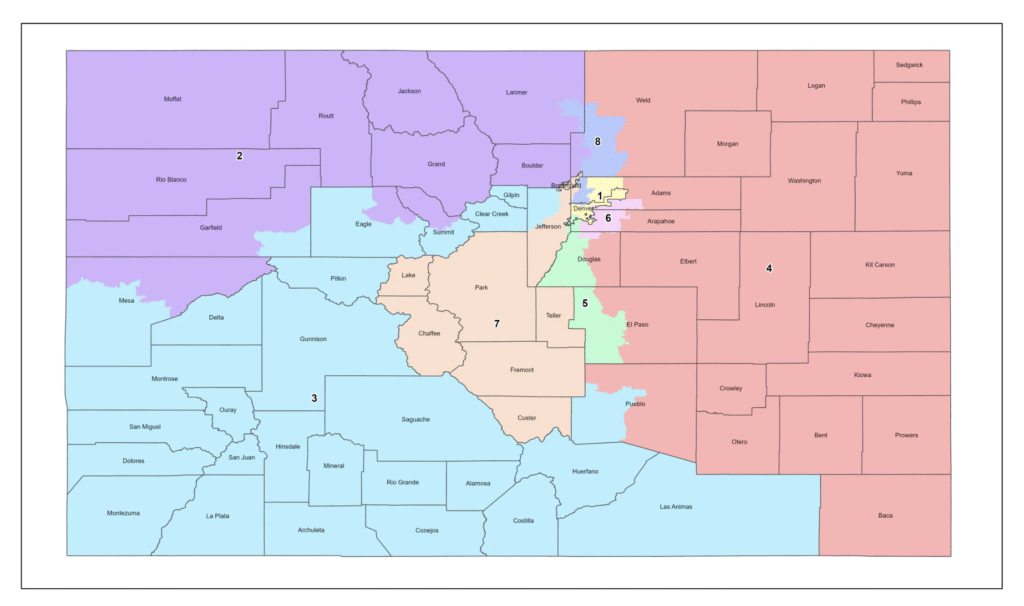
With just two meetings left before an April 15 deadline, the state’s Title Board on Wednesday pushed through a slate of ballot measures — including a revised proposal to privatize Pinnacol Assurance and dueling plans to redraw Colorado’s congressional map...

Senate panel advances bill to tighten Colorado sports betting rules amid youth addiction concerns
Marissa Ventrelli
marissa.ventrelli@coloradopolitics.com
Updated 10 hours ago
A divided Senate Finance Committee on Tuesday narrowly advanced a bill to impose new restrictions on Colorado’s booming sports betting industry, as lawmakers cited rising concerns about youth gambling and addiction while operators warned the changes could drive bettors to...
Democrat Matt Cavanaugh ends campaign in Colorado’s 5th CD, says petition firm came up short
Ernest Luning
ernest.luning@coloradopolitics.com
Updated 9 hours ago
Democratic congressional candidate Matt Cavanaugh said Wednesday that he was ending his bid to challenge Republican U.S. Rep. Jeff Crank in Colorado’s 5th District because the firm his campaign hired to gather petition signatures failed to deliver. Cavanaugh, an Army...

Colorado voters to decide whether to ban gender surgeries for minors
Marissa Ventrelli
marissa.ventrelli@coloradopolitics.com
Updated 7 hours ago
Colorado voters will decide this November whether to prohibit gender surgeries for minors and bar public funding or insurance coverage for procedures that alter children’s biological sex characteristics. The measure qualified for the ballot amid a push by the federal...

Democrats want to bar use of consumer data to set Colorado prices, employee wages
Marissa Ventrelli
marissa.ventrelli@coloradopolitics.com
Updated 10 hours ago
A closely divided House committee advanced a bill aimed at curbing the use of personal data to set individualized prices and wages, reviving a proposal that failed last year and setting up a broader debate over how far the state...

Artificial intelligence working group agrees on framework to replace Colorado law
Marianne Goodland
marianne.goodland@coloradopolitics.com
Updated 1 day ago
A group that has been working on artificial intelligence policy has reached an agreement on a framework that would replace the regulations adopted by Colorado legislators two years ago. The agreement has the backing of Gov. Jared Polis, who reluctantly...
After ‘winter of defeat,’ Colorado hopes for wetter summer
Marianne Goodland
marianne.goodland@coloradopolitics.com
Updated 17 hours ago
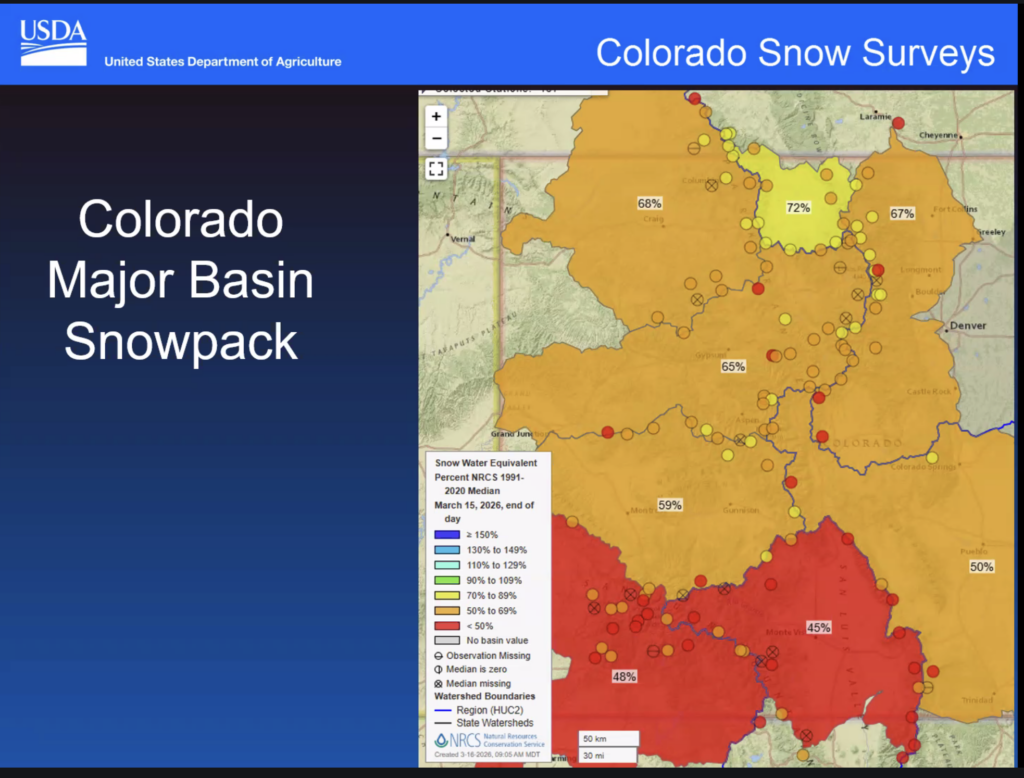
With snowpack melt already peaking in some parts of the state and drought conditions worsening compared to last year, Colorado’s water watchers are hoping for a wetter summer, though they anticipate the situation deteriorating before getting better. Meanwhile, the governor...
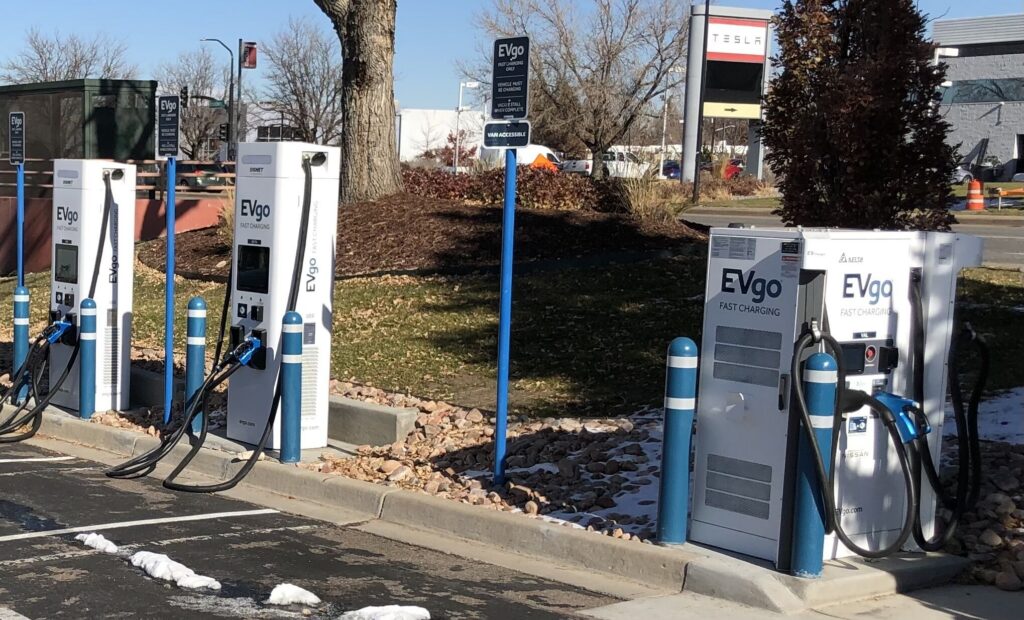
Colorado, Democrat states oppose proposal to require EV chargers be made with 100% domestic components
Scott Weiser
scott.weiser@gazette.com
Updated 1 day ago
Colorado has joined a coalition of about 20 states in opposing a federal proposal that would require electric vehicle chargers funded with federal dollars to be made with 100% domestic components. The Federal Highway Administration is considering raising the domestic...
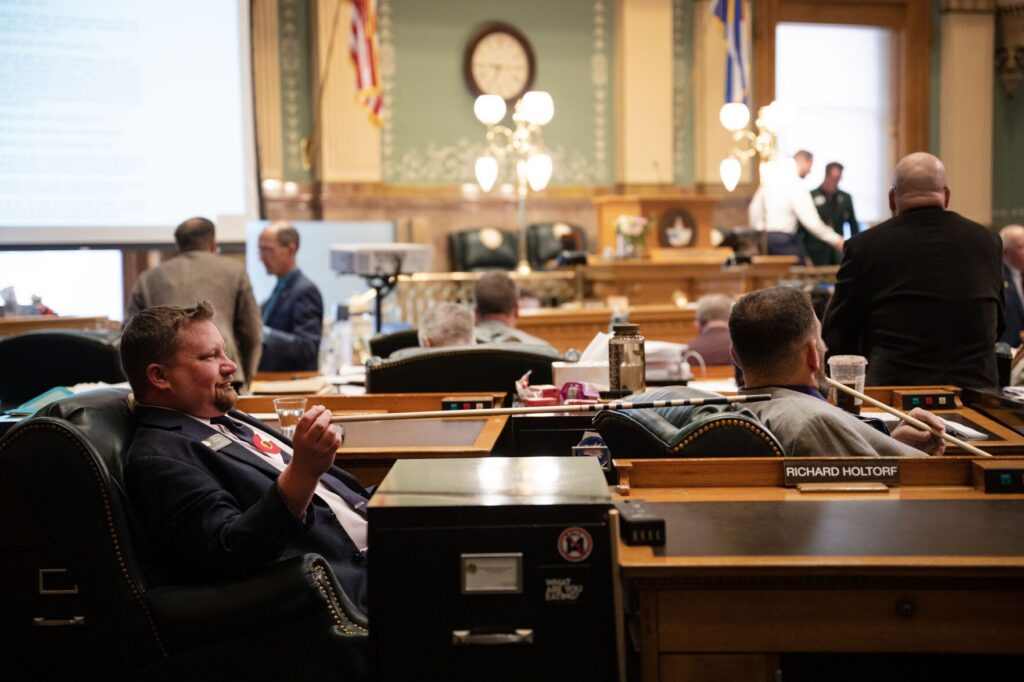
Colorado ethics panel tells legislator to attend sexual harassment training
Marianne Goodland
marianne.goodland@coloradopolitics.com
Updated 1 day ago
Colorado’s House ethics panel admonished a Republican legislator over allegations he used a master key to access areas of the Capitol that he was not permitted to enter and that he had made sexually harassing comments to several female lawmakers....

Overdose deaths from opioids dip in America — but not in Colorado, study says
Jacob Mauk
jacob.mauk@denvergazette.com
Updated 2 days ago
Overdose deaths from opioids rose in Colorado, diverging from the national trend, which has been decreasing, according to a new study from a think tank. In its new report, the Common Sense Institute said synthetic opioid overdose deaths in Colorado...
PREV
PREVIOUS

More people are now leaving Colorado than moving here from other states | Vince Bzdek
By Vince Bzdek It’s finally happened. Buried in all the self-congratulatory reports about Colorado reaching the 6 million mark in population last year was news that should be keeping our political leaders up at night. For the first time in 20 years, more people left Colorado to go to other states than moved here from […]

Colorado lawmakers contemplate avenue for people to sue ICE agents
Colorado legislators are considering a proposal to allow a “cause of action” by individuals injured in an immigration enforcement action. Lawmakers on the Senate Judiciary Committee will hear the proposal this afternoon. The bill would also allow for “legal or equitable relief or any other appropriate relief” if an agent “violates” the U.S. Constitution while […]