

Colorado state legislator plans introduction of victim compensation bill | A LOOK BACK

Forty-Five Years Ago This Week: “People to whom I’ve talked to say, ‘Yes’,” said Sen. Barbara Holme, D-Denver, “victims of crime should be compensated.”
Holme said she would introduce a victim compensation bill in the upcoming legislative session, but the topic was difficult.
“The subject is more tricky than you might think at first,” Holme said. “Many criminals are never caught, they cannot be made to pay compensation. Those victims only get compensation if the government, i.e. taxpayers, pay.”
Holme said that if the state tried to compensate for only the really heinous crimes like murder or rape, the money needed would be “enormous.”
“With the 7% limit on increases in state spending, a new, costly program, no matter how worthy, has little chance of getting approved,” Holme said. “So I am just trying to start a much more limited program … just requiring parolees to pay restitution for actual damages.”
According to Holme, some parolees were already paying restitution, but her bill would expand the program. Holme was still in the midst of determining an appropriate level of restitution payments, arguing that making them so burdensome that parolees would return to crime would be counterproductive.
“Current law provided that someone may be on parole for only one year and that if they break the conditions of parole, they may be sent back to the Cañon City [detention facility] for only three months,” Holme said. “I don’t think three months is enough of an incentive. My bill provides that someone failing to make restitution payments can be sent back to prison for three months to one year.”
Twenty-Five Years Ago: Rep. Gayle Berry’s, R-Grand Junction, ‘Innocent Spouses’ bill, which would grant state tax relief to individuals who are unaware that their spouse did not report certain income in a joint tax return, passed the state House unanimously.
At the time, federal law did provide for “innocent spouse relief” when a husband or wife was unaware of their spouse’s unreported income and had no reason to be aware of the information. However, Colorado law in 2001 still specified that both parties could be held liable for any unreported income. According to Berry, her bill would bring state law into compliance with federal law.
“Although figures are not available to know exactly how many people will be affected by this legislation, we know of divorce cases and other instances where this has become an issue,” Berry said. “I believe it is unfair to penalize a wife or husband for an inaccurate filing when they do not know about income their spouse has failed to report and do not benefit from it.”
In other news, Gov. Bill Owens presented a special license plate to Congressional Medal of Honor recipient and Adams County resident George Taro “Joe” Sakato.
A native of California, Sakato served in the 442nd Regional Combat Team during World War II. On Oct. 29, 1944, on Hill 617, near Biffontaine, France, after his platoon was decimated by enemy fire, Private Sakato made a one-man rush that encouraged his platoon to charge and destroy the enemy’s strongpoint.
According to the Medal of Honor Museum, “By continuously ignoring enemy fire, and by his gallant courage and fighting spirit, he turned impending defeat into victory and helped his platoon complete its mission.”
Sakato was originally awarded the Distinguished Service Cross, but after a 1990s review of Americans of Asian descent who received the DSC during WWII, Sakato’s award was upgraded to a Medal of Honor. President Bill Clinton honored Sakato at a White House ceremony on June 21, 2000.
George Sakato died in December 2015 at the age of 94.
Rachael Wright is the author of several novels, including The Twins of Strathnaver, with degrees in Political Science and History from Colorado Mesa University, and is a contributing columnist to Colorado Politics, the Colorado Springs Gazette, and the Denver Gazette.

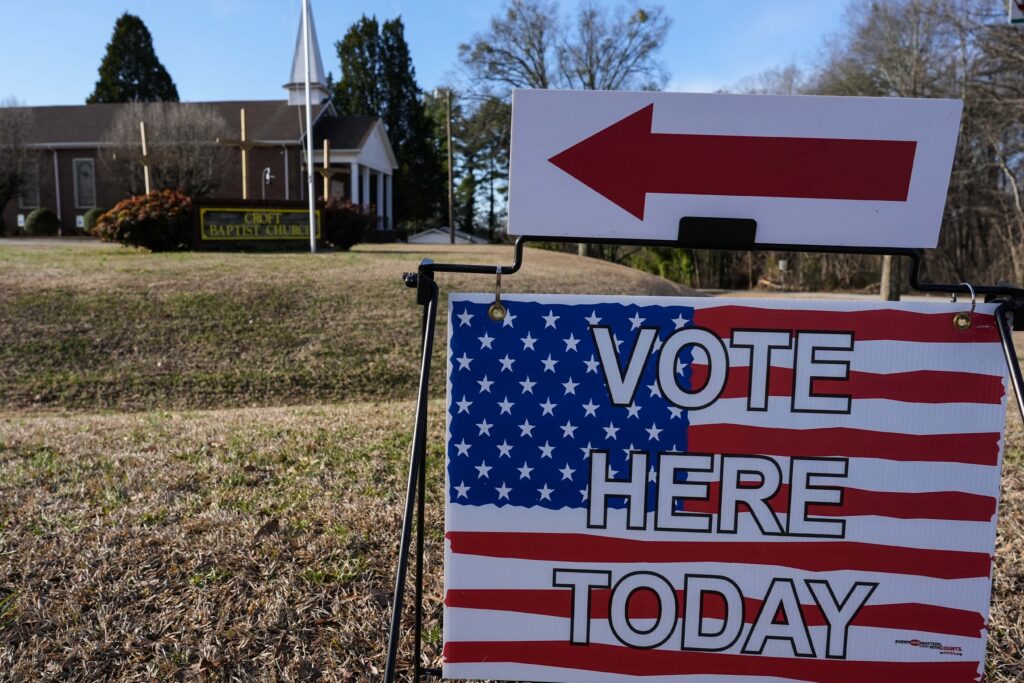
It’s time to let unaffiliated voters caucus | Vince Bzdek
Vince Bzdek
vince.bzdek@gazette.com
Updated 5 hours ago
There’s no getting around it: Colorado’s 3,000 county caucuses, which just wrapped up recently, left half the electorate out in the cold. Since unaffiliated voters now make up 51% of all Colorado voters, a majority of Colorado electors are barred...
Governor warns energy development both a boon and a risk to Colorado | A LOOK BACK
Rachael Wright, Special to Colorado Politics
rachael.wright@coloradopolitics.com
Updated 3 days ago
Forty-Five Years Ago This Week: “The real opportunity and the dangers before us are both real,” said Gov. Dick Lamm in his January state of the state address before the Colorado General Assembly. Lamm argued that energy development would continue...
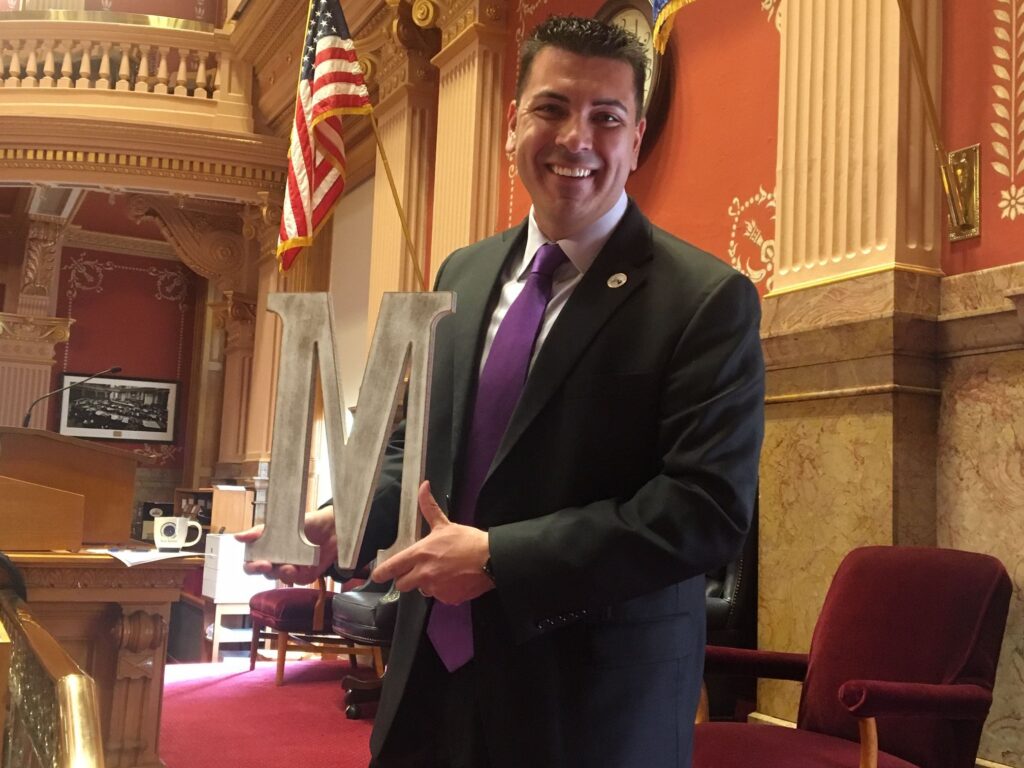
A Mile High, again: Capitol M | Week of March 21, 2026
Marianne Goodland
marianne.goodland@coloradopolitics.com
Updated 3 days ago
The lighter side of the Capitol, usually…. Local Journalism Day, except they forgot their very own local journalists. The state Senate on Thursday, March 19, passed a resolution recognizing Local Journalism Day. Everyone voted for it, which is good, because...

Colorado Politics Calendar Mar. 23-29
Rachael Wright, Special to Colorado Politics
rachael.wright@coloradopolitics.com
Updated 2 days ago
CoPo’s weekly political calendar will help you find political and public-policy events throughout Colorado. It includes candidate and issue campaign events, public policy meetings, court hearings, state and local party conventions, assemblies, debates, rallies, parades, speaking engagements, traveling dignitary appearances,...

The insular bubble of caucuses and assemblies | SONDERMANN
Eric Sondermann
eric-sondermann@coloradopolitics.com
Updated 2 days ago
Nearly 30 years ago, then-Federal Reserve Chairman Alan Greenspan coined the term “irrational exuberance” to describe the overheated stock market. That descriptive phrase could also apply to much of the political realm. The hype in politics often grossly exceeds the...

Lauren Boebert’s hard ‘no’ on Pentagon Iran funding request puts Mike Johnson in tough spot
Emily Hallas, Washington Examiner
emily.hallas.washington.examiner@gazetteedit.wpenginepowered.com
Updated 1 day ago
Colorado U.S. Rep. Lauren Boebert announced on Thursday that she will not support further funding for the United States’s war in Iran, marking an uphill battle for the Trump administration’s effort to secure additional financing from Congress. “I’ve already told...
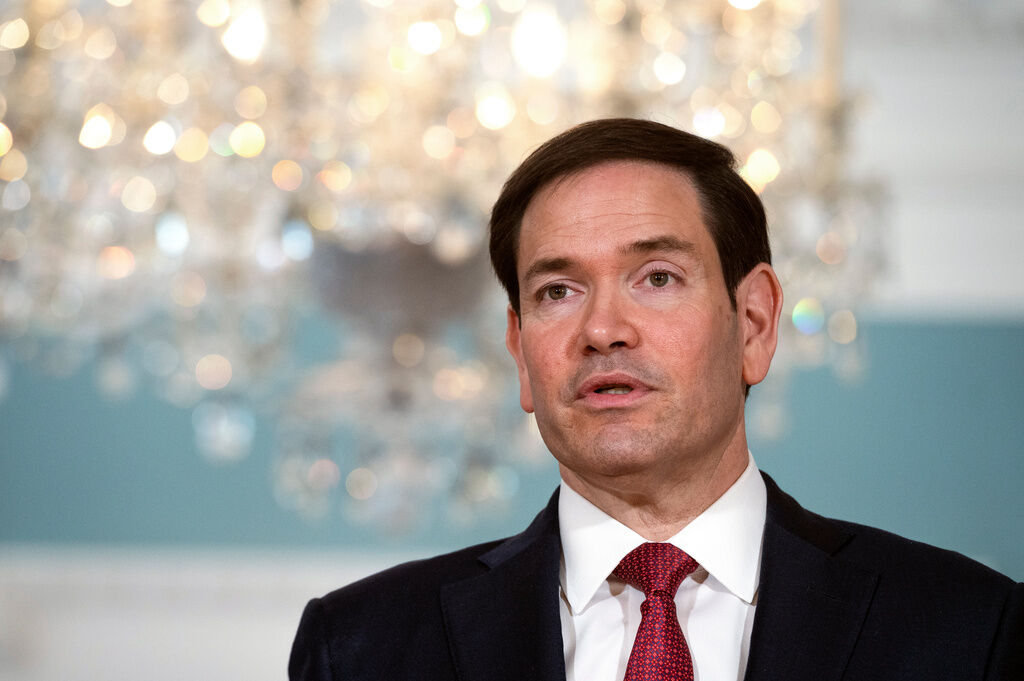
Rubio gains ground in 2028 jockeying as Iran war elevates his profile
Samantha-Jo Roth, Washington Examiner
samantha-jo.roth.washington.examiner@gazetteedit.wpenginepowered.com
Updated 1 day ago
Secretary of State Marco Rubio’s high-profile role in the Trump administration’s response to the Iran war is boosting his standing in the early jockeying for the 2028 Republican presidential nomination — and positioning him as a possible rival to Vice...

Federal judge dismisses claims against medical contractor for Eagle County jail suicide
Michael Karlik
michael.karlik@coloradopolitics.com
Updated 24 hours ago
A federal judge dismissed the claims against a medical contractor for the Eagle County jail and its employees earlier this month, concluding there were insufficient allegations that they violated the constitutional rights of a man who died by suicide in...

Colorado Senate committee advances bill increasing overtime threshold for farmworkers
Marianne Goodland
marianne.goodland@coloradopolitics.com
Updated 24 hours ago
The struggle to balance farmworker protections with the survival of Colorado’s family farms took center stage Thursday as senators debated two competing overtime bills. The Senate Business, Labor and Technology Committee held a rare double-bill hearing that led to a...

Colorado bill to fund mental health by raising alcohol taxes defeated in House committee
Marissa Ventrelli
marissa.ventrelli@coloradopolitics.com
Updated 1 hour ago
Colorado legislators on Wednesday narrowly rejected a second measure that would raised taxes on alcohol products in order to fund mental health care treatment in the state. Proponents said the new revenue is necessary to help pay for mental health...
PREV
PREVIOUS
The governor and the inmate: Trying to make sense of Polis and Peters | Eric Sondermann
Amidst the excess of news and outrage competing for our attention, much time and oxygen have been expended in trying to make sense of Jared Polis’s angst-ridden consideration of a sentence reduction for Tina Peters, former county clerk and now an ungrateful guest of the Colorado prison system. For any just emerging from some deep […]

More people are now leaving Colorado than moving here from other states | Vince Bzdek
By Vince Bzdek It’s finally happened. Buried in all the self-congratulatory reports about Colorado reaching the 6 million mark in population last year was news that should be keeping our political leaders up at night. For the first time in 20 years, more people left Colorado to go to other states than moved here from […]