

Will Denver see stepped-up immigration enforcement next? | ANALYSIS
Two years ago — as Denver grappled with a sharp influx of immigrants, many who arrived in the city after illegally crossing America’s borders — Mayor Mike Johnston joined the mayors of Chicago and New York City in criticizing Texas Gov. Greg Abbott’s busing campaign and called for a national strategy to address the crisis.
Abbott’s initiative sent thousands of immigrants from Texas to “sanctuary cities” like Denver, though the surge began before Texas started directing buses to Colorado.
Broadly speaking, a sanctuary city refers to local policies that limit or prohibit cooperation with federal immigration authorities. Both the Colorado government and the city of Denver have adopted laws barring such cooperation, though political leaders insist neither state nor municipality is a “sanctuary” jurisdiction.
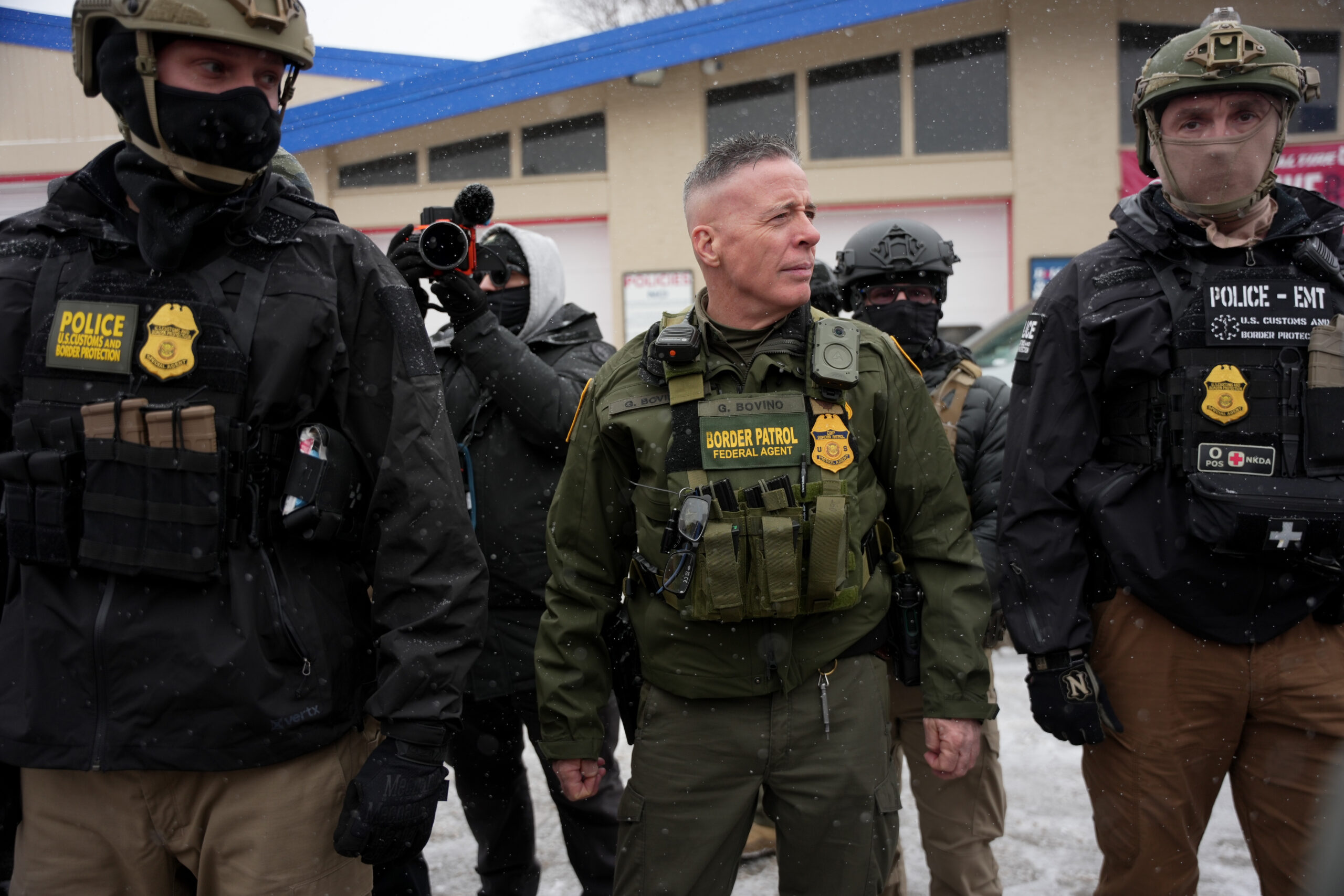
Under the Trump administration, the federal government has deployed hundreds of Border Patrol agents for stepped-up interior enforcement in several of those same cities — including Chicago and New York — but not in Denver.
So far, the enforcement activity in Colorado’s largest city by population has been limited.
With the increased enforcement in several Democratic-led cities, is Denver next? If so, in what shape? More importantly, how, exactly, are the state and local governments preparing for that situation?
Already, some Democrats have begun to position the state and jurisdictions they dominate in a more confrontational stance. The attorney general, for example, wants residents to report alleged misconduct by federal agents via an online tool. The city of Denver is seeking to prohibit the wearing of face masks in response to federal immigration operations.
It’s unclear, exactly, how such an ordinance would be enforced. Some have already raised the complications arising from local police confronting federal agents while conducting operations here.
The fatal shooting of Alex Pretti by federal agents in Minneapolis over the weekend — the second in 17 days — has added some urgency to questions about whether the Trump administration is eyeing Denver next.
The city, in fact, has been on Trump’s radar since he took office last year. Denver, and by extension, Colorado, have clashed with the president on a number of fronts, notably in immigration policy, funding and Space Command.
Add to that the growing criticism from Democrats over immigration enforcement strategies and, specifically, of the Border Patrol’s expanding role in interior operations, even as others have long welcomed such an expansion, arguing it’s the most practical way if the goal is deport a million people annually.
And here is yet another layer to the tension: The Trump administration threatened to deny funding to any states that are home to local governments resisting his administration’s immigration policies starting on Feb. 1.
And that’s not to mention that it’s a major election year in Colorado, in which some candidates have already adopted messaging surrounding the enforcement actions in Minnesota.
‘ICE’s powers are very limited’
Publicly, officials are cautious.
“Though we remain prepared for all possibilities, we have heard nothing to suggest there will be a surge in ICE (U.S. Immigration and Customs Enforcement) operations in Denver,” Jon Ewing, a Johnston spokesperson, said in an email to The Denver Gazette.
Gov. Jared Polis declined to comment on the likelihood of Denver seeing large-scale immigration operations similar to those in other cities.
“What Americans have seen in other states like Minnesota is disturbing,” Eric Maruyama, a Polis spokesperson said in an email. “Governor Polis has been outspoken about the federal government’s complete lack of transparency regarding ICE operations in the state, and continues to demand transparency from ICE.”
Attorney General Phil Weiser — who has repeatedly challenged the Trump administration’s policies in court — declined to comment on the position his office would take if expanded operations were to take place in Colorado. (The lawsuits have so far cost Colorado $600,000.)
“The attorney general’s office will not make public any legal strategy or plans to respond to possible ICE enforcement actions in Colorado,” Lawrence Pacheco, a Weiser spokesperson, said in an email.
But Weiser, who is running for governor, has already signaled a confrontational stance vis-a-vis the Trump administration by announcing last week the launch of an online “tool” for Coloradans to report misconduct by federal agents.
The attorney general’s office has framed the reporting tool as a mechanism for documenting and tracking referrals to other agencies, rather than as a vehicle for prosecuting federal agents.
Federal immigration authority varies by agency, geography and circumstance, legal experts said — distinctions that can be lost amid the heightened rhetoric around enforcement surges.
ICE agents operate nationwide and are responsible for civil immigration enforcement, including arrests and removals.
While ICE’s powers are broad, it is not unlimited.
“Broadly, I think that ICE’s powers are very limited,” said Hans Meyer, an immigration attorney in Denver. “They’re a civil immigration enforcer.”
How those limits are applied in practice has been a point of contention.
Take the Feb. 5 raids last year in Denver.

A Denver Gazette investigation found that ICE agents relied on administrative warrants, which do not carry for the same force as a judicial warrant and does not permit immigration authorities to enter private residences without authorization.
Civil rights advocates have warned the distinction between administrative and judicial warrants is poorly understood by the public, raising the risk of unlawful entries or detentions during large-scale enforcement efforts.
Others have argued that the administrative warrants are, in fact, sufficient and rooted in a federal code that allows an immigration officer to arrest or detain a person, pending any decision on whether the individual is subject to removal.
‘Immigration regulations do not prohibit relying on administrative warrants’
A federal memo, obtained by the Associated Press, asserted that administrative warrants — which are issued internally by immigration officials, not judges — grant sweeping authority to forcibly enter private residences to arrest someone with a final removal order.
While it’s unclear whether the May 12 memo has been used in Colorado operations, a federal judge in November granted a preliminary injunction against warrantless arrests by federal immigration agents in the state.
Signed by the acting ICE Director Todd Lyons, the federal memo says, in part, “Although the U.S. Department of Homeland Security (DHS) has not historically relied on administrative warrants alone to arrest aliens subject to final orders of removal in their place of residence, the DHS Office of the General Counsel has recently determined that the U.S. Constitution, the Immigration and Nationality Act, and the immigration regulations do not prohibit relying on administrative warrants for this purpose.”
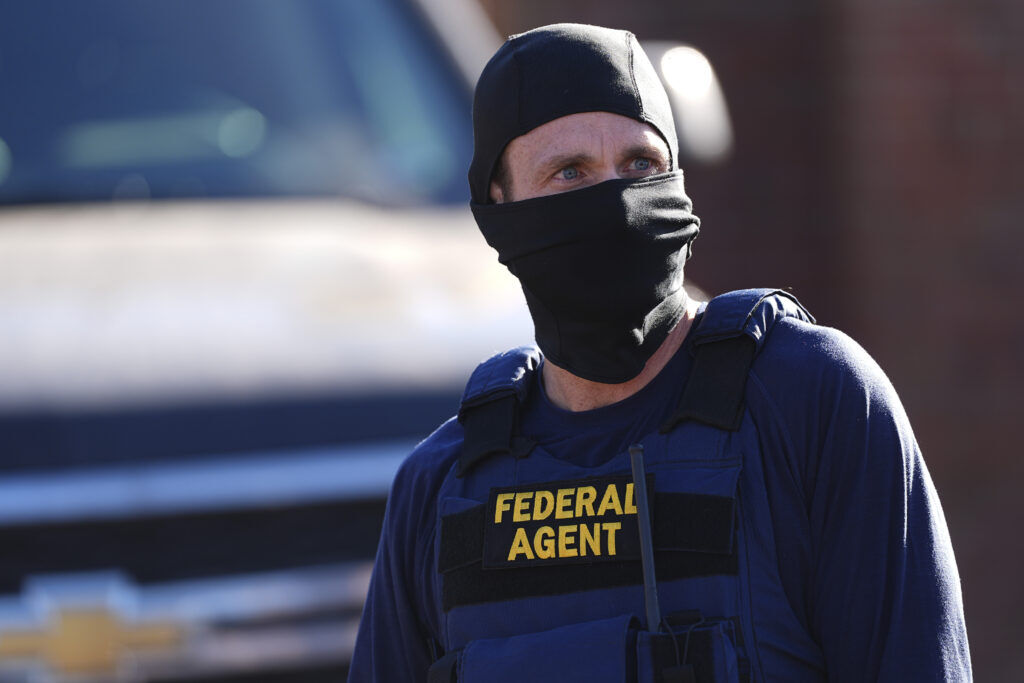
Border Patrol agents are generally limited to operations within 100 miles of the U.S. border. (Denver is more than 600 miles from the southern border with Mexico.)
Under Border Patrol Commander Gregory Bovino, these agents have played a more visible role in interior enforcement far from the southern border including Chicago, New Orleans and Minneapolis.
The new approach has drawn criticism from lawmakers and civil rights groups over inadequate training, use of excessive force and a lack of de-escalation skills in the rush to hire nearly 12,000 new agents.
These concerns have only intensified, following the shooting deaths of U.S. citizens Renée Good on Jan. 7 and Alex Pretti on Jan. 24 at the hands of federal agents in Minnesota.
Colorado officials have pointed to those incidents in calling for greater transparency around federal enforcement actions.
At the state Capitol, Democrats introduced a bill to allow Coloradans injured by immigration enforcement actions to sue federal agents or anyone participating in the operation — the proposal does not specifically identify ICE officers — who “violate the United States constitution.”
“We are angry, heartsick and scared,” House Speaker Julie McCluskie, D-Dillon has said. “Our constituents are asking us, what happens when Colorado is next?”
While mostly refraining from specifically commenting on the death of two U.S. citizens, Republicans have remained steadfast in their support of the expanded operations. Many have argued that the Trump administration is, in fact, fulfilling a campaign promise to crack down on illegal immigration and stem the flow at the border, which has seen a significant drop in illegal crossings.
On Jan. 8, a day after Good was killed in Minneapolis by a federal immigration agent, U.S. Rep. Lauren Boebert tweeted on X, “I stand with @ICEgov.”
And U.S. Gabe Evans — when highlighting the precipitous, 48% drop in homicides in Denver last year — also praised federal immigration enforcement.
“Under Republican leadership, federal law enforcement secured the border & is crushing cartels like TdA,” Evans tweeted on Jan. 8. “Violent criminals are being taken off our streets despite sanctuary jurisdictions like Denver who continue to handcuff local cops.”
In talking about the death of Alex Pretti, state Sen. Larry Liston, R-Colorado Springs, asked during a recent debate, “Who brings a loaded 9mm pistol to a demonstration?”
‘Operation Aurora’
DHS and ICE officials declined to respond to inquiries.
DHS officials, however, have defended agents, saying they are “the world’s most skilled and experienced law enforcement who undergo rigorous training” before being deployed.
“Our officers are the best of the best,” Assistant DHS Sec. Tricia McLaughlin, said in a recent press release.
McLaughlin added that every day agents “put their lives on the line to arrest some of the worst criminals on the planet.”
“Despite these attacks and the massive risks they take on, our officers and agents conduct themselves with the utmost professionalism and exhibit an enormous amount of restraint,” McLaughlin has said.
Colorado has been on Trump’s crosshairs, even before he won re-election.
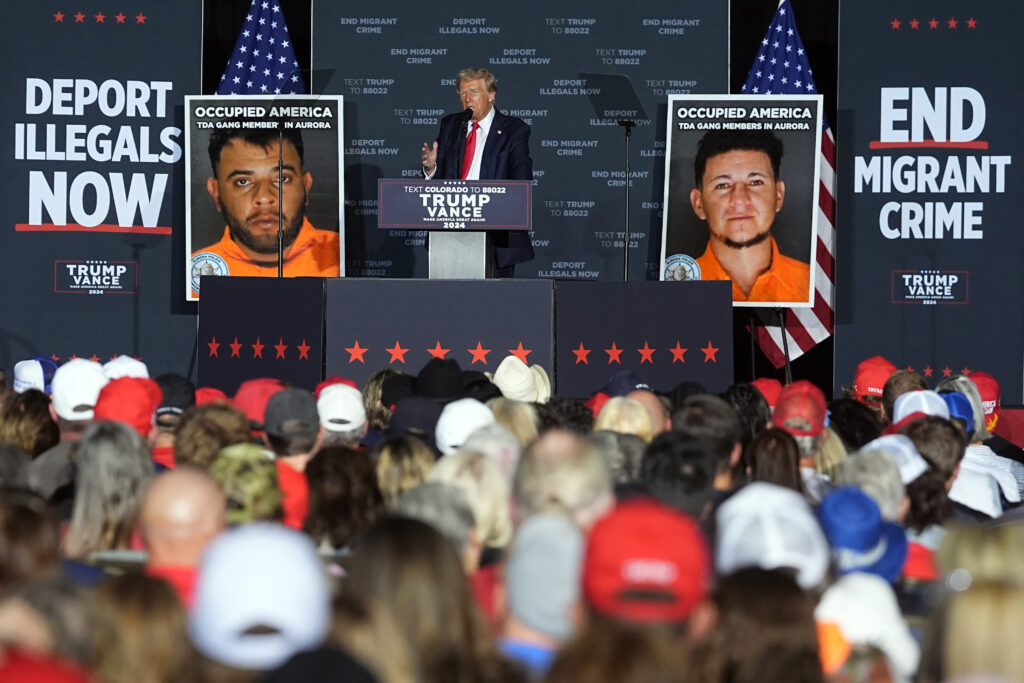
On a campaign stop in Aurora in 2024, then-candidate Donald Trump promised a mass deportation effort, if elected to a second term, unlike the United States has ever seen — starting in Colorado.
Trump amplified cited reports that the Venezuelan prison gang, Tren de Aragua (TdA), had taken over three, rundown apartment complexes in Aurora, vowing to create a task force named “Operation Aurora” to expedite the removal of “savage gangs” living in the country illegally.
“We are a country under tremendous distress,” Trump had said. “We will send elite squads from ICE to deport every single gang member.”
TdA is a violent Venezuelan prison gang that expanded its footprint in the U.S., with tentacles in Colorado’s urban centers, according to Homeland Security.
Under a strategy devised by Aurora Police Chief Todd Chamberlain, the city boarded up three CBZ Management apartment complexes that came under the control of the gang.
Former ICE agents with whom The Denver Gazette has spoken said — given the political rhetoric around Colorado — that they would not be surprised if the Trump administration turned its focus to Denver.
It remains to be seen if the White House’s strategy will shift with Bovino expected to leave Minneapolis and DHS beginning to reduce its footprint there — after deploying more than 3,000 federal agents to the Twin Cities.
“I think Minnesota has become much more combustible than they anticipated,” said one former ICE agent, who agreed to speak to The Denver Gazette on background because of government contracts with DHS.
According to national reporting, Bovino is expected to leave Minneapolis this week.
“Once Minneapolis comes to a conclusion, I expect Denver to be in their cross hairs,” the former ICE agent said.

Denver airport gears up for spring break as TSA employees miss first paycheck
Deborah Grigsby
deborah.smith@denvergazette.com
Updated 3 days ago
As a Washington, D.C. showdown over immigration enforcement halts Department of Homeland Security funding, thousands of federal airport security screeners will miss their first paychecks this week just as the annual spring break begins in the U.S. and airline travel...
Federal judge: Government violated order shielding man from deportation in ‘one-off mistake’
Michael Karlik
michael.karlik@coloradopolitics.com
Updated 5 days ago
A federal judge acknowledged on Thursday that the government violated his order by deporting a man in immigration detention during his pending court case, but it “serves nobody’s interests” to require the government to return him. On Feb. 18, Tesfami...

Federal judge hears ICE agents’ confusion about law, injunction on warrantless arrests
Michael Karlik
michael.karlik@coloradopolitics.com
Updated 1 week ago
A federal judge heard testimony on Tuesday from U.S. Customs and Immigration Enforcement agents in Colorado, who had trouble describing the requirements of his recent injunction and the training they received on making warrantless arrests pursuant to the law. On...
Can deliberation save democracy? | Vince Bzdek
Vince Bzdek
vince.bzdek@gazette.com
Updated 1 week ago
In September 2019, 523 Americans traveled to Dallas for an experiment called “America in One Room.” The gathering was designed to test a theory: Could representative citizens deliberate productively even in an era of intense polarization? The event focused on...
Denver police chief on mask ban, mayor’s orders: ‘What enforcement looks like, I’m not exactly sure’
Deborah Grigsby
deborah.smith@denvergazette.com
Updated 2 weeks ago
As Denver takes steps to restrict federal agents conducting immigration enforcement in the Mile High City, its police chief said he is unclear as to how two new measures would be enforced. “I don’t know, to be honest with you....
Judge nixes latest policy requiring 7 days’ notice for Congress members to visit ICE facilities
Michael Kunzelman
michael.kunzelman@associatedpress.com
Updated 2 weeks ago
WASHINGTON • A federal judge agreed on Monday to temporarily suspend the latest version of a Trump administration policy that requires members of Congress to provide a week’s notice before they can visit immigration detention facilities. U.S. District Judge Jia...
Judge nixes latest policy requiring 7 days’ notice for Congress members to visit ICE facilities
Michael Kunzelman
michael.kunzelman@associatedpress.com
Updated 2 weeks ago
WASHINGTON (AP) — A federal judge agreed on Monday to temporarily suspend the latest version of a Trump administration policy that requires members of Congress to provide a week’s notice before they can visit immigration detention facilities. U.S. District Judge...
Denver adopts face mask ban for law enforcement
Deborah Grigsby
deborah.smith@denvergazette.com
Updated 2 weeks ago
Members of the Denver City Council unanimously approved an ordinance Monday that prohibits law enforcement officers, including federal immigration agents, from wearing a mask or face covering while interrogating, detaining, or arresting an individual within Denver, including in city-owned buildings....

Competing overtime bills for agriculture workers split Colorado Democrats
Marianne Goodland
marianne.goodland@coloradopolitics.com
Updated 2 weeks ago
Competing bills setting the overtime threshold for farmworkers have split legislators at the Colorado state Capitol, with one group saying a law passed in 2021 has harmed, rather than helped, farming operations and workers alike, while the other side insists...
Garfield County sheriff illegally collaborated with ICE, cease and desist letter claims
Michael Braithwaite
michael.braithwaite@gazette.com
Updated 3 weeks ago
A cease and desist letter filed Wednesday alleged that the Garfield County sheriff intentionally violated state law by collaborating with the U.S. Immigration and Customs Enforcement (ICE). The letter, filed by the law firm Towards Justice, claimed that Garfield County...
PREV
PREVIOUS

$200M in federal funds to be deployed in Denver area for heat pumps aimed at reducing emissions
The Denver Regional Council of Governments (DRCOG) has officially launched a $200 million program to help reduce carbon emissions with heat pumps. The regional organization announced its new initiative, “Power Ahead Colorado,” which also includes partnerships with the Colorado Energy Office, Xcel Energy, Rewiring America and others to help achieve DRCOG’s goal of reducing greenhouse […]

Federal judge warns DOJ against raising repeatedly rejected arguments in immigration detention cases
A federal judge in Colorado warned the U.S. Department of Justice on Monday against raising arguments that she and other judges have repeatedly rejected in cases challenging the lawfulness of immigration detentions. In a Jan. 26 order finding the government is wrongfully detaining a Cuban national without a bond hearing, U.S. District Court Judge Charlotte […]