

Statewide vote set on repealing Colorado limits on police cooperation with federal immigration officials
A ballot initiative backed by the conservative group Advance Colorado has qualified for the November general election, setting up a statewide vote on whether to allow state and local law enforcement agencies to cooperate with federal authorities.
Ballot measure 95 would change the state constitution to allow law enforcement to cooperate with federal immigration officials.
That practice has been prohibited under state law since 2019, when lawmakers passed House Bill 19-1124, which bars Colorado law enforcement from arresting someone solely on the basis of a civil immigration detainer request.
Since then, state law has also been changed to bar law enforcement from providing personally identifying information about someone’s immigration status to immigration authorities.
In 2025, Senate Bill 25-276 extended those prohibitions to political subdivisions, including local governments, school districts, special districts, the judicial and legislative branches and higher education institutions.
A violation could earn a $50,000 civil penalty, according to the law signed by Gov. Jared Polis on May 23.
According to a December statement from Advance Colorado, Colorado law enforcement would be required to report “an offender to the Department of Homeland Security if they are charged with a violent crime or repeat felony and are in the country illegally.”
That notification must take place within 72 hours of the person being charged with a crime. It would also apply to someone whose immigration status is unknown or who has been convicted of a prior felony.
It does not require law enforcement to report the person who is charged with a violent crime to be convicted of that crime.
The measure says law enforcement must make a reasonable effort to determine someone’s immigration status.
Ballot measures must collect 124,238 valid signatures; Advance Colorado said in December that it turned in nearly 200,000 total signatures.
The Secretary of State’sm Office said on Jan. 23 that the ballot measure came in with 188,861 signatures; the Elections Division determined that 142,299 were valid.
Measures that change the state constitution must collect 2% of the total registered electors in each of the 35 state Senate districts. Once on the ballot, the measure must be approved by 55% of the votes cast.
Petition counts showed that petitions in every state Senate district had comfortable margins above the 2%. That included Denver districts home to safe Democratic seats, such as those held by Senate Majority Leader Robert Rodriguez, Senate President James Coleman and Sen. Julie Gonzales, who co-sponsored SB 25-276.
Just how much Advance Colorado spent to collect signatures in all 35 Senate districts is unknown. No petition circulator listed with the Secretary of State includes Initiative 95 in their current work, and Advance Colorado has not filed an issue committee to report any expenditures for petitions.
No issue committees are registered with the secretary of state’s TRACER system to oppose the measure.
For a statewide ballot measure that changes the constitution, Rick Ridder of RBI Strategies estimated the cost to collect signatures is likely around $2.5 million.
Advance Colorado is a “dark money” group, meaning it does not disclose its donors. ProPublica reported the conservative nonprofit raised $5.72 million in 2024, including a $2.65 million donation from the Colorado Opportunity Foundation.
According to CauseIQ, Michael Fields, the president of Advance Colorado, also runs the Colorado Opportunity Foundation.
Initiative 95 is the second ballot measure Advance Colorado has pushed to the 2026 ballot. Voters will also decide on Initiative 85, which asks voters to increase the penalties for the possession of fentanyl.

Colorado’s unemployment rate fell again in December
Bernadette Berdychowski
bernadette.berdychowski@denvergazette.com
Updated 45 minutes ago
Colorado’s unemployment rate fell to 3.8% in December, according to new data released Tuesday. The rate dropped one-tenth of a percentage point, following a monthslong trend of declining unemployment in the state, according to the Colorado Department of Labor and...
Colorado lawmakers reintroduce union bill, revive other stalled legislation
Marissa Ventrelli
marissa.ventrelli@coloradopolitics.com
Updated 4 hours ago
It can take years for a policy to successfully pass through the Colorado legislature, which is why it’s not uncommon to see the same bill (or a version of it) brought back from the dead several sessions in a row...

Greenland is now Colorado’s problem. And that’s a good thing. | Vince Bzdek
Vince Bzdek
vince.bzdek@gazette.com
Updated 6 hours ago
The conclusion to the dizzying odyssey over Greenland this week reminded me a little of the ending of the “Wizard of Oz.” If you recall, Dorothy, the Scarecrow, the Lion and the Tin Man finish a great and frightful quest...

Colorado snowpack still at all-time low after weekend snow
Spencer McKee
spencer-mckee@coloradopolitics.com
Updated 7 hours ago
The big snow of the last few days has come and gone, and Colorado is set to move forward into the end of January while it continues to set new all-time low records in terms of snowpack. Per the National...
Border Patrol shooting in Minneapolis sparks tense debate on Colorado Senate floor
Marianne Goodland
marianne.goodland@coloradopolitics.com
Updated 21 hours ago
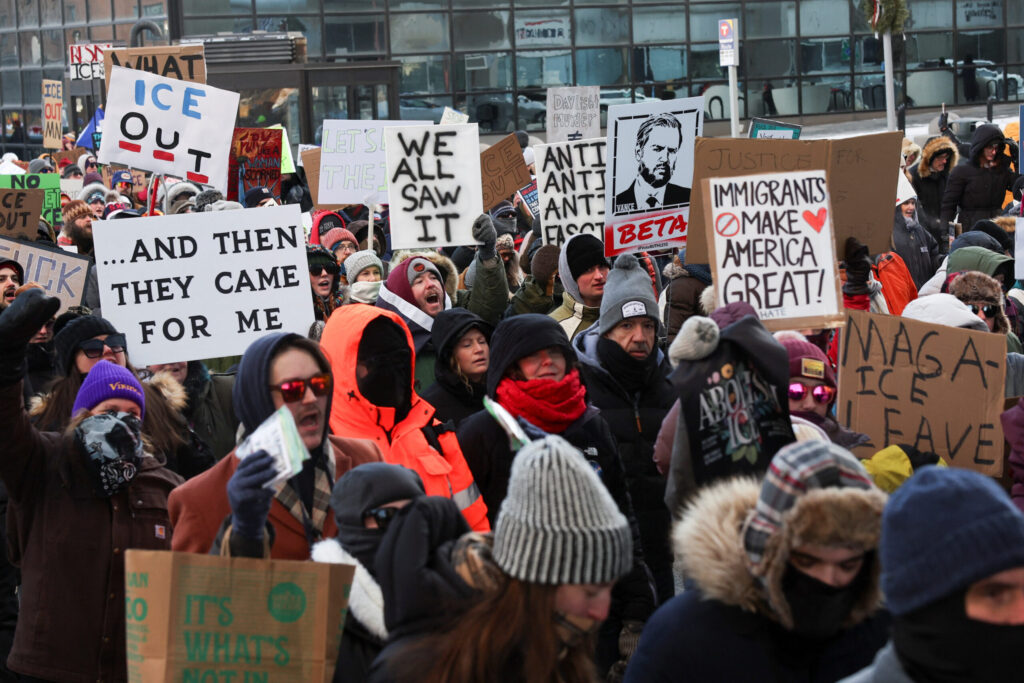
The death of Alex Pretti in Minneapolis in the hands of Border Patrol agents over the weekend prompted a debate among Colorado senators on Monday, with Democrats saying he and others were just exercising their rights, while Republicans questioned bringing...

Colorado Democrats react to Alex Pretti’s death in Minnesota
Wire Services
wire-services@coloradopolitics.com
Updated 1 day ago
Colorado’s Democrats called for an “impartial” investigation into the death of a man shot by a federal agent during an immigration operation on Saturday. Meanwhile, the chief of the Border Patrol defended the shooting, saying Alex Pretti inserted himself in...
Palmer Lake terminates town attorney
Doug Fitzgerald
doug.fitzgerald@gazette.com
Updated 1 day ago
The Town of Palmer Lake has chosen to put itself in legal limbo. Near the end of a seven-hour-plus meeting Thursday evening and into Friday morning, the Palmer Lake Board of Trustees voted to terminate Town Attorney Scott Krob. Krob...

National Western Junior Livestock Auction sets record
Marianne Goodland
marianne.goodland@coloradopolitics.com
Updated 3 days ago
The 120th National Western Stock Show, which closes Sunday, saw a standing-room only crowd in the CoBank auction arena at the new Sue Anschutz-Rodgers Livestock Center. Bidders set a record Friday for the top eight livestock – steers, lambs, goats...

Capitol M: Return to Gold Dome High, 2026 edition, and a salute to old IU
Marianne Goodland
marianne.goodland@coloradopolitics.com
Updated 5 days ago
Welcome back, campers! The 2026 legislative session is upon the good citizens of Colorado, and for a few, the first Monday of the session, Jan. 19, was pretty special. There are at least four folks in the Capitol who are...
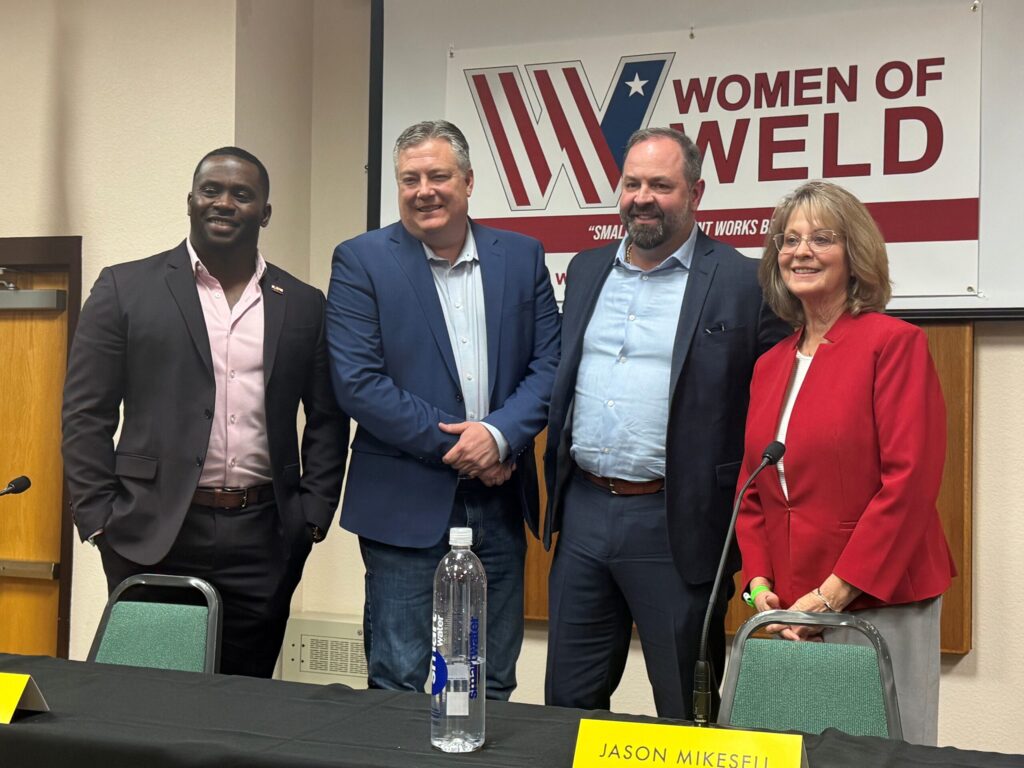
Republican candidates debate how to win the governor’s seat in Colorado — a position the GOP last secured in 2002
Thelma Grimes
thelma.grimes@coloradopolitics.com
Updated 4 days ago
Colorado has not elected a Republican governor since 2002. On Thursday night, four candidates offered competing visions for how the party can reverse its 20-plus years of failing to secure the seat. The discussion hosted by the Women of Weld...
PREV
PREVIOUS

Colorado Supreme Court to address child's CCTV testimony
The Colorado Supreme Court announced on Monday that it will review the impact of a victim’s closed-circuit testimony on the prosecution of a juvenile defendant. At least three of the court’s seven members must agree to hear an appeal. There is currently one vacancy, which will be filled next month. The justices also signaled they […]
Colorado’s unemployment rate fell again in December
Colorado’s unemployment rate fell to 3.8% in December, according to new data released Tuesday. The rate dropped one-tenth of a percentage point, following a monthslong trend of declining unemployment in the state, according to the Colorado Department of Labor and Employment’s report. The national average also fell by the same amount to 4.4%. Colorado’s unemployment […]