

Report finds Air Force Academy should improve due process for those facing discipline
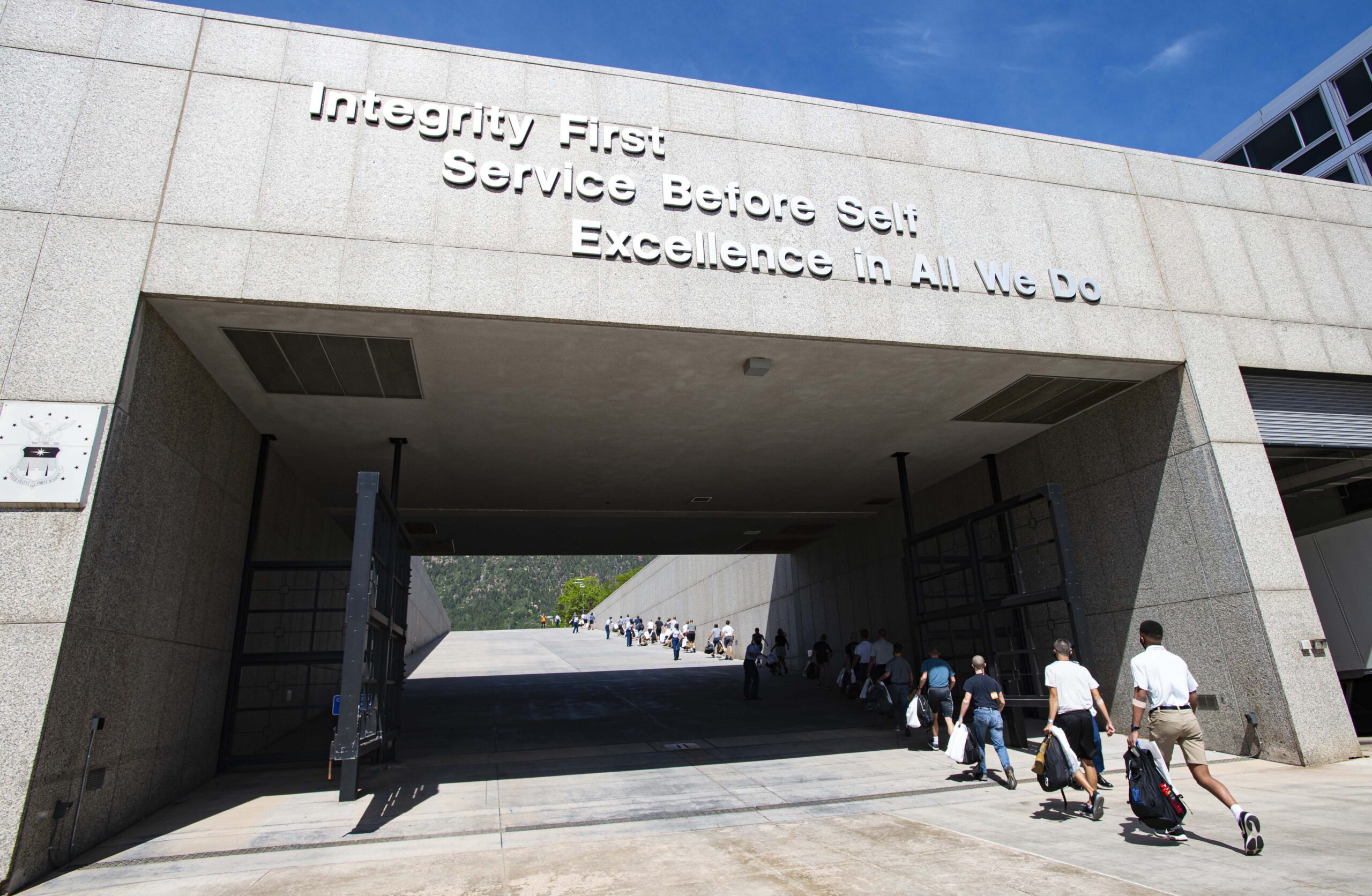
The Air Force Academy does not provide consistent access to open hearings or clear guidance on the right to remain silent to cadets facing accusations of misconduct, a Government Accountability Office report found.
The report released shortly before Christmas reviewed the honor and conduct discipline processes at the service academies and recommended changes to improve due process for students.
The report found the Air Force Academy’s superintendent should ensure “the intended range of due process protections available to students accused of conduct offenses are fully and clearly articulated.”
It also called on the academy to improve its data collection. It was the only service academy not to provide data on its conduct discipline because its data was not centrally located, the report said.
The Department of Defense officially concurred with the report’s findings.
“The Academy is committed to fair and effective processes and procedures, ensuring our cadets develop the character and leadership skills needed to serve as Air Force and Space Force officers,” the academy said in a statement.
The Department of the Air Force said in a statement it is working with Air Force Academy leadership to review the findings of the report. It did not answer specific questions about whether any changes had been made yet based on the report’s findings.
‘The light of day’
Air Force Academy cadets take an oath to live honorably and specifically not to lie, steal or cheat or tolerate others who do.
Those who violate the honor code, by cheating or other behavior, can face serious consequences. Some of the most serious include disenrollment from the Academy, completing a required period of active duty as an enlisted airman or reimbursing the school for their education. Right now, cadets are expected to pay back $55,000 for each year they attended the school, according to the academy’s Military Justice Transparency Bulletin.
Those who are found guilty of major misconduct, such as unauthorized possession of a weapon, can face the same serious consequences.
While the disciplinary processes at the service academies are not criminal trials and so the constitutional rights to an open trial do not directly apply, the same rationale should, said retired Col. Don Christensen, a former military lawyer and judge.
“Justice is better served when it has the light of day,” Christensen said.
It also helps ensure those speaking for or against the cadet don’t say absurd things, he said.
Soccer team investigation
The report was released shortly after some advocates told the Air Force Academy’s Board of Visitors in early December that the school had come down too hard on men’s soccer team players facing discipline. The investigations into the team started in October 2024 following allegations of physical, unprofessional and demeaning misconduct, according to an Academy summary. The investigation happened after GAO’s formal review of disciplinary policies and data between the 2018-19 school year through the 23-24 school year.
Players faced discipline following two team incidents in August and September of 2024. The team dogpiled during the August incident, a practice that can happen in various states of undress, The Gazette reported previously.
The details of the September incident have not been discussed publicly.
No one was criminally charged following the investigation that lasted until April 2024. All of the open cases were resolved in July.
The disciplinary process involved 42 actions, including letters of reprimand, admonishment and counseling. In 2024, there were 27 men on the team, but it is unclear if all faced disciplinary action. One of the cadets was disenrolled, following allegations of additional misconduct.
Nine seniors did not graduate in May following the investigation, even though some were not present for the September incident.
The cadets were facing disenrollment, but instead the superintendent placed them on a year of probation, said Richard Coe, an Air Force Academy alumnus who spoke at the December Board of Visitors meeting. A parent of one of the cadets and retired Air Force Col. Mark Stoup said during the meeting Coe’s statements were correct.
Stoup also highlighted the serious nature of the discipline the cadets faced, noting they completed a semester of coursework during the fall and they have lost pay, job training and opportunities because of the delay of their graduation.
“They punished them as if they were involved in a sexual assault or knew about it or caused it, and that couldn’t be further from the truth,” he said. “… If the academy leaders had actually an ounce of grace or decency, you would graduate these seniors immediately.”
Mike Rose, an Air Force Academy graduate and an attorney told the board the problems with the cadet disciplinary system included disproportionate and inconsistent punishment, excessive delays and punishment based on membership in a group rather than individual actions. The problems he highlighted were not covered in the GAO report.
The Board Chairman, Rep. August Pfluger, R- Texas, did not address the comments directly but said the board would look into the overall honor and disciplinary system.
“It’s very healthy for us to inquire about these things, to make sure that the integrity is there,” he said. Pfluger’s office did not respond to follow-up questions about his specific concerns.
Another member of the Board of Visitors, Congressman Jeff Crank, R-Colorado Springs, said he has concerns about the due process system.
“The GAO report confirms what I’ve heard multiple times as a member of the Academy’s Board of Visitors: The USAFA disciplinary system is confusing, counter-productive, unfair, and commonly falls short of basic due process requirements. This is unacceptable and must be remedied immediately,” Crank said in a statement.
Crank said he looked forward to working with Air Force Secretary Troy Meink on solutions to improve the system.
“This will continue to be a major priority for myself and the Board of Visitors,” he said.
Conduct violations
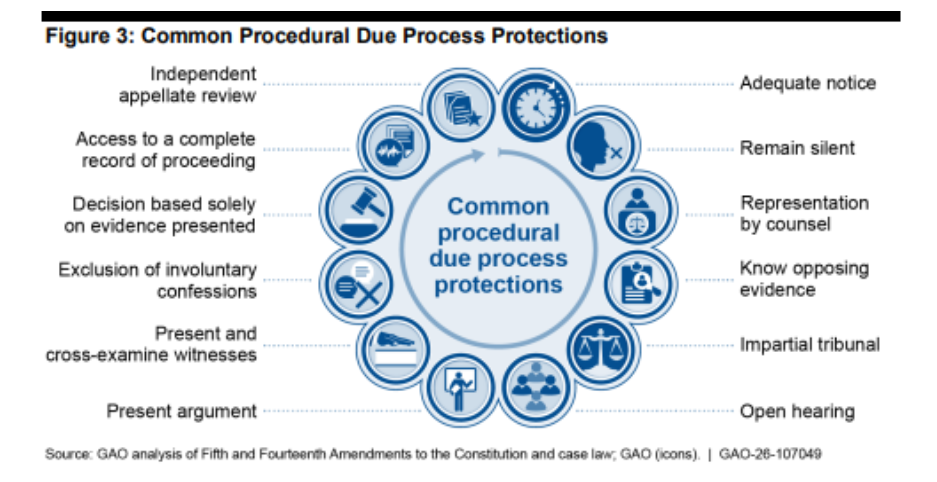
The Air Force Academy was the only school that did not provide consistent open hearings for those facing conduct violations, according to the GAO’s review. It also did not provide clear guidance on the right to remain silent or the right to present and cross-examine witnesses.
The access to open hearings is not consistent at the Air Force Academy because a hearing is not required to adjudicate offenses, the report found.
It went on to say that an open hearing may be provided for a cadet with a complaint that will be heard in front of a Board of Inquiry if the cadet is recommended for disenrollment and a bad conduct or dishonorable discharge status. Those types of discharges result in the loss of most military benefits.
In those cases, the person facing the accusations can ask the board president for the hearing to be open to spectators, the report said.
While the Academy did not provide conduct disciplinary data to the Government Accountability Office, it does post the results of disciplinary actions on its website with data going back to July 2023.
The data shows cadets were discharged for using cocaine, providing alcohol to minors and failing to adapt to military life. None received a bad conduct or dishonorable discharge.
Honor code violations
The report found that lying and cheating are the most common violations of the honor code, with the Air Force Academy seeing a spike in cheating cases, up from 88 during the 2019-2020 school year to 256 during 2020-2021. During the 20-21 year, 23 cadets faced accusations of lying. The school had 310 honor cases that year and found 241 cadets had violated the honor code. It disenrolled 153 students that year.
When the school announced the cheating scandal during the pandemic, it said two cadets involved in the scandal were no longer involved, and most were on six months’ probation and remediation.
The infractions included offenses such as not citing sources and completing final exams in small groups, the Academy said at the time.
The academy largely provides expected due process protections to those facing honor violations, such as cheating and lying. But it does not provide clear guidance on whether hearsay can be used in a court setting.
Whether hearsay can be admitted as evidence is a complex topic that many lawyers don’t understand, Christensen said.
“Not having clear rules on what evidence is allowed is a recipe for disaster,” he said
The honor disciplinary system at the academy is also largely run by cadets. The cadets conduct interviews, determine if there is enough evidence to proceed and a student honor board votes on whether the accused student committed the offense and develops a recommendation for discipline, the report said.
Then a school official, such as the commandant or superintendent will review the case file and determine the appropriate punishment, it said.
While not called out in the report, Christensen questioned relying so much on cadets to carry out a process that could terminate a fellow student’s military career.
“When they become second lieutenants, their commander’s not going to let them discipline their force,” he said.


Lauren Boebert’s hard ‘no’ on Pentagon Iran funding request puts Mike Johnson in tough spot
Emily Hallas, Washington Examiner
emily.hallas.washington.examiner@gazetteedit.wpenginepowered.com
Updated 6 hours ago
Colorado U.S. Rep. Lauren Boebert announced on Thursday that she will not support further funding for the United States’s war in Iran, marking an uphill battle for the Trump administration’s effort to secure additional financing from Congress. “I’ve already told...

Rubio gains ground in 2028 jockeying as Iran war elevates his profile
Samantha-Jo Roth, Washington Examiner
samantha-jo.roth.washington.examiner@gazetteedit.wpenginepowered.com
Updated 6 hours ago
Secretary of State Marco Rubio’s high-profile role in the Trump administration’s response to the Iran war is boosting his standing in the early jockeying for the 2028 Republican presidential nomination — and positioning him as a possible rival to Vice...

Federal judge dismisses claims against medical contractor for Eagle County jail suicide
Michael Karlik
michael.karlik@coloradopolitics.com
Updated 4 hours ago
A federal judge dismissed the claims against a medical contractor for the Eagle County jail and its employees earlier this month, concluding there were insufficient allegations that they violated the constitutional rights of a man who died by suicide in...

Colorado Senate committee advances bill increasing overtime threshold for farmworkers
Marianne Goodland
marianne.goodland@coloradopolitics.com
Updated 4 hours ago
The struggle to balance farmworker protections with the survival of Colorado’s family farms took center stage Thursday as senators debated two competing overtime bills. The Senate Business, Labor and Technology Committee held a rare double-bill hearing that led to a...

Colorado bill to fund mental health care with alcohol taxes defeated in House committee
Marissa Ventrelli
marissa.ventrelli@coloradopolitics.com
Updated 6 hours ago
A second measure proposing that alcohol producers and wholesalers in Colorado help fund mental health care treatment in the state was narrowly defeated in the House Health and Human Services Committee on Wednesday. House Bill 1301, sponsored by Rep. Bob...
Lawsuit targets Gov. Polis, Colorado officials for holding juveniles after court‑ordered release
Marissa Ventrelli
marissa.ventrelli@coloradopolitics.com
Updated 6 hours ago
Colorado officials are facing a lawsuit alleging the state has kept minors in juvenile detention for days or months after judges ordered them released, largely because appropriate foster or community placements were not available. Two minors involved in Colorado’s criminal...
Federal judge advances lawsuit seeking overtime compensation for Aurora firefighter trainees
Michael Karlik
michael.karlik@coloradopolitics.com
Updated 10 hours ago
A federal judge gave preliminary approval earlier this month to a class of Aurora firefighter trainees who may sue the city over allegations that they were denied overtime pay in violation of federal law. Joseph Elias, who attended Aurora’s fire...
Appeals court says jury not obligated to apply discounts to determine value of stolen merch
Michael Karlik
michael.karlik@coloradopolitics.com
Updated 10 hours ago
Colorado’s second-highest court concluded on Thursday that it was up to a Douglas County jury to determine the value of stolen merchandise at a defendant’s theft trial, after both sides presented different estimates of the items’ value. Under state law,...

Trump switches endorsement back to Jeff Hurd, says Hope Scheppelman is ending run in Colorado’s 3rd CD
Ernest Luning
ernest.luning@coloradopolitics.com
Updated 3 hours ago
In a surprise twist, President Donald Trump on Friday said he was again endorsing Republican U.S. Rep. Jeff Hurd after pulling his support from the Grand Junction Republican last month and instead backing Hurd’s primary challenger in Colorado’s 3rd Congressional...

Set appropriate state guidelines for critical surveillance technology | OPINION
Colorado Politics
colorado-politics@coloradopolitics.com
Updated 21 hours ago
I admit it: I’m worried. I’m hearing a lot about surveillance in the public arena. I hear cameras are capturing my car’s license plate wherever I drive, my face as I go in and out of stores and health facilities,...