

Colorado legislators eye ramping up penalties for child trafficking
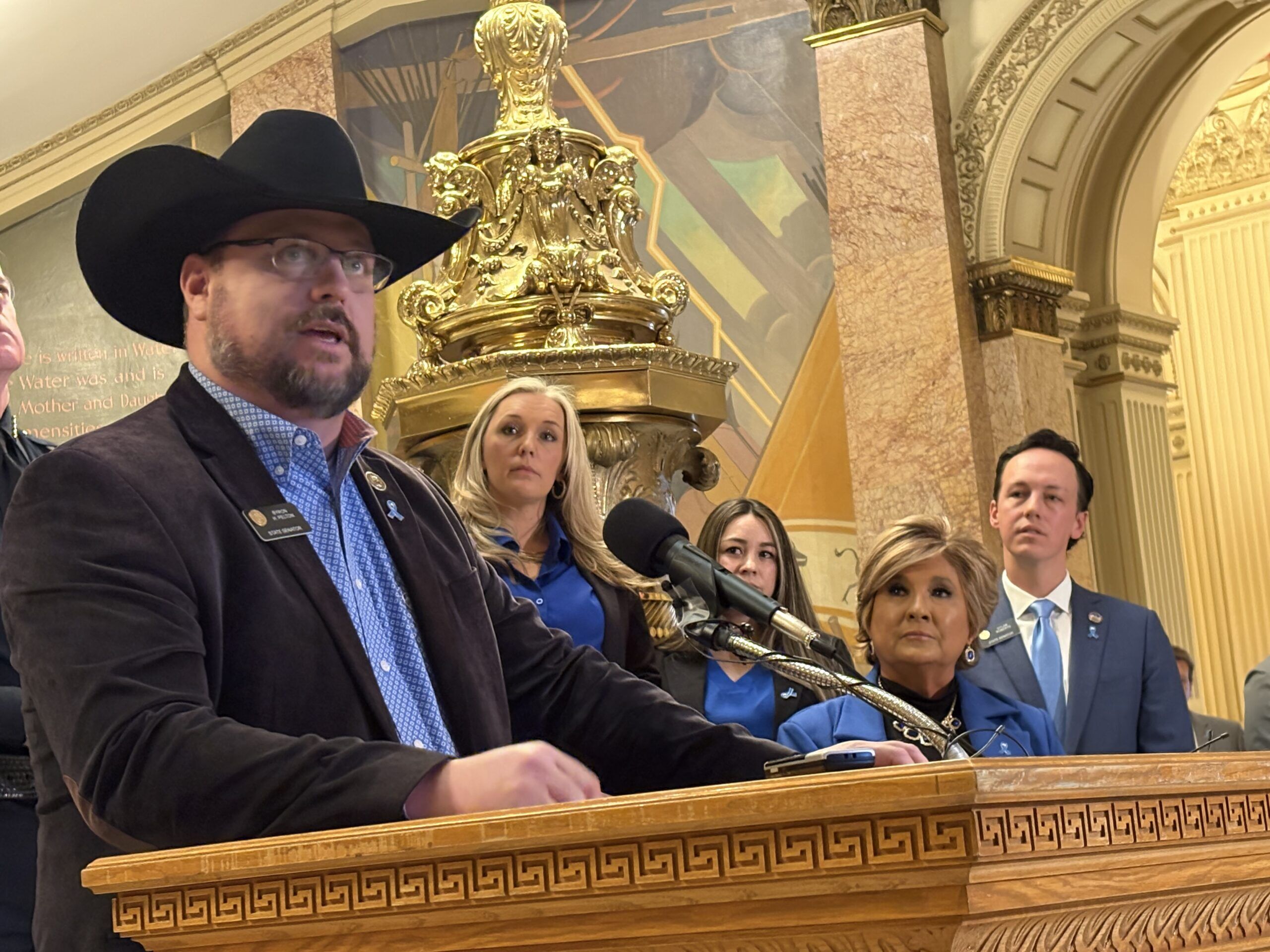
Colorado legislators on Monday announced a proposal to ramp up the penalties for human trafficking of children.
The proposal, which received the backing of Democratic and Republican leaders in the House, will address one of the many problems when dealing with individuals who buy children for sexual exploitation — penalties so low that most offenders get probation, not real prison or jail time, according to the bill’s backers.
At a news conference attended by dozens of law enforcement officials, district attorneys and victim advocates, 17th Judicial District Attorney Brian Mason pointed out that Colorado is in the top 10 states for human trafficking.
The measure goes after people who pay for kids for sexual gratification, Mason said.
Under the measure, those who buy children for commercial sexual exploitation will face a Class 3 felony, with no chance of probation. Currently, statutes set the penalties as a Class 4 felony, with probation a possibility.
The bill will be introduced in the state Senate and sponsored by Sen. Byron Pelton, R-Sterling, and Sen. Dylan Roberts, D-Frisco, a former assistant district attorney.
The current law actually protects predators more than children, added Douglas County Commissioner Abe Laydon. Pointing to the bipartisan sponsorship, Laydon said, “This is what bipartisan leadership looks like.”
House Minority Leader Jarvis Caldwell, R-Colorado Springs, said he shares that view.
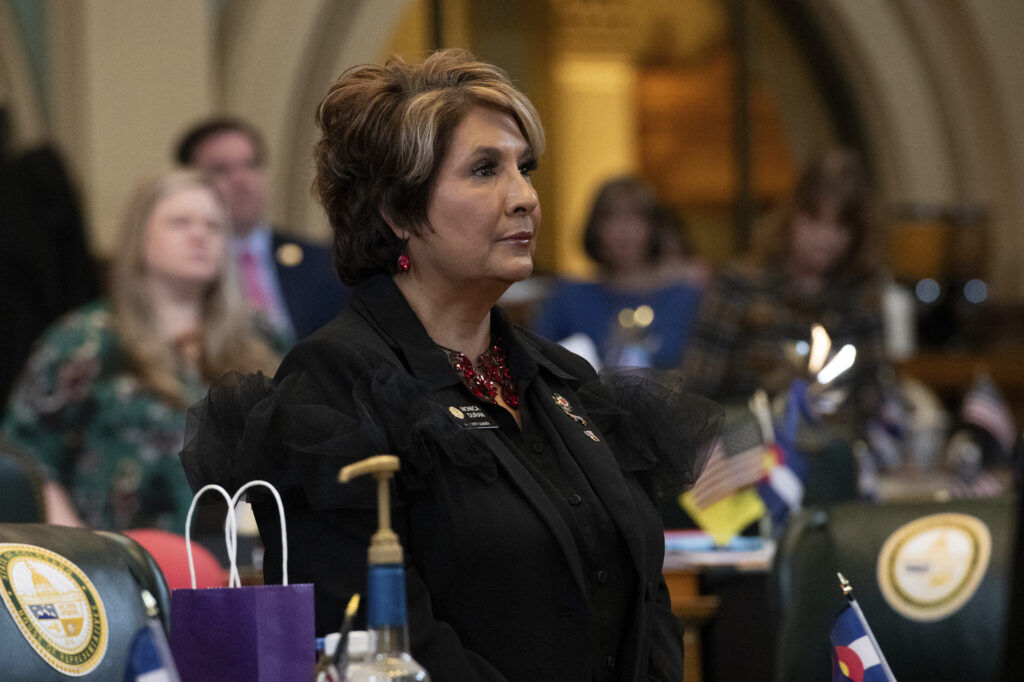
“This sends a strong message” to everyone about cooperation, including in the House, with both Caldwell and House Majority Leader Monica Duran, D-Wheat Ridge, signing on as co-sponsors, he said.
“The people of Colorado are asking us to stop the bickering, stop the fighting on the partisan issues and fix the problems of the state,” Caldwell said. “We are going into a new session in 2026 and I hope this sets the tone. We will find the issues that are not partisan and solve those issues.”
Duran said the bill has three purposes — to modernize the statutes to reflect the harm these crimes cause, with stiffer penalties; to make it clear that minors are victims, not offenders, and put the responsibility on the adults who exploit them; and to remove the term “child prostitution” from Colorado law and replace it with accurate, modern language that reflects reality and trauma.
“No child is a prostitute,” Duran said.
Federal law has already addressed that issue, but that language still exists in Colorado law, she said, adding, “When the law sounds like blame, children hear it, even when that was never the intent.”
The term “child prostitution” appears in 30 state statutes, either directly or in references to other statutes.
Duran noted that the crime of human trafficking is underreported, misclassified or hidden. When the law treats children as victims, and not as offenders, it encourages them to come forward, she said, adding the state has been seeing record numbers of reported cases.
“When the statutes use language that blames children, we are not just outdated. We are reopening those wounds,” she said.
The bill is the brainchild of Jenelle Goodrich, founder and executive director of From Silence to Saved, a nonprofit that works as a third party in human trafficking cases.
Goodrich told Colorado Politics her 10-year-old group doesn’t work for law enforcement or government but responds to cases through referrals from law enforcement to recoveries in human trafficking situations. She said it provides advocacy and case management, all the way to the adjudication of cases. The group also works with schools and foster homes to help victims.
That work is primarily in Colorado, although the group gets referrals from other states, as well.
The From Silence to Saved website said 300,000 children are at risk of sexual exploitation every year. Goodrich explained that the top 10 designation is based on national human trafficking reports that grade states on their efforts and the number of children at risk per capita.
The Polaris Project gave Colorado an “F” grade in its 2019 report, noting that the state requires survivors trying to get their criminal record cleared to pay specific filing fees.
“It is explicit in the statute that the record will only be sealed after the filing fee is paid, and survivors also have to pay the Colorado Bureau of Investigation any costs related to the sealing of their records,” the report said, adding that can prevent survivors from accessing criminal record relief.
A more recent grade came from Shared Hope International, which in 2025 gave Colorado a “D.” More than half of U.S. states got an “F” in that report.
The bill’s other aspect deals with luring of children by predators using the Internet.
“We must do our due diligence” to protect children, Pelton said. “We should never be in the top 50 of human trafficking.”
The bill matters because it treats children as victims of exploitation, he said, adding it will ensure accountability for offenders and stronger deterrent measures.
“We must do a better job in this state to put people away who do heinous crimes like this,” he said, noting that Internet luring is on the increase in Colorado.
The issue of Internet luring brought up last year’s gubernatorial veto of Senate Bill 25-086, which sought to establish requirements for social media companies and platforms. The bill’s legislative declaration specifically referenced child sex trafficking.
The state Senate voted to override that veto, although the House did not follow through.
“This is a huge undertaking,” Pelton acknowledged. “We’re doing it for the right reasons, protecting innocent children.”
Roberts said the bill is being driven by victims’ experiences and requests from prosecutors and law enforcement who are asking for the tools.
The bill is about updating outdated language, modernizing laws and making it clear that if someone commits heinous acts against children, “you will face real punishment” and serve time,” Robert said.
“That’s how to get out of the top ten, he said.
As for last year’s bill dealing with social media platforms, Roberts said, “We still need to continue working on policy and statute, and if we need to, with the social media companies to comply with warrants from law enforcement” to get the evidence to prosecute those crimes.
Roberts said he expects other legislation in the 2026 session to address some of the issues raised in SB 86.


Colorado House advances bill to ban pet stores from selling dogs as cats, as opponents warn of black market surge
Marissa Ventrelli
marissa.ventrelli@coloradopolitics.com
Updated 9 hours ago
Colorado lawmakers advanced legislation Monday that would prohibit pet stores from selling dogs and cats sourced from large-scale commercial breeders, a move sponsors say will shut down the “puppy mill pipeline.” Critics, however, warn that the bill will instead push...
Laura Clellan officially named director of Colorado Parks and Wildlife
Marianne Goodland
marianne.goodland@coloradopolitics.com
Updated 6 hours ago
Laura Clellan, who has been acting director of Colorado Parks and Wildlife since Nov. 25, was named the agency’s permanent director Monday by the Colorado Parks and Wildlife Commission. She replaced Jeff Davis, who resigned in lieu of termination weeks...

Colorado group files 6 ballot measures to counter redistricting proposals backed by Democrats
Marianne Goodland
marianne.goodland@coloradopolitics.com
Updated 4 hours ago
A half-dozen congressional redistricting ballot measures were filed Friday by a Colorado advocacy group in response to proposals filed last week from a group seeking to flip three Republican-held U.S. House seats in two years. “The gist of it is...

Secretary Hegseth promises to unleash small defense companies during Colorado visit
Mary Shinn
mary-shinn@coloradopolitics.com
Updated 5 hours ago
Secretary of Defense Pete Hegseth visited Colorado space companies Monday and promised to cut bureaucracy within the Pentagon to ensure smaller defense businesses have a chance to compete for contracts. “If we are going to have space dominance and deterrence,...

Colorado senators hold heated debate on latest immigration bill
Marianne Goodland
marianne.goodland@coloradopolitics.com
Updated 16 hours ago
A bill that would allow individuals who get injured during an immigration action to sue federal agents in state court won preliminary approval from the Colorado Senate on Monday. The bill would permit a “cause of action” by such individuals...

Trump pulls endorsement from Jeff Hurd over tariffs, backs Colorado Republican’s primary challenger
Ernest Luning
ernest.luning@coloradopolitics.com
Updated 16 hours ago
President Donald Trump on Saturday rescinded his endorsement of U.S. Rep. Jeff Hurd and threw his support behind the Colorado Republican’s primary challenger, Hope Scheppelman, citing the first-term incumbent’s “lack of support” for the administration’s tariff policy. The move comes...

Judge: CBI ordered to provide access to thousands of DNA cases
Jenny Deam
jenny-deam@coloradopolitics.com
Updated 11 hours ago
Boulder County District Judge Nancy W. Salomone on Monday ordered the Colorado Bureau of Investigation to provide access to thousands of cases where past DNA analysis could be in question or show a pattern. The ruling came in a pre-trial...
Colorado Senate Democrats choose Sen. Cathy Kipp as president pro tempore
Marianne Goodland
marianne.goodland@coloradopolitics.com
Updated 1 day ago
Senate Democrats on Monday elected Sen. Cathy Kipp, D-Fort Collins, as the next president pro tempore. Kipp replaced former Sen. Dafna Michaelson Jenet, D-Commerce City, who resigned her seat earlier this month. Kipp faced off against Sen. Tony Exum, D-Colorado...
Colorado ethics panel narrows case against Rep. Ron Weinberg
Marianne Goodland
marianne.goodland@coloradopolitics.com
Updated 11 hours ago
With a Wednesday deadline to vote on seven allegations, an ethics panel signaled that it is poised to dismiss most of the claims against a Loveland legislator, while focusing its scrutiny on allegations tied to a 2025 incident at the...

Democratic lawmakers propose changes to landlord-tenant laws in Colorado | Bills in Brief
Marissa Ventrelli
marissa.ventrelli@coloradopolitics.com
Updated 10 hours ago
Colorado lawmakers introduce hundreds of bills each year. Bills in brief cuts through the noise by explaining which proposals matter, what’s at stake, and how decisions at the Capitol could affect everyday life across the state. House Bill 1013, sponsored by Reps....
PREV
PREVIOUS

Colorado Republican Mark Baisley exits gubernatorial race, launches U.S. Senate campaign
Republican state Sen. Mark Baisley on Monday withdrew from the Colorado gubernatorial race and announced his candidacy for the U.S. Senate seat held by Democrat John Hickenlooper. His departure leaves 20 Republicans running for the office held by term-limited Democratic Gov. Jared Polis. “Colorado needs a U.S. Senator who will fight relentlessly for our Constitution, […]

Denver builder recalls Venezuela's collapse as Maduro's party rose to power
When Hugo Chávez — predecessor to deposed Venezuelan President Nicolás Maduro — came to power in 1998, Denver builder Noel West Lane was deep into a homebuilding venture in Caracas, supported by business leaders close to the preceding administration of President Rafael Caldera. Early Saturday morning, Lane, who had been president of Denver’s Melody Homes, […]