

Aurora City Council Q&A: Homelessness
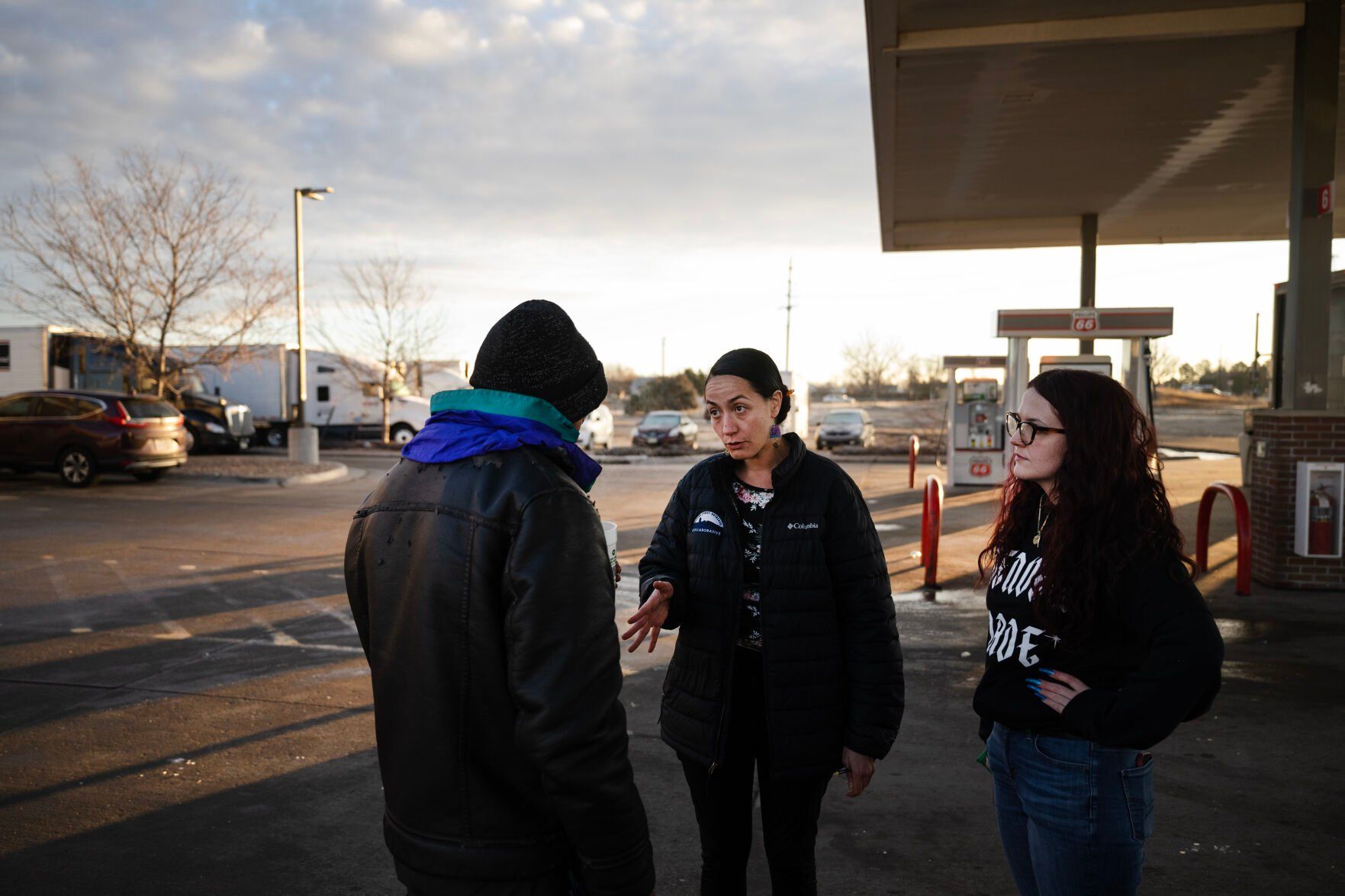
In November’s election, Aurora voters flipped what was previously a seven-to-three conservative majority on the City Council to a six-to-four progressive majority.
With the significant shift of the council’s political leaning could come policy changes and reversals. The Denver Gazette asked both new and old councilmembers about their thoughts on specific hot-button issues in Aurora and whether or not they plan to attempt to reverse certain policies.
Newly elected progressive Councilmembers Rob Andrews, Amy Wiles, Alli Jackson and Gianina Horton are still in their first official month on the council. Other progressive councilmembers include Alison Coombs and Ruben Medina. Conservative councilmembers include Angela Lawson, Stephanie Hancock, Curtis Gardner and Francoise Bergan.

Gardner, Lawson and Medina did not respond to multiple attempts by The Denver Gazette to get them to answer a questionnaire.
Over the past year, Aurora City Council members have moved forward with what the mayor has called a “tough love” approach to homelessness, enacting a camping ban, alongside starting a court system to address low-level offenses by homeless people.
Officials celebrated the opening of the Regional Navigation Campus in early November, cutting the ribbon on a former hotel that now acts as a “one-stop-shop” for homeless services and shelter.

The city’s Housing, Employment, Addiction, Recovery and Teamwork (HEART) Court, will also operate out of the navigation campus, staff said.
The idea behind the court system is to give low-level offenders the option to either go to probation with court-ordered requirements to participate in homeless services, such as addiction prevention and mental health treatment, or go to jail.
Councilmembers were asked about Aurora’s current homelessness strategy. Their responses are written verbatim below in alphabetical order by last name.
The Denver Gazette: The previous Aurora council enacted what the mayor has called a “tough love” approach to homelessness, creating a camping ban, adding a HEART court and opening the Regional Navigation Campus. Do you plan to reverse any of these decisions made by the previous council or do you think that approach should stay the same? Why?

Andrews: I want Aurora focused on what works – getting people safely indoors, connected to treatment and services, and back on a path to stability. I’m not interested in ideology or optics – I’m interested in outcomes. We will review each tool based on clear metrics and lived experience from providers, neighbors, and people experiencing homelessness, and I’ll push for a balanced approach that pairs accountability with real alternatives like shelter, supportive housing, and behavioral health care.
Bergan: I don’t think it is wise of us to reverse our policies. The camping ban has resulted in less encampments for our residents and businesses. We had a lot of complaints before the camping ban was enacted. The navigation center philosophy will hopefully address the full reality of why many people remain homeless and help them rebuild stable, self-directed lives rather than simply relocating their hardship indoors. Many chronically homeless individuals struggle with untreated addiction, serious mental illness, or long histories of disengagement from work and social norms. A treatment/work-first approach restores dignity and purpose. Work is not punishment; it is a proven stabilizer. It creates routine, builds skills, reconnects people to society, and fosters self-worth. Treatment, likewise, is an act of care, not control, offering people the tools to regain agency over their lives.
For homeless individuals with criminal records, offering the option to enter the HEART program in lieu of incarceration can achieve far better outcomes. This approach recognizes that repeated low-level offenses often stem from addiction or mental illness, not malice. Providing a clear choice — treatment and structured work instead of jail — creates a turning point to regain their life and dignity.
In the end, compassion is not defined by how little we ask of people, but by how much we are willing to invest in their potential. By combining support with structure, and care with expectations, this model offers not just shelter — but a real path out of homelessness.
Coombs: I believe we must pursue, at minimum, changes to the camping ban that address how it criminalizes chronic homelessness and poverty. Criminal penalties for the camping ban ordinance and misdemeanor trespass make it harder, not easier, for people to access stable housing. I will also ask staff to provide data on camping ban enforcement and costs, and will look at alternative options for addressing public health, life safety, and quality of life issues related to encampments.
Hancock I don’t support reversing policies just for the sake of it — what matters is whether they deliver real results. Aurora’s “tough love” approach balanced clear expectations, like the camping ban, with pathways to help through the navigation campus and HEART Court.
Intent alone isn’t enough; we have to focus on outcomes. Are more people getting into services? Are neighborhoods safer and cleaner? If yes, we keep going. If not, we adjust.
Homelessness requires both accountability and support. My priority is practical outcomes: safer streets, better conditions for residents and businesses, and real progress toward stability and dignity for people in crisis. Policies that achieve that should stay; those that don’t should change.
Horton: As much as I understand the sentiment of a tough love approach to any systemic issue facing those in poverty, I fundamentally do not believe that tough love addresses the root cause of why individuals and families are unhoused. With the navigation center being so new to the Aurora community and a new resource for those experiencing homelessness, I am looking forward to assessing their data and impact over the coming months. I am scheduling a site visit in late January to learn more about the navigation center, and impact so far. In terms of the HEART Court, I am committed in the new year to learning more about this new program. One pending question I have is the ability for those who are participating in HEART court to access a public defender who can provide council before determinant of participation in the HEART program.
Jackson: I plan to meet and talk with all my council colleagues to get their opinions and work within the departments to establish markers using data from these policies to see the impact they are having in the community.
Wiles: I believe it is premature to provide a definitive position on reversing policy at this time. While I strongly support expanding assistance for unhoused members of our community, the recent opening of the navigation center presents an important opportunity to observe and evaluate its effectiveness over the coming months before determining what adjustments may be necessary.
I would also advocate for the establishment of designated safe camping areas equipped with restrooms, ensuring that those who choose to camp can do so in a safe and sanitary environment rather than on city streets or in residential neighborhoods. In addition, I support exploring alternative housing models, such as veteran-focused tiny home communities, which can help fill existing gaps and provide specialized care tailored to the unique needs of certain unhoused populations.


Denver housing official was named in Urban Alchemy lobbying kerfuffle
Deborah Grigsby
deborah.smith@denvergazette.com
Updated 1 week ago
Denver’s Department of Housing Stability has a unique connection with its biggest and newest homeless shelter provider, as well as some of its troubles. Jeff Kositsky, HOST’s deputy director of shelter and stability, was Urban Alchemy’s chief growth officer for...

Denver’s homeless access more services
Deborah Grigsby
deborah.smith@denvergazette.com
Updated 3 weeks ago
More members of Denver’s homeless population are gaining access to health and behavioral services, according to city officials who briefed the Community Planning and Housing Committee on Tuesday. They’re getting more services, and they’re sticking around longer. Data from the...

Denver approves $30M shelter contract with Urban Alchemy
Deborah Grigsby
deborah.smith@denvergazette.com
Updated 4 weeks ago
With a 9-4 vote, Denver City Council members approved a new $30 million, three-year contract with Urban Alchemy, a San Francisco-based nonprofit, to run The Aspen, a former DoubleTree Hotel that has been turned into a homeless shelter. More than...

Residents brace for change as Salvation Army transitions from operating Denver’s hotel shelters
Deborah Grigsby
deborah.smith@denvergazette.com
Updated 4 weeks ago
It was a scorching day in Denver on Sept. 1, 2023, when Bernadette McMurrin’s aunt, Christina Martinez, passed away in a small apartment. McMurrin, 41, who considered Martinez more of a godmother than an aunt, had moved back to Denver...

Salvation Army’s Harbor Light Center helps addicts get back on their feet
Deborah Grigsby
deborah.smith@denvergazette.com
Updated 1 month ago
Dustin French walked through the doors of The Salvation Army’s Harbor Light Center in downtown Denver in July after 16 years as an addict. It had taken him more than half a year to muster the courage to do so,...

Denver Council to consider $400 million in infrastructure contracts
Deborah Grigsby
deborah.smith@denvergazette.com
Updated 1 month ago
The Denver City Council returns on Monday afternoon for its weekly meeting, approaching a full agenda that reflects several ongoing city priorities: homeless shelter operations, housing, infrastructure and police overtime. The agenda this week spans roughly 35 pages and includes...

Food banks in Denver area struggle to meet the need
Sage Kelley
sage.kelley@denvergazette.com
Updated 2 months ago
The line of people outside the Adams County Food Bank wrapped around the building as the clock ticked toward 10 a.m. Thursday. Some held grocery bags. Others sat on the ground. All wore the same saturnine expression. That sight has...

Jamie Rife to depart as head of Denver’s housing stability program
Deborah Grigsby
deborah.smith@denvergazette.com
Updated 2 months ago
Jamie Rife, the head of the city’s Department of Housing Stability (HOST), will step down from her post at the end of the month, according to a news release by Mayor Mike Johnston’s office late Wednesday afternoon. Rife, who was...
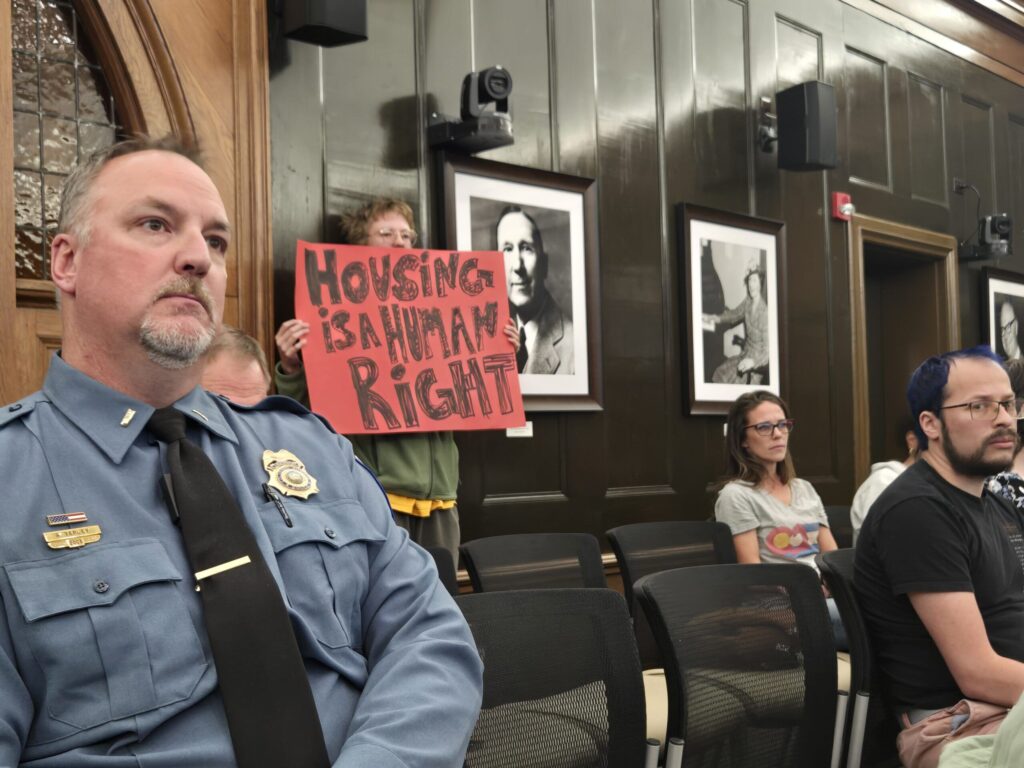
Amid outbursts, Colorado Springs City Council postpones proposed vehicle camping ban
DEBBIE KELLEY
debbie-kelley@coloradopolitics.com
Updated 2 months ago
After about three hours of presentation, discussion and public comment, Colorado Springs City Council voted 5-4 Monday to postpone a proposal that would add a vehicle camping ban to city ordinances pertaining to illegal urban camping and consolidate them for...

Aurora celebrates opening of homeless navigation campus
Kyla Pearce
kyla.pearce@gazette.com
Updated 2 months ago
Aurora officials celebrated the opening of the city’s highly anticipated Regional Navigation Campus on Thursday, cutting the ribbon on the former hotel that will act as a “one-stop-shop” for homeless services and shelter starting in two weeks. The navigation campus...
PREV
PREVIOUS

Independent Crank challenger Matt Cavanaugh joins Democratic primary in Colorado's 5th CD
Matt Cavanaugh, the Army combat veteran and author who has been running an independent campaign to unseat first-term Republican U.S. Rep. Jeff Crank in Colorado’s 5th Congressional District, registered this week as a Democrat and will seek the party’s nomination for the seat. Cavanaugh told Colorado Politics that his principles haven’t changed, but the former […]

Aurora City Council Q&A: police reform
In November’s election, Aurora voters flipped what was previously a seven-to-three conservative majority on the City Council to a six-to-four progressive majority. With the significant shift of the council’s political leaning could come policy changes and reversals. The Denver Gazette asked both new and old councilmembers about their thoughts on specific hot-button issues in Aurora […]