

The men and women of meatpacking on my mind | Rachel Gabel

The meatpacking industry employees and their families are on my mind as the closure of the Lexington, Nebraska, Tyson plant nears its closure date in January. More than 3,200 employees will lose their jobs, realistically affecting half of the 11,000 people in Lexington.
Meat packing has never been an easy way to make a living. And today, it’s far from what readers were presented in Upton Sinclair’s 1906 “The Jungle.” The industry was characterized in Sinclair’s book as brutal and wrought with worker exploitation, which may very well have been the case in that era. Notably, it was an attempt by Sinclair to encourage socialism, and it certainly wasn’t the last attempt to weaponize industry.
Today, it is incredibly efficient, and the food safety standards are the highest in the world. A time in which a shortage of safe, affordable, high-quality beef has been replaced with the opposite problem — food waste.
Dr. Mahesh Nair and I became fast friends walking to lunch at Colorado State University because he and I are both willing to die on the same mountain. It’s Hamburger Hill.
Like a bad penny back when those were still minted, misguided beef sellers circulate a tired social media post comparing their direct-to-consumer beef to that available in the grocery store. With the post is a photo comparing two pounds of ground beef, one darker than the other. The incorrect accompanying claim is the darker red color is the result of lower quality beef. Dr. Nair has dedicated his career to studying color change in beef and said the difference boils down to a single protein: myoglobin.
Myoglobin controls the color of protein. The red liquid often in the bottom of a package of meat that is often mistaken for blood is water and myoglobin. Know your ‘globins and sound like the smartest guy at the meat case or grill.
There is much less myoglobin in chicken, for example, than beef, and it is what gives beef the bright red color consumers seek. The reason there is a color difference between vacuum-packed ground beef available from small to mid-sized processors and the meat available in grocery stores typically covered with polyvinyl fluoride film is that myoglobin binds to oxygen and there is less oxygen available in vacuum-sealed packages.
Different proteins and different cuts are packaged in different types of retail packaging with appearance of the meat in mind. Ground turkey, for example, is typically sold in tray-sealed packages because that packaging allows for the atmosphere inside the package to be modified by removing the atmospheric oxygen and replacing it with another gas to ensure freshness and prevent bacterial growth.
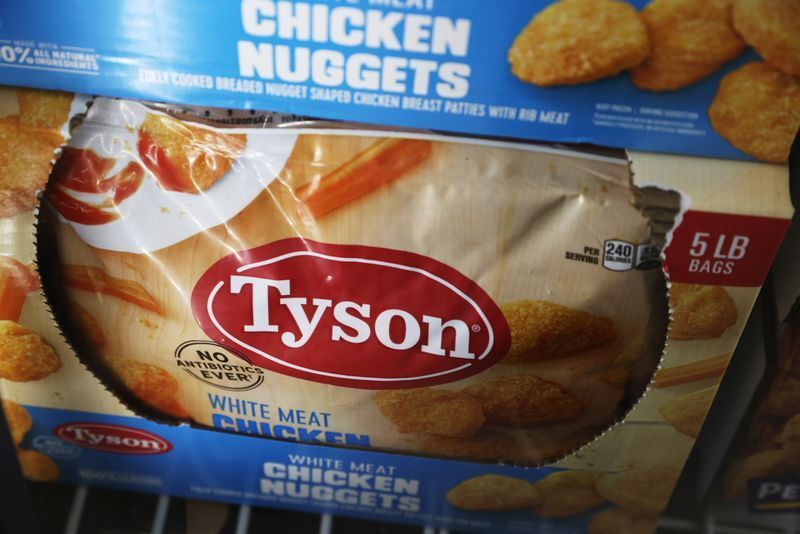
I tell you all of that, so I can tell you this. The equivalent of 700,000 head of fat cattle in the form of packaged beef is tossed in the dumpster annually due to color change. That is the equivalent of $3.7 billion. The resources used to produce, process, transport, distribute, and dispose of that volume is immense and that’s a big problem.
That’s where Dr. Nair, the self-proclaimed meat color nerd and professor in the department of animal sciences at CSU, comes in. His studies — and many others — indicate that vacuum packaging is ideal in change of slowing color change. The problem is pesky deoxymyoglobin and that the meat doesn’t appear bright red. To reduce this specific type of food waste, consumer preferences would have to change and that is a steep hill for the spriteliest stepper. Consumers purchase with their eyes.
Nair said much of his work focuses on that one protein that drives meat color and, in turn, consumer choice. There have been meat case shopper interviews to gauge consumer’s beliefs and preferences to understand that side of the equation and many studies on meat itself. Packaging is key to the entire conversation, just as it long has been. Remember the discussion surrounding antibiotic free chicken? Many consumers prefer hormone-free chicken. If you read below that statement, you’ll see another statement declaring that per federal regulations, all chicken must be raised without hormones. Paying a premium for chicken raised without hormones is akin to paying more for gluten-free oranges.
Nair expects that price could drive consumers toward vacuum-packed beef if they understand what is to be gained in terms of reducing food waste due to color change but there are a tremendous number of moving parts involved. The key moving part, of course, is the consumer who chooses a package of steaks primarily based on color and appearance. Know your ‘globins, kids.
Rachel Gabel writes about agriculture and rural issues. She is assistant editor of The Fence Post Magazine, the region’s preeminent agriculture publication.


Who has the power to declare war?
Tom Cronin Bob Loevy
tom-cronin-bob-loevy@coloradopolitics.com
Updated 14 hours ago
Our constitutional framers boldly and ambitiously granted Congress the power to declare war yet granted the executive the responsibility, after war is declared, to supervise war as the commander-in-chief. That worked well until the Cold War began. The U.S. has been...

The delicate, ever-changing dance between politics and religion | SONDERMANN
Eric Sondermann for Colorado Politics
eric_sondermann_for_colorado_politics@coloradopolitics.com
Updated 2 days ago
The dance, really a marathon that brings to mind the classic movie “They Shoot Horses, Don’t They?”, has been going on as long as there have been governments and organized religion. That is to say that this delicate tango has...
Roasts, get yer roasts, here: Capitol M | Week of March 14, 2026
Marianne Goodland
marianne.goodland@coloradopolitics.com
Updated 3 days ago
The lighter side of the Capitol, especially in the past week Apparently, the pending and eventual switch to daylight stupid time has put people in some pretty funny moods. And thank goodness! On March 4, the Senate approved the appointments...

The backstory behind the school-funding TABOR ballot initiative | Paula Noonan
Paula Noonan
paula-noonan@coloradopolitics.com
Updated 3 days ago
Last session, the General Assembly took in a report on K-12 public school funding. The legislature ordered the report because an idea circulated Colorado was among the bottom five states in dollars allocated per student even though it is one...

You get what you pay for in your state reps | Hal Bidlack
Hal Bidlack
hal-bidlack@coloradopolitics.com
Updated 4 days ago
My regular readers will know of my affection for the Out West Roundup, a Colorado Politics feature that lets us keep up to date with the goings on out here in the western U.S., and draws attention to stories that...

Colorado’s GOP at its best — and worst | Dick Wadhams
Dick Wadhams
dick-wadhams@coloradopolitics.com
Updated 3 days ago
By Dick Wadhams Colorado Republicans are fighting to be relevant in the face of gross mismanagement by Democrats who totally control state government. While the Colorado Republican Party is mired in controversy, several Republican elected officials and candidates represent the...

Someone’s lying in latest activist embarrassment for Polis’ CPW Commission | Rachel Gabel
Rachel Gabel
rachel-gabel@coloradopolitics.com
Updated 7 days ago
Either Samantha Miller is lying, or Gov. Jared Polis is. If Miller is lying, she is so secure in the red carpet rolled out for animal activists by this administration she is willing to put words in the governor’s mouth....

Ask Secretary of State candidates if they’re in favor of independent election audits | Jon Caldara
Jon Caldara
jon-caldara@coloradopolitics.com
Updated 1 week ago
This part will disappoint angry people on Twitter: Relax. Put the pitchforks down. I am not relitigating the 2020 election or mail ballots or even Tina Peters. But I am saying people don’t trust elections like they used to. And...

Redistricting plan to give Colorado Dems 7 members of the U.S. House will split El Paso County | Bob Loevy
Bob Loevy
bob-loevy@coloradopolitics.com
Updated 7 days ago
A proposed redistricting plan, which would give Colorado seven Democratic members of the U.S. House of Representatives and only one Republican, will split El Paso County into two parts and thereby weaken the county’s influence in Congress. El Paso County,...

Can deliberation save democracy? | Vince Bzdek
Vince Bzdek
vince.bzdek@gazette.com
Updated 5 days ago
In September 2019, 523 Americans traveled to Dallas for an experiment called “America in One Room.” The gathering was designed to test a theory: Could representative citizens deliberate productively even in an era of intense polarization? The event focused on...
PREV
PREVIOUS

Colorado’s unaffiliated vote is up for grabs in 2026 | Dick Wadhams
Leaders of both parties often dismiss the stunning increase in “unaffiliated” voters as just a result of automatic registration when getting a driver license or some other government process. It must make them feel better about the plummeting number of registered Democrats and Republicans in the past 10 years. As of Dec. 1, 2025, there […]

Colorado’s next governor should make kids in foster care a priority | OPINION
By Shari F. Shink The next governor of Colorado has the chance to improve the lives of thousands of children in foster care and we’re not talking about new legislation. It’s a matter of making these invisible kids a priority and having the willpower to make the system more transparent and accountable. It might not […]