

Aurora develops retail strategy as sales tax levels flatten

Over the past year, Aurora staff have worked on developing a citywide retail strategy, assessing business throughout the city and outlining goals to move forward as retail sales tax levels flatten.
Sales tax revenue in Aurora has remained flat over the last two years, causing the city to move toward a budget deficit in coming years, budget officials told councilmembers in March.
Between 2020 and 2021, there was an almost 15% increase in sales tax revenue, from about $210,000 to about $250,000. There was then a 9.4% increase between 2021 and 2022, an almost 5% increase to 2023 and a less than 4% increase between 2023 and 2024, according to data from budget officials.
Retail sales taxes make up more than half of the city’s general fund budget, and Aurora’s retail centers are facing various challenges, including deferred maintenance, large vacant spaces and safety concerns, council documents said.
Late last year, Councilmember Francoise Bergan sponsored the development of a citywide retail strategy, the process for which included evaluating retail areas across the city and coming up with goals to strengthen and improve Aurora’s economy and livability.
The goals, as developed by city staff, are to strengthen or redevelop existing retail centers, improve appearance and safety of commercial areas, promote balanced tenant mixes and encourage frequent visitation at retail centers, Jeannine Rustad, Aurora’s planning and business development director, told councilmembers Monday.
While retail is private-sector driven, the city still has a role in creating an environment that supports reinvestment, adaptability and customer confidence, Rustad said. This includes maintaining public streets, sidewalks and lighting around commercial areas and providing incentives to businesses.
“There are things we can and cannot do,” Rustad said. “We cannot act as a broker, but we can act as a matchmaker.”
Both the COVID-19 pandemic and shifts in consumer behavior have changed the retail industry significantly, with online shopping as important now as in-store experiences.
To address challenges and the impact they have on the city as a whole, staff formed the retail strategy. Now, staff will gather early next year to decide how to implement their findings.
“We need to look at … how we help these shopping centers that maybe have fallen into a little bit of disrepair and need some love,” Rustad said. “And we need look at vacant spaces and how we can incentivize them to bring something that will be good for the city.”
Rustad’s team’s first goal is to strengthen, reactivate or redevelop retail centers. This includes prioritizing reinvestments in aging centers with long-standing vacancies, explore ways to allow for “pop-up” retail, regularly reviewing sales reports, vacancy listings and other data to watch for signs of change and communicating closely with center ownership and businesses to know where assistance from the city is needed.
Part of the first goal is also incentives, Rustad said, offering assistance with fees, taxes and other financial challenges to encourage companies to come into Aurora and stay there.
Their second goal is to improve the appearance, safety and walkability of commercial areas. This includes addressing safety and cleanliness through collaboration with police and code enforcement, offering grants for security improvement and reinforcing distinctions between public and private property maintenance responsibilities, the strategy document said.
In Ward I in particular, theft is a major concern for businesses. In retail, an expected theft is 3% to 4%, Rustad said. In some areas of Ward I, retailers were seeing theft at 7% to 8%, she said. Addressing these kinds of concerns is vital to ensuring retail development.
Goal three is promoting a balanced tenant mix that increases convenience and community identity. This could include working with developers to attract businesses to growing areas and partnering with master developers to ensure that space is reserved in the right places for successful amounts of retail, service and entertainment.
The fourth goal is to encourage frequent visits of retail centers through coordinated events and customer-oriented services.
Aurora’s recently voter-approved Colfax Downtown Development Authority is an example of activation efforts that fall under this goal. Other strategies could include partnering with local and regional organizations to do digital marketing and encouraging “buy local” campaigns that highlight businesses.
Rustad called retail areas the “heart of our communities.”
“Retail isn’t just about shopping, it’s about where we gather, where we meet,” she added. “So we want to make sure Aurora is the best we can be.”
The council initially approved the effort in Monday night’s study session.
Once the council casts final approval on the retail strategy early next year, Rustad’s team will reach out to businesses to discuss market trends and conditions, then develop an implementation plan for council review and policy direction, she said. This will happen in the first quarter of the new year.
Implementation of the plan will happen through next year and beyond, city documents say.

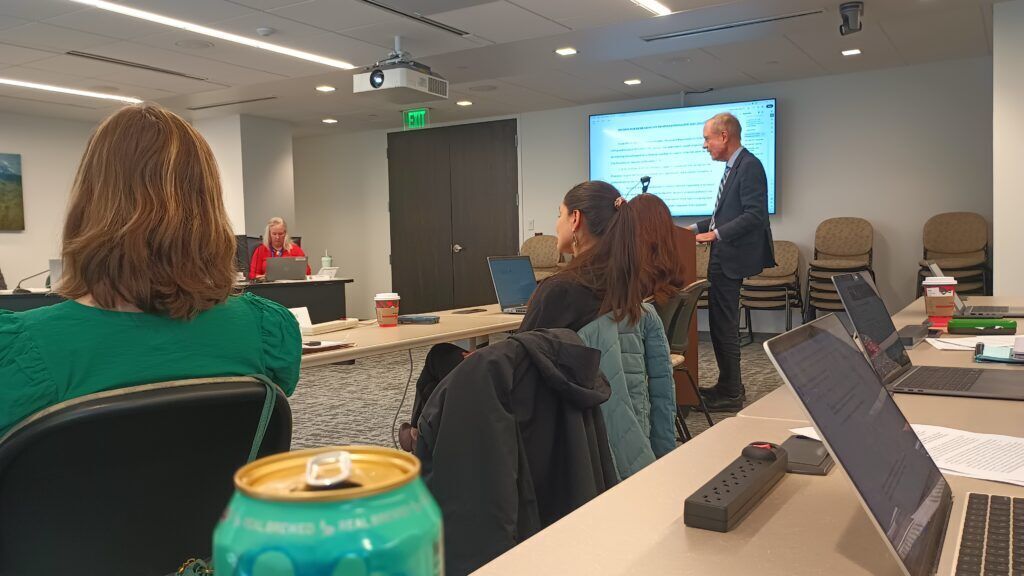
Colorado officials stall progressive income tax ballot initiative again by declaring it to have multiple subjects
Ed Sealover
ed-sealover@coloradopolitics.com
Updated 2 hours ago
In a saga offering more twists than a soap opera, Colorado Title Board members reversed course on Wednesday and determined an initiative to establish a progressive income tax doesn’t qualify for the 2026 ballot because it doesn’t have a single...

Justice Melissa Hart to step down from Colorado Supreme Court
Michael Karlik
michael.karlik@coloradopolitics.com
Updated 1 hour ago
Justice Melissa Hart will step down from the Colorado Supreme Court effective Jan. 5, the Judicial Department announced unexpectedly on Friday. Hart has been on an unexplained and unusual leave of absence from the court since Oct. 28. She told Colorado Politics...

These members of Congress will leave their jobs (mostly) voluntarily
David Mark, Washington Examiner
david.mark.washington.examiner@gazetteedit.wpenginepowered.com
Updated 3 hours ago
Former House Speaker Nancy Pelosi (D-CA) and President Donald Trump do not agree on much. In fact, they hate each other. But Pelosi, 85, and Trump, 79, do share one professional characteristic. They each regained jobs at the pinnacles of...

GOP alternative to Obamacare subsidy extension could cut health insurance prices by 11%
Tiana Lowe Doescher Washington Examiner
tianalowedoescherwashingtonexaminer@wpstage.coloradopolitics.com
Updated 3 hours ago
After 15 years of Republican railing against the Affordable Care Act, GOP lawmakers have it on the ropes. But four House Republicans are trying to help prop it up. The Republican quartet joined Democrats Dec. 17 to force a House...

Erika Kirk vows to get Vance ‘elected for 48’ at AmericaFest
Molly Parks, Washington Examiner
molly.parks.washington.examiner@gazetteedit.wpenginepowered.com
Updated 3 hours ago
Turning Point USA CEO Erika Kirk promised to put the organization’s weight behind getting Vice President JD Vance elected as the next president of the United States. With the spotlight on her as the opening speaker of TPUSA’s AmericaFest on...

Lower prices sound great, but deflation would spur economic headaches
Jay Caruso, Washington Examiner
jay.caruso.washington.examiner@gazetteedit.wpenginepowered.com
Updated 4 hours ago
Republicans have good reason to worry about their prospects in the 2026 midterm elections after a string of recent defeats. GOP losses in the recent New Jersey and Virginia gubernatorial races, Miami’s mayoral election, and the contest for a previously...
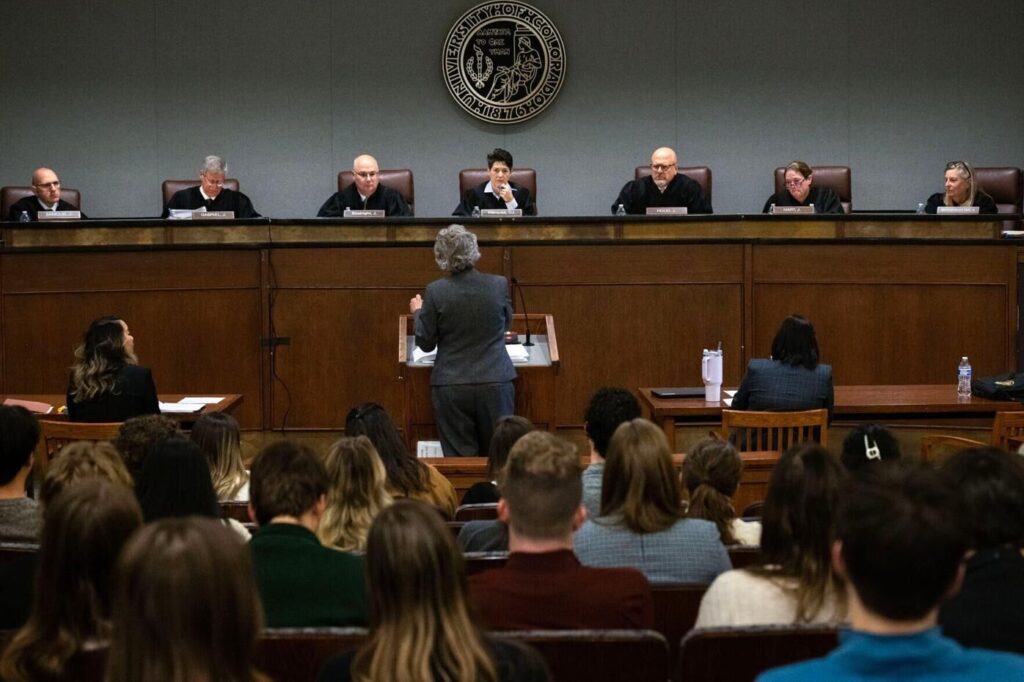
Colorado Supreme Court may address ‘new form of representation’ in criminal case
Michael Karlik
michael.karlik@coloradopolitics.com
Updated 4 hours ago
The Colorado Supreme Court signaled last week that it may get involved in an ongoing Denver criminal proceeding in which the prosecution alleges a trial judge sidestepped the clear rules for appointing defense counsel. At least four of the court’s...
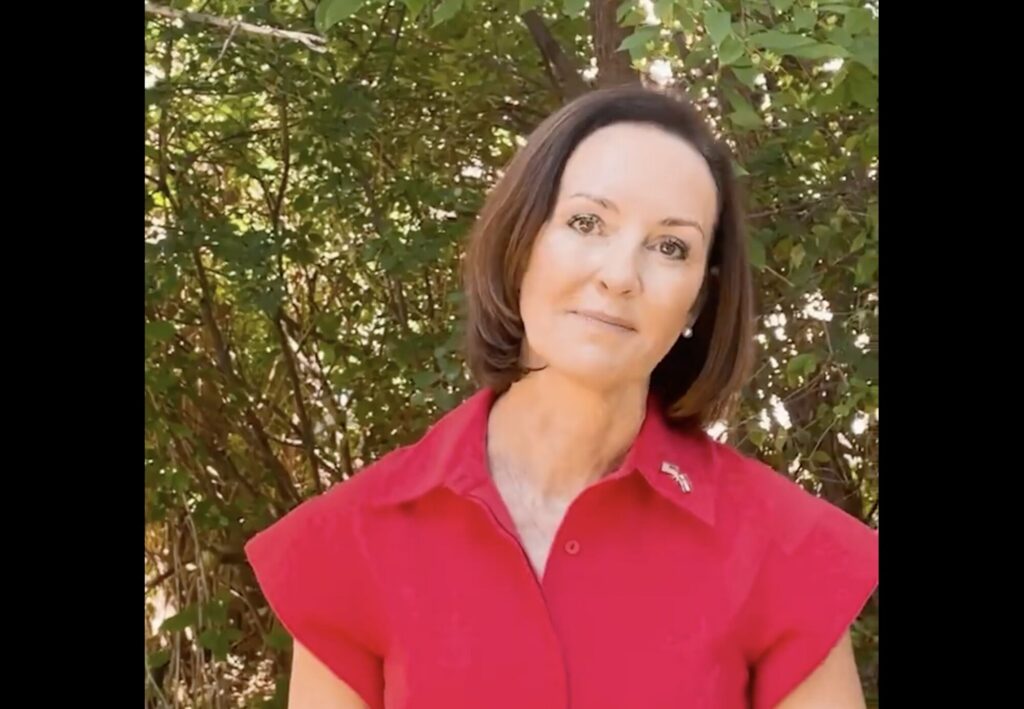
Crank challenger Jessica Killin racks up endorsements from all of Colorado’s congressional Democrats
Ernest Luning
ernest.luning@coloradopolitics.com
Updated 6 hours ago
U.S. Sen. John Hickenlooper on Thursday endorsed fellow Democrat Jessica Killin’s bid to oust Republican U.S. Rep. Jeff Crank in Colorado’s 5th Congressional District, giving the first-time candidate a clean sweep of support from the state’s six-member Democratic delegation. Killin,...

Slouching into reality regarding climate change | SLOAN
Kelly Sloan
kelly-sloan@coloradopolitics.com
Updated 15 hours ago
Milton Friedman once quipped that “nothing is so permanent as a temporary government program.” To that one may add the histrionics of the environmental lobby. Thirty-five years ago, in 1990, William F. Buckley wrote this gem of a paragraph: “In...

Improving access to health care needs Colorado-driven solutions | OPINION
Colorado Politics
colorado-politics@coloradopolitics.com
Updated 15 hours ago
By Tony Henderson More than ever, Colorado families need a health care system they can count on. Our state is still trapped in a period of instability that is making it harder for people to get care when and where...