

A $5 billion ski industry confronts a cold front in global tourism | FISCAL ROCKIES
| Editor’s Note: Once among the nation’s fastest-growing economies, Colorado today confronts mounting challenges that threaten its momentum. This series reveals how a state once defined by prosperity is navigating economic cliffs and ridges. We explore the impact that increased regulations, tariffs, shifting tax policies, the high cost of living and widening urban–rural divides have on businesses, workers, and communities. The series also highlights the push to leverage Colorado’s outdoor economy — one of its most valuable assets — for renewed growth, while working to attract industries like quantum and aerospace. |

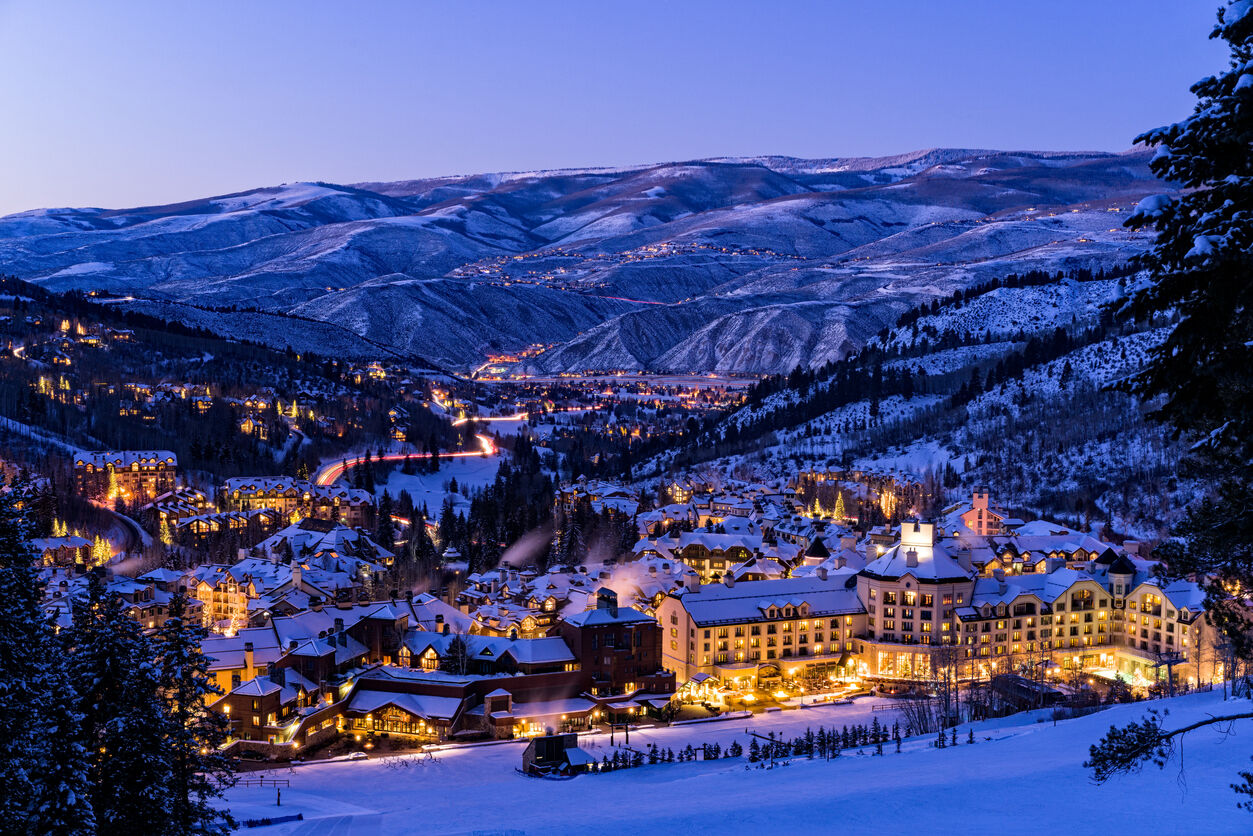
Vail and other Colorado ski towns are eyeing shaky global travel trends ahead of the 2025-26 ski season the way a novice snow rider might stand atop Rasputin’s Revenge at Vail or the Birds of Prey at Beaver Creek.
Which is to say very, very nervously.
Profuse multilingual chatter on the in-town buses aside, international skier visits account for only about 10% of overall visitation to Vail and surrounding Eagle County. Still, those visitors tend to be the biggest spenders in local lodges and retail stores in the Vail and Beaver Creek ski villages.
Stepped-up federal immigration enforcement, aggressive tariffs on imports from even close allies such as Canada and Mexico, and an overall sense of domestic disruption have tourists across the globe reconsidering travel to the United States, travel experts said. And this will be the first full season for Colorado’s $5 billion-a-year ski industry in President Donald Trump’s second term.
“We know that Mexico traffic at Eagle County Regional Airport was down about 10% in the first quarter,” said Chris Romer, president and CEO of the Vail Valley Partnership chamber of commerce. “(Travel) seems to have fallen off a cliff for (countries) other than Mexico and South America.”
Latin America makes up the majority of Vail’s 10% international clientele, Romer said, but steep declines in visitation from Canada and Europe could hurt at the margins for local businesses.
“The rest could move us from a good year to an average year or from an average year to a slightly bad year, but it’s not going to move the needle significantly,” Romer said, hopeful overall declines in visitation will be minimal. “We have such a strong brand recognition and such a loyal following in Mexico and to a lesser extent in South America.”
Vail Resorts, based in Broomfield, owns 42 ski resorts around the world, including in Canada, Australia and Switzerland, giving global ski travelers plenty of options, according to Vail Resorts’ Senior Director of Communications John Plack.
“Most guests who visit our destination resorts in the U.S. are domestic, and our international guest base from Australia, Canada, Mexico and the UK have the option to visit our international resorts, including Whistler Blackcomb — a key benefit of our diverse portfolio of resorts,” Plack noted.
Nor is Plack particularly concerned about labor shortages some in the ski industry are anticipating due to slowdowns in J-1 visa processing because of consulate staffing shortages and stepped-up vetting for social media screenings and other reasons.
“Employees with a visa make up a very small percentage of our employee base – just about 5% total — so we aren’t anticipating any notable impact to our staffing,” Plack said. “That being said, we are strong advocates of visa programs like J-1, given the cultural exchange they support.”
Romer said post-pandemic labor shortages have eased for his more than 800 member organizations, particularly for entry-level positions, although over the last two years — owing to higher housing costs and other spikes in the cost of living — companies are having a tougher time filling and keeping middle managers and supervisors, and director-level employees.
“There’s some concern about international visas, the J-1’s and certainly H2B has been a mess for a long time,” Romer said. “So there’s some consternation around the international worker, but most businesses seem pretty good on (the labor front).”
LOWERING THE TEMPERATURE
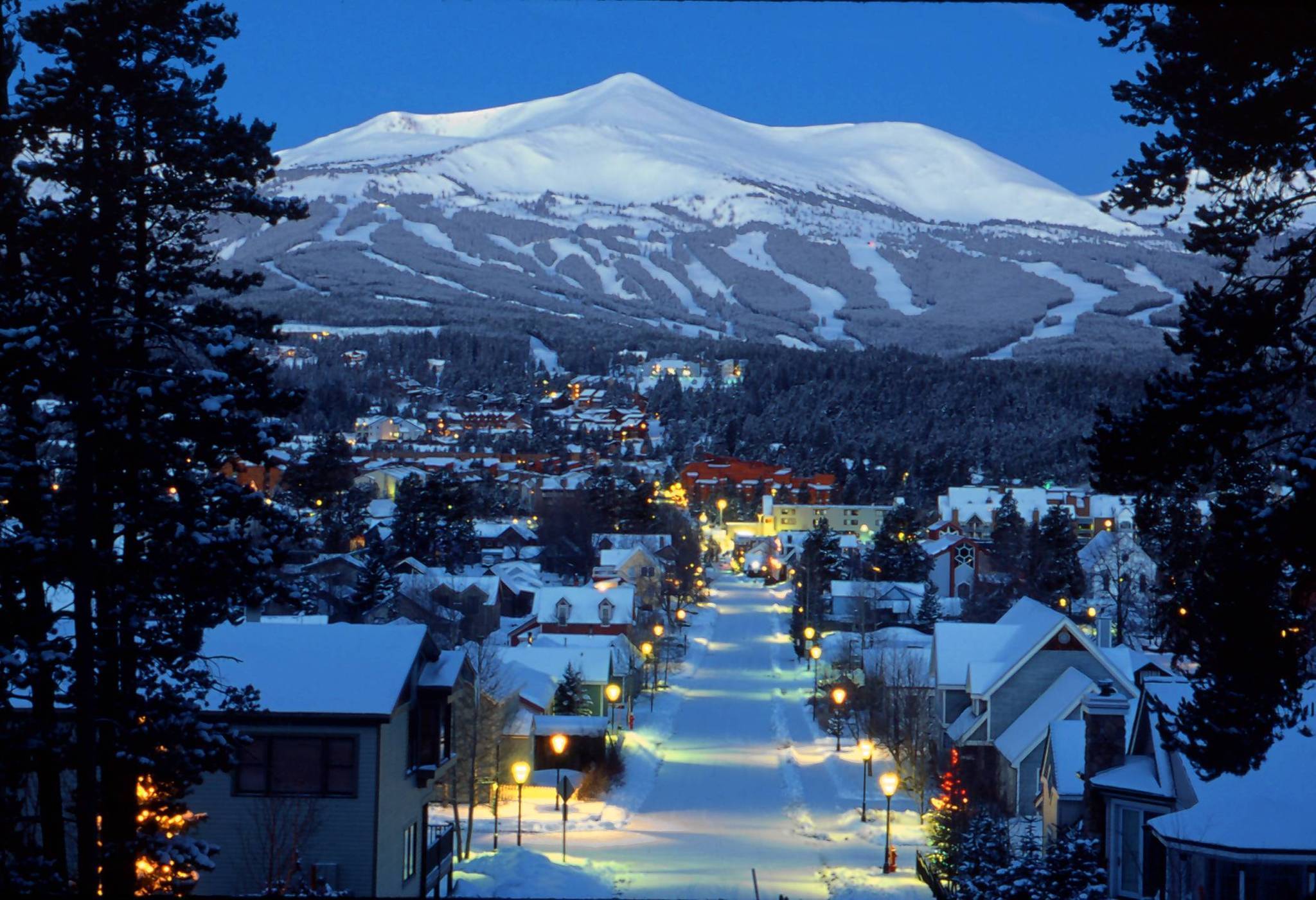
More than 30% of Eagle County residents identify as Latino or Hispanic, and Vail itself was founded in part by Austrian immigrants working with U.S. Army 10th Mountain Division ski troopers, who were wounded fighting Nazis in the mountains of Italy during World War II.
“One of the great things about our community is it is very diverse in all different aspects of diversity,” Avon Police Chief Greg Daly said. “From a cultural perspective, we have a lot of immigrants from lots of different countries here that make this area so successful. One of the reasons I celebrate is I’m an immigrant myself. I arrived here in the Vail Valley in 1994, and I am proud of my U.S. citizenship, but I’m also proud of being Irish and my culture (in) Ireland.”
Because about 50% of the population of Avon, the town at the base of Beaver Creek Resort, identifies as Latino or Hispanic, Daly said five of his officers and one of his administrators speak Spanish and English. And Colorado resort towns have not been immune from what the Vail Daily described as “community tension” over increased enforcement by Immigration and Customs Enforcement (ICE) officers under the Trump administration.
“I can say that it’s affecting our construction industry,” Eagle County Commissioner Jeanne McQueeney said of that tension. “Our schools are noticing that there are times when kids don’t show up at school. This is going to affect us in the long run for sure. Whether or not the visitors come back, we have always sort of weathered the storm.
“But,” McQueeney added, “it’s very worrisome.”
Nationwide, international air travel is down about 7% year over year, while Denver is bucking that trend by increasing about 3.2%, according to Axios, citing Visit Denver. The Colorado Sun reported that hotel occupancy is down 2% statewide through June, while skier visits also declined last season compared to the previous three. Vail Resorts is bracing for fewer guests again this season, according to the Vail Daily.
ECONOMIC HEADWINDS
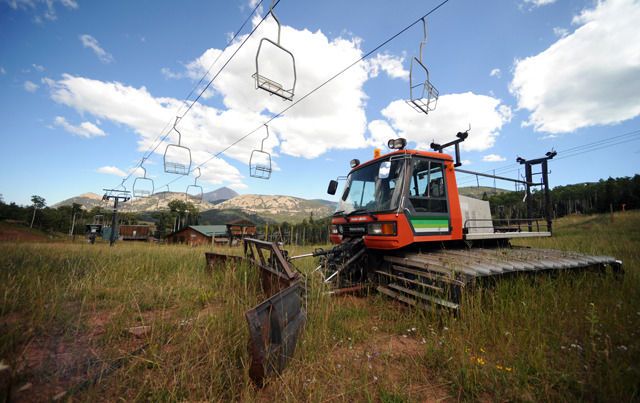
“There’s definitely a fear around where we are right now in the overall tourism economy. There’s a national trend and there’s a statewide trend, and those are definitely concerning,” said Beaver Creek Resort Company Executive Director Jim Clancy, who said Eagle County’s successful bid to raise the lodging tax by 2% to pay for childcare and wildfire mitigation is coming at the worst time.
Clancy said the resort has worked hard to bring in group business at off-peak times and that Beaver Creek will almost always be booming during the peak summer months of July and August and the peak winter months of December through March.
It’s the so-called shoulder seasons that worry him the most, he said.
“So, this isn’t just about lodging,” Clancy said of the Nov. 4 ballot question that passed by a narrow 82-vote margin. “This is about all of those other businesses, and candidly, the people that work in those businesses, making sure that there’s enough people in the resort to keep them sustained during those shoulder periods.”
By just 35 votes, town of Vail voters rejected a tax increase on Nov. 4 – a 6% excise tax on short-term rentals to pay for community housing for locals.
Former Vail Mayor Kim Langmaid, who won another term on council in the same election, supported the tax, as well as moving forward with big redevelopment projects, despite the softening of the current economy.
“Vail does have to have to be thinking long-term,” Langmaid said. “There’s definitely going to be headwinds … and there’s a concern that the near-term future is very uncertain. But we need to keep moving forward with the best information we have, and, as long as we maintain the character and culture of Vail, and we’ve got snow on the hill and great experiences for people, people are going to still want to come here.”
Eagle County Commissioner Tom Boyd said in October that year-over-year real estate sales were up 7% and tax revenue was up 6%, although he acknowledged that’s not what he’s hearing from commissioners in most of the rest of the state. Still, he’s cautiously bullish going forward.
“I don’t think Eagle County is looking at lower revenue. We’re going to be OK,” Boyd said of local government efforts to support workers. “But if you have a valley that’s full of people that need service and you don’t have people that provide service, you’ve got an economic imbalance. So, ultimately, the best lever to make sure that that doesn’t happen is local government.”
Boyd supported McQueeney and commissioner Matt Scherr putting the lodging tax increase on the ballot because, he said, he sees federal policy that has lowered taxes for high earners and businesses as a boon for high-end resort areas in Colorado.
“This has got to be the best time in a hundred years or more to be a very wealthy American,” Boyd said. “So, that’s great. Come on in, spend your money here. We welcome you from wherever you are in the world. But while we do that, we also want to make sure that the people who are serving you here are healthy and taken care of and aren’t overwhelmed by this tsunami of costs.”
NO LONGER NO. 1
Former Vail Mayor Rob Ford, who served in the late 1990s and still lives in Vail but resigned mid-term when his efforts to build affordable housing on town land became too contentious, spent the recent Oktoberfest walking around Vail talking to local business owners, who said revenues were down 20 to 25% year over year.
When Ford heard about the proposed West Lionshead development, he was inspired to make a rare visit to town hall.
“That’s alarming to me. I’ve never quite heard of those kinds of numbers in Vail before,” Ford said of the anecdotal evidence of a big downturn. “(Then I heard) how they’re about to approve a whole new Lionshead, which is going to bring in more people on the mountain, more restaurants, more retail space, more competition for everybody just when (businesses) are going in the tank.”
The current town council approved amendments to the 1990s master plan Ford helped draft, which will allow an East West Partners partnership with the town to move forward on Vail Resorts’ land. It will take many months, if not years, of approvals to ultimately get it built.
Ford argued the downturn in visitors may have more to do with a decline in quality since the advent of the Epic Pass in 2008, which he argued has led to overcrowding on the ski runs, parking and traffic snarls, and an overall decline in service quality for guests.
He told the councilmembers they should all watch a YouTube video from last season called “How Vail Destroyed Skiing”.
“When we did the Lionshead Master Plan … I was mayor of the No. 1 ski area in North America,” Ford told the council. “We were doing a pretty good job. I don’t know what the standings are now, but I certainly haven’t seen anybody touting Vail anywhere anymore. My personal opinion is that the ski experience on the mountain sucks.”
Vail was only ranked No. 14 in the West in the latest SKI Magazine reader survey and was not in the top 20 in the U.S.
Too many people trying to park in town and too many people on the ski runs seem like a good problem to have, if they’re all spending money in local restaurants and stores, but Ford argued they’re mostly all Front Range Epic Pass holders who are jumping back in their cars to fight traffic on I-70.
Romer countered that lodging reservations are currently only about 3% down for the coming winter, while summer numbers were actually up 1%. People are still coming to Vail.
“What I’m hearing from my members and what I’m seeing in the metrics … all indicators are that we are doing fine,” Romer said. “Not good, not bad, just kind of muddling along. Recognizing that there’s obvious headwinds and uncertainty and unrest and unknowns, I’m not hearing anyone cheerleading about how great they’re doing, and I’m not hearing anyone crying in their beer about how bad they’re doing.”
Read more from the Fiscal Rockies series:
Q&A: Colorado Chamber of Commerce CEO sees warning signs for state economy, despite strengths
Can you afford to live in Denver?
After years of leading the nation, Colorado’s economy shows signs of cooling
Q&A with Denver Metro Chamber of Commerce | ‘Getting harder, more expensive to do business’ in Colorado
Regulatory layers turn cost of doing business in Colorado into ‘death by a thousand cuts’
Site selectors praise Colorado workforce — but flag regulatory hurdles
‘Evolving’ regulatory landscape among Colorado cities is pricey, problematic, small businesses say
Q&A with the Colorado Springs Chamber & Economic Development Corporation | Struggling with workforce shortages, high cost, regulatory uncertainty
Once a step ahead, Colorado’s economy cools, burdened by rising costs and regulations


Daniels Fund awards $450,000 to three outstanding organizations | NONPROFIT REGISTER
Joanne Davidson Special to Colorado Politics
joanne-davidson-special-to-colorado-politics@coloradopolitics.com
Updated 5 hours ago
DANIELS FUND Denver News: You know the old saying about how it’s an honor just to be nominated? In the case of the Daniels Fund and its annual $250,000 Medal of Excellence Award, it wasn’t just an honor to be considered; it was...

Colorado attorney general joins lawsuit against Trump energy emergency order
Scott Weiser
scott.weiser@gazette.com
Updated 6 hours ago
Colorado Attorney General Phil Weiser joined a multistate lawsuit challenging an executive order invoking the National Emergencies Act that President Donald Trump issued on the day of his inauguration. The order fast-tracks fossil fuel projects by bypassing or shortening environmental...

So … why do we care about Bad Bunny?
Isabelle Rosewater, Special to The Gazette
Isabelle-Rosewater@gazette.com
Updated 22 hours ago
Puerto Rican superstar’s selection to headline first Super Bowl halftime show in Spanish has sparked global conversation and controversy Puerto Rican superstar Bad Bunny’s selection as the first artist to headline a Super Bowl halftime show performing entirely in Spanish...

More people are now leaving Colorado than moving here from other states | Vince Bzdek
Vince Bzdek
vince.bzdek@gazette.com
Updated 4 days ago
By Vince Bzdek It’s finally happened. Buried in all the self-congratulatory reports about Colorado reaching the 6 million mark in population last year was news that should be keeping our political leaders up at night. For the first time in...
Xcel gets an earful from public for power shutoffs in Colorado
Scott Weiser
scott.weiser@gazette.com
Updated 6 days ago
Residents, business owners and local officials gave Xcel Energy an earful during a hearing convened by Colorado’s utility regulators on Wednesday, accusing the power company of using power shutoffs as a liability dodge that burdens communities. Xcel’s ability to trigger...

Colorado hit a population milestone in 2025; numbers ‘don’t lie,’ but what do they say?
Stephanie Earls
stephanie-earls@coloradopolitics.com
Updated 6 days ago
Colorado is: full Standing room only How ‘bout, More crowded than it was but less crowded than we thought? Local takeaways from the U.S. Census Bureau’s most recent data drop are too complex for bumper sticker treatment, but here’s the...

We tested vapes in Colorado for signs of hemp. This is what we found.
Christopher Osher
chris.osher@gazette.com
Updated 6 days ago
This article was produced for ProPublica’s Local Reporting Network in partnership with The Denver Gazette. Sign up for Dispatches to get our stories in your inbox every week. Leaders in the Colorado marijuana industry have complained in recent years that...
Gov. Polis highlights Colorado’s business climate and affordability during annual gathering
Marissa Ventrelli
marissa.ventrelli@coloradopolitics.com
Updated 6 days ago
Gov. Jared Polis used his annual meeting with Colorado business leaders on Wednesday to take stock of his time in office, highlighting the state’s pandemic response, ongoing challenges facing downtown economies, and what he described as continued efforts to balance...

$200M in federal funds to be deployed in Denver area for heat pumps aimed at reducing emissions
Sage Kelley
sage.kelley@denvergazette.com
Updated 6 days ago
The Denver Regional Council of Governments (DRCOG) has officially launched a $200 million program to help reduce carbon emissions with heat pumps. The regional organization announced its new initiative, “Power Ahead Colorado,” which also includes partnerships with the Colorado Energy...
Colorado’s unemployment rate fell again in December
Bernadette Berdychowski
bernadette.berdychowski@denvergazette.com
Updated 1 week ago
Colorado’s unemployment rate fell to 3.8% in December, according to new data released Tuesday. The rate dropped one-tenth of a percentage point, following a monthslong trend of declining unemployment in the state, according to the Colorado Department of Labor and...
PREV
PREVIOUS

Trump highlights accomplishments in White House speech
By Steve Holland, Jeff Mason and Trevor Hunnicutt, Reuters WASHINGTON • In a rare evening address from the White House, U.S. President Donald Trump on Wednesday touted his accomplishments, saying his administration has ended wars, drastically reduced illegal border crossings and brought down the prices of some consumer goods. America is now poised for a full comeback as […]

Colorado campaign finance penalties 'a runaway train without an off-ramp'
Each day, Mike Stapleton wakes up owing the state of Colorado another $1,550. By the end of each week, Stapleton’s debt for not filing nearly three dozen campaign finance reports dating to April 2018 will have grown by nearly $11,000. As of Dec. 8, Stapleton and his campaign – The Committee to Elect Michael Stapleton […]