

Colorado board clarifies certification rules for autism behavior technicians
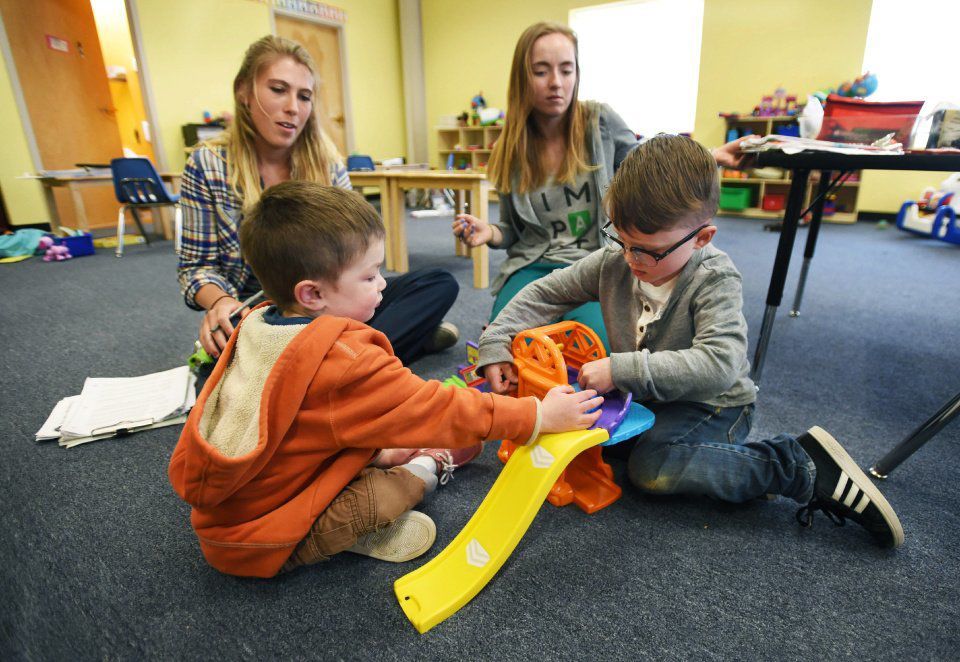
A Colorado board has clarified new rules for professionals working with children on the autism spectrum, following worries by some that hundreds of families might lose access to services as a result of a regulatory change.
Over the summer, the department announced it will soon require all behavior technicians — professionals who work with children on the autism spectrum undergoing applied behavior analysis (ABA) therapy — to be nationally certified to treat Medicaid patients.
There are three recognized certifications for behavior technicians: applied behavioral analysis technician or ABAT; board certified autism technician or BCAT; and registered behavior technician or RBT.
Some noticed that Colorado Department of Health Care Policy and Financing’s Medical Services Board appeared poised to allow only two, potentially leaving the BCAT-certified individuals out of work.
Following the confusion, the board met with groups last month and updated its rules based on the feedback, including clarifying that it will accept individuals with BCAT certifications.
During a meeting last week, autism therapy providers told the board they support the certification requirement, but requested more time for behavior technicians to obtain theirs.
The board decided to postpone voting on the rule until its next meeting on Jan. 9.
Dr. Doreen Granpeesheh, CEO of the Center for Autism and Related Disorders, said behavior technicians are a critical resource for children on the autism spectrum undergoing a type of therapy known as applied behavior analysis or ABA.
Granpreeseh said her centers, which have locations around the country including several in Colorado, use BCAT for their behavior technicians.
“In my opinion, it’s a little bit stronger,” she said. “Their test is a little bit harder, and it has some additional regulations that we think provide additional safety.”
Anahita Lake-Khosravi, a psychologist at Empowered Living Collective in Denver, agrees that behavior technicians should have to go through some form of standardized training, as long as it isn’t proving to be too much of a barrier:
“I do think that it makes sense for this to be how it is so that not just anybody off the street can come in and provide care for autistic individuals without having some sort of buy-in,” she said. “It’s a tough one because gatekeeping puts this barrier behind it, but ultimately we want people who are invested, who understand this world, and have knowledge of this world, to be able to work with these kids best.”

Those who cannot live without wild things | Rachel Gabel
Rachel Gabel
rachel-gabel@coloradopolitics.com
Updated 1 day ago
Aldo Leopold wrote in his Sand County Almanac, “There are some who can live without wild things and some who cannot.” The collection of essays first published in 1949 was accepted by a publishing house after a steady stream of...

Thank God for Wyoming — the un-Colorado | Jon Caldara
Jon Caldara
jon-caldara@coloradopolitics.com
Updated 1 day ago
Years ago, I interviewed a Canadian health-care broker whose job was helping his countrymen escape their own failing system. When their “free” health care turned into “free to wait until you die,” he’d save his clients by routing them to...
It’s time to let unaffiliated voters caucus | Vince Bzdek
Vince Bzdek
vince.bzdek@gazette.com
Updated 2 days ago
There’s no getting around it: Colorado’s 3,000 county caucuses, which just wrapped up recently, left half the electorate out in the cold. Since unaffiliated voters now make up 51% of all Colorado voters, a majority of Colorado electors are barred...
A Mile High, again: Capitol M | Week of March 21, 2026
Marianne Goodland
marianne.goodland@coloradopolitics.com
Updated 4 days ago
The lighter side of the Capitol, usually…. Local Journalism Day, except they forgot their very own local journalists. The state Senate on Thursday, March 19, passed a resolution recognizing Local Journalism Day. Everyone voted for it, which is good, because...

Colorado Senate committee advances bill increasing overtime threshold for farmworkers
Marianne Goodland
marianne.goodland@coloradopolitics.com
Updated 1 day ago
The struggle to balance farmworker protections with the survival of Colorado’s family farms took center stage Thursday as senators debated two competing overtime bills. The Senate Business, Labor and Technology Committee held a rare double-bill hearing that led to a...

Colorado bill to fund mental health by raising alcohol taxes defeated in House committee
Marissa Ventrelli
marissa.ventrelli@coloradopolitics.com
Updated 1 day ago
Colorado legislators on Wednesday narrowly rejected a second measure that would raised taxes on alcohol products in order to fund mental health care treatment in the state. Proponents said the new revenue is necessary to help pay for mental health...

Lawsuit alleges Polis administration is holding juveniles after court‑ordered release
Marissa Ventrelli
marissa.ventrelli@coloradopolitics.com
Updated 10 hours ago
Colorado officials are facing a lawsuit alleging the state kept minors in juvenile detention for days or months after judges ordered them released, largely because appropriate foster or community placements were not available. Two minors facing juvenile delinquency charges sued...

Trump switches endorsement back to Jeff Hurd, says Hope Scheppelman is ending run in Colorado’s 3rd CD
Ernest Luning
ernest.luning@coloradopolitics.com
Updated 2 days ago
In a surprise twist, President Donald Trump on Friday said he was again endorsing Republican U.S. Rep. Jeff Hurd after pulling his support from the Grand Junction Republican last month and instead backing Hurd’s primary challenger in Colorado’s 3rd Congressional...
Set appropriate state guidelines for critical surveillance technology | OPINION
Colorado Politics
colorado-politics@coloradopolitics.com
Updated 3 days ago
I admit it: I’m worried. I’m hearing a lot about surveillance in the public arena. I hear cameras are capturing my car’s license plate wherever I drive, my face as I go in and out of stores and health facilities,...
Puppy trafficking bill promotes inhumane breeding | OPINION
Colorado Politics
colorado-politics@coloradopolitics.com
Updated 3 days ago
By Patti Strand When Justice Thurgood Marshall wrote “The Constitution does not prohibit legislatures from enacting stupid laws,” he wasn’t wrong. He was referring to a political process sometimes ill-equipped to deal with complex issues that require subject-matter knowledge and a...
PREV
PREVIOUS
Trump administration moves to dissolve national climate research lab in Colorado
WASHINGTON (AP) — The Trump administration is dismantling the National Center for Atmospheric Research in Colorado, moving to dissolve a research lab that a top White House official described as “one of the largest sources of climate alarmism in the country.″ White House budget director Russ Vought criticized the lab in a social media post […]

Pinnacol privatization plan gets cool reception from Colorado legislators
Should Colorado allow Pinnacol Assurance, the quasi-governmental workers’ compensation company, to go private? The proposal, expected to be on the agenda for the 2026 state legislative session, got its first review on Wednesday from a mostly skeptical Joint Budget Committee. But the proposal did get a thumbs-up – or at least “it makes sense,” according […]