

Wright seeks ‘broad-based’ reform of 55-year-old environmental law to speed permitting
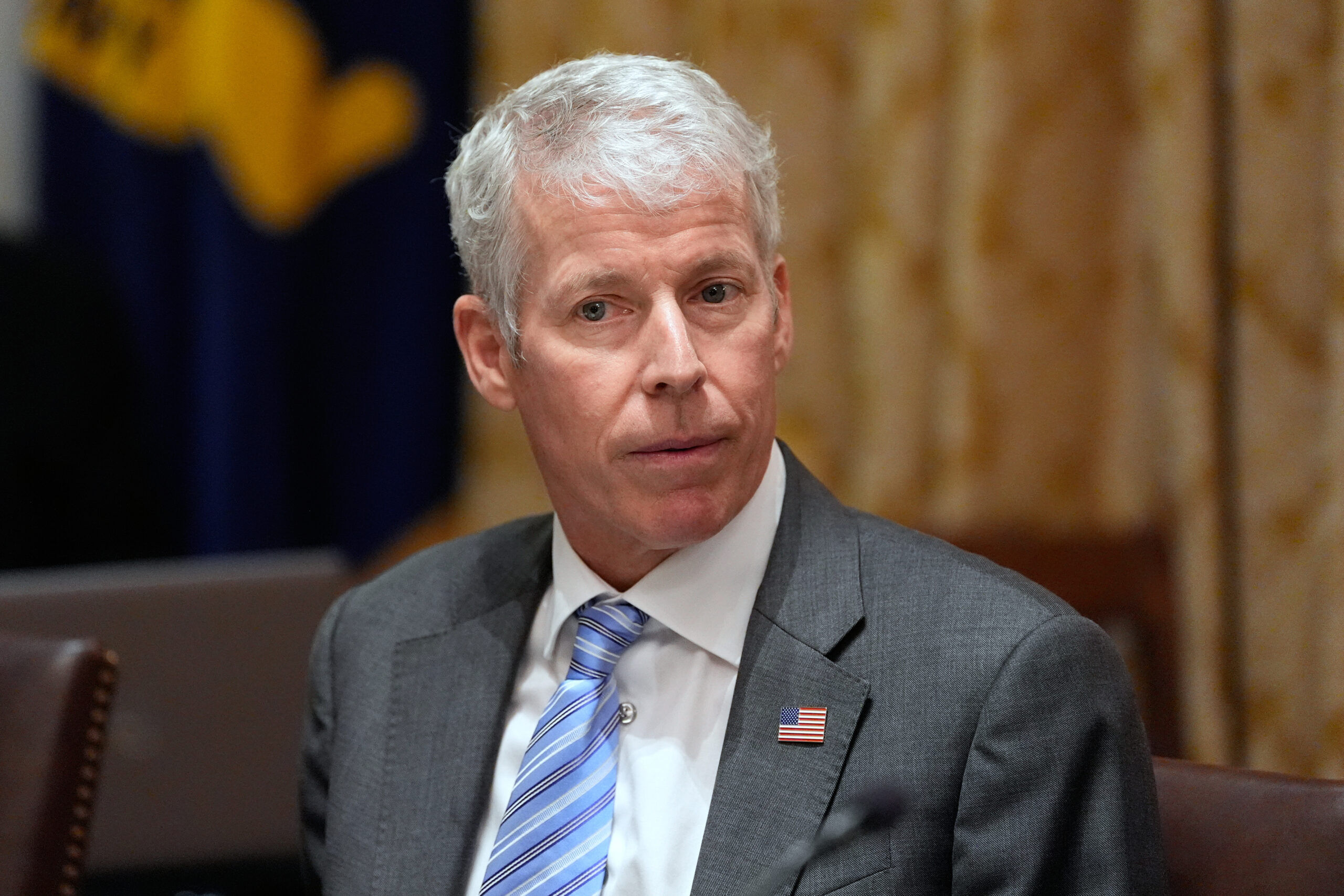
Energy Secretary Chris Wright joined the call for Congress to pass meaningful reforms to the federal environmental approval process required to build energy and infrastructure projects, specifically encouraging reforms to the National Environmental Policy Act.
Better known as NEPA, the 55-year-old law requires all federal agencies to consider and review the environmental effects of proposed projects requiring federal permits, including pipelines, highways, transmission lines, and much more.
Critics of the law have long insisted that NEPA does more harm than good by acting as red tape, opening the door for extensive legal challenges and slowing domestic infrastructure development.
Wright echoed this concern on Monday at the American Leadership in Energy Innovation Summit, calling NEPA a “massive problem.”
He said when NEPA was passed in 1970, its primary purpose was to serve as a “check,” requiring projects touching federal lands or federal funds to review what the effect on the environment could be. However, he said the law is no longer used in this way.
“It got turned into something completely different,” he said. “This is a weaponization, a 10-year legal stop on anyone from building anything by suing them on NEPA. That’s not what NEPA was about to begin with.”
In recent weeks, the Trump administration has broadly endorsed efforts in Congress to pass bipartisan permitting reform without specifically backing specific bills.
Last week, Environmental Protection Agency Administrator Lee Zeldin said Congress should consider any bill that results in a permit taking less time, costing less money, and providing more certainty.
Wright made similar comments on Monday, saying, “I hope we can get a bipartisan permitting reform bill done that’s broad-based, just quicker to get permits or stable to get permits easy, just lower risk to start planning to build things again.”
The House is poised to vote on a permitting reform bill specifically targeting the bedrock environmental law.
This week, the House is also expected to vote on the Standardizing Permitting and Expediting Economic Development Act, better known as the SPEED Act.
Introduced by House Natural Resources Chairman Bruce Westerman (R-AR), the SPEED Act would broadly overhaul and simplify NEPA and the scope of review required for environmental analyses by removing requirements to consider or conduct new scientific or technical research.
The bill would also mandate that federal agencies are not permitted to delay the issuance of an environmental review document or decision on the basis of waiting for new scientific research to be released.
Additionally, the SPEED Act would limit agencies’ ability to include downstream environmental effects associated with projects in a review and shorten the statute of limitations for legal challenges against projects subject to environmental reviews.
The bill has support among oil and gas industry executives, manufacturing trade groups, and several House Democrats.
However, a handful of House conservatives have threatened to tank the bill, saying offshore wind could benefit from the reforms, which would thwart the administration’s crackdown on renewables.
Some members of the House Freedom Caucus have targeted an amendment included late last month that would limit the president’s ability to revoke permits for certain projects.
Westerman has vowed to keep the language in the bill, telling Politico earlier this month, “If we start picking winners and losers, I don’t think we’re gonna get permitting reform done.”


So … why do we care about Bad Bunny?
Isabelle Rosewater, Special to The Gazette
Isabelle-Rosewater@gazette.com
Updated 16 hours ago
Puerto Rican superstar’s selection to headline first Super Bowl halftime show in Spanish has sparked global conversation and controversy Puerto Rican superstar Bad Bunny’s selection as the first artist to headline a Super Bowl halftime show performing entirely in Spanish...

Trump allies urge Supreme Court to uphold his birthright citizenship order
Jack Birle, Washington Examiner
jack.birle.washington.examiner@gazetteedit.wpenginepowered.com
Updated 5 days ago
The Supreme Court will soon hear a landmark challenge over precisely who can enjoy the birthright citizenship granted under the 14th amendment, and the Trump administration and its allies are urging the high court to side with the president’s view....

Trump sues IRS and Treasury for $10 billion over tax return leak
David Zimmermann Washington Examiner
davidzimmermannwashingtonexaminer@wpstage.coloradopolitics.com
Updated 5 days ago
President Donald Trump filed a $10 billion lawsuit against the IRS and Treasury Department as one of the plaintiffs on Thursday, alleging a former IRS employee leaked his confidential tax records over six years ago. The federal lawsuit, filed in...

Where government funding talks stand as Congress careens toward partial shutdown
Ramsey Touchberry, Washington Examiner
ramsey.touchberry.washington.examiner@gazetteedit.wpenginepowered.com
Updated 6 days ago
The federal government is expected to enter a partial shutdown starting Saturday, but it could be short-lived as Senate Democrats and the White House negotiate new restrictions for President Donald Trump’s sweeping deportation agenda. A procedural vote to advance a...

Appeals court indefinitely halts judge’s limits on ICE tactics in Minnesota
Kaelan Deese, Washington Examiner
kaelan.deese.washington.examiner@gazetteedit.wpenginepowered.com
Updated 1 week ago
A federal appeals court on Monday blocked a lower-court judge’s restrictions on Immigration and Customs Enforcement tactics in Minnesota, handing the Trump administration a significant win as protests and legal challenges continue to surround federal immigration operations in the Twin...

Gun rights groups split with Trump administration over Minnesota shooting
Wire Services
wire-services@coloradopolitics.com
Updated 1 week ago
The death of Alex Pretti in Minneapolis is opening a new fault line between President Donald Trump and his conservative base, as gun rights groups denounce what they say are a series of anti-Second Amendment statements justifying the shooting. The...
House races in 2026 see big competition with double-digit candidate fields
David Zimmermann Washington Examiner
davidzimmermannwashingtonexaminer@wpstage.coloradopolitics.com
Updated 1 week ago
Certain House races in 2026 are seeing larger-than-normal fields, with the number of candidates in primary and special elections climbing into the double digits. The races, from Georgia to Arizona to New York, are drawing massive candidate interest after incumbents...

Canada has ‘no intention’ of signing free trade deal with China, Carney says
Zach LaChance, Washington Examiner
zach.lachance.washington.examiner@gazetteedit.wpenginepowered.com
Updated 1 week ago
Canadian Prime Minister Mark Carney insisted he has no plans to pursue a free trade agreement with China, as President Donald Trump fumes over a recent partnership between the two countries. Canada and China struck a “preliminary agreement” on Jan....
US officially leaves the World Health Organization
Washington Examiner Staff, Washington Examiner
washington.examiner.staff.washington.examiner@gazetteedit.wpenginepowered.com
Updated 2 weeks ago
The United States officially withdrew from the World Health Organization on Thursday, slightly over a year after President Donald Trump announced his intention to withdraw the U.S. from the WHO via an executive order on the first day of his...

House advances government funding bills as Johnson appeases GOP factions
Rachel Schilke, Washington Examiner
rachel.schilke.washington.examiner@gazetteedit.wpenginepowered.com
Updated 2 weeks ago
The House is one step closer to passing the final slate of appropriations bills after Speaker Mike Johnson (R-LA) successfully staved off rebellions from his center and right flanks, setting up the legislation for a final vote later this afternoon. ...
PREV
PREVIOUS

What we know so far about the Brown University shooting
A sweeping manhunt to locate the suspect who carried out a mass shooting at Brown University is stretching into its third day. The shooter gunned down students studying for finals, killing two and injuring nine in Providence, Rhode Island, on Saturday afternoon. Authorities initially detained a person of interest but revealed late Sunday that they […]

Here’s why House Republicans are increasingly bucking leadership by forcing votes on unapproved bills
Legislative tools once thought to be assets of the House minority party only are now being wielded by members of the majority Republican conference. Members and strategists say it’s less a reflection of weak leadership and more due to their frustration that they can’t more quickly advance the Republican Party’s agenda. The use of the […]