

10th Circuit rules 20-year-old DUI convictions may be factor in deportation proceedings

The Denver-based federal appeals court concluded last month that it was appropriate for immigration authorities to consider a man’s 20-year-old impaired driving convictions when determining if he recently exhibited “good moral character.”
Under federal law, an immigrant seeking to remain in the country is eligible for relief if they have been continuously present in the U.S. for 10 years, have no convictions for certain offenses, and removal would cause a hardship to qualifying family members. Further, in the prior decade, they must have been “a person of good moral character.”
Adan Enrique Luna-Corona is a Mexican citizen who entered the United States in the mid-1990s. Between 1995 and 1998, he incurred three convictions for driving under the influence.
In 2017, Luna-Corona pleaded guilty to a fourth DUI. Shortly afterward, the government moved to deport him.
After a 2019 hearing, Denver-based Immigration Judge Ivan Gardzelewski concluded Luna-Corona had not met the good moral character requirement. He acknowledged Luna-Corona had only one drunk driving offense within the prior 10 years.
Yet, excluding the three older convictions “would ignore the widely recognized relationship between recidivist behavior and one’s moral character,” Gardzelewski wrote. The repeat offenses were “a continuation of multiple lapses in judgment.”
The Board of Immigration Appeals upheld the decision, agreeing that Luna-Corona’s recidivism was an appropriate factor when weighing his good moral character.
Case: Luna-Corona v. Bondi
Decided: November 17, 2025
Jurisdiction: Board of Immigration Appeals
Ruling: 3-0
Judges: Harris L Hartz (author)
Nancy L. Moritz
Allison H. Eid
On Nov. 17, a three-judge panel of the U.S. Court of Appeals for the 10th Circuit acknowledged the logic of limiting consideration to convictions within the 10-year period outlined in law. However, the panel invoked federal courts’ “treatment of recidivists” in criminal cases to conclude it was within-bounds to look at repeat conduct for immigration purposes.
The Board of Immigration Appeals and the immigration judge “treated Petitioner’s 2017 DUI conviction so seriously because it was his fourth such conviction,” wrote Judge Harris L Hartz. “In doing so, the BIA and IJ were not reflecting on what Petitioner’s moral character had been back in 1995 or 1996. Rather, they were saying that his moral character was bad in 2017 because he was unable to keep himself from repeating serious misconduct for which he had been convicted.”
Luna-Corona’s lawyers did not respond to a request for comment.
The case is Luna-Corona v. Bondi.


Federal judge recommends dismissing trans athletics lawsuit by area school districts
Eric Young
eric.young@gazette.com
Updated 8 hours ago
A judge has recommended dismissing a federal lawsuit filed by multiple school districts against the Colorado Attorney General’s and Civil Rights Offices over their policies dictating students’ participation in athletics and activities based on their biological sex rather than gender...
Appeals judge asks Colorado Supreme Court to once again clarify magistrate rules
Michael Karlik
michael.karlik@coloradopolitics.com
Updated 8 hours ago
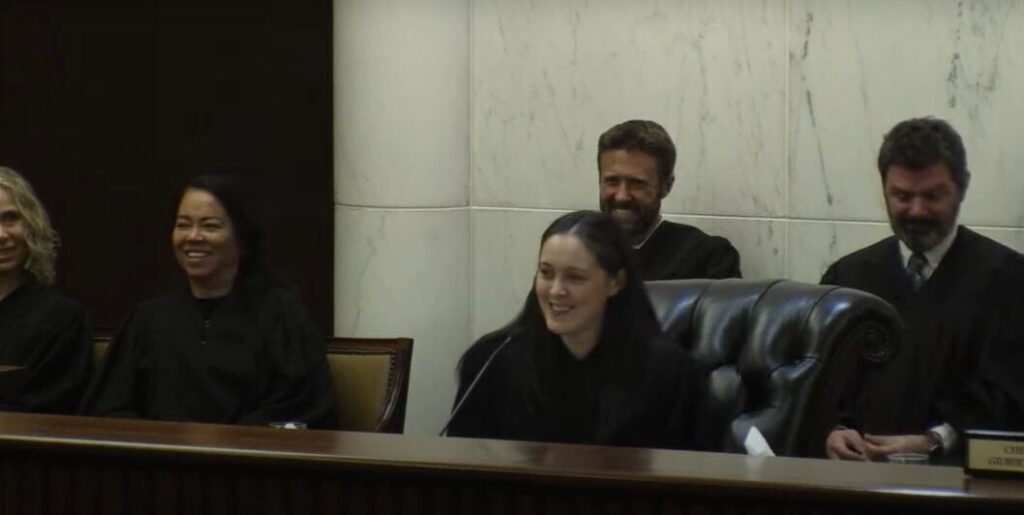
A member of Colorado’s second-highest court urged the state Supreme Court last week to revise confusing language in the rules governing magistrates, less than two weeks after an attempted cleanup of the rules took effect. Magistrates are judicial employees who are...

10th Circuit dismisses paralyzed man’s claims against Colorado Springs, officer
Michael Karlik
michael.karlik@coloradopolitics.com
Updated 16 hours ago
The Denver-based federal appeals court upheld the dismissal last week of a man’s excessive force claims against the city of Colorado Springs and the officer who tased him, causing him to fall down a sloped surface and break his neck....
Colorado justices weigh overlap between child prostitution offenses
Michael Karlik
michael.karlik@coloradopolitics.com
Updated 6 hours ago
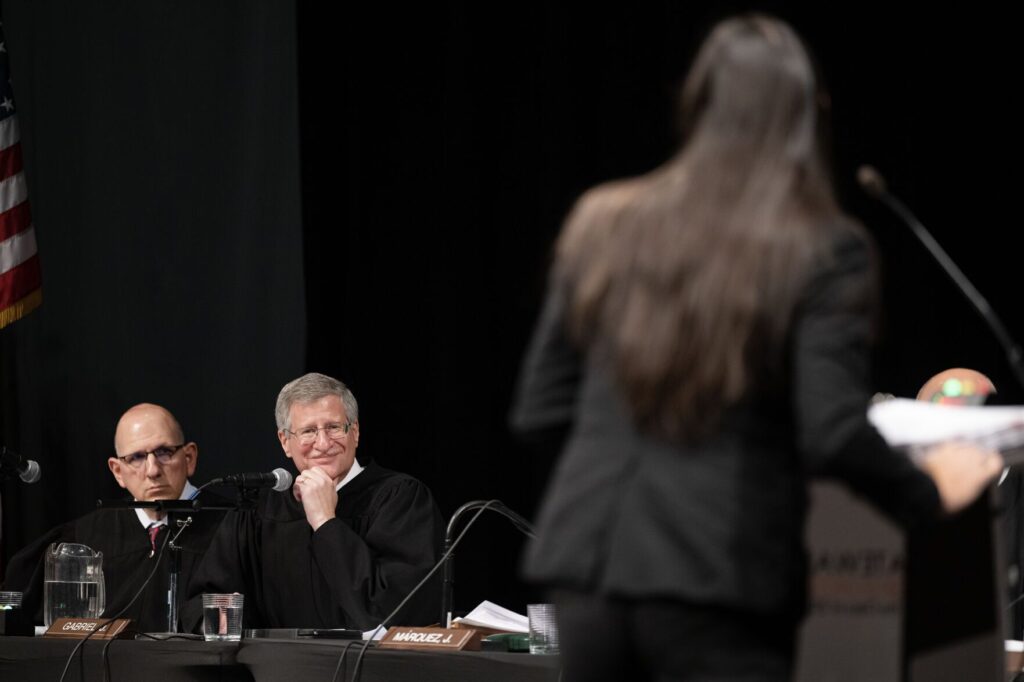
Members of the Colorado Supreme Court last week appeared willing to uphold a man’s conviction for an attempted child prostitution offense, which the state’s second-highest court previously found to be a violation of his right to equal protection under the...

State Supreme Court holds oral arguments, 10th Circuit revives dormant initiative | COURT CRAWL
Michael Karlik
michael.karlik@coloradopolitics.com
Updated 2 days ago
Welcome to Court Crawl, Colorado Politics’ roundup of news from the third branch of government. The state Supreme Court heard oral arguments last week in multiple civil and criminal cases, plus the Denver-based federal appeals court is doing something unusual...

Is a pardon for Tina Peters coming? Colorado governor confirms he is weighing options
The Denver Gazette
the-denver-gazette@coloradopolitics.com
Updated 1 day ago
Gov. Jared Polis on Friday strongly indicated he is considering clemency for Tina Peters, the former county clerk convicted of a security breach at her election office. When pressed about the matter, Polis didn’t offer an explicit answer, but he...
10th Circuit oral arguments to feature trial judges for first time in 12 years
Michael Karlik
michael.karlik@coloradopolitics.com
Updated 4 days ago
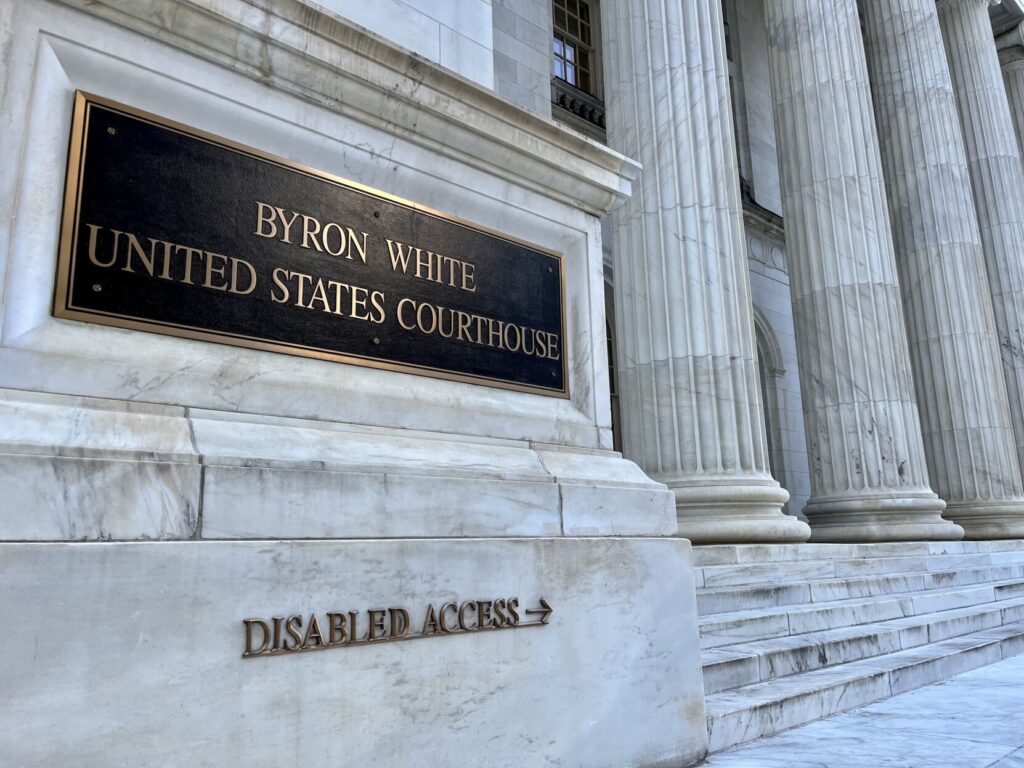
When the Denver-based federal appeals court convenes next week to hear oral arguments, six new faces will be staring down from the bench. No, the U.S. Court of Appeals for the 10th Circuit has not added six new members. It...

Federal judge says ICE cannot impose monitoring conditions beyond immigration judge’s order
Michael Karlik
michael.karlik@coloradopolitics.com
Updated 4 days ago
A federal judge told U.S. Immigration and Customs Enforcement on Thursday that it cannot impose additional restrictions or monitoring conditions beyond those ordered by an immigration judge when releasing a person on bond. In November, U.S. District Court Judge Gordon...
Colorado justices weigh constitutionality of student backpack search based on confidential tip
Michael Karlik
michael.karlik@coloradopolitics.com
Updated 3 days ago
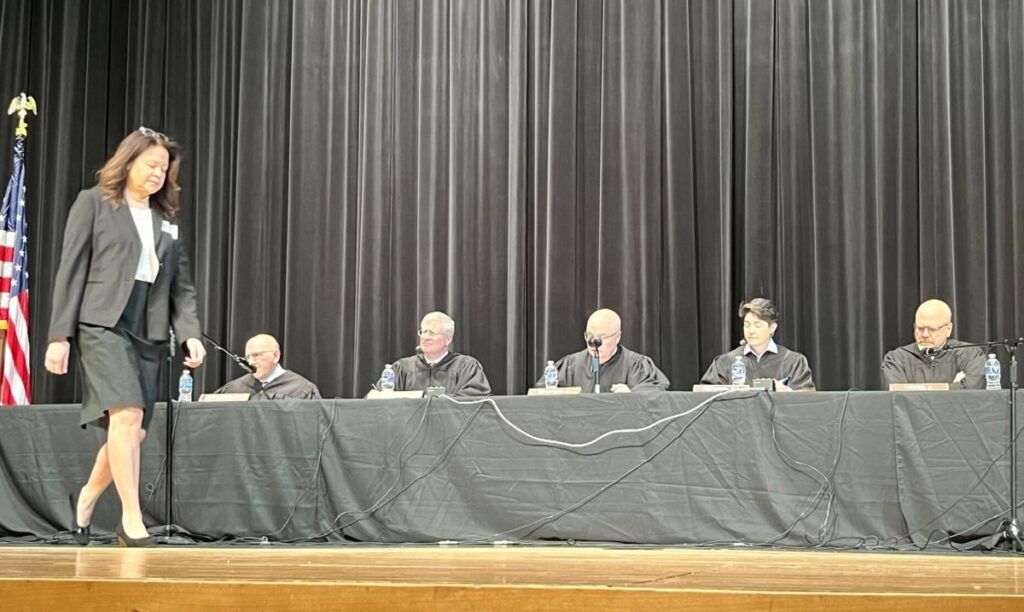
The Colorado Supreme Court considered on Wednesday whether a tip submitted through the state’s confidential school safety system provided a Douglas County administrator with reasonable suspicion to search a student’s backpack for drugs. A trial judge blocked evidence from the...
10th Circuit rebuffs Jeffco’s attempt to expand immunity footprint
Michael Karlik
michael.karlik@coloradopolitics.com
Updated 5 days ago
The Denver-based federal appeals court confirmed on Wednesday that it would not treat a judge’s decision to move a civil case forward as the automatic equivalent of denying immunity to governmental officials. The order from the U.S. Court of Appeals...
PREV
PREVIOUS

Mesa County judge wrong to conclude hatchet not a 'knife,' says appeals court
Colorado’s second-highest court determined last week that a Mesa County judge incorrectly reduced a defendant’s menacing charge from a felony to a misdemeanor after finding his hatchet did not meet the definition of “knife.” A person commits menacing as a misdemeanor if they use threats or physical actions to place another person in fear of […]

Colorado title board to review graduated income tax proposal for 2026 election
The Secretary of State’s title board on Wednesday will review another attempt at a graduated income tax ballot measure for the 2026 general election. In October, the title board had rejected two proposals submitted by the Bell Policy Center because they did not fit the state’s single-subject rule. A third was withdrawn. The two ballot […]