

10th Circuit rules Greeley officer unconstitutionally detained man standing outside home
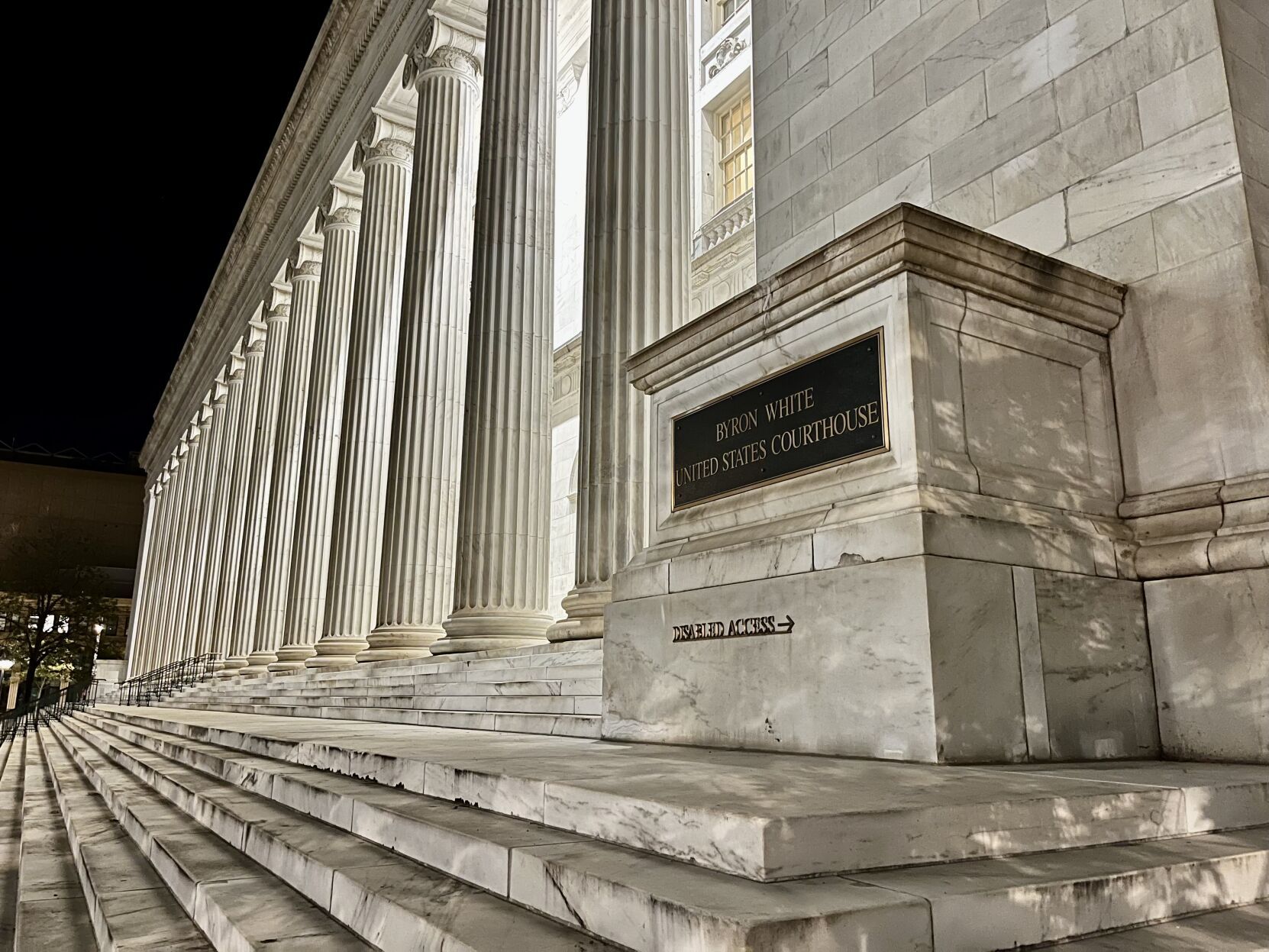
The Denver-based federal appeals court concluded last week that a Greeley police officer lacked reasonable suspicion to detain a man who was standing outside the door of a residence and not engaging in any indicators of criminal activity.
A three-judge panel of the U.S. Court of Appeals for the 10th Circuit noted that the U.S. Supreme Court has recognized an “implied license” for someone to approach a home, knock on the door and wait briefly to speak with an occupant. By all appearances, that was what Victor Manuel Trevizo Gonzalez appeared to be doing when Det. Kody Brunnemer questioned him and told him, “Don’t move.”
“This is not a difficult or esoteric concept,” wrote Judge Nancy L. Moritz in the Nov. 26 order. “Brunnemer points to nothing more than Gonzalez’s presence at the front door of a possibly vacant home, where he had an implied license to be. There are no particularized facts to suggest that Gonzalez was engaged in criminal activity or was not permitted to be at the front door of the home.”
Case: Trevizo Gonzalez v. Brunnemer
Decided: November 26, 2025
Jurisdiction: U.S. District Court for Colorado
Ruling: 3-0
Judges: Nancy L. Moritz (author)
Paul J. Kelly Jr.
Veronica S. Rossman
In January 2021, Brunnemer received a complaint about a potentially vacant property in the 2100 block of 5th Ave. The anonymous neighbor described people coming and going from the property, but without firsthand knowledge of criminal activity. Brunnemer visited the house and, although it appeared vacant, he declined to open an investigation.
Six days later, while driving by close to 10 p.m., Brunnemer spotted Trevizo Gonzalez and another man standing near the door. He pulled up, shone his light on the men and began to question them. Brunnemer told them, “Don’t move,” and returned to his patrol car. When Brunnemer walked back towards them, Trevizo Gonzalez began to pedal away on his bicycle. Brunnemer caught him and arrested him.
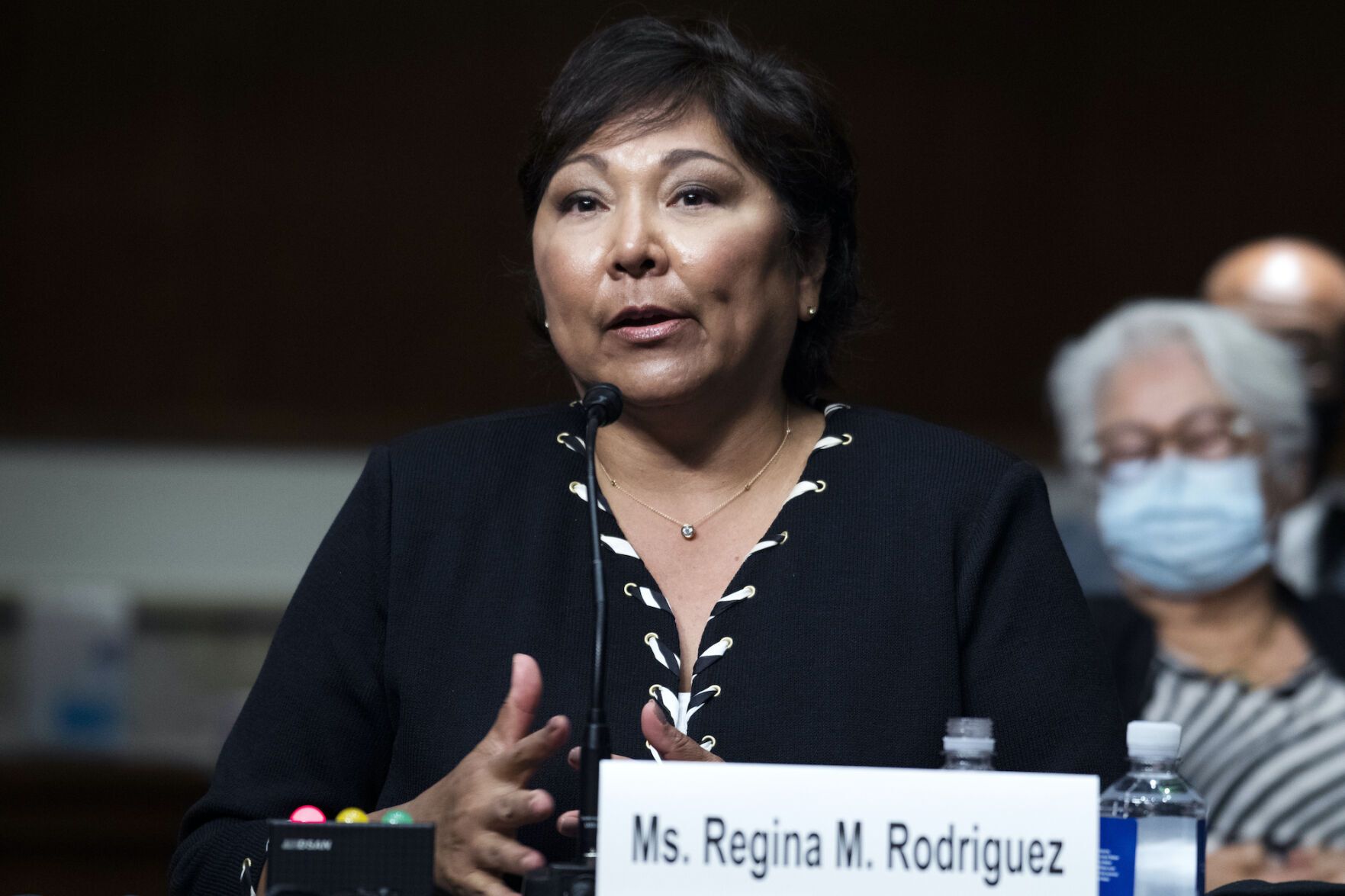
Trevizo Gonzalez sued Brunnemer for violating his Fourth Amendment right against unreasonable seizures. In April 2024, U.S. District Court Judge Regina M. Rodriguez sided with Trevizo Gonzalez in finding Brunnemer lacked reasonable suspicion to detain him.
“Here, at most, a neighbor had seen unknown individuals at a potentially vacant property on one prior occasion. There is no evidence that Plaintiff was, or even may have been, one of those people,” she wrote. “At the time of the stop, there was no visible criminal activity ‘afoot,’ let alone criminal activity being undertaken by Plaintiff.”
On appeal, Brunnemer argued Rodriguez failed to account for the totality of the circumstances when evaluating whether he had reasonable suspicion Trevizo Gonzalez was trespassing at the house.
“We have a patrol officer who was alerted to a problematic situation with a property,” attorney Michael J. Axelrad argued to the 10th Circuit panel.
“That was a while before the stop occurred, right?” asked Judge Veronica S. Rossman.
“I don’t see any case law or support for the proposition that reasonable suspicion has a shelf life of five days or less,” said Axelrad.
Brunnemer “saw nothing other than them being on the porch,” said Moritz. “It’s perfectly fine for him to go up and check to see and ask questions if he can. But then he seizes them.”
Attorney John Graham, representing Trevizo Gonzalez, argued that an officer’s suspicions of criminal activity at some point in the past do not give him authority to detain anyone in that area later.
“Here, he’s observed in a moment doing what anyone has the ability to do. Girl Scouts, solicitors — any person has the ability to approach a house,” Graham said. “Here, there are simply no facts to suggest he was doing anything other than that.”
The 10th Circuit panel agreed with him.
“Indeed, when Brunnemer himself investigated the property the prior week, he likewise knocked on the door,” wrote Moritz. “Perhaps if Brunnemer had observed Gonzalez for longer or continued his voluntary conversation with Gonzalez, he might have developed particularized suspicion, but he chose to proceed on a hunch instead.”
The case is Trevizo Gonzalez v. Brunnemer et al.


Federal judge recommends dismissing trans athletics lawsuit by area school districts
Eric Young
eric.young@gazette.com
Updated 3 hours ago
A judge has recommended dismissing a federal lawsuit filed by multiple school districts against the Colorado Attorney General’s and Civil Rights Offices over their policies dictating students’ participation in athletics and activities based on their biological sex rather than gender...
Appeals judge asks Colorado Supreme Court to once again clarify magistrate rules
Michael Karlik
michael.karlik@coloradopolitics.com
Updated 4 hours ago
A member of Colorado’s second-highest court urged the state Supreme Court last week to revise confusing language in the rules governing magistrates, less than two weeks after an attempted cleanup of the rules took effect. Magistrates are judicial employees who are...

10th Circuit dismisses paralyzed man’s claims against Colorado Springs, officer
Michael Karlik
michael.karlik@coloradopolitics.com
Updated 11 hours ago
The Denver-based federal appeals court upheld the dismissal last week of a man’s excessive force claims against the city of Colorado Springs and the officer who tased him, causing him to fall down a sloped surface and break his neck....
Colorado justices weigh overlap between child prostitution offenses
Michael Karlik
michael.karlik@coloradopolitics.com
Updated 2 hours ago
Members of the Colorado Supreme Court last week appeared willing to uphold a man’s conviction for an attempted child prostitution offense, which the state’s second-highest court previously found to be a violation of his right to equal protection under the...

State Supreme Court holds oral arguments, 10th Circuit revives dormant initiative | COURT CRAWL
Michael Karlik
michael.karlik@coloradopolitics.com
Updated 1 day ago
Welcome to Court Crawl, Colorado Politics’ roundup of news from the third branch of government. The state Supreme Court heard oral arguments last week in multiple civil and criminal cases, plus the Denver-based federal appeals court is doing something unusual...
Is a pardon for Tina Peters coming? Colorado governor confirms he is weighing options
The Denver Gazette
the-denver-gazette@coloradopolitics.com
Updated 1 day ago
Gov. Jared Polis on Friday strongly indicated he is considering clemency for Tina Peters, the former county clerk convicted of a security breach at her election office. When pressed about the matter, Polis didn’t offer an explicit answer, but he...
10th Circuit oral arguments to feature trial judges for first time in 12 years
Michael Karlik
michael.karlik@coloradopolitics.com
Updated 4 days ago
When the Denver-based federal appeals court convenes next week to hear oral arguments, six new faces will be staring down from the bench. No, the U.S. Court of Appeals for the 10th Circuit has not added six new members. It...
Federal judge says ICE cannot impose monitoring conditions beyond immigration judge’s order
Michael Karlik
michael.karlik@coloradopolitics.com
Updated 4 days ago
A federal judge told U.S. Immigration and Customs Enforcement on Thursday that it cannot impose additional restrictions or monitoring conditions beyond those ordered by an immigration judge when releasing a person on bond. In November, U.S. District Court Judge Gordon...
Colorado justices weigh constitutionality of student backpack search based on confidential tip
Michael Karlik
michael.karlik@coloradopolitics.com
Updated 3 days ago
The Colorado Supreme Court considered on Wednesday whether a tip submitted through the state’s confidential school safety system provided a Douglas County administrator with reasonable suspicion to search a student’s backpack for drugs. A trial judge blocked evidence from the...
10th Circuit rebuffs Jeffco’s attempt to expand immunity footprint
Michael Karlik
michael.karlik@coloradopolitics.com
Updated 4 days ago
The Denver-based federal appeals court confirmed on Wednesday that it would not treat a judge’s decision to move a civil case forward as the automatic equivalent of denying immunity to governmental officials. The order from the U.S. Court of Appeals...
PREV
PREVIOUS

Copper Creek yearling wolf blamed for livestock death in Gunnison County
A heifer found dead in eastern Gunnison County on Nov. 22 was killed by one of the yearlings from the Copper Creek wolf pack, according to a rancher, who did not want to be identified. It’s the fourth livestock death in November attributed to wolves. Two calves and a ewe were also killed by wolves […]
Funeral for Sen. Faith Winter will be held Friday at the Colorado Capitol
Colorado Sen. Faith Winter will be remembered on Dec. 5 at 2 p.m. in a funeral service on the state Capitol’s west steps. A celebration of life reception will follow. Winter died on Wednesday, Nov. 26, in a three-vehicle accident on I-25 near East Dry Creek Road. The accident is still under investigation by the […]