

Once dismissed by the mainstream, ski ballet is finding new life in Colorado
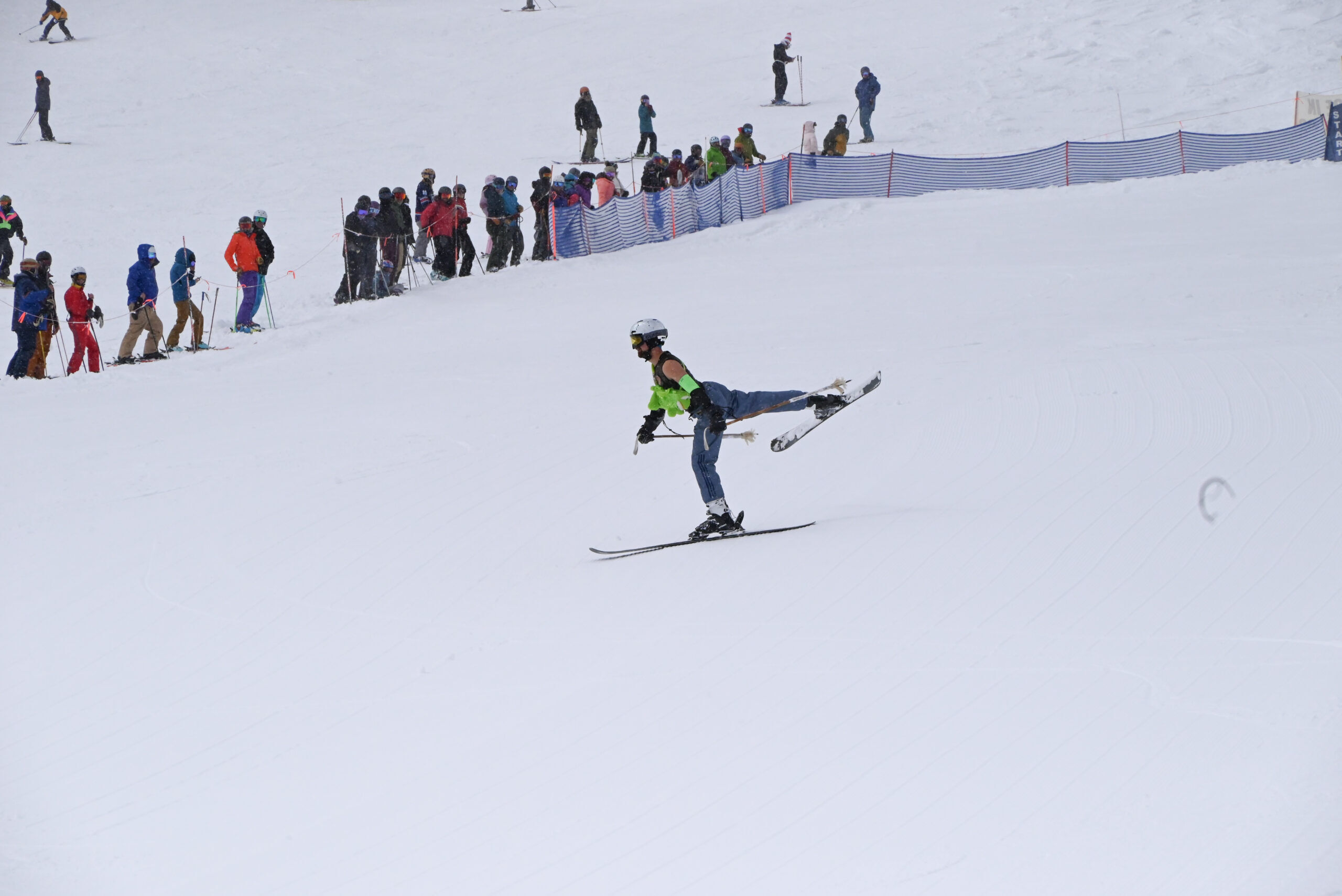
The sun was breaking through the clouds one day last April as Lara Rosenbaum stood atop a slope at Colorado’s Monarch Mountain.
She took in the scene around her: Costumed skiers twirling around, their arms and legs moving in the elegant cadence of a dancer, getting loose before their performance set to music.
“I honestly almost cried,” Rosenbaum said. “Like, they were seriously there because they loved ballet skiing.”
This was niche skiing Rosenbaum had known to be long abandoned by the sporting world, gone from the competitive circuit since her top finish at the 2000 U.S. Freestyle Championships. Rosenbaum has known herself to be among the last generation of this free-spirited style that rose and fell in a short-lived, free-spirited era 一 dismissed by the mainstream that favored speed and air over whimsical theatrics and short skis.
And yet there at Monarch Mountain that day, in an event that closed out the ski area’s 2024-’25 season, ski ballet seemed alive and well.
“It was really special,” Rosenbaum said.
It was part of what she’s seen as a “resurgence.”
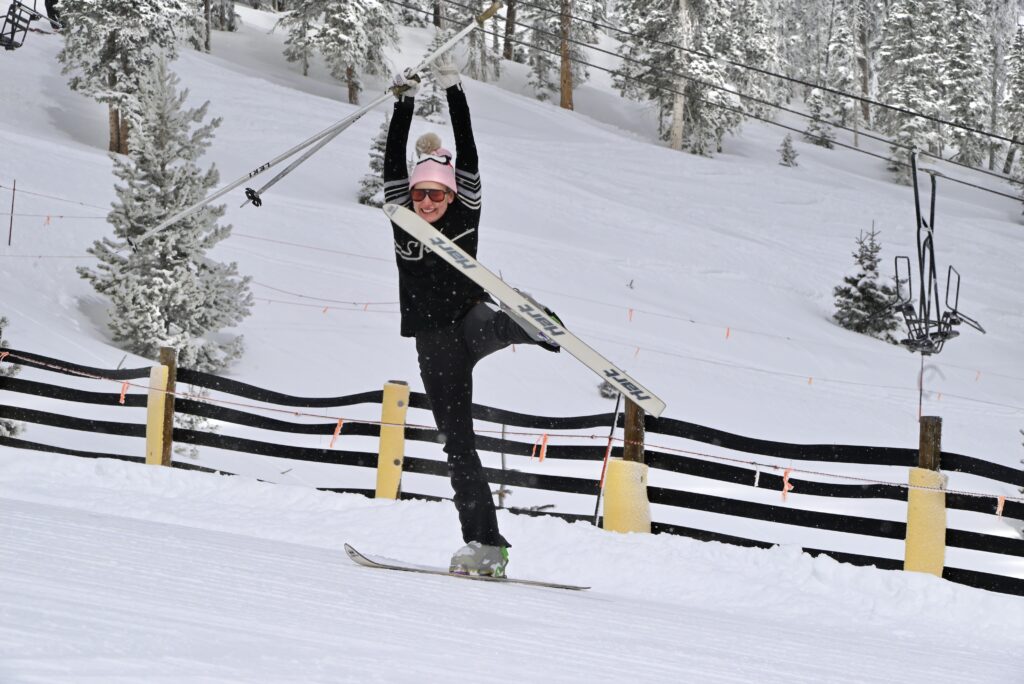
She’s seen it on social media, where she posts videos in hopes of bringing ski ballet to a new generation. “I’m getting messages on Facebook or Instagram almost daily,” said Rosenbaum, who lives in Nashville while traveling to mountains around the world. “I get people asking how they can learn.”
The Monarch event coincided with the release of a documentary exploring the colorful history of ski ballet. Produced by Switzerland-based ski brand MGG, the documentary coincided with an organized event in Verbier that claimed, like Monarch, to be the first of its kind for the sport in two decades.
Another event is coming to Colorado this weekend. On Saturday, Winter Park is hosting a ski ballet competition with a $1,000 cash prize.
And while plans are not yet final, Glenwood Springs’ Sunlight Mountain Resort is also eyeing ski ballet this season.
“We feel like we started something,” said BL Holdinghaus, director of planning and development at Monarch. “I think we’re gonna see a lot more of it in the next year or two.”
His thinking is based on the “huge success” Monarch reported after its first ski ballet. Come April, the plan is to close the season again with an expanded competition and lessons 一 and, yes, costumes that are customary to end-of-season parties.
That’s what Lisa Ledwith had in mind with ski ballet: “One of those classic, fun-loving, end-of-season events where you’ve got costumes,” said the executive director of Salida’s KHEN radio station, which partnered on the event.
Recalling rambunctious Warren Miller movies of the ’80s, the idea made sense to Ledwith.
“But we did something we didn’t expect to do,” she said. “We gave people this opportunity to celebrate this sport that has been dormant.”
People like Jim Cutchey, who came from Minnesota to win the competition, dressed as Slash while whirling to “Sweet Child O’ Mine.” Gripping long poles ideal for hoisting and flipping, he whirled atop his short Olin Ballet skis from 1982.
Cutchey taught ski ballet through that decade. “Every once in a while I want to know if somebody is still doing this stuff,” he said, explaining how he found out about the day at Monarch while browsing online.
That’s also how Kat Carillo found out about the day. Cat in the Hat costume in tow 一 to go with “Stray Cat Strut” 一 she came from Angel Fire, N.M., where last season she started teaching ski ballet.
“We gotta pass it on,” Carillo said of the sport. “People who can’t do it anymore are disappearing, and we gotta pass it on.”

Pros and practitioners of long ago virtually gather on a Facebook page called “TIP TAIL,” so named for another maneuver: One pops up and spins atop the ski tips. Many more maneuvers are seen in videos frequently posted to the page, where the directive is simple: “Have fun, enjoy it and make it LIVE!”
It was “[b]orn amid the rebellious spirit of flower power and the counterculture movement,” reads a remembrance published last year at Olympics.com. Ski ballet, the article continues, was “a jazzy revolt against conformity and the rigid norms of competitive skiing.”
Before the term “freestyle” entered the popular skiing lexicon, it seemed young skiers of the ‘60s were inspired by the creativity and self-expression of ice skating, gymnastics and dance. They took those techniques to the snow, and the International Ski Federation took notice. Ski ballet gained official recognition in 1979, worthy of World Cup events and national championships.
By 1988 it was worthy of the Olympics 一 almost. That year at the Winter Games in Calgary, ski ballet was introduced as a demonstration sport, a promotional category meant to gauge the audience for medal consideration. Ski ballet returned as a demonstration for the 1992 Winter Olympics.
The sport’s best and brightest started to see themselves on the real stage 一 including Rosenbaum, who qualified for the 1994 Winter Games. Out of high school, she had quickly risen the ski ballet ranks.
“I was in such good shape, I was getting top threes,” Rosenbaum recalled. “I was in a position to medal.”
Until the position was taken away.
The International Olympic Committee opted to remove ski ballet. That was for a lack of fanfare and finances, according to some accounts 一 and for other reasons, according to athletes interviewed for MGG’s recent documentary, “Dancing on the Edge: A Ski Ballet Story.”
Said Fabrice Becker, the Frenchman who won the demonstration event in 1992: “I feel like we were somehow the misfits of the skiing industry. We were some sort of clowns to them. They didn’t understand what we were doing.”
They were testing popular notions of a sport focused on racing, not dancing. But they were nonetheless testing the limits of strength, balance and gravity, said another former pro in the documentary.
“Those (expletives) changed our lives,” Justin Holland said of the Olympic Committee. “A lot of us didn’t have stuff to fall back on. A lot of us are still lost.”
As for Rosenbaum, she went on to World Cup and national championship stages until those, too, faded. The last title awarded to her in 2000 felt more bitter than sweet 一 the end of the sport she loved.
“It was kind of like a bad breakup,” Rosenbaum said, “where you try to go cold turkey and try not to think about it too much, and you just try to heal yourself.”
Twenty-five years later, along came that day at Monarch. And maybe there will be more days like it, Rosenbaum likes to think 一 from Winter Park and beyond.
That was a healing day at Monarch.
“It’s hard to describe,” Rosenbaum said, thinking back. “It was like, after all this time, there’s still people who love it.”



PREV
PREVIOUS

Lost cat sends Denver-area couple down rabbit hole of hope, heartbreak
In the waning hours of Oct. 4, a three-legged house cat named Bambi slipped out the front door of her suburban Denver home and disappeared into the night. What ensued was a frenetic two-week odyssey for the owners, desperate and willing to do anything to find her, and a dark primer on the lengths some […]

DPS' Alex Marrero named one of two finalists for Chicago Public Schools’ top job
After months of speculation — and repeated assurances that he wasn’t looking to leave — Denver Public Schools (DPS) Superintendent Alex Marrero is now one of two finalists for the top job at Chicago Public Schools (CPS). Marrero did not deny or confirm he is seeking the job. “While I have great respect for Chicago […]