

Colorado justices, 5-2, say police money used for drug deals not subject to crime victim restitution

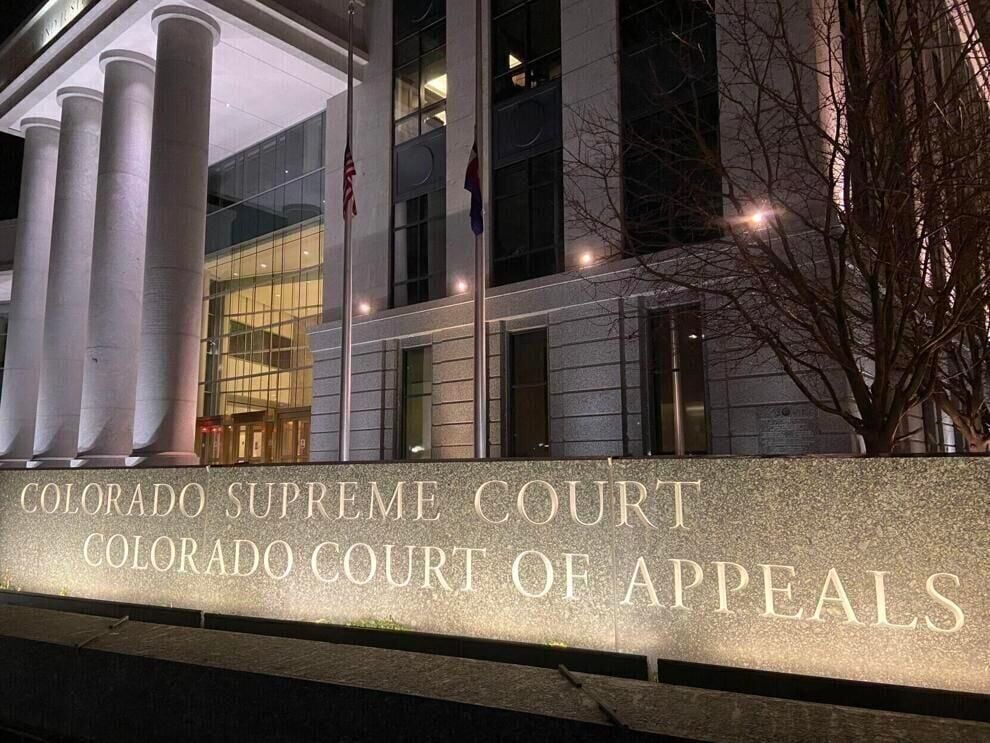
The Colorado Supreme Court, by 5-2, ruled on Monday that the state’s crime victim restitution law does not obligate defendants to repay law enforcement agencies for unrecovered money they use to buy drugs undercover.
The government maintained the restitution law authorized the repayment of “buy money” because it was either “money advanced by law enforcement agencies” or it was an “extraordinary” investigative cost, making it subject to recovery. Members of the majority were unconvinced.
“Construing ‘money advanced by law enforcement agencies’ now as costs incurred by law enforcement agencies would alter the language the legislature used,” wrote Justice Carlos A. Samour Jr. in the Sept. 8 opinion. “What’s more, today, the use of buy money is such a widely accepted practice by law enforcement in this country that it has become customary.”
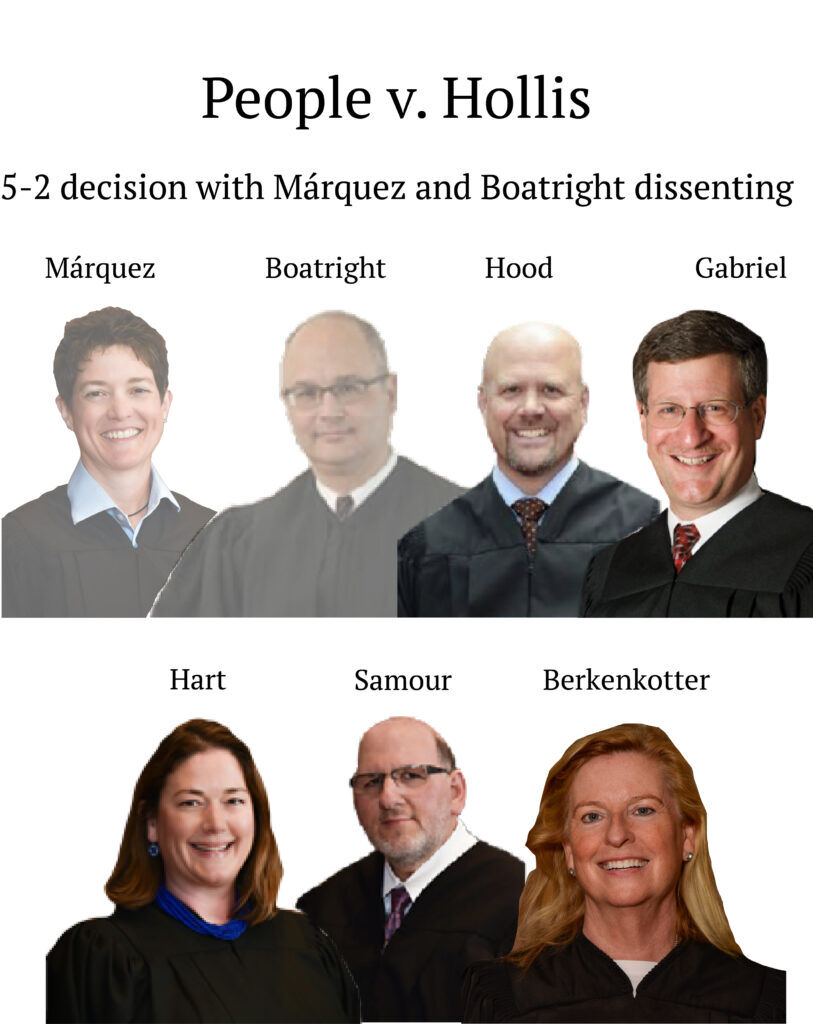
Justice Brian D. Boatright, writing in dissent, argued the use of buy money was, under his definition, an extraordinary cost, in contrast with “ordinary” police expenditures for uniforms, equipment and salaries.
“If someone were to ask 100 random people whether a defendant should be permitted to keep the money paid to them by an undercover agent during a criminal investigation, certainly the vast majority would answer no,” he wrote for himself and Chief Justice Monica M. Márquez. “The legislature could not have intended for drug dealers to keep the money that law enforcement used during an investigation. This outcome defies logic.”
In the underlying case, Nathan Hollis pleaded guilty to two drug distribution charges in which he sold narcotics on multiple occasions to an undercover officer in Weld County. Law enforcement waited for months after the first transaction to arrest Hollis, at which point $1,640 he received from the officer was gone.
Prosecutors sought to have Hollis repay the buy money as financial restitution. Hollis objected, noting Colorado’s restitution law for crime victims covers money advanced by law enforcement agencies and extraordinary investigation costs. To Hollis, the buy money fell into neither of those categories, especially considering the five to 10 drug transactions Weld County’s drug task force undertook every month.
The Court of Appeals agreed with him.
The drug task force investigating Hollis was “not a victim under the restitution statute,” wrote Judge Ted C. Tow III in the three-judge panel’s opinion. Moreover, the buy money was “used solely to investigate drug-related crimes. And as officers of the Task Force testified, controlled buys occur several times per month using money specifically budgeted for that purpose.”

The Colorado Attorney General’s Office appealed to the Supreme Court, arguing criminal defendants should not benefit from an illegal drug transaction.
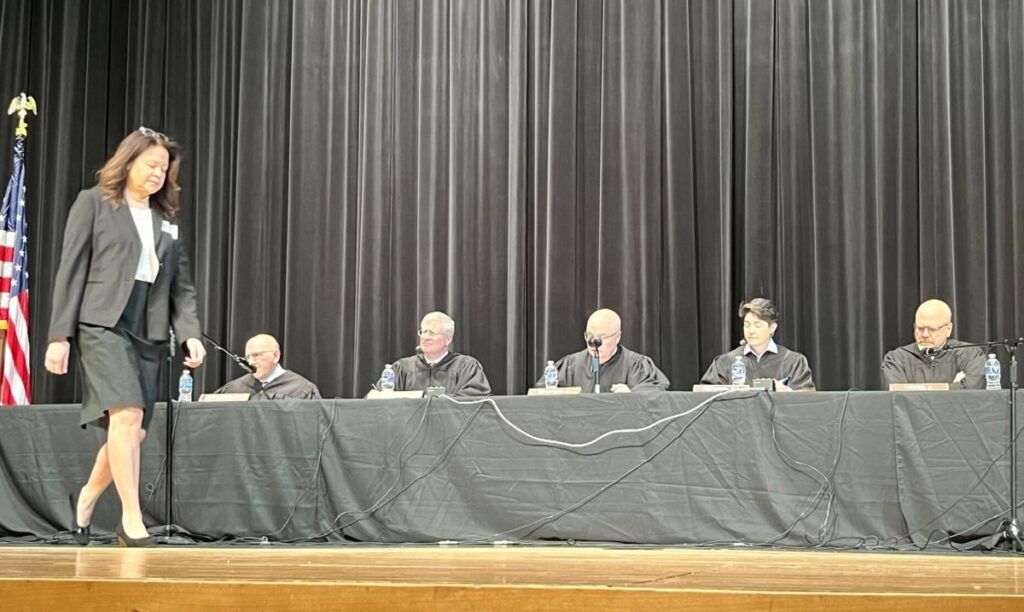
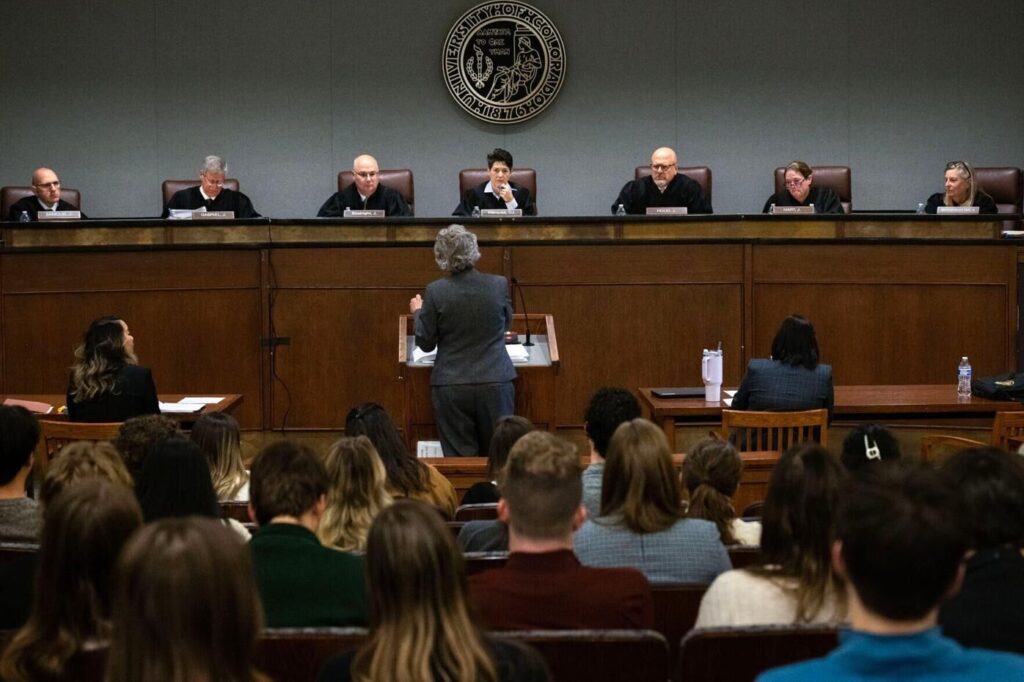
During oral arguments, public defender Lisa Weisz urged the court not to find the buy money was something advanced by law enforcement, arguing an “advance” occurs when the entity paying the money is not getting anything in return.
“Would it qualify if a police officer undercover ‘advanced’ money to a prostitute?” asked Boatright.
“It depends if they got something back,” responded Weisz.
“There’s gonna be a problem if he did,” said Boatright to chuckles.
Some justices also felt, as the Court of Appeals did, that the use of buy money was not an extraordinary investigation cost.
“What to make of the fact that there was an existing budget for this when thinking of this as extraordinary?” wondered Justice Maria E. Berkenkotter.
“I would guess right now in Colorado Springs there are 20 officers doing drug-buy busts,” responded Weisz. “It seems exceedingly common to me.”
Michael Karlik michael.karlik@coloradopolitics.com
Ultimately, the majority noted restitution has to be authorized under state law. Samour explained that the buy money was not an “advance” because it was simply a transaction: An officer gave Hollis money and Hollis gave him drugs.
To the extent the drug task force supplied an officer with cash, “it was not ‘money advanced’ by the Task Force,” wrote Samour.
Because buy money is a “widely accepted practice,” he continued, it could not be an extraordinary investigative cost, either. Holding otherwise would risk “opening Pandora’s box” for other types of routine law enforcement expenditures.
The government insists “we should consider the use of buy money extraordinary because we need ‘to take the profit out of crime’,” Samour wrote. “While everyone would agree that this is a laudable goal, it is a policy matter better suited for the legislature.”
Boatright, in dissent, believed “ordinary” costs were synonymous with “fixed” costs that police must account for regardless of criminal activity. Just because the buy money was in the budget, he argued, it did not lose its extraordinary character.
“For example, one would not argue that because a law enforcement agency has allocated money for using drones to protect a visiting dignitary, the use of those funds would be an ordinary cost,” he wrote.
The case is People v. Hollis.

10th Circuit orders lawyer to pay $1,000 for faulty AI citations
Michael Karlik
michael.karlik@coloradopolitics.com
Updated 5 hours ago
The Denver-based federal appeals court ordered a lawyer on Monday to pay $1,000 to the opposing side for submitting a legal filing with fake case citations generated by artificial intelligence. A three-judge panel of the U.S. Court of Appeals for...

Supreme Court finalists selected, federal judges slash backlogs | COURT CRAWL
Michael Karlik
michael.karlik@coloradopolitics.com
Updated 12 hours ago
Welcome to Court Crawl, Colorado Politics’ roundup of news from the third branch of government. Coloradans learned who the three finalists are for a state Supreme Court vacancy, and new data show that Colorado’s federal trial judges reduced their backlog...
Federal judge blasts government for violating court order, confiscating man’s property
Michael Karlik
michael.karlik@coloradopolitics.com
Updated 1 day ago
A federal judge gave the government three hours on Friday to return the property of a man released from immigration detention, which it allegedly retained in violation of her previous order. “At its most benign, this failure is an unforced...
DA’s withdrawal from veterans treatment court not judge’s problem, ethics panel says
Michael Karlik
michael.karlik@coloradopolitics.com
Updated 3 days ago
There are no ethical concerns from a judge continuing to participate in a specialty veterans treatment court if the district attorney’s office has withdrawn from the program, the Colorado Supreme Court’s ethics committee advised on Wednesday. Colorado law permits chief...
Divided appeals court orders insurance company to pay $35,600 for delayed disclosure of policy
Michael Karlik
michael.karlik@coloradopolitics.com
Updated 3 days ago
Colorado’s second-highest court concluded on Thursday that an insurance company violated state law when it refused to disclose an automobile policy to an injured motorist for nearly one year after she requested it. By 2-1, a three-judge Court of Appeals...
Judge expected to decide Monday whether to accept latest plea agreements for Hallfords
Mackenzie Bodell
mackenzie-bodell@coloradopolitics.com
Updated 4 days ago
An El Paso County judge is expected to decide Monday whether to accept new negotiations that would extend the prison sentence for Jon and Carie Hallford, coming on the heels of the court rejecting the original plea agreements for the...
Who are the 3 finalists for the Colorado Supreme Court?
Michael Karlik
michael.karlik@coloradopolitics.com
Updated 5 days ago
A citizen-led nominating commission has chosen the finalists for a vacancy on the Colorado Supreme Court, the first opening in five years on the seven-member court. The vacancy arose after the unexpected resignation of Justice Melissa Hart, who formally departed...
Christopher Zenisek, trial judge experienced with high-profile cases | SUPREME COURT FINALISTS
Michael Karlik
michael.karlik@coloradopolitics.com
Updated 5 days ago
After the Marshall fire burned through Boulder County in the final days of 2021 and wound up destroying more than 1,000 homes, the sprawling 4,000-plaintiff litigation was assigned to District Court Judge Christopher Zenisek of Jefferson County. Zenisek would go...
Andrea Wang, water and energy expert | SUPREME COURT FINALISTS
Michael Karlik
michael.karlik@coloradopolitics.com
Updated 5 days ago
When the late Chief Justice Mary Mullarkey authored a 2002 opinion in the complex and long-running Taylor Ranch case involving landowners’ claims to access a 77,000-acre tract in the San Luis Valley, she worked with her law clerk, Andrea S....
Susan Blanco, innovator in the judiciary | SUPREME COURT FINALISTS
Michael Karlik
michael.karlik@coloradopolitics.com
Updated 5 days ago
Less than 24 hours after her selection as a finalist for a Colorado Supreme Court vacancy, Chief Judge Susan Blanco was back on the bench in Fort Collins, moving methodically through the variety of complications she encountered. “Your goatee might...
PREV
PREVIOUS

Supreme Court lifts restrictions on LA immigration stops set after agents swept up US citizens
WASHINGTON (AP) — The Supreme Court on Monday cleared the way for federal agents to conduct sweeping immigration operations for now in Los Angeles, the latest victory for President Donald Trump’s administration at the high court. The conservative majority lifted a restraining order from a judge who found that roving patrols were conducting indiscriminate stops […]

Divided Colorado Supreme Court says defendants liable for possessing others' debit cards even if unusable
The Colorado Supreme Court, by 5-2, rejected the idea on Monday that prosecutors need to prove a debit card is functional in order to convict a defendant of unlawfully possessing someone else’s “financial device.” The majority believed Colorado law was straightforward: Legislators outlawed the unauthorized possession of a financial device, and debit cards were specifically […]