

Putting people first in farming | PODIUM
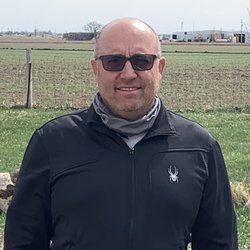
By Joseph Petrocco
Colorado family farms are resilient. They routinely survive droughts, floods, crushing hailstorms, pest infestations, price uncertainty and even low profit margins. Yet, there is another challenge that may hinder their survival.
Policy creation by legislators who mean well but don’t understand farming is one of the most difficult obstacles Colorado family farms and their employees face. In 2021, the Colorado General Assembly passed, and Gov. Jared Polis signed into law, SB21-087, now called the Ag Labor Rights & Responsibilities Act (ALRRA).
I would be remiss without noting the positives of the bill. This legislation had extensive provisions for farms to train their employees to avoid heat illness while working outdoors on Colorado’s hot summer days. The Colorado Fruit & Vegetable Growers Association (CFVGA) participated in ergonomics research to help determine and then to educate farmers and their employees on the best practices for long-term health. CFVGA also supports provisions in this bill that allow employees to form unions to advocate for themselves.
However, ALRRA also instituted overtime pay for those who work in Colorado farming. Though this seems positive — and believe me, at Petrocco Farms, we would love to be able to pay our employees more than they currently earn — this bill has put a strain on Colorado family farms. We are at the mercy of the buyer when we sell highly perishable produce. Rather than creating more income for employees, this law has made it more difficult for farms to remain profitable.
And, worst of all, our employee incomes have gone down. Farmers cannot afford to pay overtime. According to a survey by Dr. Alexandra Hill, professor at UC Davis, California farm employees, due to a recent change in overtime rules, earn $100 less per week than before the change was made. In Colorado, ALRRA has forced some year-round workers to get a second job.
Some have the illusion foreign farmworkers are taking jobs from Americans. Even U.S. Department of Agriculture Secretary Brooke Rollins at a press briefing earlier this summer quipped perhaps those enrolled in SNAP and/or Medicaid who now need to fulfill the 80-hour-per-week work requirement would be able to fill the void. In Colorado, these are highly seasonal positions. Bending to pick crops on hot summer days in a temporary position just isn’t a job Americans want or are able to do.
Farming is highly unpredictable. We can’t predict exactly when crops will be ready or what challenging weather — like hail, strong winds, or heavy rain —farmers will have to avoid harvesting them successfully. The last thing farmers need to be thinking about during these situations is if they will bring in enough from their crops to pay employees’ overtime.
Unlike retailers or professional services, farmers are unable to pass on the cost for overtime pay to their customers. When ALRRA passed, farms like ours explained the additional, unforeseen and unavoidable cost of overtime to our corporate buyers, but most have been unwilling to increase what they pay us for our produce. Why would retail operations pay more for Colorado produce when they can buy it from another state or another country at a lower price?
In Colorado, the minimum wage for 2025 for foreign workers — not including overtime — is $17.84. This is set by the government and varies from one state to the next. This hourly rate is comparable to what a worker makes for the same work in Mexico for an entire day — and there is no overtime pay. As a result, the United States is rapidly increasing the amount of produce it buys abroad. According to Cathy Burns, president of the International Fresh Produce Association, between 2007 and 2021, fruit imports increased from 50% to 60% and vegetable imports increased from 20% to 38%.
Another alarming fact is in 2023 the United States for the first time became a net importer of food. In June of 2025, the value of agricultural exports trailed that of imports by $4.1 billion — a gap 14% wider than a year earlier — pushing the sector’s deficit to a staggering $28.6 billion for the first six months of this year, according to data released in early August by the U.S. Department of Agriculture.
Unless policies change, and feeding ourselves becomes just as much of a national security issue as producing our own pharmaceuticals, metals and cars, this trend of allowing foreign nations to feed us will continue.
Eliminating burdensome regulations and enacting policies that value family farms put consumers, farmers and their employees first!
Joseph Petrocco is a fourth-generation Colorado farmer and president of Petrocco Farms and the Colorado Fruit & Vegetable Growers Association (CFVGA).

‘I am shocked — shocked — about the cost of insurance!’ | OPINION
Colorado Politics
colorado-politics@coloradopolitics.com
Updated 21 hours ago
By Brandi Bradley In a famous scene from the classic movie “Casablanca”, the police captain defends the closure of Rick’s Café by remarking to Humphrey Bogart‘s character, “I’m shocked, shocked to find there’s gambling going on here.” Thereupon the Bogart...

Puppy-mill pipeline plagues Colorado consumers | OPINION
Colorado Politics
colorado-politics@coloradopolitics.com
Updated 21 hours ago
By Roland Halpern We can shut down the puppy-mill pipeline plaguing Colorado consumers. According to Florida’s Attorney General, deceptive pet sales tied to commercial breeding operations cost Florida consumers more than $25 million annually in avoidable veterinary bills, medications and...

Pondering Colorado’s population pivot | Miller Hudson
Miller Hudson
miller-hudson@coloradopolitics.com
Updated 2 days ago
A year ago, I ran across one of those business page statistics which confirmed current reports more families are moving out of Colorado than arriving. Rental companies were noticing for the first time in their memory, certainly since the 1960s,...

Hick, much like Trump, harmed rural Colorado | Dick Wadhams
Dick Wadhams
dick-wadhams@coloradopolitics.com
Updated 2 days ago
Colorado’s congressional delegation unanimously opposed President Donald Trump’s recent veto of the Arkansas Valley Conduit water project which had been passed by Congress without opposition. But Trump is not the first chief executive to unilaterally harm communities in rural southeastern...

How to handle the national cattle herd at its lowest level in 75 years? | Rachel Gabel
Rachel Gabel
rachel-gabel@coloradopolitics.com
Updated 2 days ago
This time of year, the salebarns are full of bidders, buyers and cream pie connoisseurs. The adrenaline and anxiety in the building and around the ring is as thick as the gravy served in the café. In the back of...

Why U.S. Sen. Michael Bennet won’t be governor of Colorado | Jon Caldara
Jon Caldara
jon-caldara@coloradopolitics.com
Updated 5 days ago
I suggest we get used to saying the words, “Governor Weiser.” The election for Colorado’s next governor does not take place in November. It’s in fewer than five months, on June 30. That’s the state’s primary election. Whoever wins the...
Capitol M: Olympic version | Week of Feb. 7, 2026
Marianne Goodland
marianne.goodland@coloradopolitics.com
Updated 5 days ago
The lighter side of the state Capitol, usually. Sen. Byron Pelton, R-Sterling, who turns 50 this year, is sporting eyeglasses for the first time. He blames the lege. “With 700 bills to read a year, my eyes are failing me,”...

Trump’s critics are not the ones suffering from “derangement” | SONDERMANN
By Eric Sondermann
by-eric-sondermann@coloradopolitics.com
Updated 6 days ago
It appears that 63% of Americans, plus or minus, are deranged. Per recent surveys, that is the percentage of fellow citizens who do not approve of President Trump’s performance a year into his second term. In Trump’s world, almost any...
A step in the right direction for Taiwan | Kelly Sloan
Kelly Sloan
kelly-sloan@coloradopolitics.com
Updated 5 days ago
Earlier this week, amid the chaos, bustle, tension and constant movement of a legislative session in full swing, a short ceremony took place in the east foyer on the first floor of the State Capitol, just steps from the governor’s...
Grassroots-backed study an excellent basis for game-changing health care program | Paula Noonan
Paula Noonan
paula-noonan@coloradopolitics.com
Updated 5 days ago
Nibble here, nibble there. That’s how the federal government and the state have set our nation’s health care policy. President Harry Truman’s effort after World War II to bring universal health care to the United States failed. Now we have...
PREV
PREVIOUS

Dialing for dollars still rules the day | BIDLACK
As my regular reader (Hi, Jeff!) will recall, when I ran for the United States House of Representatives back in 2008, in a relatively short campaign (April to November) I raised roughly a quarter-of-a-million dollars in donations. A recent Colorado Politics story reminded me of those seemingly endless hours of picking up the phone and […]

A special session to settle on a 'secret sauce' for statewide AI regulation | NOONAN
The biggest muddle at the Capitol during the “extraordinary session” of the General Assembly was not money, that is, the $750 million blowhole in the state’s budget due, more or less, to the nation’s federal tax cuts. It was what to do with artificial intelligence, or AI. The muddle doesn’t affect AI’s mundane uses, such […]