

Dialing for dollars still rules the day | BIDLACK
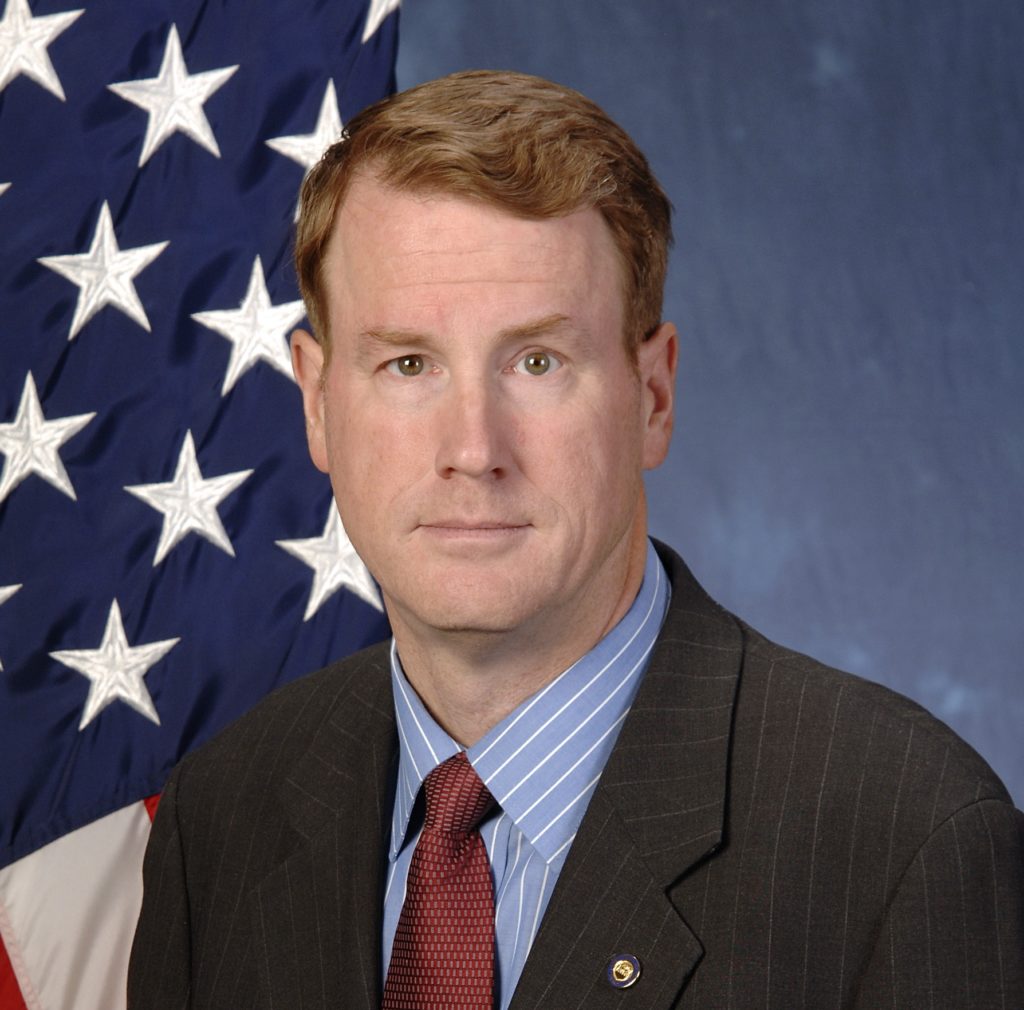
As my regular reader (Hi, Jeff!) will recall, when I ran for the United States House of Representatives back in 2008, in a relatively short campaign (April to November) I raised roughly a quarter-of-a-million dollars in donations. A recent Colorado Politics story reminded me of those seemingly endless hours of picking up the phone and calling strangers in hopes they might consider donating to my campaign.
I had a success rate (that is, a person agreed to donate something) of roughly 2% to 3%, which was pretty typical of the national average. Talk to any serious candidate for higher office and they will no doubt have their own stories about the misery of dialing for dollars. You hear every possible combination of voicemail messages, including dozens of reply messages by little kids, that may seem quite darling in small doses, but I can assure you after the 37th “cute-kid” voicemail of the day, one can be quite tired of them.
In a campaign, it is vital the members of the campaign team have specific and non-overlapping duties. And by far, the very best person to do the fundraising is the candidate him or herself. So, I tried to call 100 people per day (sometimes I made that, often I didn’t) and ultimately raised the aforementioned $250,000.
So, what do you spend it on? Well, that varies, but for most national and statewide races, it is going to be media, and in 2008 that meant television. These days, smart campaigns have a strong social media presence, but back in my race, that only meant having my son set up a Facebook page for the campaign, as well as a Myspace page.
But a simple fact is the amount of money you raise, in and of itself, is an important factor in how you run your campaign. Donors prefer to donate to those whom they feel are “serious” candidates with a chance to win. In my case, in the first quarter we were running I raised a bit more than $100,000. That was an amount of money that got quite a bit of media attention, as it showed me to be a serious candidate who might, just might, be able to create a serious campaign that threatened the GOP incumbent (spoiler: not so much).
Money has only gotten to be more important in political campaigns since my day. That’s a shame, of course, but it is also a grim reality. Enough money in your campaign war chest and you might even scare off potential challengers who see your cash pile to be enough to get you the attention you need to win.
And so, as the CoPo story notes, four candidates had really good fundraising quarters.
Perhaps most impressive was the fundraising of first-time candidate Eileen Laubacher, who is a retired Navy rear admiral (that’s a big deal, folks) and a former member of the National Security Council team under the Biden administration. I twice served on the NSC staff during summer academic breaks at the Air Force Academy, and the NSC is an amazing place to work and only the best thrive there.
Admiral Laubacher is the latest Democrat hoping to send our national embarrassment, U.S. Rep. Lauren Boebert, packing her carpet bag and out of Washington. As you surely know, Boebert was quite worried Adam Frisch had her dialed in back in the last election cycle in Congressional District 3, so Boebert just moved across the state to the deepest red part, CD-4, and got herself elected there.
Does Laubacher have a chance in 2026? We’ll see, but raising a massive $1.9 million last quarter is tremendously impressive. Obviously, as a career military officer myself, I’m delighted to see another veteran run against the wholly unqualified Boebert. The admiral raised more than 13 times as much as Boebert. The quarter ended with Boebert having about $170,000 in the bank, while Laubacher has more than a million.
The obvious question, of course, is whether even that amount of money (and the differential between candidates) is enough to make a Democratic a winning candidate? Her military career certainly helps, especially when compared to the “career” of Boebert. But can the admiral win in such a red area?
After my quixotic campaign ended, I had some discussions with some really smart campaign experts. I asked the question, is there any amount of money that, had I had it, would have let me squeak through and win the election? A few said something between $2 million and $5 million would have done it, while another said there was no amount that would make me electable, the district is just too red.
The campaign in CD-4 may help us understand if there is a path to Democratic victory, and I sure hope so.
Stay tuned.
Hal Bidlack is a retired professor of political science and a retired Air Force lieutenant colonel who taught more than 17 years at the U.S. Air Force Academy in Colorado Springs.

‘I am shocked — shocked — about the cost of insurance!’ | OPINION
Colorado Politics
colorado-politics@coloradopolitics.com
Updated 18 hours ago
By Brandi Bradley In a famous scene from the classic movie “Casablanca”, the police captain defends the closure of Rick’s Café by remarking to Humphrey Bogart‘s character, “I’m shocked, shocked to find there’s gambling going on here.” Thereupon the Bogart...

Puppy-mill pipeline plagues Colorado consumers | OPINION
Colorado Politics
colorado-politics@coloradopolitics.com
Updated 18 hours ago
By Roland Halpern We can shut down the puppy-mill pipeline plaguing Colorado consumers. According to Florida’s Attorney General, deceptive pet sales tied to commercial breeding operations cost Florida consumers more than $25 million annually in avoidable veterinary bills, medications and...

Pondering Colorado’s population pivot | Miller Hudson
Miller Hudson
miller-hudson@coloradopolitics.com
Updated 2 days ago
A year ago, I ran across one of those business page statistics which confirmed current reports more families are moving out of Colorado than arriving. Rental companies were noticing for the first time in their memory, certainly since the 1960s,...

Hick, much like Trump, harmed rural Colorado | Dick Wadhams
Dick Wadhams
dick-wadhams@coloradopolitics.com
Updated 2 days ago
Colorado’s congressional delegation unanimously opposed President Donald Trump’s recent veto of the Arkansas Valley Conduit water project which had been passed by Congress without opposition. But Trump is not the first chief executive to unilaterally harm communities in rural southeastern...

How to handle the national cattle herd at its lowest level in 75 years? | Rachel Gabel
Rachel Gabel
rachel-gabel@coloradopolitics.com
Updated 2 days ago
This time of year, the salebarns are full of bidders, buyers and cream pie connoisseurs. The adrenaline and anxiety in the building and around the ring is as thick as the gravy served in the café. In the back of...

Why U.S. Sen. Michael Bennet won’t be governor of Colorado | Jon Caldara
Jon Caldara
jon-caldara@coloradopolitics.com
Updated 5 days ago
I suggest we get used to saying the words, “Governor Weiser.” The election for Colorado’s next governor does not take place in November. It’s in fewer than five months, on June 30. That’s the state’s primary election. Whoever wins the...
Capitol M: Olympic version | Week of Feb. 7, 2026
Marianne Goodland
marianne.goodland@coloradopolitics.com
Updated 5 days ago
The lighter side of the state Capitol, usually. Sen. Byron Pelton, R-Sterling, who turns 50 this year, is sporting eyeglasses for the first time. He blames the lege. “With 700 bills to read a year, my eyes are failing me,”...

Trump’s critics are not the ones suffering from “derangement” | SONDERMANN
By Eric Sondermann
by-eric-sondermann@coloradopolitics.com
Updated 6 days ago
It appears that 63% of Americans, plus or minus, are deranged. Per recent surveys, that is the percentage of fellow citizens who do not approve of President Trump’s performance a year into his second term. In Trump’s world, almost any...

A step in the right direction for Taiwan | Kelly Sloan
Kelly Sloan
kelly-sloan@coloradopolitics.com
Updated 5 days ago
Earlier this week, amid the chaos, bustle, tension and constant movement of a legislative session in full swing, a short ceremony took place in the east foyer on the first floor of the State Capitol, just steps from the governor’s...
Grassroots-backed study an excellent basis for game-changing health care program | Paula Noonan
Paula Noonan
paula-noonan@coloradopolitics.com
Updated 5 days ago
Nibble here, nibble there. That’s how the federal government and the state have set our nation’s health care policy. President Harry Truman’s effort after World War II to bring universal health care to the United States failed. Now we have...
PREV
PREVIOUS

Denver's shameful smear of the salvation army | WADHAMS
No good deed should go unpunished. Or at least that seems to be the mantra of the City of Denver. Despite all the rosy declarations of statistical victory, Denver is still mired in crime and homelessness. Just ask the tens of thousands of people who will no longer work or recreate downtown. They see the reality of downtown […]

Putting people first in farming | PODIUM
By Joseph Petrocco Colorado family farms are resilient. They routinely survive droughts, floods, crushing hailstorms, pest infestations, price uncertainty and even low profit margins. Yet, there is another challenge that may hinder their survival. Policy creation by legislators who mean well but don’t understand farming is one of the most difficult obstacles Colorado family farms […]