

Colorado Springs-based Auria wins $8.1 million contract

Jerilee Bennett, Gazette file
As more and more satellites circle the globe, ensuring antennas are available for critical Space Force actions such as correcting an orbit or receiving images is key.
Recently, Colorado Springs-based Auria received an $8.1 million contract to build a cloud-based prototype that will ensure either military or commercial ground-stations not currently used by the Space Force are available for those tasks. Auria was born out of Boecore, Ascension Engineering Group, Orbit Logic and La Jolla Logic.
The prototype is meant to ensure antennas are available for use when the satellites pass overhead. Auria already supplies a similar product to NOAA and other customers.
A Government Accountability Office report in 2023 highlighted the need for the Space Force to add to its system of 19 global ground stations because they are aging and space traffic is increasing.
Relying on commercial ground stations can help handle the load from new satellites, and the new Joint Antenna Marketplace prototype that Auria is building will ensure the Space Force can pick the best providers and schedule the services at needed times, Auria President Tom Dickson said.
Another company, Sphinx Defense, won a $9.5 million contract to build a competing prototype. The competing companies have two years to deliver prototypes that could lead to additional work.
“We’ve assigned some key people to it because it is such an important contract for the company,” Dickson said.
The company was hiring 30 additional people at the beginning of the summer after receiving three large contracts. Half of those people will work in Colorado Springs, he said.
The two pilot-project awards are part of a broader effort to accelerate contracting through the Space Enterprise Consortium’s Other Transaction Authority.
The National Security Technology Accelerator is working for the consortium to help oversee the pilot projects and announced the contract awards. As part of its work, the accelerator works with small companies on meeting government standards for requirements around bookkeeping and cybersecurity.
In its role the accelerator bridges the gap between smaller companies and the DOD to help diversify the companies receiving contracts.
“The way we see our role it’s all about increasing the size of the aperture through which the government can view emerging technology,” said Tim Greeff, president and founder of the accelerator.
While Greeff could not comment on why individual contractors were selected, he does see a need to better integrate the government’s space infrastructure with commercial offerings.
“Broadly speaking there is a very recognized and real need to figure out how to integrate with the commercial sector,” Greeff said “… Or else we are going to fall way behind.”

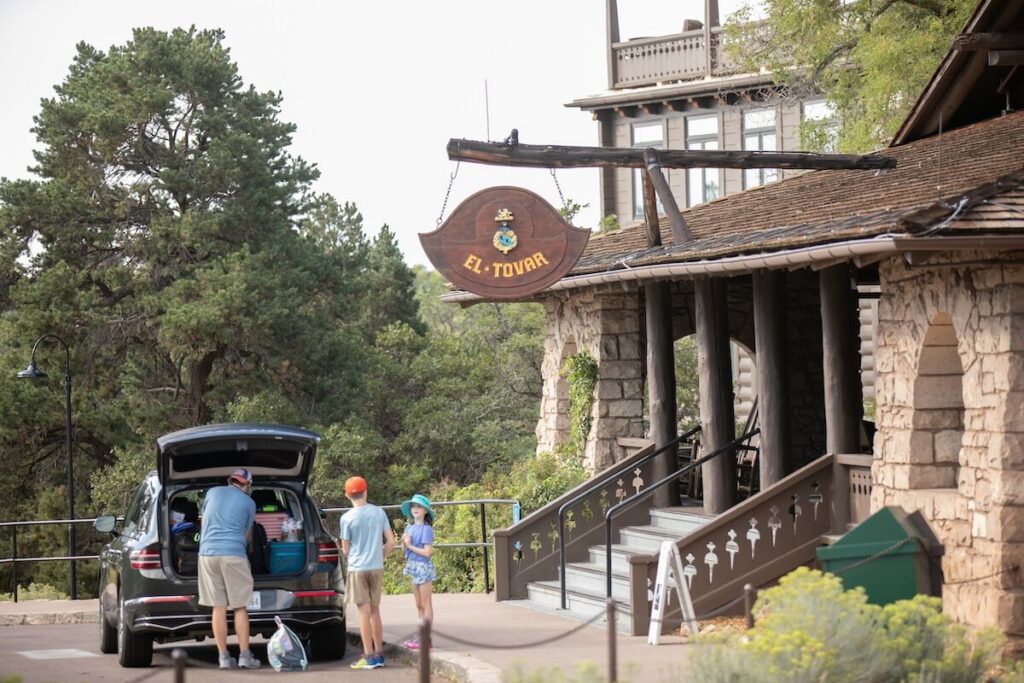
Grand Canyon flooding threatens economy that’s still recovering from a fire | OUT WEST ROUNDUP
Ernest Luning
ernest.luning@coloradopolitics.com
Updated 3 days ago
ARIZONA Flooding slams park’s economy Deadly flooding at the Grand Canyon is damaging the area’s economy, with a washed-out pipeline severing the South Rim’s water supply and shutting down lodging at the popular tourist vista for an indefinite period. The...

Immigration reporting measure fuels debate over Colorado’s role with ICE
Marissa Ventrelli
marissa.ventrelli@coloradopolitics.com
Updated 10 hours ago
A coalition of advocacy groups and several district attorneys rallied outside the Colorado Capitol on Thursday to oppose a ballot measure that, if approved by voters in November, would require state and local law enforcement to cooperate with federal immigration...

Colorado Politics Calendar Sept. 14-20
Rachael Wright, Special to Colorado Politics
rachael.wright@coloradopolitics.com
Updated 4 days ago
CoPo’s weekly political calendar will help you find political and public-policy events throughout Colorado. It includes candidate and issue campaign events, public policy meetings, court hearings, state and local party conventions, assemblies, debates, rallies, parades, speaking engagements, traveling dignitary appearances,...
The African roots of three Colorado leaders | SONDERMANN
Eric Sondermann
eric-sondermann@coloradopolitics.com
Updated 3 days ago
Colorado’s political transformation is measured in many ways. A once reliably red state (with asterisks) became purple and is now a rather deep blue. For better or worse, probably the latter, power is ever more consolidated along the Front Range...
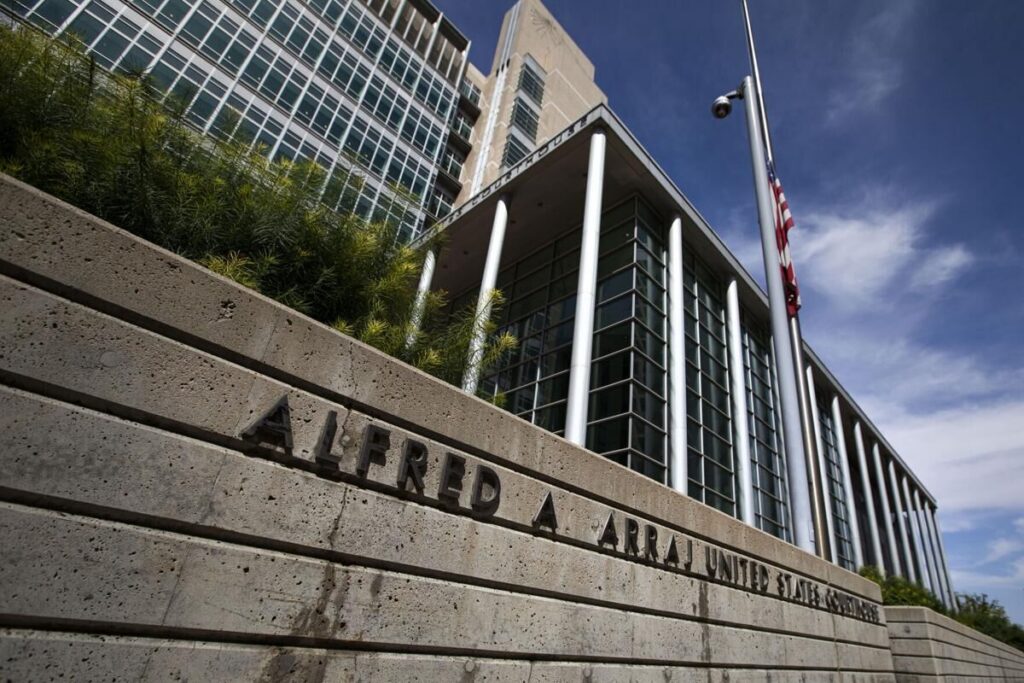
Federal judge green-lights civil trial against ex-Fort Collins DUI officer
Michael Karlik
michael.karlik@coloradopolitics.com
Updated 2 days ago
A federal judge ruled on Thursday that Fort Collins’ former “DUI officer” will face a civil trial for allegedly investigating a motorist for impaired driving without any reasonable suspicion to do so. In recent years, several people arrested by Officer...

Denver police reopen 13 sex assault cases after retesting Missy Woods’ CBI work
Jenny Deam
jenny.deam@gazette.com
Updated 9 hours ago
Thirteen previously closed Denver sexual assault cases have been reopened after the city’s crime lab retested DNA evidence once analyzed by former Colorado Bureau of Investigation forensic analyst Yvonne Woods. A police spokesperson told The Denver Gazette the once-closed cases...

Ballot measure aims to shift Colorado sporting goods tax revenue to land, water and wildfire projects
Marissa Ventrelli
marissa.ventrelli@coloradopolitics.com
Updated 1 day ago
Colorado voters this November will decide whether to direct a share of sales tax revenue from sporting goods — including bicycles and skiing equipment — toward land and water conservation, wildfire prevention and expanding outdoor recreation. Supporters say the measure...

Colorado Supreme Court suspends Mesa County judge pending misconduct investigation
Michael Karlik
michael.karlik@coloradopolitics.com
Updated 1 day ago
The Colorado Supreme Court suspended Mesa County Court Judge Michael J. Grattan on Thursday amid a misconduct investigation. The court’s Sept. 10 order gave Grattan 21 days to explain why his paid suspension should not continue through the end of...

Trump honors the fallen of the 9/11 terrorist attacks during Pentagon speech
Mabinty Quarshie
mabinty-quarshie@coloradopolitics.com
Updated 2 days ago
President Donald Trump and first lady Melania Trump honored the roughly 3,000 Americans killed during the Sept. 11, 2001, terrorist attacks during a ceremony at the Pentagon. The event marking the 25th anniversary of the deadliest attack on American soil...
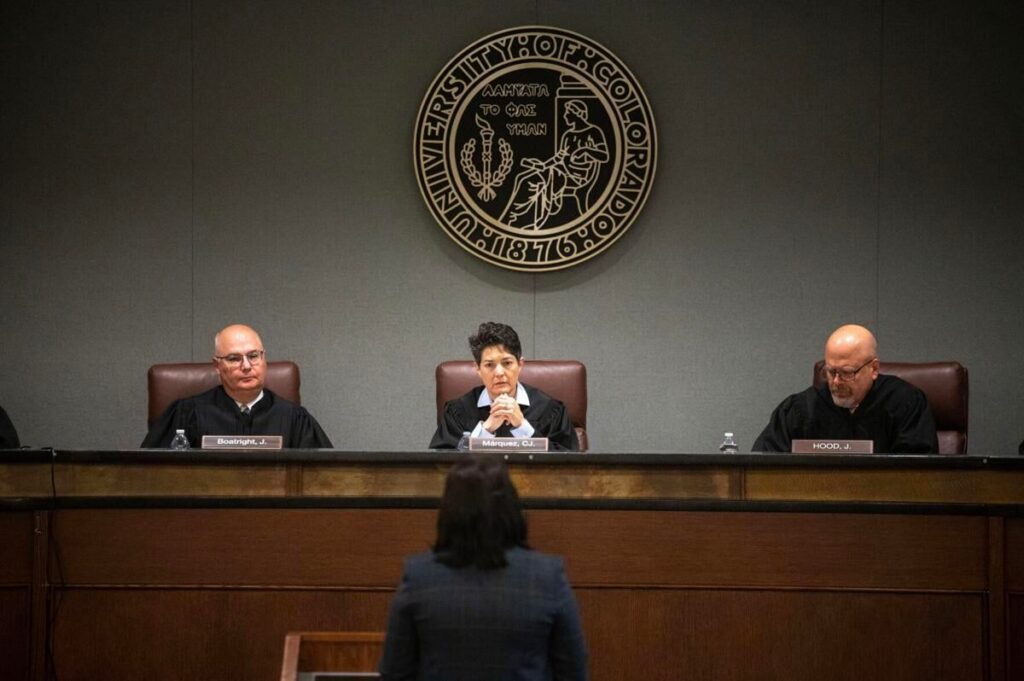
Colorado Supreme Court changes course, dismisses case about special district bonds
Michael Karlik
michael.karlik@coloradopolitics.com
Updated 1 day ago
The Colorado Supreme Court declined on Friday to decide a dispute between a large-scale Commerce City development and the various districts financing it, after initially showing interest in the ongoing case. Colorado has roughly 2,800 special districts, which are local...
PREV
PREVIOUS

Xcel Energy proposes five-year $4.9 billion grid modernization plan
Colorado’s largest utility company is proposing a $4.9 billion plan to modernize the power grid, accommodating vehicle and building electrification, as well as distributed electric generation and storage. The goal, Xcel Energy added, includes enhancing reliability, resiliency, and safety benefits, as required by a recently adopted state law. The five-year plan is expected to cost Colorado […]

Trump and Putin shake hands warmly in Alaska to kick off their summit on the war in Ukraine
JOINT BASE ELMENDORF-RICHARDSON, Alaska (AP) — President Donald Trump and Russia’s Vladimir Putin kicked off their Alaska summit with a warm handshake on Friday, greeting each other like old friends before heading into hours of discussions that could reshape the war in Ukraine and relations between Moscow and Washington. After descending from Air Force One, Trump applauded the Russian […]