

Rural Reckoning | Polis, lawmakers say housing, health policies benefit rural Colorado
JERILEE BENNETT THE GAZETTE

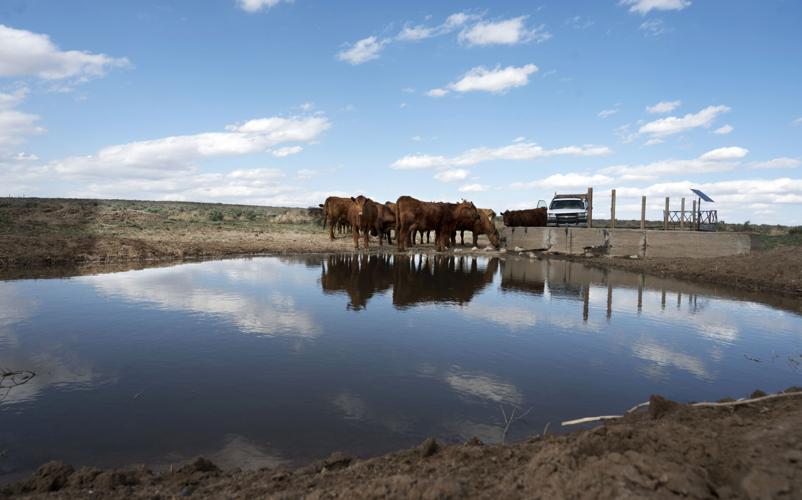
Amid the tension between rural and urban leaders at the state Capitol, the governor and lawmakers have tackled housing, healthcare, food security and mental health access across Colorado’s rural communities, advocates from both sides of that divide said.
They pointed to measures they said directly target rural areas, as well as other policies that apply statewide but yield a bigger impact on non-urban regions because of their unique challenges.
Often, these measures come in the form of preserving funding for programs.
Senate Minority Whip Sen. Cleave Simpson, R-Alamosa, said it may seem like he mostly complains about Gov. Jared Polis and the Democratic-led state legislature for neglecting rural Colorado, but the state policymakers have collectively produced what he described as bright spots.
Over the last few years, the governor and state lawmakers have pushed initiatives to address housing shortages, mental health services, health care and food access that benefited rural Colorado, Simpson said.
“I do think the governor and legislators have made positive efforts toward improving the economy and housing,” Simpson told Colorado Politics. “We may not be where we should be, but we are taking steps.”
In a recent interview with Colorado Politics, Polis said he hopes residents understand that a lot of his major policies are based on helping the entire state — not specifically the Front Range or rural Colorado.
From housing and property taxes to universal preschool, the governor, now on his second term, said it helps the state more when all residents benefit from policies coming out of the state Capitol.
The governor and legislators pointed to the following policies as among the accomplishments in the last few years.
Housing
Rural and mountain counties over the last few years have urged the state to pass laws focused on housing affordability, as many industries, including health care, have argued that a lack of inventory directly affects their ability to recruit a reliable workforce.
Last year, Polis signed three bills related to affordable housing, including one that focused on rural regions.
Backed by Simpson, House Bill 1434 expanded the state’s affordable housing tax credits issued by the Colorado Housing and Finance Authority and created a new state income tax credit for taxpayers who invest in qualified low-income housing projects located in a “transit oriented” community.
The state also passed Senate Bill 174, which local governments applauded when Polis signed it into law. The measure requires the Department of Local Affairs to work with local governments to develop housing needs assessments and provides $15 million in grants.
Kevin Bommer, who heads the Colorado Municipal League, which represents 271 municipalities, said SB 174 “marks a significant step forward in supporting municipalities’ ongoing efforts to address housing challenges while preserving local character.” He called the measure “the most impactful housing bill to become law in decades.”
That’s a nod to the bill’s requirements that — municipalities said — don’t violate local control over housing, zoning or land use. Some of the biggest clashes between local governments and state legislators have often centered on the extent with which municipalities and counties may retain their ability to direct housing initiatives.
On the one hand, local governments argue that they know their areas best, and can, therefore, offer housing policies most suited to their communities. State actors, on the other hand, insist that local regulations have gotten in the way of fast-tracking housing developments and that a statewide approach would hasten the work.
In 2024, the legislature also passed House Bill 1308, which requires the Division of Housing at DOLA to implement stricter rules around affordable housing grant programs, as well as reporting requirements.
This year, Polis urged the legislature to help facilitate the building of more starter homes, such as condominiums, which are needed not only in urban areas but also in mountain towns and rural areas. In response, lawmakers adopted House Bill 1272, which amended the “construction defect” law that some have blamed for stalling condo construction for decades.
Following the skyrocketing valuations that hammered property owners in 2023 and 2024, several groups pushed two propositions that would have reduced property assessment rates and imposed an annual cap on property tax revenues. The ballot measures compelled the governor and the legislature to negotiate with Advance Colorado and Colorado Concern, which ultimately led to a special session to pass a compromise, in which residents and businesses would see property tax savings.
Under the deal, property taxes would still go up in the next two years — they just won’t go up as much.

Universal preschool
The governor pushed for the creation of a universal preschool program, which, he maintained, greatly benefits rural communities.
The program, which began in the fall of 2023, provides free preschool for all Colorado children in the year before kindergarten. This initiative is part of a broader effort to expand access to early childhood education and make it more affordable for families, supporters said.
“When you talk about preschool, it’s not an urban agenda, it’s a rural agenda,” he said. “There has been a lot of work around university free preschool and it has been transformative in rural communities. When I talk to people in rural communities, it’s one of the things they bring up and they say, ‘Wow’.
Healthcare
Simpson, the Republican legislator, said health care facilities in rural Colorado, with their fixed costs, are perennially under threat of shutting down.
If they closed their doors, the next place to offer health services could be hundreds of miles away.
Over the last few years, the legislature enacted policies geared toward preserving that health care access, proponents said.
One such proposal, House Bill 1222, bars what’s called a pharmacy benefit manager from prohibiting a rural independent pharmacy from using a private courier or a delivery service to deliver a prescription drug to a patient.

Behavioral Health
Rural Coloradans face a number of challenges when it comes to mental health care, notably access to providers. The AgrAbility Project, housed at Colorado State University, sought to tackle some of those challenges.
Chad Reznicek, AgrAbility’s behavioral health specialist, said rising suicide rates among Colorado agricultural workers led to shifting the program’s focus from disability advocacy to mental and behavioral health services.
In 2021, the state legislature passed a bill expanding AgrAbility and investing $180,000 in funding for the program’s specialists.
Because of the unique challenges associated with the occupation, AgrAbility prioritizes hiring professionals with experience in agriculture and provides training to all of its mental health care providers.
Another mental health care service now available to rural Coloradans is the Agricultural Addiction and Mental Health Program.
Established in 2020, the program is housed within the Colorado Farm Bureau Foundation, the farm bureau’s nonprofit arm. It provides vouchers for up to eight sessions of therapy for farmers and ranchers across the state.
Anneliese Phippen, who is with the group, said she hears daily about how the program has helped members. She worried that the state’s budget shortfall would result in the program getting cut. But one lawmaker in particular made sure that didn’t happen, she said.
“We were not sure this spring how the future would look for this program and were even brainstorming other options for how we could keep it going,” she said. “We don’t want to see this go away because it is so valuable. We were immensely grateful to Rep. Dusty Johnson for her support in keeping that line item in (the budget) and ensuring that we can continue to provide that funding and those vouchers for at least another year.”
Just knowing that there’s help available is extremely valuable to farmers and ranchers, Phippen said.
Many don’t have health insurance, she said, so even if they live in a community where mental health services are available, they often can’t afford them, she said.
Since 2022, the program has provided more than 1,000 hours of free therapy services, Phippen added.

Food access
In some parts of Colorado, people drive more than 90 miles each way to get to the closest grocery store, according to Mickey Davis.
Davis serves as the manager of the state’s Community Food Access Program, created through legislation in 2022. The program, which initially used funds from the federal American Rescue Plan Act, was established to improve access to affordable, healthy food in low-income and rural areas of the state by providing grants to small retailers and family farms.
“In a lot of cases, folks live in a small community, whether it’s a mountain town or the Eastern Plains or even urban areas, without sufficient transportation, and it takes a really long time to get to a place where they can buy affordable, fresh, healthy food,” Davis explained. “So our program was designed to support infrastructure for small food retailers who are in those communities to help them supply that healthy food.”
While there has been a lot of talk recently about supporting local producers, retailers are often left out of those conversations, Davis said.
Grocery stores operate on extremely low margins, meaning big purchases, such as new refrigeration equipment or point-of-service systems, are often not in the budget, she said.
“That’s why this program was established — to support them,” she said. “We have a lot of really amazing stories of people saying this has been game-changing, because in a lot of cases, if a town loses its grocery store, that could be the end of the town.”
Davis said all of the grant funds have been awarded — 116 in 42 counties totaling $5 million — but about half the recipients still have some left to spend. Grants have been used to pay for everything from walk-in coolers to payroll for additional staff. One community store began to accept WIC vouchers for the first time — thanks to a new point of sale system.
A bill was passed in 2023 that continues the program as a refundable income tax credit, rather than a grant, available to certain small food retailers and family farms until 2030.
The Department of Agriculture is still measuring the program’s impacts, but people are “hearing a lot of really amazing stories,” Davis said.
The 2022 community food bill also established the Community Food Consortium, a membership organization for small food retailers and farms. The agriculture department has enlisted three different food hubs around the state to offer member benefits and perks, as well as guaranteed delivery to their stores.
“The thinking is these retailers can have a guaranteed distributor and that distributor can carry products from Colorado producers,” said Davis. “There’s also just a lot of benefits when all of these businesses get together and talk shop and we get to learn about a lot of other challenges that they’re going through.
“They often get to help each other out quite a bit,” Davis added.
Editor’s Note: This is the second part of a series examining Colorado’s urban-rural relationship. New stories in the series will be published every Friday through Aug. 8. Follow all the stories in the series here. Thelma Grimes contributed to this report


US service member missing after Iran shot down fighter jet has been rescued, US officials say
Associated Press
associated-press@coloradopolitics.com
Updated 11 hours ago
JERUSALEM — President Donald Trump announced early Sunday that the U.S. had rescued an aviator nearly two days after he was shot down over Iran. The extraction came after a frantic search in what appears to be a remote, mountainous region of...

Who are the kings being crowned here in Colorado? | Jon Caldara
Jon Caldara
jon-caldara@coloradopolitics.com
Updated 3 days ago
Though most of us celebrate “No Kings Day” on July 4, the Trump-deranged got a head start last weekend with rallies around the state. Attendees bravely fought oppression by blocking traffic for people with jobs. Rally-goers demanded freedom from tyranny,...

Low and slow meets forever: US postage stamps honor lowrider car culture | OUT WEST ROUNDUP
The Associated Press
the-associated-press@coloradopolitics.com
Updated 4 days ago
NEW MEXICO Stamps honor lowrider culture ALBUQUERQUE — From Mexican American and Chicano barrios in the American Southwest to the halls of the Smithsonian on the National Mall and even the streets of Japan, lowrider culture has become part of...
An April Fool’s Day to remember | Capitol M | Week of April 4, 2026
Marianne Goodland
marianne.goodland@coloradopolitics.com
Updated 3 days ago
The lighter side of the Capitol, and if light were weight, the Capitol would have lifted off better than the Artemis II rocket on April Fool’s Day. There was a plethora of Fools at the Capitol for April Fool’s Day...

Democrats rebounding without learning necessary lessons | SONDERMANN
Eric Sondermann
eric-sondermann@coloradopolitics.com
Updated 1 day ago
“When we fight, we win!” That, reportedly, was the chant heard over and over again at the Colorado Democratic Assembly a week ago. It suggests that pugilism has been the piece missing from the Democratic toolkit. Perhaps it was just...

Colorado Politics Calendar Apr. 6-12
Rachael Wright, Special to Colorado Politics
rachael.wright@coloradopolitics.com
Updated 4 days ago
CoPo’s weekly political calendar will help you find political and public-policy events throughout Colorado. It includes candidate and issue campaign events, public policy meetings, court hearings, state and local party conventions, assemblies, debates, rallies, parades, speaking engagements, traveling dignitary appearances,...
Federal judge sides with Mesa County school district in ex-student’s First Amendment claims
Michael Karlik
michael.karlik@coloradopolitics.com
Updated 2 days ago
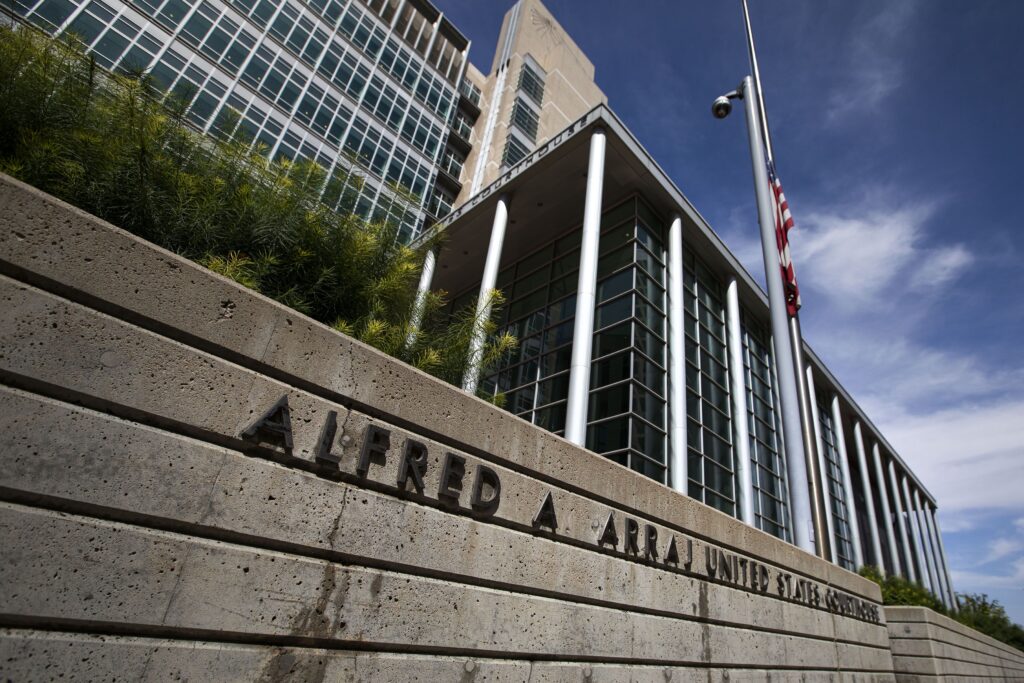
A federal judge concluded last week that Mesa County Valley School District 51 and three of its administrators did not violate the First Amendment rights of a former student when they imposed minor discipline in response to disruptive behavior. In...

Colorado Supreme Court intervenes in 4 ongoing cases
Michael Karlik
michael.karlik@coloradopolitics.com
Updated 2 days ago
The Colorado Supreme Court recently moved to intervene in four ongoing cases, including two criminal prosecutions, a civil lawsuit, and a child welfare proceeding. At least four of the court’s seven members must agree to hear a case outside of...
Colorado ski resorts announce early closures amid historic snowpack lows, high temperatures
Kyla Pearce
kyla.pearce@gazette.com
Updated 1 day ago
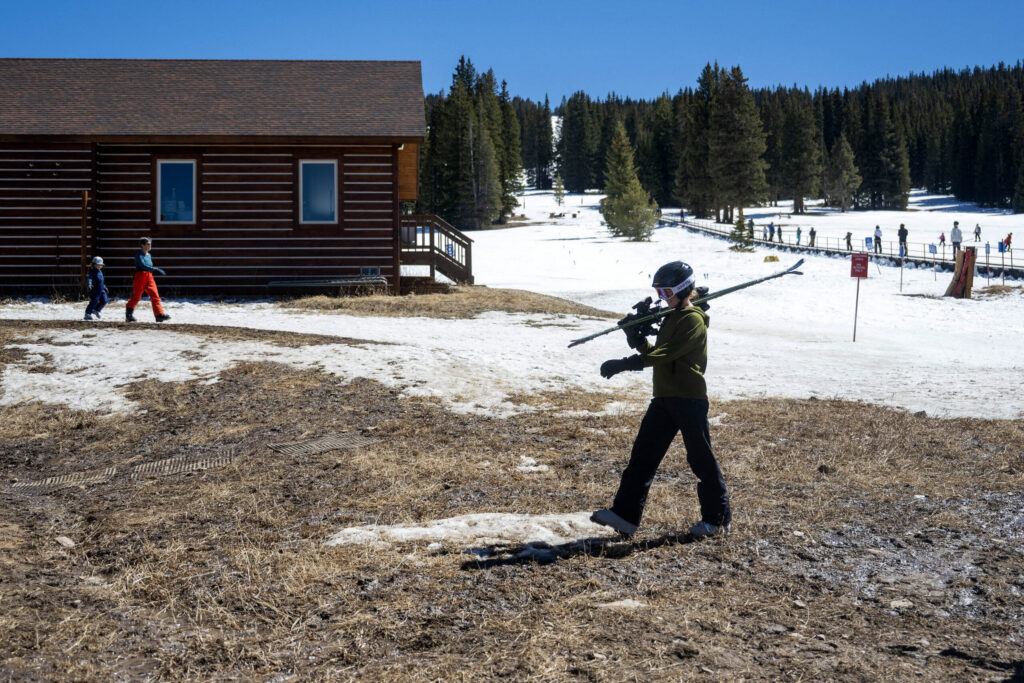
Vail Resorts is the latest area to announce season closure Wednesday As Colorado’s historically low snowpack year comes to a close and spring conditions take over the mountains, the state’s major ski resorts are announcing closing dates — some of...

Kentucky Gov. Andy Beshear set to headline Colorado Democrats’ annual fundraising dinner
Ernest Luning
ernest.luning@coloradopolitics.com
Updated 2 days ago
Kentucky Gov. Andy Beshear, one of the Democrats’ top 2028 presidential prospects, is scheduled to deliver the keynote address at the Colorado Democratic Party’s annual fundraising dinner in June in Denver, the party said Friday. Serving his second term as...