

Can Dem guv aspirants avert crisis, find realistic remedy to TABOR trouble? | HUDSON

Colorado Democrats, together with assorted progressive nonprofits, have been grousing about the TABOR (Taxpayer’s Bill of Rights) amendment since voters approved it in 1992. Truth be told, the coalition of opponents who had thrice defeated Doug Bruce previously took their eyes off the ball in that election. A crowded ballot included several hot topics, including mining-town gaming and Amendment 2’s exclusion of LGBT discrimination as a civil rights violation. It was presumed Bruce’s perseverance was running out of steam. Huge mistake! The California transplant, energized by his home state’s “Prop 13” success in capping property taxes, kept honing his proposals to accommodate business community critics and attract anti-tax converts. Coloradans narrowly approved his eclectic, throw-everything-into-the-pot fiscal provisions.
The demographic, economic and political profile of Colorado in 1992 was vastly different than it is today. Not only has our population doubled, but an economy primarily fueled by the sale of tangible goods (70%) has flipped to a service-driven market (now nearing 70%) which goes largely untaxed. Local governments and special districts, as well as transportation funding, all dependent primarily on sales tax revenues, have been squeezed as their tax base continues to shrivel and infrastructure demands accelerate. TABOR restrictions on spending and revenue may have made some sense 33 years ago, but they were premised on a static economy. Freezing fiscal rules in the state constitution ignores the inexorable effect of cultural and technological change.
At the statewide level, the legislature swiftly discovered winning voter approval of tax hikes was difficult, if not impossible. “De-Brucing”, which permits excess revenues to be retained without triggering a taxpayer refund, has proven an easier sell at the local level where elected officials can spell out the specific purposes for which dollars are being retained. Consequently, legislators — an inventive group of political entrepreneurs — have devised a grab bag of “workarounds” that include, fees, TABOR enterprises, leasebacks and other Rube Goldberg mechanisms which isolate spending from the General Fund and shift it into clever regulatory dodges. In 1992, 70% of the Colorado budget resided in the General Fund; today it is now 30%. Multiple competing and usually dedicated revenue streams create an accounting nightmare, handcuffing the Joint Budget Committee’s (JBC) flexibility in juggling revenues with public needs.
Stay up to speed: Sign up for daily opinion in your inbox Monday-Friday
During the recent legislative session, we started to hear rumors of a billion-dollar TABOR-induced “structural deficit” confronting Colorado — and predicted to grow in future years. It’s doubtful most voters possess even the slipperiest notion of what this threat involves. Nonetheless, with their overwhelming majorities at the legislature, Democrats will own its consequences. Dems rarely communicate well regarding fiscal challenges. To an average voter, TABOR offers a guarantee they are entitled to vote on all tax increases. This sounds like a good idea to most of them, even the Democrats. When candidates argue the time to reform TABOR has arrived, they sound like they plan to strip residents of their right to vote on tax hikes. This is not the TABOR provision, however, contributing to Colorado’s structural deficits.
It is the remaining 5,000-plus words in TABOR that generate fiscal chaos for the Joint Budget Committee. Both announced Democratic candidates for governor have acknowledged the crisis lying ahead without offering a realistic remedy. Several proposals to replace Colorado’s flat income tax with popular, “soak-the-rich” variants of a graduated income scheme are currently bouncing around. In a classic example of introducing a “fix” that has only made things worse, our legislature asked voters to amend the Constitution following the approval of TABOR to limit all future amendments to a single issue. Though an instance of closing the barn door after the livestock escaped, voters proceeded to nail it shut.
Attorneys estimate it would require 23 separate initiatives to repeal TABOR and its many provisions. I’ve long suggested a Gordian Knot solution might be asking voters to authorize the removal of all spending and revenue stipulations currently embedded in the nation’s longest state constitution and transferring them into statute. Thus, the single subject considered by voters would be removing fiscal provisions from the constitution. Needless to say, the subsequent legislative session would feel like a rugby scrum as numerous sacred causes would be competing, now unprotected, for budget priority. Their civic guardians will defend them zealously.
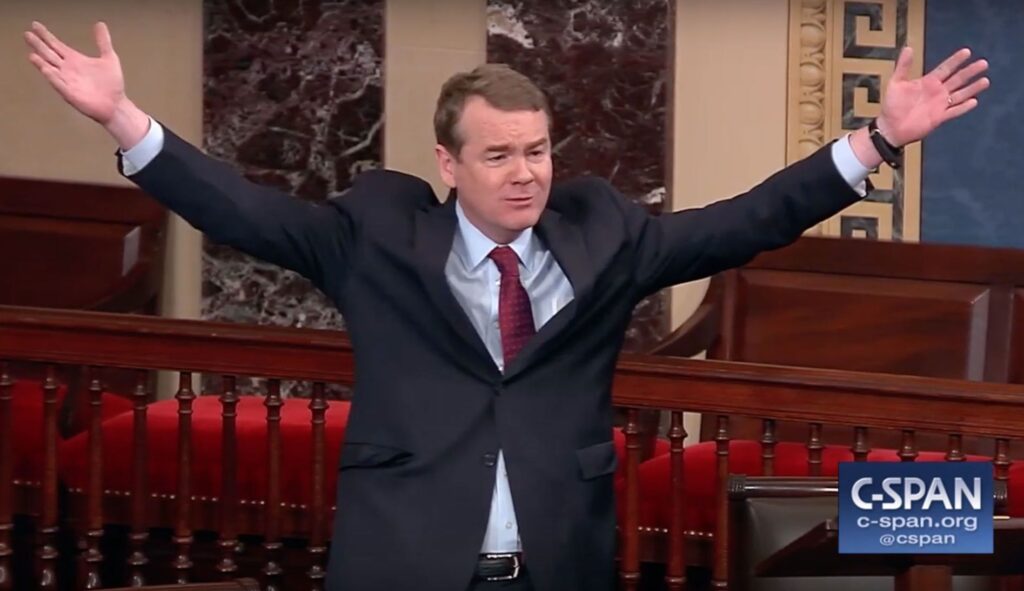
This solution returns the formulation of fiscal policy where it belongs in a representative system — to the floor of Colorado’s Capitol. It’s difficult to recall a more fiscally turbulent era in American life. Should the Trump administration’s “Big Beautiful Bill” be adopted in anything like its current draft, every state will be calling special sessions to cope with the deficits in store for their federally supported services — particularly Medicaid expenses. Whatever band-aids may be contrived to limp through the next year, both Democratic gubernatorial candidates, U.S. Sen. Michael Bennet and Attorney General Phil Weiser, should explain to voters precisely how they intend to tackle the “structural deficit” ahead of us. It’s real, it’s large and it’s resolution will likely be painful — just the mix every politician detests.
The place to start, I suspect, is to assure voters there is no need to tamper with their right to vote on tax increases. This seemingly remains a “third rail” of TABOR politics. I don’t envy the challenge of persuasively explaining to voters the interactions between spending limits, revenue caps, refunds and the fiscal stepchildren of TABOR. This amendment was not engraved on golden tablets, but rather was born from mistrust of government, specifically elected legislators. Economic change and increasing complexity have become constants of modern life. Techno-fascist tribunes for artificial intelligence claim they can better manage these challenges. I’d rather stick with democracy.
Miller Hudson is a public affairs consultant and a former Colorado legislator.
Colorado Politics Must-Reads:


Crow’s stunt wasn’t seditious — but was dangerous | BRAUCHLER
George Brauchler
george-brauchler@gazette.com
Updated 9 hours ago
This Thanksgiving, when millions of military members sat down with their families to eat turkey, they likely discussed Crow. Colorado U.S. Rep. Jason Crow’s media lust led him to create an unprecedented video designed to instill doubt in our military...

Polis’ silence deafening on Peters’ prison transfer | WADHAMS
Dick Wadhams
dick-wadhams@coloradopolitics.com
Updated 9 hours ago
What is Gov. Jared Polis thinking? As President Donald Trump tries to bully Colorado into releasing convicted and imprisoned Tina Peters to federal custody, a silent Polis appears to have dived under his desk. The U.S. Bureau of Prisons has...

Trump’s menacing military moves wearing thin with voters | HUDSON
Miller Hudson
miller-hudson@coloradopolitics.com
Updated 9 hours ago
When I reported to my initial assignment following Naval Officer Candidate School, my commanding officer asked me somewhat jovially, “You know why the Navy sends me Ensigns don’t you Mr. Hudson?” Puzzled, I replied, “No, Sir.” Still grinning, he explained,...

Beef industry takes another blow with Nebraska plant closure | GABEL
Rachel Gabel
rachel-gabel@coloradopolitics.com
Updated 9 hours ago
Black Swan is apparently on the menu this holiday season for people across the cattle and beef value chains. Last week, Tyson announced the closure of a processing plant in Lexington, Nebraska. This plant processes about 5,000 head of cattle...

Gambling is better than polling in predicting elections | CALDARA
Jon Caldara
jon-caldara@coloradopolitics.com
Updated 3 days ago
You’ve heard the term, “click bait.” It’s those wonderful, tempting links all over websites like “The top-10 sexiest actors,” or “You’ll never believe what she looks like now.” For political junkies, our click bait is the latest poll numbers. We...

Rural Colorado health care receives the attention it deserves | PODIUM
Colorado Politics
colorado-politics@coloradopolitics.com
Updated 5 days ago
By Marc Catlin A $50 billion investment to fund rural health care was in jeopardy in mid-October, when members of the U.S. Senate attempted to strip out the Rural Health Transformation (RHT) program in exchange for opening the U.S. government....
Colorado’s Michael Bennet rode outrage over last government shutdown to presidential bid | TRAIL MIX
Ernest Luning
ernest.luning@coloradopolitics.com
Updated 5 days ago
Only weeks after the longest federal government shutdown in U.S. history ended with congressional Democrats’ demands to restore health care funding previously cut by Republicans left dangling, the high-stakes standoff that dominated political news for 43 days has already receded...
Giving thanks for the long-overdue Epstein reckoning | NOONAN
Paula Noonan
paula-noonan@coloradopolitics.com
Updated 5 days ago
Thanksgiving is the best holiday. No gifts required. Just family and friends around a table enjoying each other’s company, expressing gratitude for the good things in their lives. Some good things arrived recently in the form of the Epstein emails....

Illegal means illegal | BIDLACK
Hal Bidlack
hal-bidlack@coloradopolitics.com
Updated 7 days ago
Before I get to the core of today’s column, my outrage at a president calling for the execution of sitting members of Congress, I’d like to tell you a little bit about how we go about launching intercontinental ballistic missiles,...