

Colorado pols must heed how to best hear all that needs to be heard | HUDSON

I spent more time attending Colorado legislative committee hearings this past session than I had since the years before COVID. Those often-tedious hours drove home the perverse and unanticipated consequences of term limits.
Legislative customs are built on what has transpired during the previous six years. Aside from a sprinkling of senators who have moved from the House, whatever traditions may have existed 10 or 15, much less 30 or 40 years before, may as well have occurred in the Pleistocene. No better evidence of this disconnect exists than last session’s dust-up over clandestine meetings conducted by leadership in both parties, clearly in violation of the state’s Open Meetings Law. When this commenced was never pinned down, but had become a habit for at least 20 years, perhaps all of the 21st century, according to former Speaker Terrance Carroll.
What was surprising were the expressions of indignation, rather than embarrassment, from legislators. “They were doing this when I got here,” was the most frequent explanation once they were exposed. Rather than apologize, bipartisan majorities scrambled to formally exempt themselves from the restrictions imposed by voters. Turning over this rock revealed an entire network of technology-assisted subterfuges — disappearing email threads, covert coordination of off-the-record negotiations, secret chat rooms and more. When both chambers introduced and adopted a bill this year to strengthen their defenses against nosy journalists and their own constituents, it required a gubernatorial veto to bring a halt to this “cover our asses” initiative. There is some small merit to the argument reaching compromise is made more difficult when conducted in broad daylight, but not enough of an excuse to risk the appearance of chicanery when just 17% of voters trust you.
Forty years ago, accommodating public testimony was often limited to residents who could access the Capitol easily. Speakerphones were installed in each committee room and the occasional rural Coloradan would wait patiently to speak just as Zoom callers do today. By contrast, there was far more expert testimony that opened discussion on each bill — witnesses who were afforded 10 to 15 minutes to make their case. Both proponents and opponents of a bill would often fly a renowned engineer, medical professional, academic or legislator from afar who had dealt with the subject. We rarely see this kind of expertise in a hearing today. There are simply too many voters waiting and ready to speak. Consequently, testimony is limited to two or three minutes, sometimes less. As you would expect, comments are repetitious and lack coherent structure.
Stay up to speed: Sign up for daily opinion in your inbox Monday-Friday
Truth be told, almost no one is listening. Legislators are texting or studying their tablets, wandering in and out of the hearing, while reporters leave the room to interview them, and the public audience is often napping. The entire exercise has become a charade without intrinsic value or purpose — a waste of time for all concerned. COVID must take much of the blame for this state of affairs. It was exciting and small ‘d’ democratic to afford a platform to every interested citizen. Substantive analysis has been lost. No one will pay to bring the nation’s leading expert on any issue to Denver if their time will be confined to three minutes or less.
What is lost is the epiphany that transpires when a knowledgeable critic pokes a hole in a legislative premise or offers a recommendation for strengthening a proposed statute. It was not uncommon 40 years ago for a committee chairman to decide to table a bill with instructions to the sponsors to draft a specific amendment or renegotiate a section premised on expert testimony. There was an opening for persuasion.
Legislative leadership should launch a restructuring of the debate process. In mulling over the current state of affairs, I haven’t hit on the “magic bullet” that might fix everything. But improvements are conceivable. Perhaps there could be two rounds of testimony. An hour would be evenly divided between bill sponsors and their critics to fill as they wish — three 10-minute presentations or a single 30-minute peroration. Then legislators should be afforded a sufficient period to fully quiz these witnesses. This hearing might be best confined to such formal testimony, with general public speakers permitted time to digest its content. Not only could this format assist legislators in grasping the full implications of a proposal, but it would also work equally as well for journalists. I suspect the National Conference of State Legislators, headquartered here in Denver, could offer additional suggestions from around the country. There has to be a better way.
A different problem has arisen in the structure of “town hall” meetings. At the federal level a pattern has developed requiring those who desire to attend to pre-register. They are urged to submit possible questions culled by staff and then read to the senator or member of Congress. You can’t escape the feeling this entire conversation has been choreographed. Only a few minutes, if any, are left for true spontaneous questioning between voters and their leaders. Simply picking questions out of a hat would provide greater spontaneity. Town halls should provide needed training for incumbents in how to handle unexpected challenges. They provide excellent practice for an elected official and tell his or her constituents something about the quality of their reflexes — important stuff.
Wisdom is real. It deserves to be fully aired, yet not slavishly heeded. Facts are facts, while decisions regarding them are political. Closing the information loop, it’s important to recognize anonymous speech isn’t free speech. It’s always propaganda. Few reputable media outlets deliberately produce fake news. Few citizens wishing to speak about laws under consideration at the legislature will repeat someone else’s opinion, although a few may. In both instances, however, they deserve to be heard.
Miller Hudson is a public affairs consultant and a former Colorado legislator.
Colorado Politics Must-Reads:

Crow’s stunt wasn’t seditious — but was dangerous | BRAUCHLER
George Brauchler
george-brauchler@gazette.com
Updated 5 hours ago
This Thanksgiving, when millions of military members sat down with their families to eat turkey, they likely discussed Crow. Colorado U.S. Rep. Jason Crow’s media lust led him to create an unprecedented video designed to instill doubt in our military...

Polis’ silence deafening on Peters’ prison transfer | WADHAMS
Dick Wadhams
dick-wadhams@coloradopolitics.com
Updated 5 hours ago
What is Gov. Jared Polis thinking? As President Donald Trump tries to bully Colorado into releasing convicted and imprisoned Tina Peters to federal custody, a silent Polis appears to have dived under his desk. The U.S. Bureau of Prisons has...
Trump’s menacing military moves wearing thin with voters | HUDSON
Miller Hudson
miller-hudson@coloradopolitics.com
Updated 5 hours ago
When I reported to my initial assignment following Naval Officer Candidate School, my commanding officer asked me somewhat jovially, “You know why the Navy sends me Ensigns don’t you Mr. Hudson?” Puzzled, I replied, “No, Sir.” Still grinning, he explained,...

Beef industry takes another blow with Nebraska plant closure | GABEL
Rachel Gabel
rachel-gabel@coloradopolitics.com
Updated 5 hours ago
Black Swan is apparently on the menu this holiday season for people across the cattle and beef value chains. Last week, Tyson announced the closure of a processing plant in Lexington, Nebraska. This plant processes about 5,000 head of cattle...
Gambling is better than polling in predicting elections | CALDARA
Jon Caldara
jon-caldara@coloradopolitics.com
Updated 3 days ago
You’ve heard the term, “click bait.” It’s those wonderful, tempting links all over websites like “The top-10 sexiest actors,” or “You’ll never believe what she looks like now.” For political junkies, our click bait is the latest poll numbers. We...
Rural Colorado health care receives the attention it deserves | PODIUM
Colorado Politics
colorado-politics@coloradopolitics.com
Updated 5 days ago
By Marc Catlin A $50 billion investment to fund rural health care was in jeopardy in mid-October, when members of the U.S. Senate attempted to strip out the Rural Health Transformation (RHT) program in exchange for opening the U.S. government....
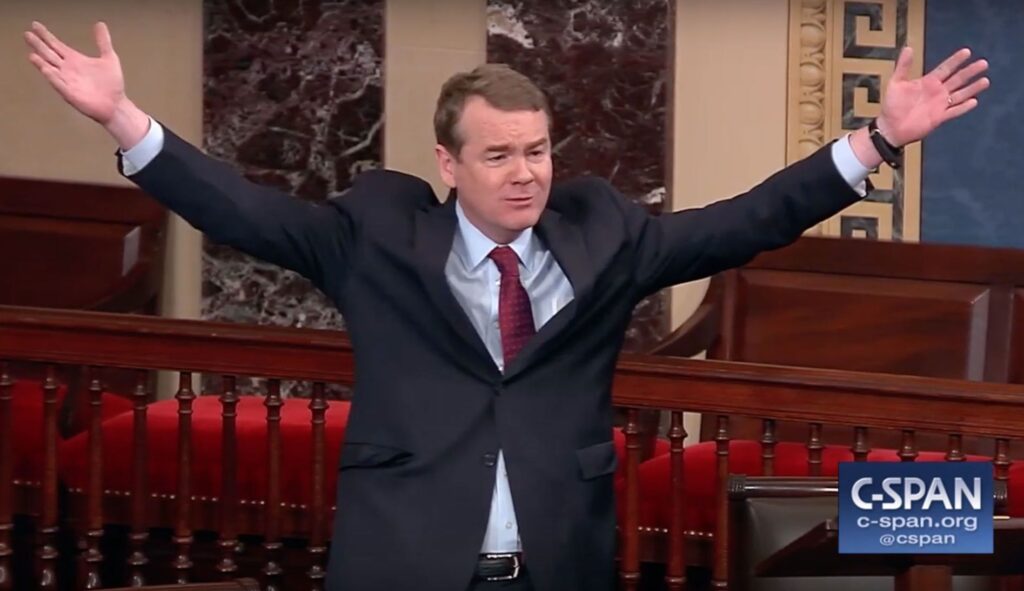
Colorado’s Michael Bennet rode outrage over last government shutdown to presidential bid | TRAIL MIX
Ernest Luning
ernest.luning@coloradopolitics.com
Updated 5 days ago
Only weeks after the longest federal government shutdown in U.S. history ended with congressional Democrats’ demands to restore health care funding previously cut by Republicans left dangling, the high-stakes standoff that dominated political news for 43 days has already receded...
Giving thanks for the long-overdue Epstein reckoning | NOONAN
Paula Noonan
paula-noonan@coloradopolitics.com
Updated 5 days ago
Thanksgiving is the best holiday. No gifts required. Just family and friends around a table enjoying each other’s company, expressing gratitude for the good things in their lives. Some good things arrived recently in the form of the Epstein emails....
Illegal means illegal | BIDLACK
Hal Bidlack
hal-bidlack@coloradopolitics.com
Updated 6 days ago
Before I get to the core of today’s column, my outrage at a president calling for the execution of sitting members of Congress, I’d like to tell you a little bit about how we go about launching intercontinental ballistic missiles,...