

Divided appeals court upholds judge’s decade-old violation of restitution law
Colorado’s second-highest court turned aside a defendant’s challenge earlier this month to a judge’s decade-old order that he pay $28,518 in crime victim restitution, even though the judge failed to comply with state law in doing so.
In Colorado, as part of sentencing, judges must consider whether defendants owe financial restitution to their victims. If so, prosecutors generally need to provide the requested amount by the time of sentencing or within 91 days of sentencing. Judges must also impose the restitution amount within 91 days of sentencing. If judges need to extend either deadline, they must find extenuating circumstances or good cause.
In a major decision, People v. Weeks, the state Supreme Court ruled in November 2021 that judges’ historical process of awarding compensation to crime victims did not comply with Colorado law. The justices noted a lackadaisical approach had taken hold in the trial courts that neglected the clear deadlines and procedural requirements. Consequently, if trial judges fail to follow the law, they lose authority to issue a restitution order.

After Thomas Andrew Huntley pleaded guilty to a pair of offenses in 2014, the prosecution in Douglas County submitted its restitution request nearly 80 days after Huntley’s sentencing. Huntley did not object and then-District Court Judge Paul A. King ordered the restitution amount 118 days after sentencing — without finding good cause to exceed the deadline.
Only in 2022, and after the Supreme Court decided Weeks, did Huntley file a motion to overturn the faulty restitution order. But by 2-1, a three-judge Court of Appeals panel determined Huntley was obligated to file his challenge within 126 days of the original order.
“Huntley’s motion challenging the restitution order as being entered in an illegal manner, filed seven and a half years after the order entered, is therefore untimely,” wrote Judge W. Eric Kuhn in the May 1 opinion.
Judge Timothy J. Schutz dissented. He believed Huntley’s restitution order was not just issued in an illegal manner, but King’s noncompliance rendered the sentence itself illegal and, therefore, open to challenge at any time.
“The majority opinion attempts to excuse the sentencing court’s failure to meet its obligations,” he wrote, “based on the fact that this sentence was entered in 2014, seven years before the supreme court issued the Weeks decision. But Weeks did not create new law.”

Previously, a precedent-setting Court of Appeals opinion addressed whether defendants could mount postconviction challenges to years-old restitution orders that violated Weeks. The opinion held such challenges addressed only the “illegal manner” in which a judge imposed restitution. That “procedural deficiency” did not render the sentence itself illegal.
That decision — which is not binding on other Court of Appeals panels — is currently in front of the Supreme Court for review along with other legal questions addressing the fallout from Weeks. Schutz acknowledged the justices’ upcoming ruling could affect whether Huntley is ultimately successful, or whether Schutz’s own views on the subject “will be obsolete.”
Huntley’s challenge alleged multiple flaws with his restitution order. Apart from King’s violation of the 91-day deadline, he pointed out King, at the time of sentencing, did not explicitly say whether Huntley would owe restitution.
In 2022, District Court Judge Theresa Slade initially agreed King’s order, 118 days after sentencing, was “entered without jurisdiction” — while inexplicably quoting a non-existent line from Weeks. But she believed the proper time to challenge restitution was after Huntley was resentenced a few years prior for a probation violation.
The Court of Appeals panel’s majority distanced itself from that rationale, instead holding that Huntley had 126 days to challenge the faulty restitution order after King issued it.
“Huntley challenges the procedure that preceded the district court’s determination of the amount he must pay to the victims. A challenge to the procedure used to reach a restitution amount is an illegal manner claim, not an illegal sentence claim,” wrote Kuhn for himself and Judge Craig R. Welling.
Kuhn added “the better practice” would have been for King to explicitly state at sentencing that Huntley would need to pay crime victim restitution, but the context of his plea agreement made clear that restitution would be a factor.
Schutz, who has been critical of deviations from the process the Supreme Court envsionsed in Weeks, saw otherwise. He noted state law did not authorize King to issue a sentencing order that was ambiguous about whether Huntley even owed restitution.
“The obligation to enter such an order, along with the corresponding obligation to ensure that restitution is resolved within ninety-one days,” he wrote, “rests solely on the sentencing court’s shoulders. The sentencing court here did neither.”
The case is People v. Huntley.
Colorado Politics Must-Reads:

Federal judge upholds constitutionality of Colorado campaign contribution limits
Michael Karlik
michael.karlik@coloradopolitics.com
Updated 2 days ago
A federal judge upheld Colorado’s individual campaign contribution limits as constitutional on Thursday, finding that three Republican plaintiffs failed to prove the campaign finance framework violates their First Amendment rights. U.S. District Court Senior Judge John L. Kane recognized that...

Appeals court rejects theory that existing tax revenue undermines need for new fees
Michael Karlik
michael.karlik@coloradopolitics.com
Updated 3 days ago
Colorado’s second-highest court rejected a plaintiff’s claim on Thursday that the tax revenue generated by an existing activity should prevent local governments from imposing new fees aimed at regulating the activity. The question stemmed from Colorado’s unique constraints on taxation...
Appeals court finds no illegal sentence when defendants forfeit time-served credit
Michael Karlik
michael.karlik@coloradopolitics.com
Updated 1 day ago
Colorado’s second-highest court ruled on Thursday that criminal defendants may agree to relinquish the credits they earned while incarcerated pending trial, despite a state law guaranteeing that such time “shall be deducted” from a person’s sentence. Kerry Ellis Endsley pleaded...
Appeals court reinstates Garfield County arson charge
Michael Karlik
michael.karlik@coloradopolitics.com
Updated 16 hours ago
Colorado’s second-highest court reinstated a Garfield County defendant’s arson charge on Thursday, concluding a trial judge improperly credited a witness’s claim that she alone was responsible for starting the fire. A sheriff’s deputy responded to a brush fire near Parachute...
Federal judges rebuke ex-Colorado judicial discipline director for conduct in lawsuit
Michael Karlik
michael.karlik@coloradopolitics.com
Updated 4 days ago
A pair of federal judges expressed a desire on Thursday to break the logjam on a lawsuit by Colorado’s former judicial discipline director against the state Supreme Court and related entities, while simultaneously showing little tolerance for the plaintiff’s scorched-earth...
Democratic bill would let recipients of ‘conversion therapy’ sue Colorado providers with no statute of limitations
Marissa Ventrelli
marissa.ventrelli@coloradopolitics.com
Updated 4 days ago
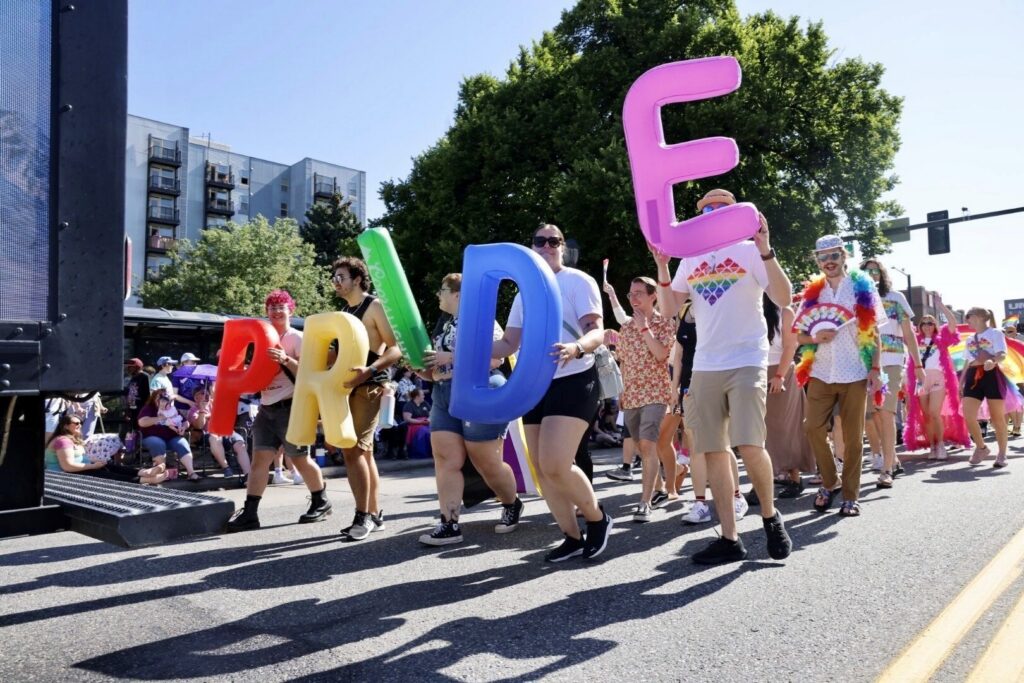
Colorado lawmakers have advanced a proposal that would allow people who underwent conversion therapy to sue licensed providers for damages, moving the measure forward on a party-line vote in the House Judiciary Committee. House Bill 1322, proposed by Democratic Reps....
Federal judge refuses to authorize immediate appeal in World Cup trafficking lawsuit
Michael Karlik
michael.karlik@coloradopolitics.com
Updated 5 days ago
A federal judge declined to authorize an immediate appeal last week of a prior decision allowing companies operating out of Colorado to be sued for allegedly participating in a human trafficking venture involving Filipino laborers who constructed facilities for the...
Federal judge considers second round of sanctions against ex-Colorado judicial discipline director
Michael Karlik
michael.karlik@coloradopolitics.com
Updated 5 days ago
A federal judge ordered Colorado’s former judicial discipline director on Tuesday to explain why she should not sanction him a second time for filing documents for improper purposes, such as harassment or delay. U.S. District Court Senior Judge Kathryn H....

Colorado justices agree to review insurance question that has divided federal judges
Michael Karlik
michael.karlik@coloradopolitics.com
Updated 5 days ago
The Colorado Supreme Court granted a federal judge’s request on Friday to address an issue that has produced conflicting answers in policyholders’ lawsuits against insurance companies over unpaid benefits. “Parties (and judges) regularly spend undue time and money fighting in...

Federal judge dismisses background screeners’ challenge to Colorado law
Michael Karlik
michael.karlik@coloradopolitics.com
Updated 2 days ago
A federal judge dismissed a challenge on Friday to a portion of Colorado law that prohibits certain information from being included in consumer reports, in what seemed to be a conflict with federal law. Congress originally enacted the Fair Credit...