

Colorado senators pass bill to penalize ‘deadnaming,’ ‘misgendering’ transgender individuals

Marissa Ventrelli
Colorado senators began their final week of session debating a proposal to add “deadnaming” and “misgendering” to the state’s anti-discrimination law.
The measure passed on a 20-14 vote, with all Republicans and Democratic Sens. Marc Snyder of Colorado Springs and Kyle Mullica of Thornton voting against it.
Senate sponsors Faith Winter, D-Westminster, and Chris Kolker, D-Centennial, introduced a number of amendments to House Bill 1312, which already had been significantly changed since its introduction in the House.
Among other provisions, the bill originally required courts to consider “deadnaming” or “misgendering as a form of “coercive control” in child custody cases. It also prohibited courts from applying other states’ laws that allow for the removal of a child from a parent or guardian’s custody if they allowed that child to receive “gender-affirming health-care services.”
Following criticism from parents across the state and several prominent LGBTQ organizations pulling their support from the bill due to legal concerns, sponsors removed any mentions of family courts, stripping it down to only include provisions defining “misgendering” and “deadnaming” as discriminatory acts under the Colorado Anti-Discrimination Act. It still includes several requirements for public and charter schools regarding their policies on preferred names and dress codes.
Transgender individuals are being targeted more than “almost any community” right now, Winter told her colleagues.
“When they are facing backlash and retaliation and fear, it is time for us to stand up and say it is time,” she said. “It is time to make sure that we are affirming that mistreating transgender folks is discrimination, and I hope that you join me in that today.”
Sen. Cathy Kipp, D-Fort Collins, claimed that transgender people have been “scapegoated” by the Trump administration and they are afraid of losing their rights; hence, the need for the legislation, she said.
“I know that there is a lot of fear out there, and really I think it’s fear of the unknown,” she said. “People don’t always understand what they’re not familiar with, but folks in our transgender community are scared.”
Winter and Kolker introduced an amendment to the bill that requires county clerks and recorders to issue new marriage licenses to individuals who request to change their name from what appears on their original licenses. Under the amendment, the new license cannot be marked as amended or “indicate in any manner” that the name has been changed.
The sponsors also amended the bill to include a legislative declaration, which in part states that “each Coloradan has the right to access fair employment, housing opportunities, public accommodations, and advertising that is free from discrimination regardless of their membership in a protected class.”
Republicans had threatened to filibuster the bill through the end of the session, and the debate lasted about seven hours on Monday night. During the debate, Republicans believe the bill could infringe on parental rights, even with the amendments.
Sen. Janice Rich, R-Grand Junction, argued that classifying “deadnaming” and “misgendering” as discriminatory acts could put parents at risk of losing custody of their children if they “refuse to comply with this radical worldview.”
“It concerns me that the government continues to think it knows better than the parents as to what’s best for their children,” she said. “Should the issue of a child’s gender arise in the home, I believe that the parents of that child are in the best position to address the issue in concert with the child’s pediatrician.”
Sen. Barbara Kirkmeyer, R-Brighton, argued that the amendments came far too late for many constituents, who don’t understand the legislative process and believe the family court provisions are still in the bill.
“They don’t understand about first readings, second readings, third readings, amendments,” she said. “They understand what an amendment is, but they don’t understand how it impacts the bill.”
House Bill 1312 will go back to the House, which will need to concur or refuse changes made by senators.


Colorado Supreme Court signals intervention in dispute over treatment for trans children
Michael Karlik
michael.karlik@coloradopolitics.com
Updated 3 hours ago
The Colorado Supreme Court ordered Children’s Hospital Colorado on Tuesday to explain why it should not direct the organization to resume providing certain types of services to transgender children in compliance with the state’s non-discrimination law. Last month, a Denver...

Trump faces first domestic test on Iran conflict with Senate war powers vote
Ramsey Touchberry, Washington Examiner
ramsey.touchberry.washington.examiner@gazetteedit.wpenginepowered.com
Updated 5 hours ago
Administration officials are scrambling to sell members of Congress on President Donald Trump’s military operations in Iran ahead of bipartisan attempts to limit his war powers in the Middle East without approval from lawmakers. The Senate and House are set...
Supreme Court hands California parents win over secret gender transition policy
Jack Birle, Washington Examiner
jack.birle.washington.examiner@gazetteedit.wpenginepowered.com
Updated 5 hours ago
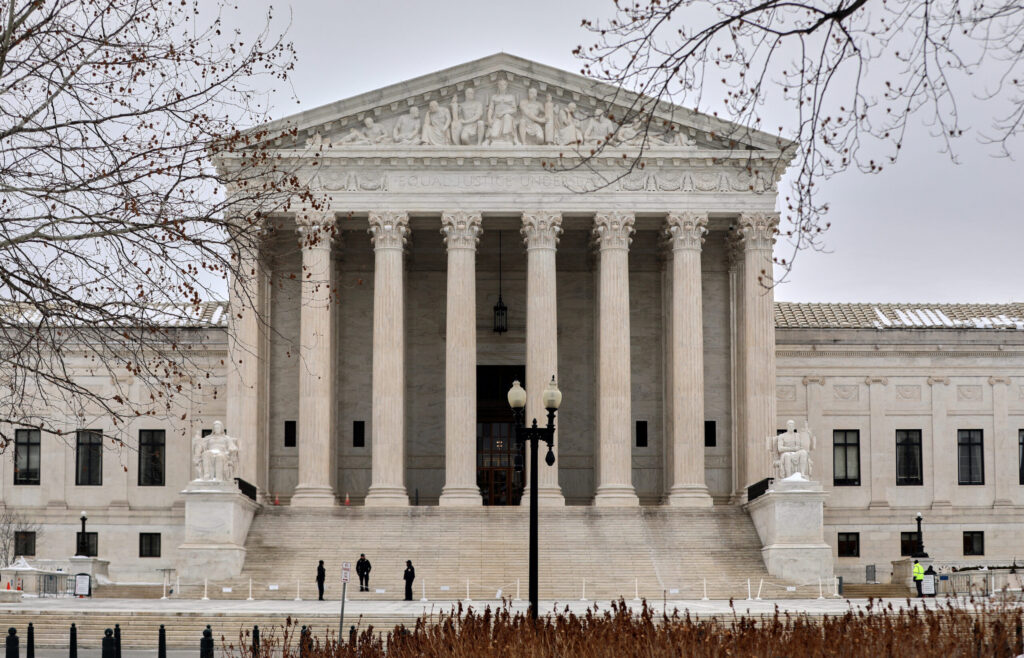
The Supreme Court gave California parents a significant victory late Monday when it kept in place a lower court’s block of the Golden State’s public school policy hiding students’ gender identity and preferred pronouns from parents. A 6-3 majority on...

Judge nixes latest policy requiring 7 days’ notice for Congress members to visit ICE facilities
Michael Kunzelman
michael.kunzelman@associatedpress.com
Updated 3 hours ago
WASHINGTON • A federal judge agreed on Monday to temporarily suspend the latest version of a Trump administration policy that requires members of Congress to provide a week’s notice before they can visit immigration detention facilities. U.S. District Judge Jia...
Judge nixes latest policy requiring 7 days’ notice for Congress members to visit ICE facilities
Michael Kunzelman
michael.kunzelman@associatedpress.com
Updated 5 hours ago
WASHINGTON (AP) — A federal judge agreed on Monday to temporarily suspend the latest version of a Trump administration policy that requires members of Congress to provide a week’s notice before they can visit immigration detention facilities. U.S. District Judge...

Gov. Polis, Upper Basin states criticize federal draft plan for managing the Colorado River
Marianne Goodland
marianne.goodland@coloradopolitics.com
Updated 5 hours ago
With no agreement among the seven Colorado River states and federal deadlines now passed, the Upper Colorado River Commission on Monday sharply criticized the U.S. Department of the Interior’s draft plan for managing the river after current guidelines expire this...

Ballot access, dual-office ban bills move swiftly through Colorado legislature
Marianne Goodland
marianne.goodland@coloradopolitics.com
Updated 6 hours ago
With an eye on the 2026 election cycle and mounting tensions with the Trump administration, Colorado lawmakers are fast-tracking a pair of election bills they say will protect the state’s mail ballot system and tighten rules for elected officials. The...

Colorado GOP chair Brita Horn loses ‘no-confidence’ vote, vows to refocus on ‘mending that divide’
Ernest Luning
ernest.luning@coloradopolitics.com
Updated 45 minutes ago
The Colorado Republican Party’s state central committee approved a resolution expressing “no confidence” in state chair Brita Horn in a landslide late Monday night near the end of an online meeting marked by rancor and confusion. Almost 80% of the...

Trump to attend White House Correspondents’ Dinner for first time as president
Washington Examiner Staff, Washington Examiner
washington.examiner.staff.washington.examiner@gazetteedit.wpenginepowered.com
Updated 9 hours ago
President Donald Trump announced on Monday that he accepted an invitation to this year’s White House Correspondents’ Dinner. It would mark the first time Trump has attended the dinner, in either term, since he’s been president. Trump announced the decision...

Noem blames ‘violent protesters’ for Minneapolis chaos under tough questioning in Senate hearing
Rebecca Santana
rebecca.santana@associatedpress.com
Updated 9 hours ago
WASHINGTON (AP) — Homeland Security Secretary Kristi Noem testified in the Senate on Tuesday in her first congressional appearance since the shooting deaths of two protesters in Minneapolis galvanized widespread opposition to how the Trump administration was executing its mass...