

Colorado Senate strips added funding for 19 rural schools
Update: the Senate approved the School Finance Act Tuesday afternoon on a unanimous vote. The bill now heads back to the House for review of amendments.
The bill, as amended by the Senate, implements the 2024 school funding formula at 15% per year for six years, and then 10% for the final seventh year of implementation, while still maintaining the four-year averaging model for the 2025-26 school year. To help stabilize school funding in a declining enrollment environment, the bill includes a three-year averaging model in 2026-2027 if the new funding formula is implemented at 30 percent, otherwise it will remain at four years.
Changes to the 2025-26 School Finance Act made last Thursday didn’t last long once the bill reached the full Senate the next day, where lawmakers stripped out additional funding for rural schools and adopted further changes.
Friday evening, the Senate took up the second reading debate on House Bill 1320, which contains the 2025-26 school finance act that seeks to increase base per-pupil funding by $195.42, to $8,691.80. The proposal also establishes the total program funding at $10.036 billion, combining state dollars, local property tax funding, and state education funds.
The Senate Appropriations Committee, somewhat to the consternation of the bill’s sponsors, added an amendment to create the “Kids Matter Fund” starting in the 2026-27 fiscal year, so that change doesn’t impact the upcoming year’s budget.
The proposal would take all state revenue collected from an existing tax of three-quarters of 1% on the federal taxable income of every “individual, estate, trust and corporation” and deposit it into the new Kids Matter Fund.
The dollars would go to base per-pupil funding, and that change is estimated to cost around $220 million to $250 million.
Another amendment would add 0.5% for 19 school districts, mostly small rural schools with declining enrollment, at a cost of about $3.5 million from the state education fund. That was part of a deal in the 2024 legislation that rewrote the School Finance Act, but the money wasn’t there for that to take place in the 2025 bill.
When that measure hit the Senate floor, the first change was to strike all the changes made by the appropriations committee, a request from co-sponsor Sen. Jeff Bridges, D-Greenwood Village.
Bridges added back an amendment that he supported in the appropriations committee — $7.6 million to the Building Excellent Schools Together (BEST) fund, money that will come from BEST’s public school capital construction assistance fund, created in 2008.
The Kids Matter First amendment also won support for going back into the bill after a push from Sens. Chris Kolker, D-Centennial, and Barbara Kirkmeyer, R-Brighton.
This time, it won support from the bill’s sponsors.
“I love this. I’d like it to be the Kirkmeyer-Kolker-Bridges-Lundeen amendment,” Bridges, noting it is very close to what the four lawmakers have wanted for a long time. This amendment almost guarantees the new school finance formula would be implemented, Bridges added.
However, the amendment for additional funding for the 19 mostly rural school districts didn’t make it back onto the bill.
A frustrated Sen. Byron Pelton, R-Sterling, who sponsored the rural school amendment, told the Senate it would have made the deal in the 2024 law “whole.”
Pelton said the 2024 law included 0.5% funding language for rural schools last year. Virtually all of the schools covered under the amendment have declining enrollments, but under the 2025 bill, they get the same funding as they did in 2024. That would apply to 18 rural schools, plus the Sheridan school district in Arapahoe County.
Co-sponsor Senate Minority Leader Paul Lundeen, R-Monument, said those school districts will do better under the new formula than the one that existed prior to 2025.
“We hear the problem and are responding to the problem,” he said. Lundeen didn’t support the amendment.
Bridges noted that Sheridan, located in his district, has 90% free and reduced lunch, the second highest in the state. Under the old formula, Sheridan would lose a lot of money. But because of the “hold harmless,” and even with declining enrollment, it’s getting the same money as it got in 2024.
“It breaks my heart to ask for a ‘no’ vote, but cutting $1.2 billion from the budget sucks and we aren’t fully implementing the formula as we planned to last year, and we can’t fully keep the additional 0.5% for these schools that was agreed to last year,” Bridges said.
Not having the votes, Pelton withdrew the amendment and sought a commitment from lawmakers to help the rural schools stay open.
“The commitment is in the (2024) law,” Lundeen said.
It was a rare loss for rural schools, which received additional dollars on a semi-regular basis under the previous school finance formula.
The school finance act is now awaiting a final vote from the Senate and will then be sent back to the House for amendment review.


Trump lowers flags to half-staff for Dolly Parton: ‘The World loves you’
Naomi Lim
naomi-lim@coloradopolitics.com
Updated 12 hours ago
President Donald Trump is honoring the life of country music legend and philanthropist Dolly Parton by ordering federal buildings across the country to lower flags to half-staff for a week. “Very sad to report that Dolly Parton, one of the...
Ted Cruz suggests GOP realignment coming after Trump leaves office
Emily Hallas
emily-hallas@coloradopolitics.com
Updated 12 hours ago
Sen. Ted Cruz (R-TX) on Monday suggested the Republican Party could embrace a directional shift after President Donald Trump leaves office, a transition that promises to leave a gaping hole in the GOP. Cruz is known as a critical ally...
2 Colorado State troopers shot near Woodland Park; suspect killed
DEBBIE KELLEY
debbie-kelley@coloradopolitics.com
Updated 12 hours ago
Two Colorado State Patrol troopers were hospitalized, and a suspect is dead after a shooting during a traffic stop Tuesday. The initial incident happened at about 7:15 a.m., when a resident reported suspicious activity in the area near milepost 286...

Aurora moves forward with data center regulations
Kyla Pearce
kyla.pearce@gazette.com
Updated 12 hours ago
The Aurora City Council approved moving forward with two new regulations on data centers and directed staff to come back at the next study session with others. At a council meeting in early August, council members directed city management to...

Aurora City Council considers stricter food truck regulations
Kyla Pearce
kyla.pearce@gazette.com
Updated 12 hours ago
The Aurora City Council is considering passing laws to limit the number of food trucks on properties in the city and how and when they operate. Councilmember Angela Lawson, who sponsored the ordinance, said she understands the importance of food...
Denver murder conviction reversed for incomplete self-defense instruction
Michael Karlik
michael.karlik@coloradopolitics.com
Updated 10 hours ago
Colorado’s second-highest court reversed a defendant’s murder conviction last week because a Denver judge gave an incomplete instruction to the jury about the man’s right to self-defense. Donald R. Gonzales and Gary McLaughlin met up in a Capitol Hill parking...
Colorado lawmaker, House leaders named in workplace-retaliation lawsuit
Marianne Goodland
marianne.goodland@coloradopolitics.com
Updated 13 hours ago
A former legislative aide has filed a lawsuit alleging she was mistreated, illegally directed to perform campaign work and harmed by a House leadership structure she charged was fragmented, politicized and ineffective at protecting employees. The lawsuit, filed by Jennifer...

Secret Service confirms awareness of Iranian state media video threatening Barron Trump’s life
The Associated Press
the-associated-press@coloradopolitics.com
Updated 18 hours ago
WASHINGTON (AP) — The U.S. Secret Service has confirmed it is aware that Iranian state media has aired a video that appears to threaten the life of Barron Trump, President Donald Trump’s youngest son. “The U.S. Secret Service is aware...
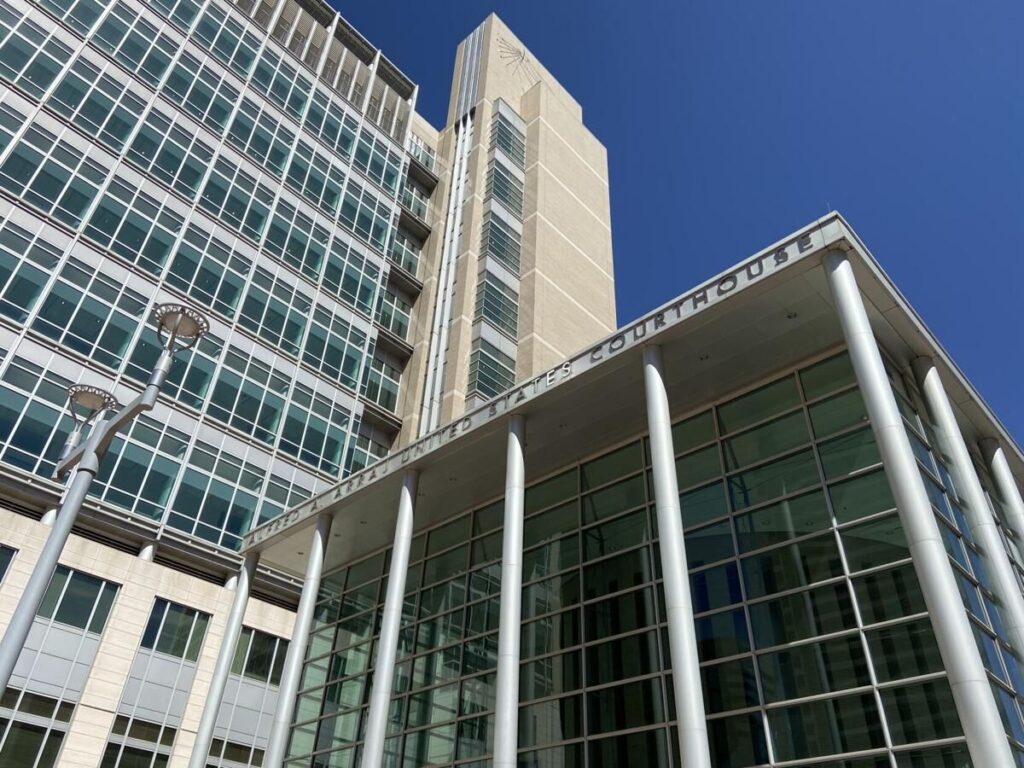
Federal judge hears arguments about Colorado’s 3-day gun purchase waiting period
Michael Karlik
michael.karlik@coloradopolitics.com
Updated 18 hours ago
A federal judge heard arguments on Monday about the constitutionality of a 2023 Colorado law that generally imposes a three-day waiting period on firearm purchases after the initiation of a background check. The test that the U.S. Supreme Court created...

Denver auditor finds oversight failures in $175.6M 16th Street project
Nico Brambila
nico.brambila@denvergazette.com
Updated 12 hours ago
Surprise historic sewer discovery delayed completion a year, cost $18M The Denver Auditor recently found significant oversight and contracting problems with the $175.6 million 16th Street Improvement Project, including an $18 million contract increase and a nearly one-year extension that...