

Independence Institute leader rocks governor’s race in bid to face Romer | A LOOK BACK
Thirty-Five Years Ago This Week: Starting out with no viable candidates to challenge Gov. Roy Romer earlier in the year, the Republican Party suddenly had its hands full with a bumper crop of candidates vying for the GOP’s nomination, including John Andrews, executive director of the Independence Institute.
Three weeks previously, Andrews had announced that he would run for lieutenant governor and then abruptly told the press that he had changed his mind and would run for governor instead.
Andrews joined former U.S. Rep. Mike Strang and Robin Heid, mostly known for his advocacy for legalized drugs, in the gubernatorial race. Colorado Springs Mayor Bob Issac had put his own candidacy “on hold.”
Andrews, an outspoken advocate for school choice, said that his gubernatorial campaign would be “a neighborhood campaign, a people’s campaign, a campaign about the real issues facing our state and the real strength we have to meet those issues when we pull together as freely choosing individuals.”
Andrews also advocated for tax ceilings, slowing spending in government, allowing parents greater control over schooling, upgrading public services through competitive contracting and term limits for state government officials.
“Romer’s popularity is very thin,” Andrews said. “By November it may vanish like the emperor’s new clothes.”
Andrews also told The Colorado Statesman that he’d been welcomed into the gubernatorial race by state Republican Party Chairman Bruce Benson and former party chair Dwight Hamilton.
But unlike Issac who expressed his reluctance to put the GOP through a divisive primary that he said would only help Romer, Andrews said that while he was a “party loyalist and not a spoiler,” he wouldn’t commit to dropping out of the race to avoid a primary if he didn’t get enough votes at the state assembly.
“We’ll cross that bridge when we come to it,” Andrews said.
Twenty-Five Years Ago: “The legislature made a wise decision when it defeated House Bill 00-1454,” said Susan Morrisey, executive director of the Colorado Tobacco Education and Prevention Alliance (CTEPA). “That measure would have crippled Colorado’s ability to address it’s tobacco problem.”
Under HB 00-1454 all decisions regarding the sale of Colorado’s tobacco settlement payments, including the percentage sold, how many years of payments are sold, and the minimum rate of return, would all have been made by a state-created corporation not subject to legislative oversight or final approval.
“House Bill 1454 would have sold off the rights to Colorado’s tobacco settlement payments to out-of-state investment bankers,” Morrisey said. “Under this measure, Colorado may have only received 30 cents on the dollar, or even less.
The bill’s fate was in doubt after failing the Senate Finance Committee and then being revived by the same committee but failing again on a 4-to-3 vote.
Morrisey told The Colorado Statesman that vital programs, which received a large percentage of their funding from tobacco settlement dollars, would have been under threat of massive shortfall if the bill had passed. Over the next 25 years Colorado was expected to receive an estimated $3.2 billion in settlement payments.
CTEPA did endorse SB 00-71 which allocated 38% of settlement funds to a trust, 15% to tobacco education programs, 19% to Gov. Bill Owens’ Read to Achieve Program, $10 million to the Children’s Basic Health Plan, and the remaining to a home nurse program, community care grants and the Colorado State Veterans Trust Fund.
Colorado became the ninth U.S. state to defeat a securitization bill for tobacco settlement funds.
Rachael Wright is the author of several novels including The Twins of Strathnaver, with degrees in Political Science and History from Colorado Mesa University, and is a contributing writer to Colorado Politics, the Colorado Springs Gazette and the Denver Gazette.


Can deliberation save democracy? | Vince Bzdek
Vince Bzdek
vince.bzdek@gazette.com
Updated 1 hour ago
In September 2019, 523 Americans traveled to Dallas for an experiment called “America in One Room.” The gathering was designed to test a theory: Could representative citizens deliberate productively even in an era of intense polarization? The event took place...

Colorado health equity funder’s redirection debated
DEBBIE KELLEY
debbie-kelley@coloradopolitics.com
Updated 1 day ago
A redirection in grantmaking that began two years ago for The Colorado Trust, a 40-year-old Denver-headquartered funder, has led some employees to now voice concerns, which has reportedly put their jobs in jeopardy. The vice president of communications for the...
Redistricting scheme would give Colorado Democrats seven House members, split El Paso County
Bob Loevy
bob-loevy@coloradopolitics.com
Updated 13 hours ago
A proposed redistricting plan, which could give Colorado seven Democratic members of the U.S. House of Representatives and only one Republican, would split El Paso County into two parts and thereby weaken the county’s influence in Congress. El Paso County,...

Is Trump a builder or just a latter-day headhunter? | SONDERMANN
By Eric Sondermann
by-eric-sondermann@coloradopolitics.com
Updated 2 days ago
It was well under 100 hours after President Donald Trump’s overly long, overly theatrical State of the Union speech that he unleashed American bombers across Iran. As I write, it is now less than 100 hours since those bombers started...

LDS activist excommunicated from the church speaks out on women’s rights across Colorado | A LOOK BACK
Rachael Wright, Special to Colorado Politics
rachael.wright@coloradopolitics.com
Updated 2 days ago
Forty-Five Years Ago This Week: “Women must demand — now and if necessary at the peril of our lives — that we be granted civil rights in the same way rich white men in this country were granted them: constitutional...

Democrats eye new taxes on alcohol, marijuana to fund Colorado mental health spending
Marissa Ventrelli
marissa.ventrelli@coloradopolitics.com
Updated 2 days ago
Facing a more than $1 billion budget shortfall, Colorado lawmakers are searching for ways to fund mental health services in a state that consistently ranks among the worst in the nation for mental health outcomes. Several proposals this session aim...

Hopes and fears: Colorado Iranians speak out on widening war
Mark Samuelson Special to The Denver Gazette
mark.samuelson@denvergazette.com
Updated 11 hours ago
Group talks about young people protesting against the Islamic Republic, and Reza Pahlavi and the monarchy When Denver area real estate agent Fara Novin dined out for her birthday Friday night, Feb. 27, she blew out a candle on a...
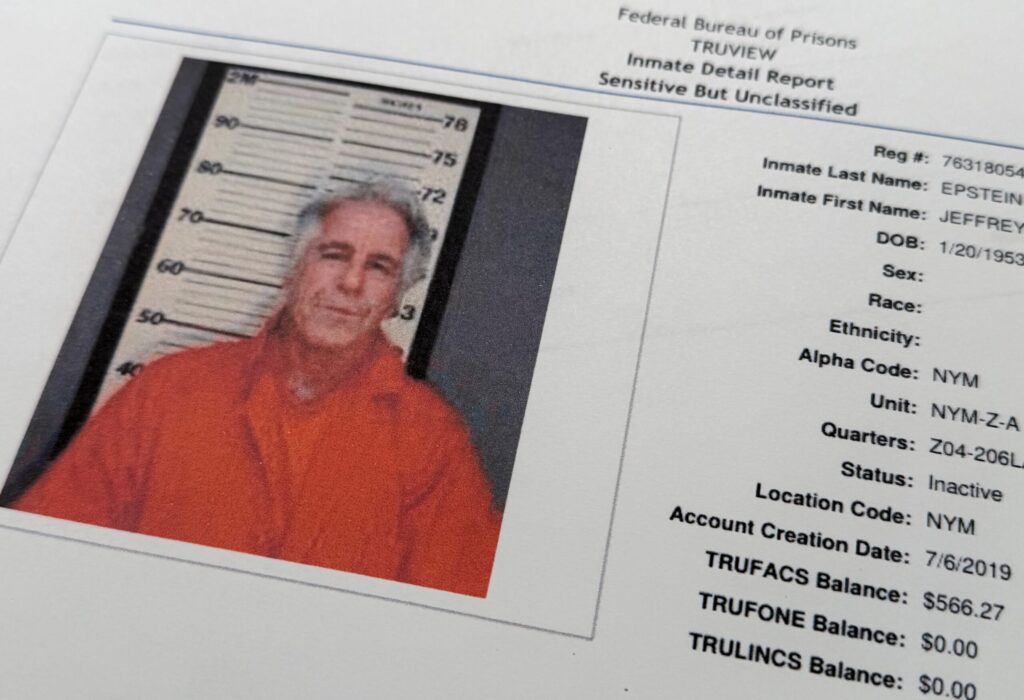
DOJ publishes more Epstein documents mentioning Trump after initial omission
Rena Rowe, Washington Examiner
rena.rowe.washington.examiner@gazetteedit.wpenginepowered.com
Updated 1 day ago
The Justice Department released additional Epstein files on Thursday, including uncorroborated accusations from a woman claiming she was sexually assaulted by President Donald Trump. Last week, Rep. Robert Garcia (D-CA), the top Democrat on the House Oversight and Government Reform...

Federal judge dismisses developer’s challenge to Denver affordable housing ordinances
Michael Karlik
michael.karlik@coloradopolitics.com
Updated 23 hours ago
A federal judge dismissed a homebuilder’s constitutional challenge on Tuesday to a pair of Denver ordinances that impose obligations on developers related to the affordable housing demands created by new construction. Two related companies, redT Homes and redT Capital Partners,...

Another TABOR fight: Democrats plan to redirect residents’ refunds to K-12 spending
Marianne Goodland
marianne.goodland@coloradopolitics.com
Updated 8 hours ago
Colorado voters could decide this fall whether billions of dollars that would otherwise be returned as refunds under the Taxpayer’s Bill of Rights should instead go to public schools under a ballot measure unveiled Thursday by Democrats. Supporters say the...