

Douglas County commissioners push for home rule status
Douglas County commissioners, despite skepticism and now a legal fight, are trying to gain home rule status for the county in an attempt to maintain conservative principles while Democrats control the legislature.
To become home rule – a process rarely seen in Colorado – Douglas County voters must approve the creation of a home rule charter committee in June and then adopt the new charter in November.
What is home rule?
Typically, municipalities such as a city or town obtain home rule status and establish a charter that citizens follow. All five Douglas County municipalities are among 103 total home rule municipalities in Colorado.
“Douglas County municipalities already have the ability to dictate the structure of their government and take advantage of those powers that are in the Colorado constitution,” Commissioner George Teal said.
He added: “The county is just catching up to them by going home rule itself.”
Home rule counties are rare in Colorado. Out of 63 counties, only four are home rule. Denver and Broomfield are home rule, but are both cities and counties, while Pitkin and Weld counties are home rule but just counties.
A handbook distributed to county commissioners by Colorado Counties, Inc. notes county home rule “does not include the kind of ‘functional’ home rule powers found in municipal charters … Thus, state statute still determines the functions, services, and facilities provided by home rule counties.”
Under Colorado law, county residents may establish their own government structure, including the number of commissioners, county employees, duties and compensation. But commissioners and staff still must operate the county in accordance with a more structured home rule charter, limiting what the county can do compared to a municipality.
For example, counties with a home rule charter don’t have unlimited ordinance-making powers like home rule cities do.
History of home rule counties
It’s been nearly half a century since Weld County established its home rule charter in northern Colorado.
It was the first sole Colorado county to establish home rule when it did so in 1976.
Weld County’s reasoning? Consolidation of government.
Weld County’s home rule status expanded the number of commissioners from three to five while minimizing 12 existing departments into five, which respective commissioners oversee.
“I think that’s benefited the county in many ways,” Weld County At-Large Commissioner Kevin Ross said. “We’re not just policy setters here for the county. We’re actually managing the day-to- day activities. It has us keep a closer eye and tighter control on our finances,” Ross said. “We have a better idea what staffing needs are and ways to find efficiency with the commissioners.”
Unlike other counties, Ross added, “we tend to operate as less government is better government.”
In the past, voters in counties like Ouray, Eagle and Summit rejected home rule. Most recently, in 2005, Eagle County explored doing something similar to Weld County by changing its government structure, but voters ultimately rejected it.
Summit County came close in 1996, when 56% of voters approved its home rule commission, but then 67% of voters eventually rejected the commission’s written charter, according to an Aspen Times’ 2005 article.
Preserving conservative principles
Unlike other home rule efforts, Douglas County commissioners want to structure the charter to maintain Republican principles within the county and Democrat-dominated state, according to Teal.
“If the political winds do change here in the county, we preserve these conservative principles that just can’t be changed by two county commissioners being elected that are Democrats,” Teal said.
Possible exemptions from some Colorado laws piqued the interest of commissioners.
County Attorney Jeff Garcia pointed to property tax legislation and laws surrounding immigration enforcement as “things that would be possibly different if we were a home rule county instead of just a statutory county.”
Garcia added there are hundreds of laws the county can’t be exempt from under home rule. It is up to the charter commission to decide what laws to request exemption from.
Douglas County’s House District 45 Rep. Max Brooks, who also serves on the Castle Rock Town Council, said he isn’t aware of any laws in question by the county, but he claimed that the General Assembly is impeding local control.
Officials also mentioned mask mandates, bag fees, overturned property tax reductions and sanctuary community policies as laws to focus on.
When announcing home rule efforts on March 25, Commissioner Abe Laydon said “we have watched as reckless state policies have made Colorado less safe, less affordable and less free.”
“We are pursuing home rule status to assert our right to govern ourselves in the best interest of our people,” he said. “Commissioners are not driving this bus. It’s up to the citizens.”
Douglas County’s 2023 bi-annual voter opinion poll received 760 responses. In that survey, 37% of voters labeled home rule status “high priority,” while 42% said it is “medium priority” and 20% deemed it “low priority” to have “more independence from state controls.”
Legal battle over home rule efforts
Douglas County’s home rule efforts prompted former political rivals to team up in a lawsuit that attempts to overturn two home rule resolutions approved on March 25.
The lawsuit alleges commissioners violated Colorado’s open meeting laws while discussing the home rule process in private or without notice.
Former Douglas County Commissioner Lora Thomas, one of the plaintiffs in the lawsuit, argued the county’s home rule process isn’t intended to be citizen-led.
“There was not one whisper of home rule in the public arena until March 25 when the three commissioners put home rule on a ballot in a special business meeting that lasted 10 minutes,” Thomas said. “There was no citizen comment, nothing.”
Teal insisted it is a citizen-led effort because “anybody who voted for me knew that this is something I was pushing for.”
“If the citizens of Douglas County didn’t like what I was saying about home rule, they should have fired me,” Teal said, “but they didn’t.”
After the March 25 announcement, Gov. Jared Polis reached out to Douglas County commissioners and voiced concerns that a change in operations would end up hurting residents.
“The governor expressed his concern to the Douglas County commissioners that a change in status could lead to increased costs and bureaucracy for Douglas County,” said Shelby Wieman, a spokesperson for Polis.
She added the governor “hopes they make specific commitments to preserve key services while not expanding the size of the county bureaucracy.”
Douglas County’s first town hall to address home rule is scheduled for 6 p.m. May 28 at 100 Third St. in Castle Rock. State law requires a town hall to be held within 30 days before the first election, which is scheduled for June 24 and will cost the county $500,000.


Redistricting plan to give Colorado Dems 7 members of the U.S. House will split El Paso County | Bob Loevy
Bob Loevy
bob-loevy@coloradopolitics.com
Updated 13 hours ago
A proposed redistricting plan, which would give Colorado seven Democratic members of the U.S. House of Representatives and only one Republican, will split El Paso County into two parts and thereby weaken the county’s influence in Congress. El Paso County,...
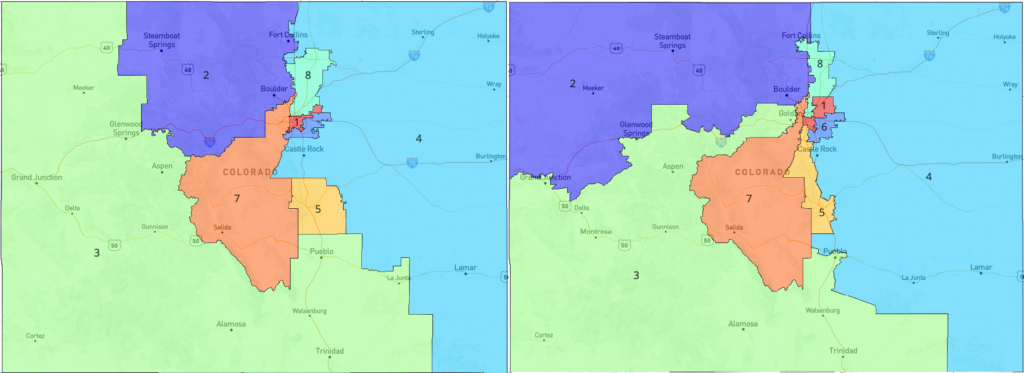
Redistricting scheme would give Colorado Democrats seven House members, split El Paso County | Bob Loevy
Bob Loevy
bob-loevy@coloradopolitics.com
Updated 5 hours ago
A proposed redistricting plan, which could give Colorado seven Democratic members of the U.S. House of Representatives and only one Republican, would split El Paso County into two parts and thereby weaken the county’s influence in Congress. El Paso County,...

Colorado health equity funder’s redirection debated
DEBBIE KELLEY
debbie-kelley@coloradopolitics.com
Updated 1 day ago
A redirection in grantmaking that began two years ago for The Colorado Trust, a 40-year-old Denver-headquartered funder, has led some employees to now voice concerns, which has reportedly put their jobs in jeopardy. The vice president of communications for the...

Can deliberation save democracy? | Vince Bzdek
Vince Bzdek
vince.bzdek@gazette.com
Updated 9 hours ago
In September 2019, 523 Americans traveled to Dallas for an experiment called “America in One Room.” The gathering was designed to test a theory: Could representative citizens deliberate productively even in an era of intense polarization? The event took place...

Is Trump a builder or just a latter-day headhunter? | SONDERMANN
By Eric Sondermann
by-eric-sondermann@coloradopolitics.com
Updated 3 days ago
It was well under 100 hours after President Donald Trump’s overly long, overly theatrical State of the Union speech that he unleashed American bombers across Iran. As I write, it is now less than 100 hours since those bombers started...

Democrats eye new taxes on alcohol, marijuana to fund Colorado mental health spending
Marissa Ventrelli
marissa.ventrelli@coloradopolitics.com
Updated 2 days ago
Facing a more than $1 billion budget shortfall, Colorado lawmakers are searching for ways to fund mental health services in a state that consistently ranks among the worst in the nation for mental health outcomes. Several proposals this session aim...

Colorado Politics Calendar Mar. 9-13
Rachael Wright, Special to Colorado Politics
rachael.wright@coloradopolitics.com
Updated 2 days ago
CoPo’s weekly political calendar will help you find political and public-policy events throughout Colorado. It includes candidate and issue campaign events, public policy meetings, court hearings, state and local party conventions, assemblies, debates, rallies, parades, speaking engagements, traveling dignitary appearances,...

LDS activist excommunicated from the church speaks out on women’s rights across Colorado | A LOOK BACK
Rachael Wright, Special to Colorado Politics
rachael.wright@coloradopolitics.com
Updated 3 days ago
Forty-Five Years Ago This Week: “Women must demand — now and if necessary at the peril of our lives — that we be granted civil rights in the same way rich white men in this country were granted them: constitutional...

Hopes and fears: Colorado Iranians speak out on widening war
Mark Samuelson Special to The Denver Gazette
mark.samuelson@denvergazette.com
Updated 6 hours ago
Group talks about young people protesting against the Islamic Republic, and Reza Pahlavi and the monarchy When Denver area real estate agent Fara Novin dined out for her birthday Friday night, Feb. 27, she blew out a candle on a...
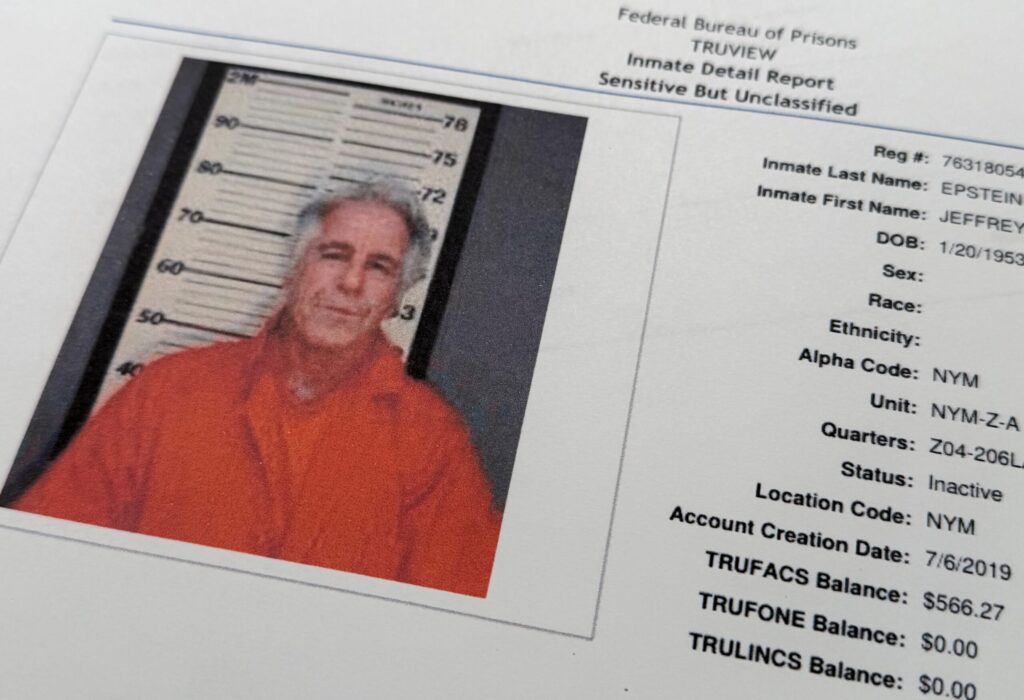
DOJ publishes more Epstein documents mentioning Trump after initial omission
Rena Rowe, Washington Examiner
rena.rowe.washington.examiner@gazetteedit.wpenginepowered.com
Updated 2 days ago
The Justice Department released additional Epstein files on Thursday, including uncorroborated accusations from a woman claiming she was sexually assaulted by President Donald Trump. Last week, Rep. Robert Garcia (D-CA), the top Democrat on the House Oversight and Government Reform...