

10th Circuit allows Gross Reservoir construction to continue while trial judge sorts out project
The Colorado-based federal appeals court on Friday permitted construction to continue temporarily on Denver Water’s massive infrastructure project in Boulder County while a trial judge forges ahead with a hearing on the matter.
Earlier this month, U.S. District Court Senior Judge Christine M. Arguello found that, as a result of federal law violations, the expansion of Gross Reservoir and Dam should cease permanently and any further construction on the ongoing project would stop temporarily. The pause on construction, Arguello wrote, would give her time to hear from engineers and determine what work would need to occur to make the dam safe.
Days later, Arguello allowed for necessary construction to temporarily resume, and the U.S. Court of Appeals for the 10th Circuit extended that window while it reviewed Denver Water’s request to continue work.
In an April 25 order, a two-judge panel of the 10th Circuit declined to address Denver Water’s request that it suspend, or stay, Arguello’s moratorium on construction entirely pending appeal. Instead, Judges Scott M. Matheson Jr. and Richard E.N. Federico believed it best for Arguello to proceed with the hearing she has scheduled for May 6, with construction permitted through then.
“The pending proceedings are expected to develop factual information that may result in a more precisely tailored limitation on construction of the dam and will assist us in our resolution of the stay motion,” they wrote. The judges also observed Arguello may “modify the total ban on continued construction” based on what she hears.
Arguello previously found the U.S. Army Corps of Engineers wrongfully approved a discharge permit for the project after it improperly eliminated alternatives that avoided disturbing wetlands. Further, the Corps improperly combined two distinct goals that had the effect of steering the project toward reservoir expansion. The actions violated both the Clean Water Act and the National Environmental Policy Act.
Denver Water said it has already incurred $314 million in construction costs on the project, with an additional $4 million per week in construction delays. The utility warned of safety risks if the deconstructed-and-reconstructed dam is left in its current state and told the 10th Circuit it had an obligation to its customers to proceed with reservoir expansion even in the face of litigation.
The environmental groups that successfully challenged the project, meanwhile, argued it would be more harmful to continue construction.
“Petitioners alleged catastrophic harms that will result without an injunction,” lawyers for the groups wrote. “Denver Water will kill 500,000 trees, destroy recreation areas and hiking trails, displace wildlife, degrade air and water quality, divert water from the Colorado River’s headwaters, and threaten the safety of nearby residents. These irreversible harms, especially of this immense magnitude, are irreparable.”
The 10th Circuit’s order advised that it is allowing construction to continue until Arguello issues her post-hearing order. After that, the circuit will evaluate how to proceed.
The case is Save the Colorado et al. v. Graham et al.

Federal judge partially allows second World Cup trafficking lawsuit to move forward
Michael Karlik
michael.karlik@coloradopolitics.com
Updated 3 minutes ago
A federal judge allowed some claims to move forward last month against companies operating out of Colorado that allegedly participated in a human trafficking venture involving Filipino laborers who constructed facilities for the 2022 World Cup in Qatar. There are...
Federal judge dismisses lawsuit seeking to force Colorado secretary of state to screen out scam filings
Michael Karlik
michael.karlik@coloradopolitics.com
Updated 2 hours ago
A federal judge dismissed a lawsuit last week that sought to require Colorado’s secretary of state to verify corporate filings in the state’s database to reduce the risk of future fraud. Bernard Butts of Florida, who was 83 when he...
Federal judge finds no constitutional violation by Huerfano County well inspectors
Michael Karlik
michael.karlik@coloradopolitics.com
Updated 4 hours ago
A federal judge concluded last month that two Huerfano County employees did not engage in an unconstitutional search when they approached the plaintiffs’ camper within 40 feet to investigate a potential code violation. In July 2021, the county’s building inspector,...
Federal judge warns of increasingly inadequate immigration bond hearings
Michael Karlik
michael.karlik@coloradopolitics.com
Updated 19 hours ago
A federal judge ordered the immediate release of a man in immigration custody last week and, seemingly for the first time in Colorado, warned that the government is increasingly conducting inadequate bond hearings for detainees. Colorado’s federal trial court is facing...

10th Circuit upholds dismissal of Barry Morphew’s civil lawsuit against prosecutors, investigators
Michael Karlik
michael.karlik@coloradopolitics.com
Updated 19 hours ago
The Denver-based federal appeals court agreed on Monday that Barry Morphew, who now stands accused for a second time of murdering his wife, failed to state viable claims against the government officials involved in his first, unsuccessful prosecution. Morphew was...
Federal judge blocks evidence from Aurora police’s unconstitutional search
Michael Karlik
michael.karlik@coloradopolitics.com
Updated 19 hours ago
A federal judge ruled last month that prosecutors cannot use firearm evidence against a defendant because Aurora police searched him without having any reasonable basis to believe he was armed and dangerous. In evaluating the constitutionality of the search, U.S....

Colorado justices confirm lawyers may ‘borrow’ allegations from elsewhere
Michael Karlik
michael.karlik@coloradopolitics.com
Updated 2 days ago
The Colorado Supreme Court ruled on Monday that plaintiffs’ lawyers can use allegations made elsewhere to bolster their own clients’ claims, so long as the attorney first performs some degree of investigation into the “borrowed” assertions. Under Colorado’s rules for...
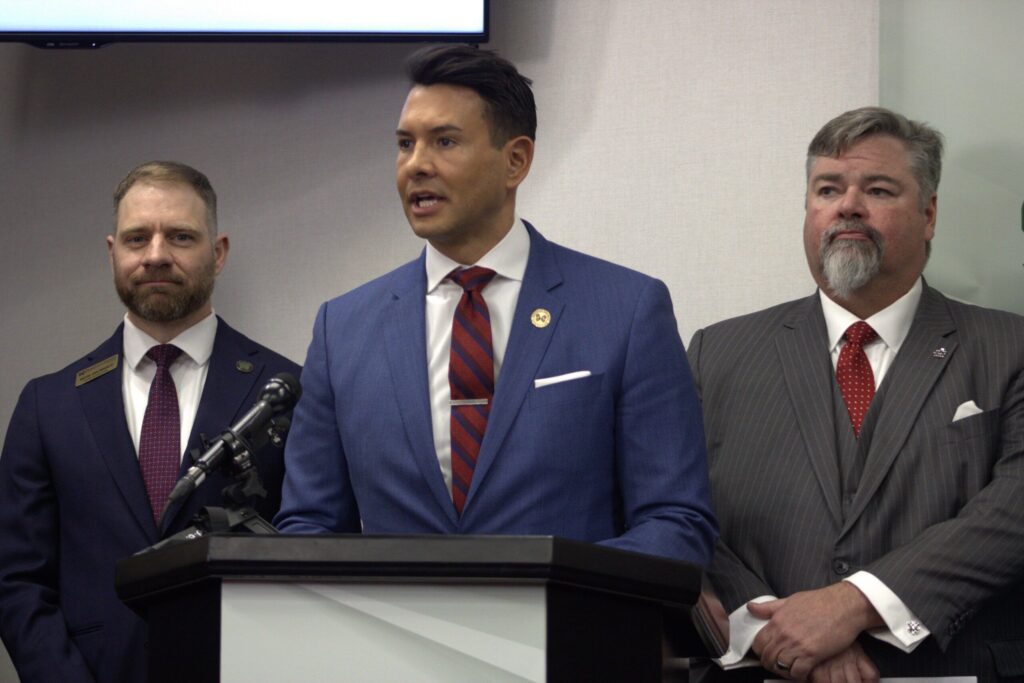
Appeals Court rules Douglas County violated open meeting laws
Nicholas Fogleman
nicholas.fogleman@denvergazette.com
Updated 1 day ago
The Colorado Court of Appeals ruled that Douglas County Commissioners violated Colorado open meeting laws in a series of closed meetings leading up to the county’s failed home rule special election. The Thursday ruling reversed a trial court’s denial of...

Colorado justices restore RTD subcontractor’s award, reject ‘drastic’ view of public works law
Michael Karlik
michael.karlik@coloradopolitics.com
Updated 2 days ago
The Colorado Supreme Court on Monday restored a $5.7 million award to a company that helped build a commuter rail line and, in doing so, rejected a view of state law that would nullify a subcontractor’s entitlement to any compensation...
El Paso County defendant’s speedy trial rights violated, Colorado justices find in overturning convictions
Michael Karlik
michael.karlik@coloradopolitics.com
Updated 2 days ago
The Colorado Supreme Court concluded on Monday that an El Paso County prosecutor made an unjustified decision to file a mid-case appeal, pushing the trial beyond the legal deadline and requiring that the defendant’s convictions be overturned. In Colorado, the...