

Federal judge skeptical of government’s assurances that alleged ‘alien enemies’ will receive process
A federal judge on Monday signaled she is not fully prepared to take the government at its word that it would provide appropriate procedures for non-citizens to contest their removals under an 18th Century “alien enemies” law and instead said the government’s recent actions suggested due process would not actually happen.
U.S. District Court Judge Charlotte N. Sweeney, a Joe Biden appointee, is considering whether to extend her temporary moratorium on the removal of those individuals who fall under President Donald Trump’s recent proclamation invoking the Alien Enemies Act of 1798. Through the proclamation, Trump has subjected to summary removal Venezuelan citizens, 14 or older, who are purportedly members of the Tren de Aragua gang and who are neither American citizens nor lawful permanent residents.
The April 21 hearing in Sweeney’s courtroom occurred little more than 48 hours after the U.S. Supreme Court, in a separate legal challenge out of Texas, temporarily halted alien enemies-related removals from that jurisdiction. She pressed the government about why she should not grant the requested temporary restraining order given the similarity between the Colorado and Texas cases.
“The consequences here would be extremely grave if I denied the TRO and two days later, upon finding ‘new evidence,’ these two individuals are designated as TdA and subject to removal,” said Sweeney, referring to the two named Colorado petitioners. “Wouldn’t the prudent thing be to continue the TRO and await guidance from the Supreme Court?”

Michael Velchik, senior counsel with the U.S. Department of Justice, responded that the government had already determined the two named petitioners would not be removed pursuant to the Alien Enemies Act proclamation, so there was no need for judicial intervention.
“You can imagine it’s not great comfort to be told you’re not currently being considered for removal. That can change any time,” said Sweeney.
The underlying case, filed less than two weeks ago, is one of a handful that have emerged to challenge Trump’s March 14 proclamation targeting suspected members of TdA who are not naturalized citizens or lawful permanent residents. Among other issues, the litigation disputes the legality of Trump’s reliance on the Alien Enemies Act, which specifically applies during “a declared war between the United States and any foreign nation or government.”
The two named petitioners, D.B.U. and R.M.M., alleged they are Venezuelan nationals detained in Colorado who have incorrectly been labeled as members of TdA. One of the men alleged he, in fact, “lives in fear of the gang” because the group killed two of his family members.
They filed under a legal tool known as “habeas corpus,” which challenges a person’s convictions or confinement as unlawful. The Supreme Court decided, by 5-4 earlier this month, that a habeas action in the place of detention was the required approach.
The petitioners are seeking a temporary restraining order preventing their removal under the Alien Enemies Act and, more broadly, they wish to declare Trump’s application of the act unlawful. On behalf of all proposed class members in Colorado who are subject to Trump’s proclamation, the lawsuit seeks to block the government from deporting them without notice and an opportunity to respond.
Last week, Sweeney temporarily barred the government from removing anyone in the class from Colorado to allow her to retain jurisdiction over the case while she could evaluate the arguments.
A major development happened shortly after midnight on Saturday, when the Supreme Court’s majority blocked the government from removing alleged “alien enemies” from a Texas detention center in a case with similar circumstances as Colorado’s. NBC News reported that buses with detained non-citizens turned around from the airport at some point while the litigation was being heard.

Timothy R. Macdonald, of the ACLU of Colorado, told Sweeney that after the federal district judge in Texas denied a temporary restraining order, the government “rounded up” people who allegedly fell under Trump’s proclamation and provided them an English-only notice of removal with no information about how to contest their designations as “alien enemies.”
“What we know from the government’s behavior in the Northern District of Texas last week is that to the government, a few hours notice, not in the language the person speaks, with no notice given to (counsel), is the government’s version of what reasonable notice is,” Macdonald said.
Sweeney read aloud from the English-language notice the government is providing alleged “alien enemies,” which contained no direction for how someone may challenge that designation in habeas proceedings.
“You’re acting as if these individuals, many of whom don’t speak the language, would know there’s something called habeas relief,” she told the government. “It gives no notice to seek any kind of relief.”
Velchik, the government’s attorney, assured Sweeney future notices will be provided in a language the detainee understands and they will have “at least 24 hours” to file a habeas action.
Sweeney asked him if the government “will not ever consider” the two named petitioners as subject to removal as “alien enemies.”
“I think mathematically, you can’t rule out the possibility that after the hearing is over,” Velchik said, the petitioners “self-identify as members of TdA or some other information comes into the record.”
He added the purpose of the hearing was to communicate the government’s belief that at this time, the petitioners were not removable as “alien enemies.”
“But given the conduct in other jurisdictions,” Sweeney said, “it doesn’t really reassure one that that would be followed to the extent I think you are representing it would be.”
Macdonald agreed with her, arguing that under the government’s logic, every time someone brought a habeas action, their designation as an “alien enemy” would be removed, preventing the lawsuit from moving forward.
“The idea the government can try and come in and manipulate this court’s jurisdiction to say, ‘We’re not gonna remove these two people right now, deny the TRO and let us proceed,’ I think is preposterous. It’s the shell game.”
Sweeney said she will issue a written order promptly.
The case is D.B.U. et al. v. Trump et al.


Overdose deaths from opioids dip in America — but not in Colorado, study says
Jacob Mauk
jacob.mauk@denvergazette.com
Updated 4 hours ago
Overdose deaths from opioids rose in Colorado, diverging from the national trend, which has been decreasing, according to a new study from a think tank. In its new report, the Common Sense Institute said synthetic opioid overdose deaths in Colorado...
Error-prone Douglas County judge triggers another reversal of criminal convictions
Michael Karlik
michael.karlik@coloradopolitics.com
Updated 8 hours ago
Colorado’s second-highest court overturned a defendant’s Douglas County convictions on Thursday due to the error of a judge whose actions have triggered a disproportionate number of reversals to convictions and sentences in recent years. Since 2021, the Court of Appeals...

Federal judge formalizes injunction blocking USDA’s ‘pilot project’ for Colorado food assistance
Michael Karlik
michael.karlik@coloradopolitics.com
Updated 8 hours ago
A federal judge formalized his order on Monday to prevent the U.S. Department of Agriculture from requiring Colorado to participate in a food assistance “pilot project,” finding that it violates the law, the U.S. Constitution, and “the bounds of reasoned...

Colorado justices speak about inner workings of court, analysis of appellate opinions | COURT CRAWL
Michael Karlik
michael.karlik@coloradopolitics.com
Updated 13 hours ago
Welcome to Court Crawl, Colorado Politics’ roundup of news from the third branch of government. Members of the state Supreme Court provided an inside look at the workings of their institution, and a Colorado Politics analysis found that some appellate...
Appeals court finds no requirement for different judge to handle attorney-client conflict hearings
Michael Karlik
michael.karlik@coloradopolitics.com
Updated 14 hours ago
Colorado’s second-highest court rejected a defendant’s argument on Thursday that a judge improperly heard about a potential conflict between himself and his lawyer right before sentencing, and the man’s reaction could have “tainted” the sentencing decision. In September 2023, Anthony...
The influencers? Some Colorado appeals judges outpace colleagues in setting legal precedent
Michael Karlik
michael.karlik@coloradopolitics.com
Updated 14 hours ago
A handful of judges on Colorado’s second-highest court are producing substantially more precedent-setting opinions than their colleagues, which create binding interpretations of the law that reach beyond individual cases. The Court of Appeals issues approximately 1,700 opinions each year. A...
Colorado justices weigh fairness concerns after defendant prevailed despite ghosting case
Michael Karlik
michael.karlik@coloradopolitics.com
Updated 1 day ago
Members of the Colorado Supreme Court struggled on Tuesday to balance the need for one defendant to shield itself against a plaintiff’s claim that its employee sexually assaulted her child, and the fact that the employee legally admitted the allegations...
Colorado justices skeptical of appellate court’s limitation on prosecution’s appeal
Michael Karlik
michael.karlik@coloradopolitics.com
Updated 4 days ago
The Colorado Supreme Court seemed skeptical on Tuesday that Denver prosecutors should be barred from appealing a trial judge’s permanent dismissal of a criminal case, based upon the sequence of events after the original ruling. Prosecutors charged Quinn M. Jebe...
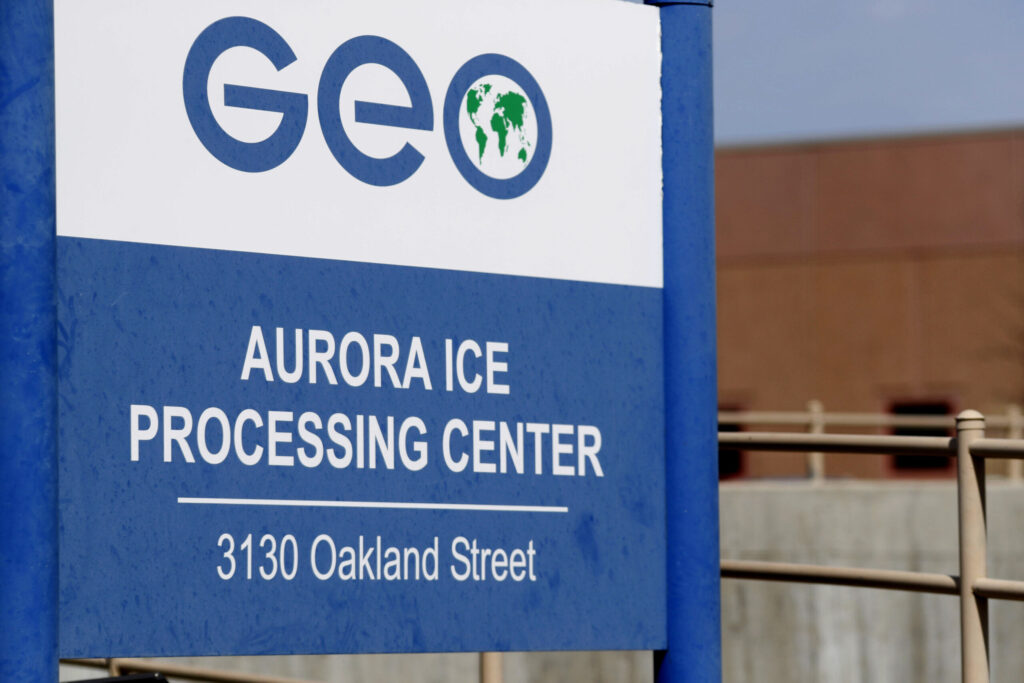
Federal judge: Government violated order shielding man from deportation in ‘one-off mistake’
Michael Karlik
michael.karlik@coloradopolitics.com
Updated 2 days ago
A federal judge acknowledged on Thursday that the government violated his order by deporting a man in immigration detention during his pending court case, but it “serves nobody’s interests” to require the government to return him. On Feb. 18, Tesfami...
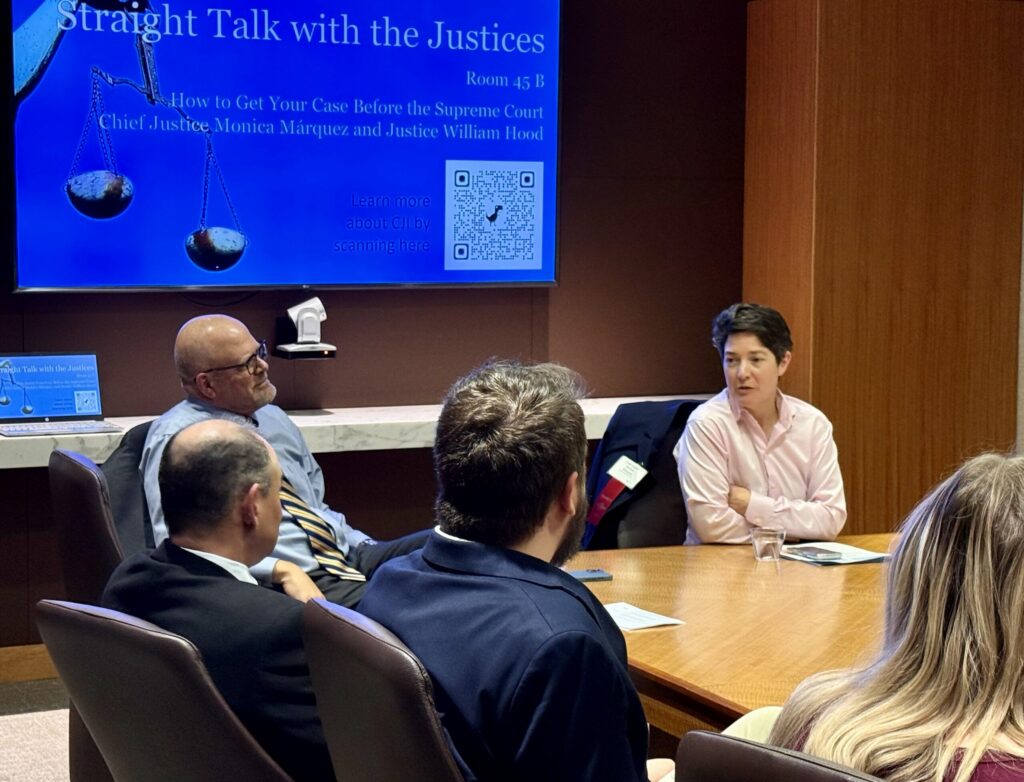
Colorado Supreme Court lifts curtain on decision-making at legal event
Michael Karlik
michael.karlik@coloradopolitics.com
Updated 4 days ago
Members of the Colorado Supreme Court sat down with lawyers on Wednesday to answer questions about behind-the-scenes topics, including what happens immediately after an appeal is argued, why they might intervene in an ongoing case, and the consequence of a...