

A little William F. Buckley to put the Ukrainian mess into proper perspective | SLOAN

Kelly Sloan
Hearing President Donald Trump speak about his designs for the Panama Canal prompted me to look up the classic “Firing Line” debate over the ratification of the Panama Canal Treaty back in 1978, an intramural battle of wits between eight of the staunchest anti-communist public figures in America at the time. It was possibly the single greatest dialectical exchange between conservatives on foreign policy ever recorded. William F. Buckley, chair of the “for” side, delivered, in my judgement, one of the most polemically and rhetorically erudite closings in the history of debate.
Much of it resonates strikingly in today’s contentions regarding Ukraine and America’s role in the world, particularly after that ridiculous debacle in the White House last week. I highly recommend watching the whole thing, or reading it if you are lucky enough to own a copy of Buckley’s literary autobiography, “Miles Gone By” in which he records it. A few snippets in particular are useful in informing the current situation:
“I think that Governor Reagan put his finger on it when he said the reason this treaty is unpopular is because we’re tired of being pushed around. We were pushed out of Vietnam because we didn’t have the guts to go in there and do it right.”
(One could substitute “Iraq” or “Afghanistan” and not miss a beat.)
“We’re prepared… to desert Taiwan because three-and-a-half Harvard professors think that we ought to normalize our relations with Red China.”
(That hasn’t changed much.)
“We are prepared to allow sixteen semisavage countries to cartelize the oil that is indispensable to the industrial might of the West because we don’t have a diplomacy that’s firm enough to do something about it, and, therefore, how do we get our kicks? By saying ‘no’ to the people of Panama.”
Sound familiar? That pretty much sums up what President Trump and Vice President JD Vance did to Ukrainian President Volodymyr Zelensky, and also nicely sums up the reason.
Now, Zelensky certainly did neither himself nor his country any favors in that devil’s carnival of a meeting. I mean, what exactly was he thinking? He knew with whom he was dealing and the rhetorical history, and he surely knew the stakes for his beleaguered nation. So why let himself get set up in such a foolish, unnecessary way? It is beside the fact the point he was trying, rather inelegantly, to make was true — Putin has ignored or broken every other negotiated agreement — but in his tactless delivery he provided the excuse Vance was looking for. There were no adults in the room during that mess, at least none of consequence, at a time when adults were desperately needed.
Stay up to speed: Sign up for daily opinion in your inbox Monday-Friday
Buckley went on:
“When I am in a mood to say ‘no’, representing the United States, I want to be looking the Soviet Union in the face and say ‘no’ the next time they want to send tanks running over students who want a little freedom in Czechoslovakia. I want to say ‘no’ to China when it subsidizes genocide in Cambodia on a scale that has not been known in this century…”
Or for that matter, in their own country. It is easy to berate someone like Zelensky; easy and fun to berate someone like Canadian Prime Minister Justin Trudeau; but it is quite another to stand up with that sort of acerbity against Vladimir Putin or Xi Xiaoping, two barbaric cretins who deserve the wrath of the leader of the free world. I would be among the first to cheer the president and VP if they directed that same vitriol toward Kim Jong Un. To do so against a pro-Western ally is a sign of weakness, not strength. Forty, 20, even 10 years ago, it would be nearly as inconceivable for a Republican president to express foreign policy in this manner as it would be to imagine the United States would vote with Russia, China, and North Korea in the United Nations against the free world.
“We are allowing ourselves to be beguiled, not by our minds, not by any hard empirical analysis, certainly not by those ideals to which we profess allegiance when we meditate on the Declaration of Independence.”
Indeed. It is difficult to discern a viable endgame to Trump’s strategy, one which puts America and the West in a stronger position. Does he simply want “peace” at any cost, like a modern-day George McGovern? Or does he not believe his own words, spoken rather eloquently at the end of his speech to Congress Tuesday, and so doubt America’s strength and potential he has to cut a deal with Russia and China to carve up the world, and then slinker back and hunker down hoping no one notices?
Well, if so, then to update Buckley:
“Let’s recognize that we are so impoverished militarily as a result of so many lamentable decisions that we need” (the Ukrainians) “who understand themselves as joined with us in a common enterprise, because when they look at the leaders of the United States they can recognize that, not as a result of our attempt to curry favor with anybody, but as a result of our concern for our own self esteem, we were big enough to grant to little people that which we ourselves fought for two hundred” (and 50) “years ago.”
Kelly Sloan is a political and public affairs consultant and a recovering journalist based in Denver.


Colorado is shrinking — time for our elected officials to take notice | Jon Caldara
Jon Caldara
jon-caldara@coloradopolitics.com
Updated 3 days ago
By Jon Caldara Something strange is happening in Colorado — strange enough that the political class should notice. People are leaving Colorado. After years of being one of the fastest-growing states in the nation, net in-migration has stopped and may...
Capitol M: Return to Gold Dome High, 2026 edition, and a salute to old IU
Marianne Goodland
marianne.goodland@coloradopolitics.com
Updated 3 days ago
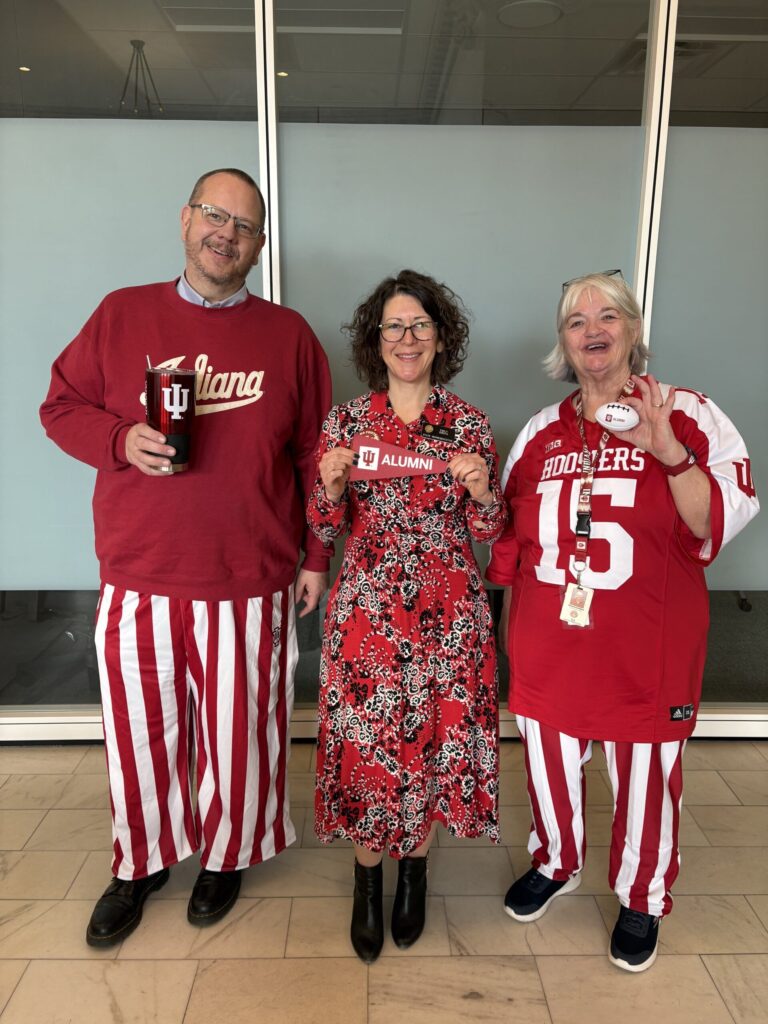
Welcome back, campers! The 2026 legislative session is upon the good citizens of Colorado, and for a few, the first Monday of the session, Jan. 19, was pretty special. There are at least four folks in the Capitol who are...
The biggest accelerant of our political tribalism | SONDERMANN
Eric Sondermann
eric-sondermann@coloradopolitics.com
Updated 4 days ago
In years past, my go-to word in describing our political condition was “polarization.” I used it endlessly and still do on occasion. But as time has moved on, and the divide has only grown in depth and toxicity, polarization no...
The ramifications of President Trump’s pursuit of Greenland | Kelly Sloan
Kelly Sloan
kelly-sloan@coloradopolitics.com
Updated 2 days ago
President Donald Trump has evidently stepped back from his threatened fantasy of invading Greenland — the sovereign territory of a U.S. ally — to which many a sigh of relief has been expressed, including by the markets. There was next...
Let’s find out who’s up to the gubernatorial task post Polis | Paula Noonan
Paula Noonan
paula-noonan@coloradopolitics.com
Updated 3 days ago
Gov. Jared Polis is bold and his policies are bolder than bold. That’s the paraphrase of his State of the State speech to open the 2026 General Assembly and start off his last year in office. His sweeping review of...
We dream, we dare, we decouple — how Colorado turns values into policy | OPINION
Colorado Politics
colorado-politics@coloradopolitics.com
Updated 4 days ago
By Kathy White Gov. Jared Polis’ final State of the State address was a clear victory lap. After eight years as governor, he used the moment to highlight accomplishments, reflect on progress and remind Coloradans what his administration has delivered....
Volunteer homeowners’ associations to be hit with new lot-splitting law | Bob Loevy
Bob Loevy
bob-loevy@coloradopolitics.com
Updated 4 days ago
Volunteer homeowners’ associations in Colorado Springs, particularly those close to the downtown area, are preparing for another attack on single-family zoning from Gov. Jared Polis and the state legislature during the just underway 2026 legislative session. The new proposal is...

Comprehensive energy permitting reform benefits Colorado, the mountain west | PODIUM
Colorado Politics
colorado-politics@coloradopolitics.com
Updated 5 days ago
By Ron Dickson Thank you, U.S. Reps. Gabe Evans and Jeff Hurd, for your participation in the Congressional Problem Solvers Caucus and your support of comprehensive energy permitting reform. We also appreciate U.S. Sen. John Hickenlooper’s continued efforts to enhance...

Colorado kids will die with CDC’s recent changes to vaccine schedule | OPINION
Colorado Politics
colorado-politics@coloradopolitics.com
Updated 5 days ago
By Connie Ingram and Lesley Thompson No parent or grandparent should ever face the terror of watching a child fight for their life against a disease that could have been prevented. Yet more families could be put in exactly this...
Solutions right in front of us to solve political extremism crisis | OPINION
Colorado Politics
colorado-politics@coloradopolitics.com
Updated 5 days ago
By Landon Mascareñaz Everywhere I went these past two weeks, the sentiment was the same: “What are we going to do about political extremism and the conflict in this country?” I heard it from folks on the left, right and...