

As budget deficit worsens, Colorado lawmakers debate $4 million for new judges
Before the 2025 session began, leaders warned lawmakers to avoid running legislation with a cost — especially from general fund dollars.
General fund dollars are the discretionary money lawmakers put into the state budget, mainly coming from individual and corporate income taxes and sales and use taxes.
The Joint Budget Committee, the panel responsible for drafting the 2025-26 state budget, continues to struggle to find the money to fill a $1 billion deficit, which is causing heated debate.
On Tuesday, the Senate floor debated a bill to spend $4 million on new judges.
Update: the Senate passed Senate Bill 24 on Wednesday on a 26-7 vote.
The bill split the Joint Budget Committee, with its Democratic members in favor and its Republican member, Sen. Barbara Kirkmeyer, R-Brighton, opposed.
As introduced, Senate Bill 24 would spend $18.8 million in general fund dollars in 2025-26 to add 18 judges throughout the state and another 11 the following year.
That didn’t fly with the Senate Appropriations Committee, which amended the bill to reduce the costs to $4 million, adding just five new judges in the next budget year and pushing out the rest in ensuing budget years.
SB 24 won a 5-2 vote from the appropriations committee, with JBC Chair Sen. Jeff Bridges, D-Englewood, and Sen. Judy Amabile, D-Boulder, voting in favor, and Kirkmeyer voting against.
SB 24 co-sponsor Sen. Dylan Roberts, D-Frisco, won approval for an amendment to reduce the number of judges from 29 to 15.
A second amendment, however, could increase funding for the public defender’s office, which is necessary when new judges are added. However, because of other changes, the amendment would result in a net reduction in funding for the public defender’s office, Roberts said.
That brought Kirkmeyer to the podium, where she raised concerns over the budget hit.
“This is a level of service that we can’t afford,” she said. “You can’t spend your way out of a structural deficit.”
Kirkmeyer warned her colleagues to think about their bills and the fiscal notes that accompany them, which show the expenses tied to a proposal.
“You need to be thinking about not only this fiscal note but any fiscal note that comes forward this year,” she said. “You have to stop spending. And it has to start this year. If you want to support this, there needs to be discussion from all of you about what you believe we should cut.”
She noted the JBC is agonizing over $100,000 in cuts.
This fiscal note, she said, asks that public defenders be prioritized in this next budget year, while the JBC cuts money from childcare for low-income families or considers reductions in universal preschool. Funding this bill means the JBC will look for cuts in education or behavioral health, she said.
The bill passed on a voice vote and could be sent to a final vote, with its $4 million cost, as soon as Wednesday.
Bills with fiscal notes
Out of 466 bills introduced through Feb. 24, about 60 carry general fund costs to the state, ranging from about $8,000 to $73.4 million.
The total impact on the general fund for 2025-26 is $134.4 million, including the addition of 88.8 full-time equivalent employees.
Senate leaders said on Tuesday morning they’ve reiterated concerns over the state budget.
“There’s recognition of the fiscal constraints” this year, and conversations need to be had about whether there’s funding for a policy and a path to get there, said Senate Majority Leader Robert Rodriguez, D-Denver.
But some of these are policies lawmakers have been working on for years, he said, adding, “Do they not have the conversation about policy just because there isn’t any funding?”
Senate Bill 13, which extends a senior housing income tax credit, will cost the state the most, at $73.4 million. The measure came from an interim committee, the Legislative Oversight Committee Concerning Tax Policy.
The bill, which Sen. Kyle Mullica, D-Northglenn, is sponsoring in the Senate, passed the Senate Finance Committee on Jan. 28 and is now awaiting action from the Senate Appropriations Committee.
Mullica told Colorado Politics he has no easy answer on where to find the money to pay for the tax credit, which reduces state general fund revenue. He said they’re still having conversations.
“But we still have a job to do,” he said. “From my perspective, it’s where my values align. I believe we need to take care of some of our most hard-to-serve citizens, our seniors.”
If they don’t qualify for the senior homestead property tax exemption, “we need to find another way to making sure we’re not forgetting them,” he said.
Aware of the budget situation, he stressed that it doesn’t mean they won’t have tough conversations.
At the same time, he said, “You can lead with your values and still have difficult conversations… You don’t abandon your beliefs.”
In the 2024 session, lawmakers offered more than 270 bills out of 570 with a net general fund impact.

Who are the 3 finalists for the Colorado Supreme Court?
Michael Karlik
michael.karlik@coloradopolitics.com
Updated 9 hours ago
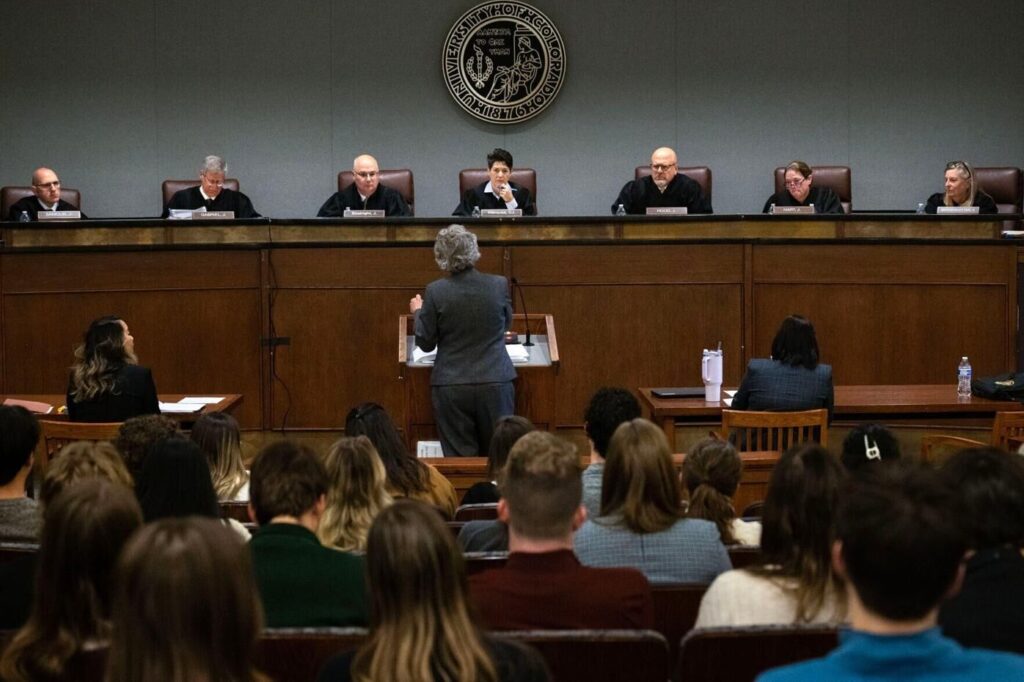
A citizen-led nominating commission has chosen the finalists for a vacancy on the Colorado Supreme Court, the first opening in five years on the seven-member court. The vacancy arose after the unexpected resignation of Justice Melissa Hart, who formally departed...
Christopher Zenisek, trial judge experienced with high-profile cases | SUPREME COURT FINALISTS
Michael Karlik
michael.karlik@coloradopolitics.com
Updated 9 hours ago
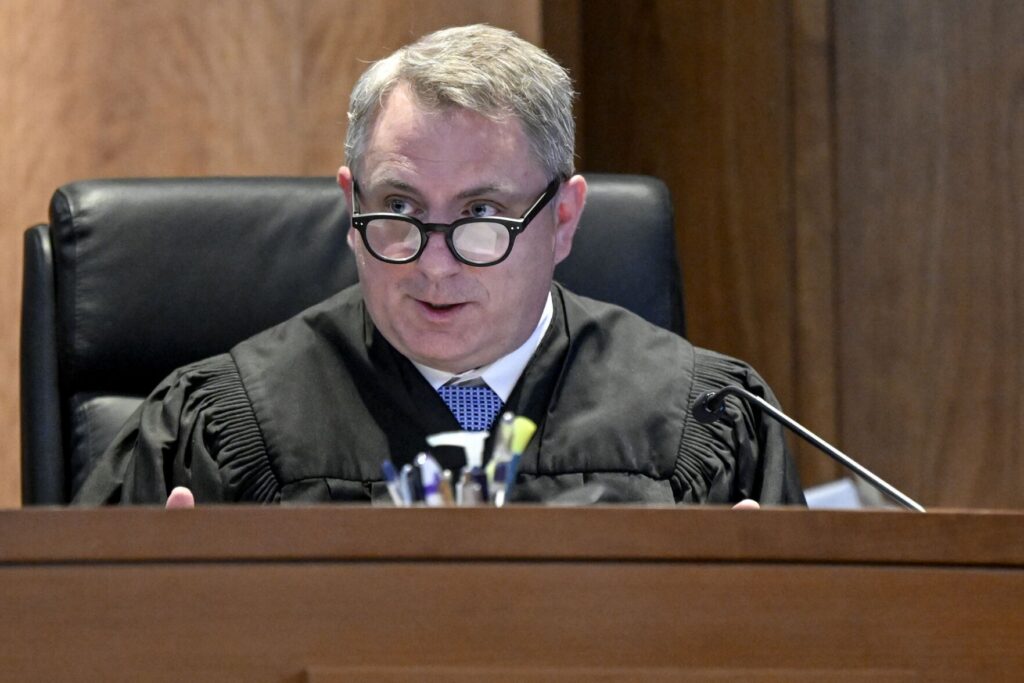
After the Marshall fire burned through Boulder County in the final days of 2021 and wound up destroying more than 1,000 homes, the sprawling 4,000-plaintiff litigation was assigned to District Court Judge Christopher Zenisek of Jefferson County. Zenisek would go...
Andrea Wang, water and energy expert | SUPREME COURT FINALISTS
Michael Karlik
michael.karlik@coloradopolitics.com
Updated 9 hours ago
When the late Chief Justice Mary Mullarkey authored a 2002 opinion in the complex and long-running Taylor Ranch case involving landowners’ claims to access a 77,000-acre tract in the San Luis Valley, she worked with her law clerk, Andrea S....
Susan Blanco, innovator in the judiciary | SUPREME COURT FINALISTS
Michael Karlik
michael.karlik@coloradopolitics.com
Updated 9 hours ago
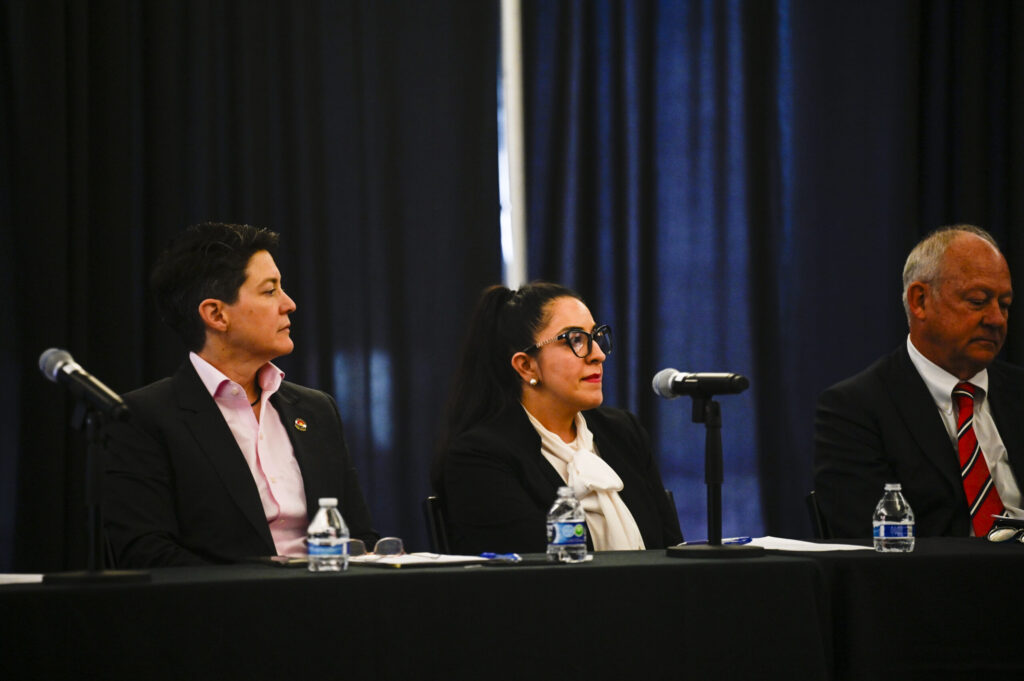
Less than 24 hours after her selection as a finalist for a Colorado Supreme Court vacancy, Chief Judge Susan Blanco was back on the bench in Fort Collins, moving methodically through the variety of complications she encountered. “Your goatee might...
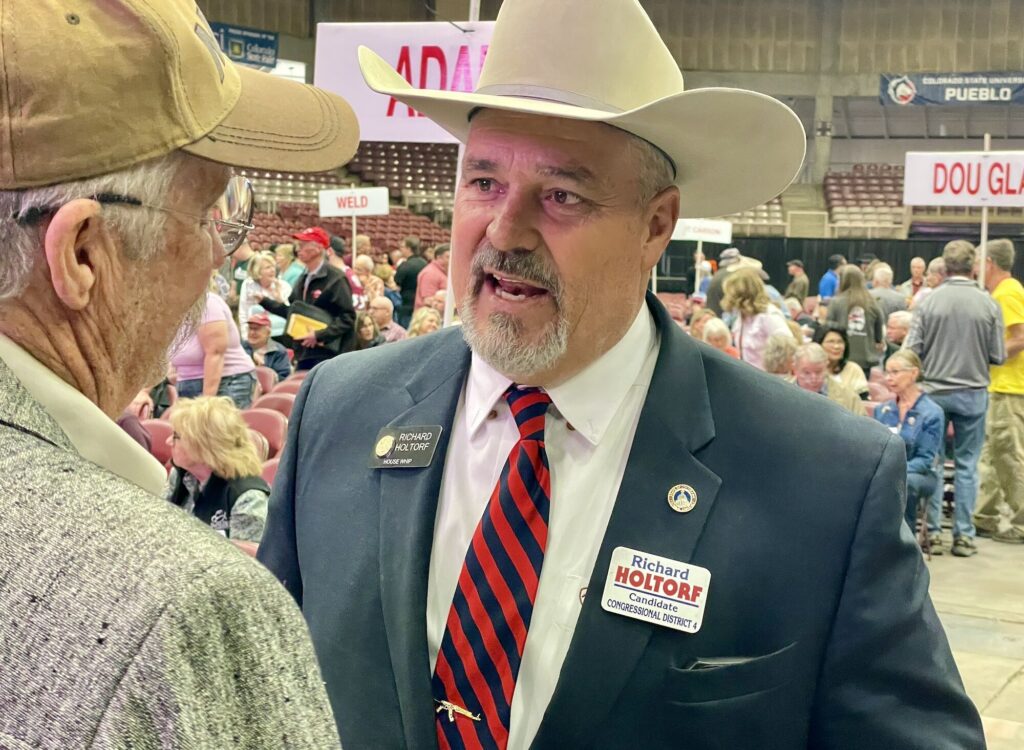
Colorado GOP vice chair Richard Holtorf resigns, says it’s ‘impossible’ to work with chair Brita Horn
Ernest Luning
ernest.luning@coloradopolitics.com
Updated 6 hours ago
Colorado Republican Party Vice Chair Richard Holtorf notified GOP officials on Tuesday that he will step down from the party position at the end of the month, citing his inability to work with state chair Brita Horn. Holtorf, a third-generation...

Daniels Fund awards $450K to three outstanding organizations | NONPROFIT REGISTER
Joanne Davidson Special to Colorado Politics
joanne-davidson-special-to-colorado-politics@coloradopolitics.com
Updated 10 hours ago
You know the old saying about how it’s an honor just to be nominated? In the case of the Daniels Fund and its annual $250,000 Medal of Excellence Award, it wasn’t just an honor to be considered; it was also quite profitable. ...

14th wolf dies in northwest Colorado
Marianne Goodland
marianne.goodland@coloradopolitics.com
Updated 1 day ago
The 14th wolf to die in Colorado since their reintroduction about two years ago took place during a “collaring” operation in the northwestern region of the state last week. Colorado Parks and Wildlife said the wolf, identified as #2305 —...

Colorado joins lawsuit against Trump energy emergency order
Scott Weiser
scott.weiser@gazette.com
Updated 10 hours ago
Colorado Attorney General Phil Weiser joined a multistate lawsuit challenging an executive order invoking the National Emergencies Act that President Donald Trump issued on the day of his inauguration. The order fast-tracks fossil fuel projects by bypassing or shortening environmental...
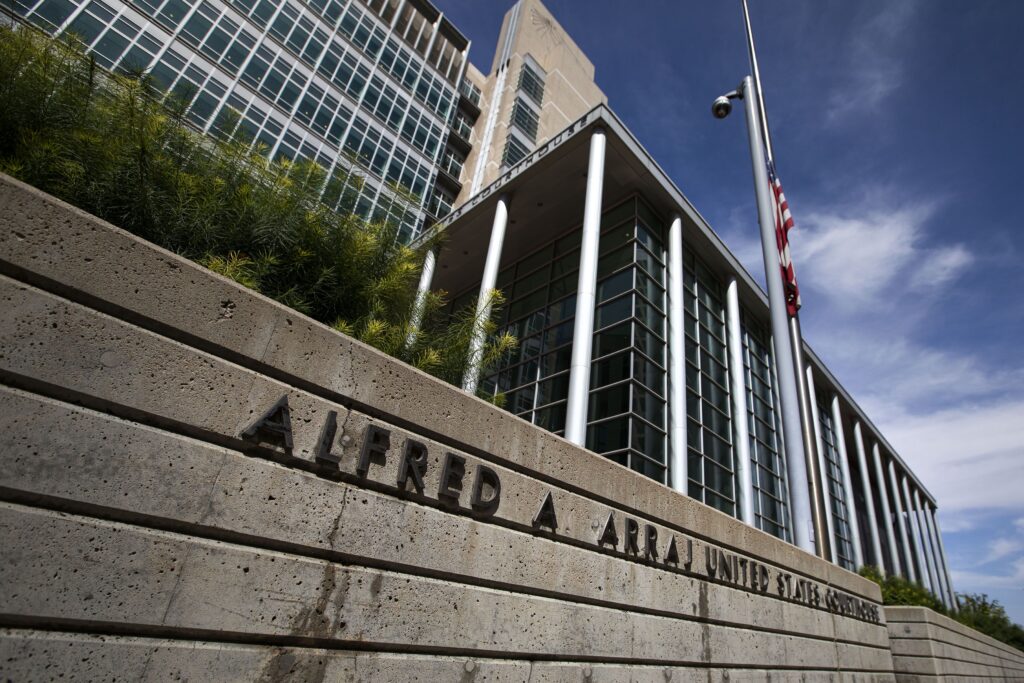
Colorado’s federal judges slash motions backlog to lowest in years
Michael Karlik
michael.karlik@coloradopolitics.com
Updated 1 day ago
Colorado’s federal trial judges collectively had 37 motions in civil cases that had been sitting on their dockets for at least six months without a ruling, as of Sept. 30. That is the smallest backlog the state’s U.S. District Court...

Colorado delegation splits in House vote to end federal government shutdown
Ernest Luning
ernest.luning@coloradopolitics.com
Updated 1 day ago
Colorado’s U.S. House members divided mostly along party lines Tuesday in separate votes on a funding deal to end the federal government’s partial shutdown, while giving Congress more time to negotiate long-term funding for the Department of Homeland Security. Lawmakers...