

Bill to exempt student-athlete NIL contracts from Colorado open records act draws scrutiny
A bill to create more exemptions to the Colorado Open Records Act as it applies to student athletics got a rigorous hearing in the House Education Committee on Wednesday.
However, following a rash of committee questions over Title IX, creating new contract law and transparency, the sponsor agreed to postpone action on the bill.
The measure is House Bill 1041, which would update state law on the issue of “name, image and likeness” (NIL) and is sponsored by first-year lawmaker Rep. Lesley Smith, D-Boulder, a former regent at the University of Colorado. One section of the bill, which got the most attention from lawmakers on both sides of the aisle, pertains to carving out from the state’s open records law the contracts signed between the university and its student athletes on payments and other considerations tied to NIL.
Smith told the committee that state law does not allow an institution of higher education to compensate a current student-athlete for their NIL, but “this is no longer in line with national trends and upcoming NCAA rule changes.”
Under HB 1041, an institution of higher education or athletic association can compensate a student-athlete for using their name, image, or likeness in branding or marketing for the institution.
Depending on how well they perform, that can be worth millions to the student-athlete, such as the University’s recent Heisman Trophy winner, Travis Hunter.
The changes to the state’s existing law on NIL were partly prompted by a series of legal settlements and NCAA rules changes that will take effect on July 1, 2025.
Among them is House v. NCAA, which consolidated two previous class-action lawsuits regarding NIL payments last October.
Under House, $2.78 billion must be paid to thousands of college athletes who played between 2016 and 2021. The NCAA will pay $1.2 billion of that, while colleges and universities will pay the rest.
Colleges and universities would also be able to, but not mandated, to share 22% of their athletics revenue with student-athletes.
Universities have profited from student sports competitions to the tune of millions of dollars annually, with football and men’s basketball the biggest revenue-generating sports. Those revenues often pay for other athletic programs that do not turn a profit, including sports that put students on the road to the Olympics.
In 2020, Fordham University studied student-athlete compensation and reported that 86% live below the federal poverty line. On average, the Fordham study said, a Division I football or basketball player’s value can range from $120,000 to over $265,000. However, students receive only full-ride scholarships, which the study said does not “help athletes from poverty who are trying to help feed their family back home.”
The Fordham study pointed out that the University of Texas, which received $219 million in sports revenue in the 2018 fiscal year, provided 85 full-ride scholarships for its student-athletes at an estimated cost of $425,000.
The landscape for compensation for student athletes began to change in 2018, with the lawsuit NCAA v. Alston. In 2021, the US Supreme Court ruled the NCAA used its goal of amateurism in college athletics to violate antitrust laws.
At that time, the court said the NCAA could no longer restrict education-related benefits, such as musical instruments, computers, or scholarships for graduate or vocational education.
The House lawsuit and other class action lawsuits arose from that decision.
The other side of the NIL issue is how colleges and universities respond to revenue sharing.
Indiana University is cutting 25 positions, including in compliance, in its athletics department, but said it would not eliminate any sports. Last year, Loyola Marymount announced it would eliminate six sports programs, in track and field, cross-country and swimming, some for men, some for women, partly a result of the upcoming NIL issue.
Former Alabama Head Football Coach Nick Saban retired last year, citing the changing landscape of college athletics, including NIL, as part of the reason.
He told Sports Illustrated last year that after the team lost of Michigan in the national finals, “I thought we could have a hell of a team next year, and then maybe 70 or 80 percent of the players you talk to, all they want to know is two things: ‘What assurances do I have that I’m going to play?’ because they’re thinking about transferring, and, ‘How much are you going to pay me?'”
An NCAA NIL database of student-athlete earnings for 2024 showed student-athletes across all sports could earn on average $23,499 for a variety of activities, including social media, autographs and “royalties.” But take out everything except for football and men’s basketball, and the potential earnings rise to more than $42,000 per student-athlete.
HB 1041 is the latest in a series of bills and new state laws dating back to 2020 to addres the NIL issue.
It started in 2020 with Senate Bill 123, which established a college athlete’s right to be paid for their names, images, and likenesses and to obtain professional and legal representation, i.e., sports agents. Previously, a student-athlete who hired an agent was done with their college playing career.
CU Athletic Director Rick George told the House Education Committee Wednesday that NIL contracts are replacing national letters of intent that student-athletes previously signed when choosing a college or university. He estimated revenue-sharing payments at $20 million per year.
Those NIL contracts would also include benefits other than NIL revenue the student-athlete would gain, such as tuition and meals, and requiring the student to adhere to team rules.
George told reporters the University is restructuring its athletics operations “from within,” which he said will be announced in the next two to three weeks. George said the university will likely not fill vacant positions as part of that restructuring, but it is not closing any sports programs.
The bill’s section on exempting NIL contracts from CORA drew the most questions and concerns from lawmakers.
George initially told lawmakers that their interest in exempting the NIL contracts had to do with the student-athlete’s mental health. People could question why the university pays an athlete so much when the athlete has a bad game or season. But he later admitted that competitiveness for student-athletes is also a driver.
Attorney Eric Maxfield, representing the Colorado Freedom of Information Coalition, told the committee laws around NIL are changing rapidly, as is the date on the issue. “This is not the time to close data. Data leads to good policy decisions. This is a time to leave that door open,” Maxfield said.
Reps. Jennifer Bacon, D-Denver, and Jacque Phillips, D-Thornton, raised concerns over how NIL fits with Title IX, which requires schools to provide equal opportunities for men and women in college sports. Bacon also asked about protecting information on students, which is covered under the Federal Education Rights and Privacy Act, and how that gels with NIL contracts for students.
Maxfield pointed to a 2023 Temple University Law Review article that said, “Concealing NIL records from the public disserves the interests of every stakeholder—the public, the athletes, and college sports itself—in making sure that competition is fair, honest, and passes the test of legitimacy and that athletes have equitable earning opportunities befitting their level of accomplishment.”
“FERPA is not a carpet under which you can sweep everything about a student,” Maxfield told the committee. It applies to their educational records, not contracts.
Smith ran into one of her tests as a new lawmaker: working with those who support the bill and omitting other voices who raise concerns.
The Colorado Freedom of Information Coalition, the Colorado Press Association, and the Colorado Broadcasting Association expressed concerns. The CPA seeks to amend the bill; the other two organizations oppose it.
Maxfield said they learned about the bill only after it was introduced and didn’t learn until Tuesday about an amendment on transparency related to prospective student-athletes coming out of high school.
When asked why she had not included the other groups, whose views on the bill have been public for more than a week, she said, “We might have stakeholding with them now.” She also noted that CU is taking the lead on the bill. She said she was new to the process and “I don’t know the ins and outs.”

Nebraska to be 1st state to implement Trump’s new Medicaid work requirements | OUT WEST ROUNDUP
Ernest Luning
ernest.luning@coloradopolitics.com
Updated 4 days ago
NEBRASKA Medicaid work requirements set Nebraska will become the first state to implement new work requirements for some people with Medicaid health insurance under a law President Donald Trump signed last summer. Gov. Jim Pillen, a Republican, announced on Dec....

Frozen funds, vetoes and lawsuits: Why Colorado says it’s in Trump’s crosshairs
Thelma Grimes
thelma.grimes@coloradopolitics.com
Updated 1 day ago
Colorado Democrats have accused President Donald Trump of deliberately targeting their state, arguing his administration is using federal powers to punish it for its policies and resistance. But whether Colorado is being singled out — and why — depends largely...
Colorado ‘un santuario’ for drug activity, DEA chief says
The Denver Gazette
the-denver-gazette@coloradopolitics.com
Updated 1 day ago
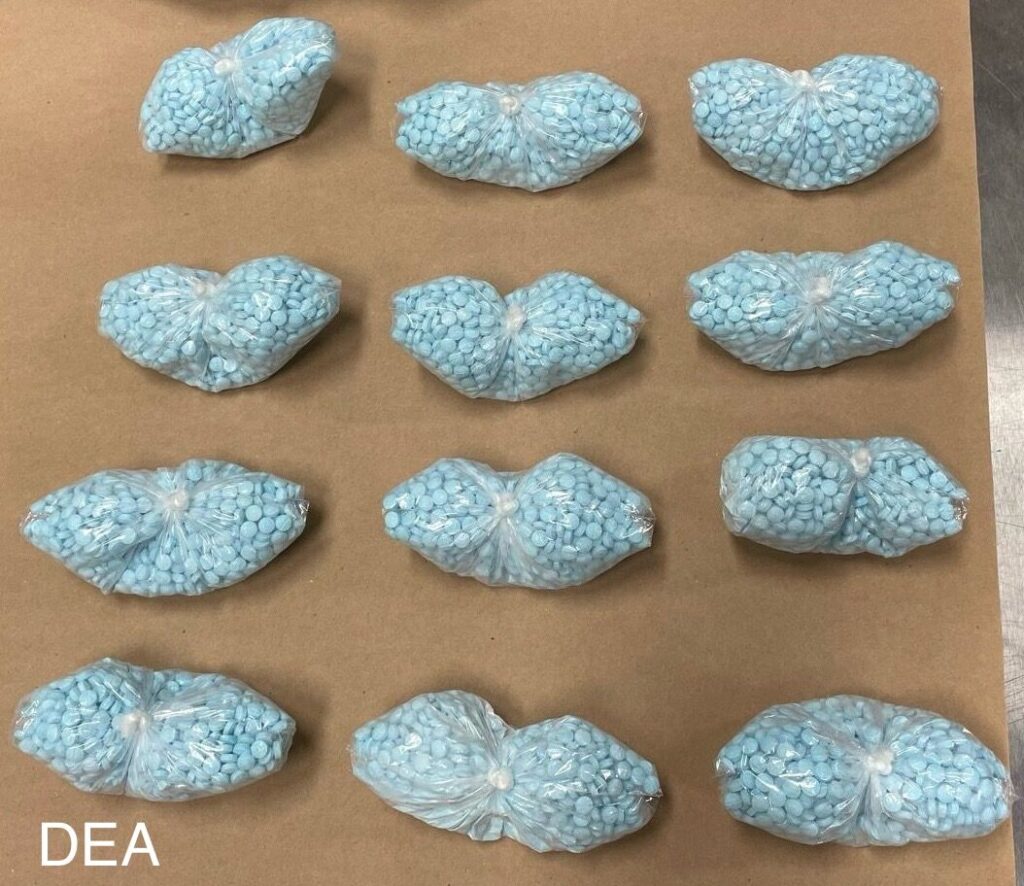
Colorado’s “sanctuary” laws, notably its prohibition against cooperating with federal authorities, are having a “chilling effect” on law enforcement’s ability to go after drug cartels operating in the state, an official of the U.S. Drug Enforcement Agency said. That situation...
Vince Bzdek: Coloradans are fed up with the high price of cars
Vince Bzdek
vince.bzdek@gazette.com
Updated 1 day ago
Car buyers in Colorado – and America – are fed up. Cars are too damn expensive. The average price of a new car broke the $50,000 barrier last fall, according to Kelley Blue Book stats. The Wall Street Journal recently...
Unsolicited advice to both Republicans and Democrats | SONDERMANN
Eric Sondermann
eric-sondermann@coloradopolitics.com
Updated 4 days ago
This even-numbered year will be one of political turnover in Colorado with the governor’s chair opening up, along with the other state executive offices (attorney general, state treasurer, and secretary of state), all due to term limits. A U.S. Senate...
New Jersey signs legislation banning cellphones in schools
Molly Parks, Washington Examiner
molly.parks.washington.examiner@gazetteedit.wpenginepowered.com
Updated 2 days ago
K-12 students in New Jersey will no longer be allowed to use their cellphones in school starting in the fall of 2026. Gov. Phil Murphy (D-NJ) signed a bill into law on Thursday establishing “phone-free” schools in the Garden State....
Gov. Jared Polis ‘frustrated, surprised’ at efforts to revive vetoed union bill
Marissa Ventrelli
marissa.ventrelli@coloradopolitics.com
Updated 2 days ago
Gov. Jared Polis was surprised that Democratic lawmakers and labor groups are seeking to revive a union-backed legislation less than a year after he vetoed the bill due to concerns about its impact on businesses and mandatory dues. Elected officials...

Red Carpet Reception proves new home’s a winner for Coors Western Art Exhibit & Sale | NONPROFIT REGISTER
Joanne Davidson Special to Colorado Politics
joanne-davidson-special-to-colorado-politics@coloradopolitics.com
Updated 2 days ago
NATIONAL WESTERN STOCK SHOW News: It wasn’t just the art that people were talking about at Thursday night’s Red Carpet Reception for the 34th Coors Western Art Exhibit & Sale. A good number of the 1,000-plus guests were on their first visit to the show’s spacious new location on the...
Colorado candidates switch parties, races as midterm election year looms | TRAIL MIX
Ernest Luning
ernest.luning@coloradopolitics.com
Updated 2 days ago
The final days of 2025 saw an unusually high number of Colorado candidates switch parties and races, reshaping at least a few primaries ahead of this year’s midterm elections. The state has seen its share of switchers over the years,...
Denver Auditor: Office of Social Equity and Innovation risks mismanaging or losing taxpayer money
Deborah Grigsby
deborah.smith@denvergazette.com
Updated 3 hours ago
Denver’s Office of Social Equity and Innovation has yet to implement half of the 14 recommendations made by auditors in 2024, leaving the city and the Colorado Youth Detention Continuum Program at risk of misusing small-dollar funds. A follow-up report...