

Group targets Colorado’s ‘sanctuary laws’ for repeal
A group is targeting for repeal Colorado’s “sanctuary statutes,” which prohibit, in specific instances, cooperation with federal authorities in enforcing immigration laws.
Advance Colorado, an organization with experience in pushing for ballot measures, said it filed the proposal in response to Colorado’s “dangerous status as a sanctuary state.”
The proposal would mandate state and local law enforcers to work with federal agencies on immigration enforcement. Specifically, it would require local authorities to cooperate with requests to notify the U.S. Department of Homeland Security about releasing inmates, and detain the latter if they are charged with a violent crime or had been convicted with a prior felony.
“Gov. Polis and Denver Mayor Mike Johnston have expressed their willingness to work with federal authorities to arrest criminals, but the current laws the governor signed do not give them that wiggle room, as they only allow for cooperation on federal warrants (rather than detainers), which are rare and must be issued by a judge or where there is a federal operation to catch gang members, drug or human trafficking rings, or interstate crimes,” Advance Colorado said in a news release.
“The current laws do not allow for cooperation to detain or deport murderers, rapists, armed robbers, or a host of other violent criminals.”
Advance Colorado President Michael Fields also urged lawmakers to pass a set of proposals that also seeks to repeal the “sanctuary laws” and mandates cooperation with federal authorities.
“It shouldn’t be optional to take criminals who are here illegally out of our state; it should be mandatory,” Fields said.
Polis, in contrast to Johnston, has taken a more nuanced approach to the illegal immigration crisis. Last Friday, he urged the Trump administration to increase the number of immigration and FBI agents working out of Colorado, even as he insisted that his state is not a “sanctuary” jurisdiction.
“Both ICE and the FBI have a very small presence in our state. So, if there’s a way to increase their capability, if you’re going to send more folks to go after criminals and working in conjunction with Colorado law enforcement, that could be a part of making Colorado safer,” he said.
At issue are three laws that, broadly speaking, put Colorado under the category of “sanctuary” states: House Bill 19-1124, Senate Bill 21-131 and House Bill 23-1100. The three laws, respectively, prohibit Colorado law enforcement from complying with federal immigration detainers, prevent state agencies and law enforcement from sharing certain personal information with immigration authorities unless compelled by the courts, bar state or local entities from contracting or paying for immigration detention facilities, and prohibit local jails from holding inmates solely at the request of ICE.
A court challenge filed by Douglas county targeted the 2023 law that restricts the ability of state and local governments from making agreements with federal immigration officials over the detention of immigrants who are unlawfully staying in the country, as well as the 2019 statute that blocks local law enforcers from arresting or detaining an immigrant solely on the basis of a federal immigration detainer.
The 2019 law also prohibits probation officers from providing “personal information about an individual to federal immigration authorities.”
The lawsuit, filed in Denver District Court, said the two laws are “illegal and unconstitutional” because they violate the Colorado Constitution’s provisions on intergovernmental relationships and distribution of powers. They are also preempted by federal immigration laws and regulations, the lawsuit added.
A judge last month dismissed the case, concluding Douglas County did not have any standing to sue the state. The county said it plans to appeal.
Colorado found itself in the national spotlight recently when a Venezuelan gang accused of terrorizing apartment complexes in Aurora came to light. Tren de Aragua, which originated in the prisons of Venezuela, is known for targeting immigrants and is believed to be behind a spree of kidnappings, extortion and other crimes tied to immigrants from South and Central America.
Over the last two years, roughly 43,000 immigrants — mainly from South and Central America who crossed the southern border illegally — have arrived in Denver, costing the city $80 million. Separately, Polis signed a bill last year allocating $24 million to schools getting new students amid the surge of immigrants.
Reporters Ernest Luning, Noah Festenstein and Nico Brambila contributed to this article.


What courageous citizenship really looks like | Vince Bzdek
Vince Bzdek
vince.bzdek@gazette.com
Updated 56 minutes ago
By Vince Bzdek What exactly is courage? Ernest Hemingway famously called it grace under pressure. Mark Twain wrote that “courage is resistance to fear, mastery of fear — not absence of fear.” C.S. Lewis refined that even more: “Courage is...
The coming election and mischief in the making | SONDERMANN
Eric Sondermann
eric-sondermann@coloradopolitics.com
Updated 3 days ago
America’s tribalism is such these days that we struggle to even agree on the basic rules. Elections have always been hotly contested. As the saying goes, “Politics ain’t beanbag.” The process has long involved elements of nastiness and underhanded conduct....

Colorado Politics Calendar Aug. 31-Sept. 6
Rachael Wright, Special to Colorado Politics
rachael.wright@coloradopolitics.com
Updated 3 days ago
CoPo’s weekly political calendar will help you find political and public-policy events throughout Colorado. It includes candidate and issue campaign events, public policy meetings, court hearings, state and local party conventions, assemblies, debates, rallies, parades, speaking engagements, traveling dignitary appearances,...
Tancredo in Running for Dept. of Ed. Position | A LOOK BACK
Rachael Wright, Special to Colorado Politics
rachael.wright@coloradopolitics.com
Updated 3 days ago
Forty-five years ago this week: “I know that my name has been placed before the Secretary of Education, and I know that I’m one of three or four being considered for the Department of Education’s Region 8,” said state Rep....
Colorado measure adding ID checks to mail-in voting qualifies for ballot
Marissa Ventrelli
marissa.ventrelli@coloradopolitics.com
Updated 21 hours ago
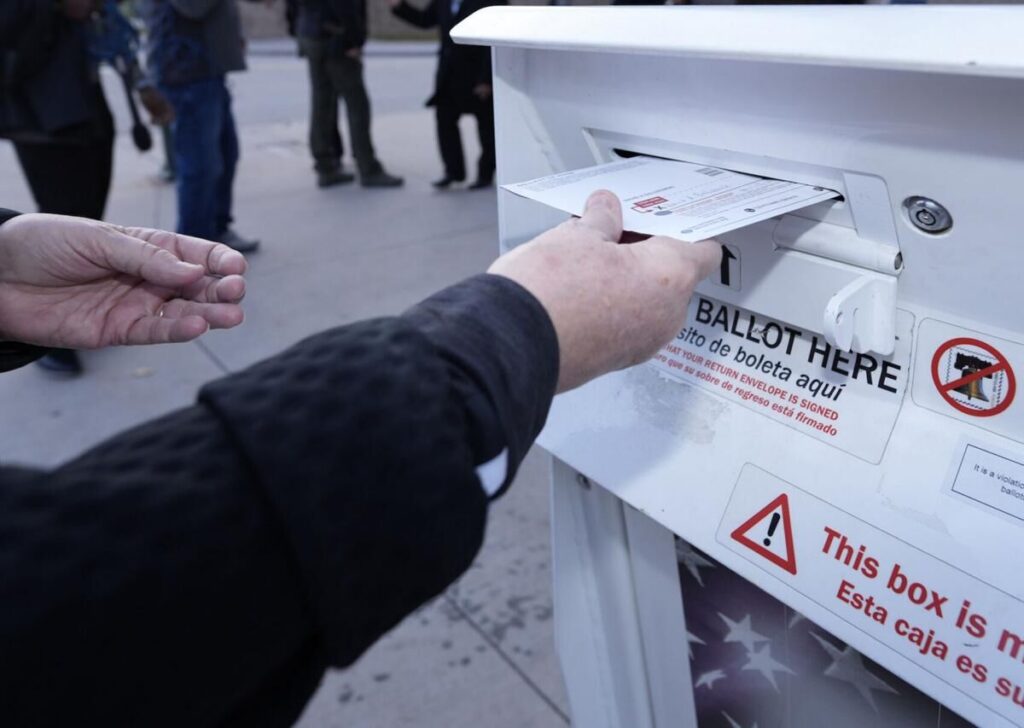
A ballot initiative that would require voters to include additional information on mail-in ballots has qualified for the November election, according to the Secretary of State’s Office. Backed by El Paso County Treasurer Chuck Broerman and former Deputy Secretary of...
Colorado election website error exposes personal data of confidential voters
Marissa Ventrelli
marissa.ventrelli@coloradopolitics.com
Updated 22 hours ago
A system update accidentally lifted protections on confidential records in Colorado, exposing dozens of voters’ personal information, according to the Secretary of State’s Office. The limit that normally blocks access to confidential voter profiles was inadvertently disabled during an update...

PUC adds weekly comment after killing private talks
Scott Weiser
scott.weiser@gazette.com
Updated 22 hours ago
The Colorado Public Utilities Commission will take public comment at the start of every commissioner’s weekly meeting beginning Sept. 9 as part of its new transparency mandate, the commission announced, expanding a slot previously limited to the second Wednesday of...
10th Circuit overturns framework for sentencing probation violators by 11-1
Michael Karlik
michael.karlik@coloradopolitics.com
Updated 23 hours ago
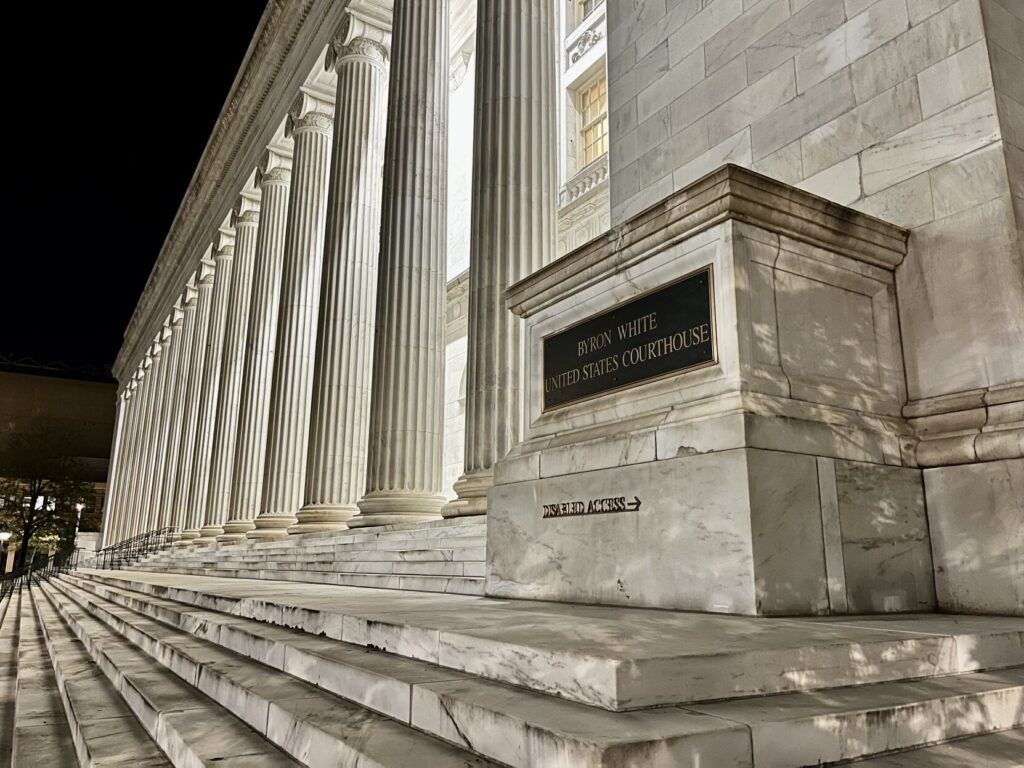
In a rare decision by all 12 of its full-time judges, the Denver-based federal appeals court ruled in a lopsided vote on Friday that one of its members created a sentencing process for probation violators that was out of step...
Federal judge dismisses excessive force lawsuit against Colorado Springs, officer
Michael Karlik
michael.karlik@coloradopolitics.com
Updated 4 hours ago
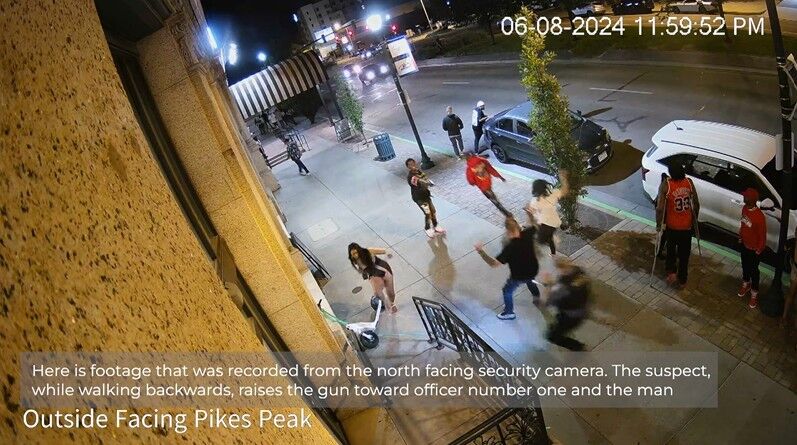
A federal judge concluded last week that a Colorado Springs police officer could not be held liable for shooting a suspect three times after the man menaced two victims with a gun and fled the scene. Al’morion Germany was involved...

DeFlock started from one man’s curiosity — now Flock cameras are a midterm issue
Claire Carter
claire.carter@washingtonexaminer.com
Updated 1 day ago
Will Freeman wasn’t looking to start a national movement when he launched DeFlock after noticing Flock Safety’s automatic license plate readers along the side of the road. The software engineer was driving across the country in 2024 when the cameras...