

Tired TABOR nurtures dysfunction voters detest | HUDSON

Miller Hudson
For the past two years, Colorado’s legislative leadership on each side of the aisle launched the annual General Assembly opening with promises to make property tax reform their number one priority. Yet, no such bill reached the floor until the final week of both sessions — too late for thorough public hearings or adequate floor debate. With overpowering majorities in the House and Senate, Democrats had to accept responsibility for their inexplicable delays.
Alleging difficulty organizing meetings with stakeholders — a dubious excuse, since many of the most obvious stakeholders complained they were never consulted — 2023 produced ballot question HH. What was proffered to voters as tax relief consisted of rebates funded from TABOR, tax surpluses already scheduled for return to taxpayers — a three-card monte scam moving money from one pocket to another and then claiming it was newly discovered revenue.
I happened to run into state Sen. Chris Hansen, one of the architects of the HH referendum at the Capitol shortly after the close of the 2023 session. I suggested to him Colorado homeowners were likely to kick his butt up between his shoulders come November. He protested some of the best fiscal minds in the governor’s office helped design his Rubik’s Cube solution. Proposition HH was crushed at the ballot box and the percolating property tax mess got even messier and more urgent. In a repeat effort, the 2024 bill arrived even later, requiring House Speaker Julie McCluskie to choke off debate and ram the legislation through the House with just Democratic votes. Because of a subsequent court decision, Gov. Jared Polis had to call a special session during the summer to re-rewrite the legislation. With time running out for tax relief, the amended bill delivered a patch but not a cure.
Stay up to speed: Sign up for daily opinion in your inbox Monday-Friday
This year, bipartisan leadership promised to reduce the cost of living for Coloradans, reducing prices across the state. Don’t hold your breath. Gov. Polis was elected in 2018 on a promise to save voters money on their health care — a pledge expanded to include virtually every initiative launched from the governor’s office. The results have been health care continues to grow more expensive, although perhaps not as much as in other states, housing has become more expensive, and grocery bills continue to climb while more than 20% of our restaurants have vanished as the remaining menus have doubled in cost. Colorado is a small state, buffeted by globalization and national market pressures. There is no path to a deflationary oasis where good intentions will save our paychecks.
The notion an economic elephant can be steered by grabbing its tail is pure fantasy. Better if the legislature focuses on its immediate budgetary challenge. Joint Budget Committee Chair Jeff Bridges points out the billion-dollar cut that must be made in Colorado general fund expenditures is a product of the TABOR amendment handcuffs placed on the budget process. He doesn’t explain how the moving parts interact because the “TABOR rationing cap” beggars easy comprehension. The general fund is expected to balance out this year at about $16.5 billion. This represents only about half of total state expenditures, with the remainder occurring off the TABOR ledger — federal funds, TABOR enterprises, certificates of participation (don’t ask) and fee income. This latter category has Senate Minority Leader Paul Lundeen exercised. His caucus plans to run a repeal of fee-based programs.
If the debate is whether it is good public policy to fund government with fees, the answer is almost certainly no. It’s not. Nonetheless, it is also necessary. Placing TABOR, or any other spending and revenue edicts in the state constitution, is premised on the belief the economy will never change — that it’s never subject to evolution of any kind. The Colorado economy of 1992, when TABOR squeaked to victory on its third attempt, looked vastly different than the economy of today. TABOR imposed budgetary rules that deny legislators the flexibility to adapt to these changed circumstances. The various and ingenious mechanisms crafted to escape TABOR restrictions have complicated budgeting while creating a feudal infrastructure of funding silos dedicated to support worthy ends. They swiftly migrate out of reach of the legislature.
Bridges writes, “I’m confident the budget we end up with, though arbitrarily limited by outdated parts of TABOR, will come together through the combined talents of an incredible bipartisan team working diligently to create a state budget that reflects Colorado values.” It is indeed encouraging to hear his optimism, but it is well past time to challenge the delusion Doug Bruce received TABOR tablets before a burning bush. Not a single other state has chosen to adopt a similar set of fiscal rules, although several have considered them. In 2009, an interim Legislative Committee on Long Term Fiscal Stability took public testimony. I testified as follows, “Whatever one believes about the adequacy of state revenues or the appropriate size of Colorado’s government, restoration of full control over the state budget is a goal that can and should be supported by both Republican and Democratic legislators.”
This can be achieved without abandoning the heart of TABOR which requires voter approval for tax increases. Meanwhile, the Joint Budget Committee and taxpayers would benefit from the restoration of a reasonable margin for discretionary adjustments and a reduction in the budgetary clutter of fee-based financing. Sen. Lundeen is correct: there is a certain lunacy to the current situation. At the root of this predicament is TABOR, which is no longer a solution to any problem but has itself nurtured the dysfunction voters detest.
Miller Hudson is a public affairs consultant and a former Colorado legislator.

What exactly makes you a public figure? | Hal Bidlack
Hal Bidlack
hal-bidlack@coloradopolitics.com
Updated 22 hours ago
Well, once again, this non-lawyer columnist is going to jump in the deep end of legal scholarship and will explore a recent Colorado Court of Appeals decision. Buckle up. In yet another terrific Colorado Politics Court Crawl article, we learned...

Modernizing Pinnacol is about its members, not politics | IN RESPONSE
Colorado Politics
colorado-politics@coloradopolitics.com
Updated 12 hours ago
By Akasha Absher While we share the passion for protecting Colorado’s workers expressed in a recent op-ed from the perspective of trial attorneys and union representatives, the piece paints a picture of Pinnacol Assurance that is more rooted in 1915...

Mum on his own replacement, Bennet disrespects voters | Dick Wadhams
Dick Wadhams
dick-wadhams@coloradopolitics.com
Updated 3 days ago
U.S. Sen. Michael Bennet is playing an arrogant game of hide-and-seek with Colorado voters as he seeks to abandon his Senate seat to become governor. Bennet insists that if he is elected governor in November, he will wait until he...

What kind of energy independence did we pay for? | Miller Hudson
Miller Hudson
miller-hudson@coloradopolitics.com
Updated 3 days ago
It was during the summer of 1972 AT&T published an internal solicitation for installation and repair supervisors with “inner-city” experience to transfer to Mountain Bell. The catch was an applicant’s readiness to work 10 hours a day, six days a...

Those who cannot live without wild things | Rachel Gabel
Rachel Gabel
rachel-gabel@coloradopolitics.com
Updated 3 days ago
Aldo Leopold wrote in his Sand County Almanac, “There are some who can live without wild things and some who cannot.” The collection of essays first published in 1949 was accepted by a publishing house after a steady stream of...

Thank God for Wyoming — the un-Colorado | Jon Caldara
Jon Caldara
jon-caldara@coloradopolitics.com
Updated 3 days ago
Years ago, I interviewed a Canadian health-care broker whose job was helping his countrymen escape their own failing system. When their “free” health care turned into “free to wait until you die,” he’d save his clients by routing them to...
It’s time to let unaffiliated voters caucus | Vince Bzdek
Vince Bzdek
vince.bzdek@gazette.com
Updated 1 day ago
There’s no getting around it: Colorado’s 3,000 county caucuses, which just wrapped up recently, left half the electorate out in the cold. Since unaffiliated voters now make up 51% of all Colorado voters, a majority of Colorado electors are barred...
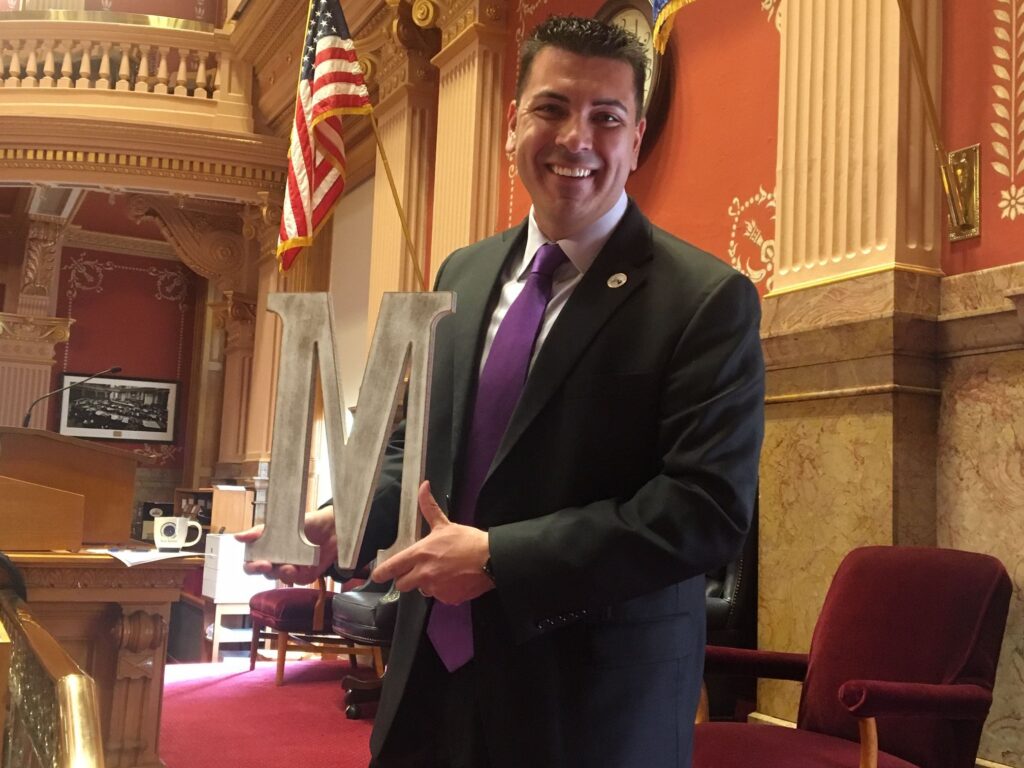
A Mile High, again: Capitol M | Week of March 21, 2026
Marianne Goodland
marianne.goodland@coloradopolitics.com
Updated 6 days ago
The lighter side of the Capitol, usually…. Local Journalism Day, except they forgot their very own local journalists. The state Senate on Thursday, March 19, passed a resolution recognizing Local Journalism Day. Everyone voted for it, which is good, because...

The insular bubble of caucuses and assemblies | SONDERMANN
Eric Sondermann
eric-sondermann@coloradopolitics.com
Updated 5 days ago
Nearly 30 years ago, then-Federal Reserve Chairman Alan Greenspan coined the term “irrational exuberance” to describe the overheated stock market. That descriptive phrase could also apply to much of the political realm. The hype in politics often grossly exceeds the...

Set appropriate state guidelines for critical surveillance technology | OPINION
Colorado Politics
colorado-politics@coloradopolitics.com
Updated 5 days ago
I admit it: I’m worried. I’m hearing a lot about surveillance in the public arena. I hear cameras are capturing my car’s license plate wherever I drive, my face as I go in and out of stores and health facilities,...