

IRA funding fosters new cash crop for Colorado’s ag communities | OPINION

Jan Kochis
For four generations, our family has farmed and ranched in Elbert County, not far from Limon, where we’ve grown everything from wheat, corn and millet to sorghum and sunflowers. We’ve also raised cattle. For the past six years, however, we’ve reaped the rewards of a new cash crop. There are 30 wind turbines on our land, churning out electricity sold across Colorado and generating revenue that’s a god-send amid farming’s razor-thin margins.
There are other farmers and ranchers in the state who also have benefited from investments in clean energy projects on their lands, but that contingent is now growing with the help of federal investments pumping much-needed capital into rural communities across the state and the nation.
One of the most recent and prominent examples comes from the wholesale power provider that markets electricity to our local rural electric cooperative, and ultimately to our home and business. Mountain View Electric is one of 16 Colorado members of Tri-State Generation and Transmission, which last month was awarded $679 million in federal funding to advance its expansion of wind, solar and battery storage capacity.
Stay up to speed: Sign up for daily opinion in your inbox Monday-Friday
Two other co-ops, Brighton-based United Power and Sedalia-based CORE Electric, also received a combined $480 million through the U.S. Dept. of Agriculture’s New ERA (Empowering Rural America) program — part of the Biden administration’s Inflation Recovery Act, or IRA. That’s more than $1.1 billion flowing into rural communities statewide.
It would be an understatement to call that kind of investment transformational. With $9.7 billion earmarked nationwide to help rural electric cooperatives transition into the clean energy economy, it’s the single largest investment in rural energy since the co-op system was formed by Franklin Delano Roosevelt almost a century ago.
The funding Tri-State is receiving will be used to build 700 megawatts (MW) of new wind capacity, 200 MW of which will be paired with battery storage, 240 MW of new solar capacity and 310 MW of stand-alone storage, including state-of-the-art 100-hour iron air batteries. The battery storage capacity is notable because it helps turn the intermittent nature of wind and solar into a 24-7 source of electricity, decreasing reliance on coal and gas resources that are increasingly expensive and subject to swings in market pricing.
More importantly, Tri-State will be spreading these projects across its service territory. That means more farmers and ranchers will have opportunities, as we did, to supplement their incomes with lease and royalty payments for wind and solar projects on their land.
In the end, this is a natural progression for agriculture. The corn we grow goes to feedlots. Our Snowmass wheat is sold to a flour mill in Denver. And now the electricity generated on our land is transmitted across the state and the western United States. This has not been a trade-off. Out of our 10,000-acre operation, the wind towers occupy probably no more than 30 acres. We can farm right up to the edge of them and our cows can graze beneath the spinning turbines.
We have seen first-hand how important these kinds of clean-energy investments can be for rural communities. The injection of capital that came when Invenergy and Xcel Energy developed and built the Rush Creek Wind Farm here in 2018 has helped reinvigorate Elbert County. There is a new sense of hope and prosperity.
Investing in renewable energy development creates jobs in construction, maintenance and technology, fostering economic growth in rural areas. This investment not only helps farmers diversify their income but also empowers entire communities to thrive. We love where we live and work, and we’re thrilled many other farmers and ranchers and the rural communities they live in now have added opportunities to benefit from the infusion of capital made possible through the IRA.
Jan Kochis and her husband Virgil are fourth-generation farmers and ranchers in Elbert County. She serves on the board of Rocky Mountain Farmers Union and was formerly chair of the board.

What exactly makes you a public figure? | Hal Bidlack
Hal Bidlack
hal-bidlack@coloradopolitics.com
Updated 20 hours ago
Well, once again, this non-lawyer columnist is going to jump in the deep end of legal scholarship and will explore a recent Colorado Court of Appeals decision. Buckle up. In yet another terrific Colorado Politics Court Crawl article, we learned...
Modernizing Pinnacol is about its members, not politics | IN RESPONSE
Colorado Politics
colorado-politics@coloradopolitics.com
Updated 10 hours ago
By Akasha Absher While we share the passion for protecting Colorado’s workers expressed in a recent op-ed from the perspective of trial attorneys and union representatives, the piece paints a picture of Pinnacol Assurance that is more rooted in 1915...

Mum on his own replacement, Bennet disrespects voters | Dick Wadhams
Dick Wadhams
dick-wadhams@coloradopolitics.com
Updated 3 days ago
U.S. Sen. Michael Bennet is playing an arrogant game of hide-and-seek with Colorado voters as he seeks to abandon his Senate seat to become governor. Bennet insists that if he is elected governor in November, he will wait until he...

What kind of energy independence did we pay for? | Miller Hudson
Miller Hudson
miller-hudson@coloradopolitics.com
Updated 3 days ago
It was during the summer of 1972 AT&T published an internal solicitation for installation and repair supervisors with “inner-city” experience to transfer to Mountain Bell. The catch was an applicant’s readiness to work 10 hours a day, six days a...
Those who cannot live without wild things | Rachel Gabel
Rachel Gabel
rachel-gabel@coloradopolitics.com
Updated 3 days ago
Aldo Leopold wrote in his Sand County Almanac, “There are some who can live without wild things and some who cannot.” The collection of essays first published in 1949 was accepted by a publishing house after a steady stream of...

Thank God for Wyoming — the un-Colorado | Jon Caldara
Jon Caldara
jon-caldara@coloradopolitics.com
Updated 3 days ago
Years ago, I interviewed a Canadian health-care broker whose job was helping his countrymen escape their own failing system. When their “free” health care turned into “free to wait until you die,” he’d save his clients by routing them to...
It’s time to let unaffiliated voters caucus | Vince Bzdek
Vince Bzdek
vince.bzdek@gazette.com
Updated 1 day ago
There’s no getting around it: Colorado’s 3,000 county caucuses, which just wrapped up recently, left half the electorate out in the cold. Since unaffiliated voters now make up 51% of all Colorado voters, a majority of Colorado electors are barred...
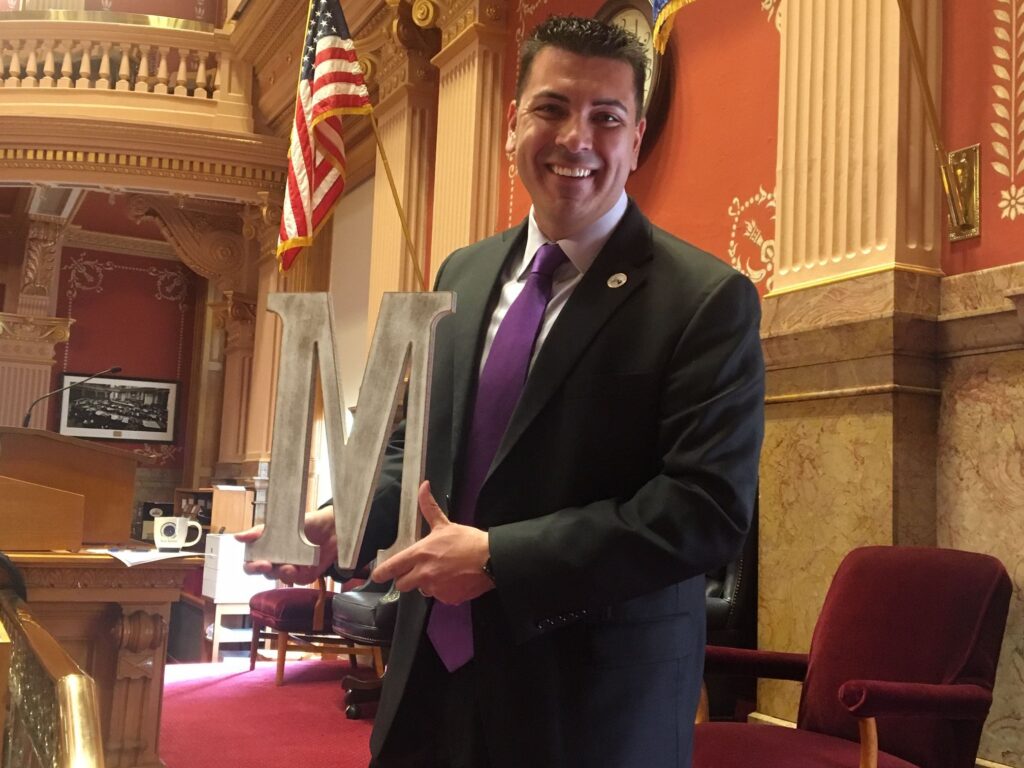
A Mile High, again: Capitol M | Week of March 21, 2026
Marianne Goodland
marianne.goodland@coloradopolitics.com
Updated 6 days ago
The lighter side of the Capitol, usually…. Local Journalism Day, except they forgot their very own local journalists. The state Senate on Thursday, March 19, passed a resolution recognizing Local Journalism Day. Everyone voted for it, which is good, because...

The insular bubble of caucuses and assemblies | SONDERMANN
Eric Sondermann
eric-sondermann@coloradopolitics.com
Updated 5 days ago
Nearly 30 years ago, then-Federal Reserve Chairman Alan Greenspan coined the term “irrational exuberance” to describe the overheated stock market. That descriptive phrase could also apply to much of the political realm. The hype in politics often grossly exceeds the...
Set appropriate state guidelines for critical surveillance technology | OPINION
Colorado Politics
colorado-politics@coloradopolitics.com
Updated 5 days ago
I admit it: I’m worried. I’m hearing a lot about surveillance in the public arena. I hear cameras are capturing my car’s license plate wherever I drive, my face as I go in and out of stores and health facilities,...