

Colorado voters paint state familiar shade of blue at ballot box: Analysis | COLORADO’S 2024 ELECTION
The only surprise on election night in Colorado was that there weren’t any big surprises.
Capping the most turbulent campaign stretch in memory — including everything from one of the state’s Republican members of Congress retiring, another switching districts and the third resigning midterm, to the Democrats replacing the top of their presidential ticket just over 100 days before ballots were due — by the time preliminary returns had posted on Tuesday, both parties appeared to be pretty much where they’d started.
Contrary to the hopes of party leaders on both sides of the aisle, hardly any flippable seats changed hands, as, true to form, state voters approved statewide propositions from the left and from the right, while shooting down others advanced by both shades of partisans and centrists alike.
As expected, the Democratic presidential ticket of Vice President Kamala Harris and Minnesota Gov. Tim Walz won the state’s 10 electoral votes by double digits over Republican nominees former President Donald Trump and Ohio Sen. JD Vance. It’s been 20 years since a Republican candidate for the White House has carried the state.
It wasn’t a sweep for either side of the ideological spectrum.
As has become customary in the last decade, Colorado voters tilted left, except when they didn’t, in the more Republican-leaning regions. At the same time, voters split their decisions on ballot measures, passing a constitutional amendment to guarantee the right to an abortion and took a hard line on public safety initiatives, approving a truth in sentencing measure and earmarking state funds to pay for increased law enforcement.
Meanwhile, a sweeping proposal to change the way Colorado conducts its elections, Proposition 131, went down to defeat by a double-digit margin, despite its well-heeled backers having overwhelmed opponents with millions of dollars in spending. The ballot measure would have scrapped the state’s traditional primary system, replacing it with a wide-open scrum sending the top four candidates to the general election ballot, which would then be decided by ranked-choice voting.
Both major political parties — and the minor parties that weighed in — opposed the measure, and voters appeared to agree.
Two years ago, Colorado was home to two of the closest House races in the country. Republican U.S. Rep. Lauren Boebert came within fewer than 600 votes of losing reelection to the the GOP-leaning 3rd Congressional District in Western and Southern Colorado, and Democratic U.S. Rep. Yadira Caraveo won in the newly created 8th Congressional District, stretching north of the Denver metro area, by just over 1,600 votes.
After nearly two years of solid campaigning and tens of millions of dollars poured into the pair of competitive districts, however, both seats looked at press time like they might remain in their respective party’s columns.
In the 3rd CD, Republican Jeff Hurd held a 2-point lead over Democrat Adam Frisch, who came close to beating Boebert in the district in 2022, while Caraveo led Republican challenger Gabe Evans, a state lawmaker, by about the same margin in the tossup 8th CD.
Neither lagging candidate was ready to concede, leaving open the possibility that the election could eventually yield an upset. That, too, has familiar rings, since neither seat was decided on election night in 2022, and the 3rd CD was close enough to trigger a mandatory recount.
Elsewhere around the state, voters in the congressional seats occupied by Democrats returned their incumbents to office, and the seats held by Republicans stayed in the party’s hands.
Boebert, who jumped to a safer district after her razor-thin win in the last election, carried her new seat by a healthy margin, filling the seat left open by former U.S. Rep. Ken Buck’s abrupt resignation earlier this year.
In the reliably Republican 5th Congressional District, veteran GOP operative Jeff Crank takes over for retiring U.S. Rep. Doug Lamborn, who has warmed the seat since 2006, when he beat Crank and four others in a wide-open primary.

Primary rival sues to prevent Democrat Eileen Laubacher from going through assembly in Colorado’s 4th CD
Ernest Luning
ernest.luning@coloradopolitics.com
Updated 1 hour ago
Democratic congressional candidate Trish Calvarese on Monday asked a judge to prevent one of her primary rivals, Eileen Laubacher, from participating in the caucus and assembly process to seek the nomination to challenge Republican U.S. Rep. Lauren Boebert in Colorado’s...
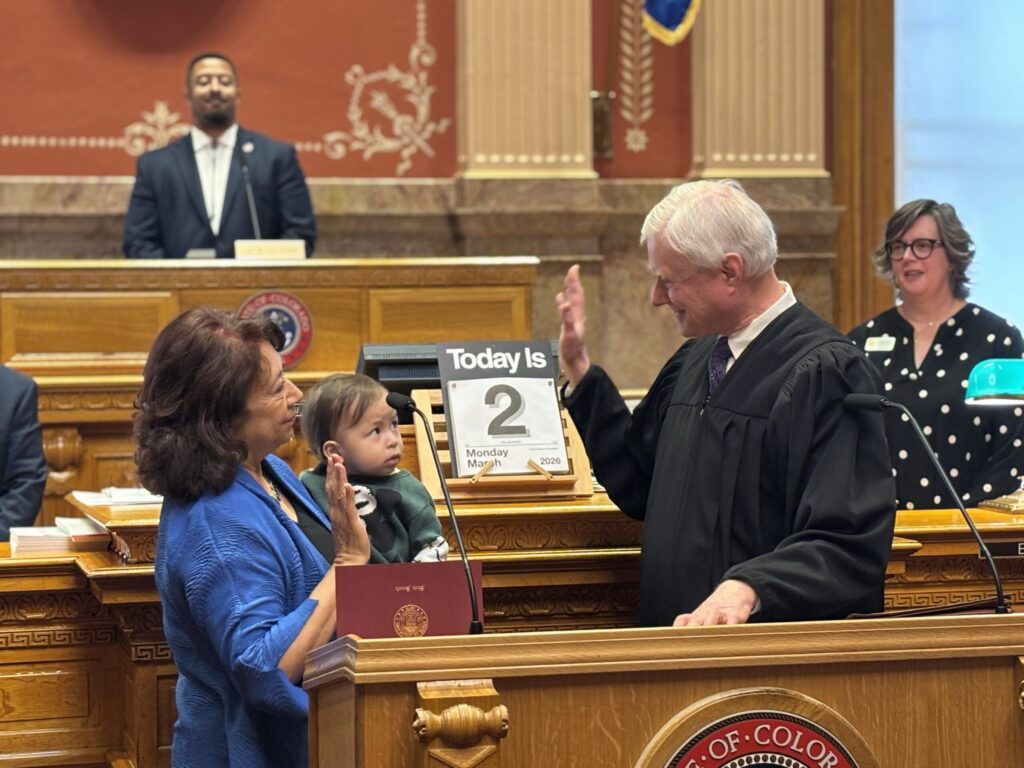
Colorado Senate swears in Adrienne Benavidez after district vacancy win
Marianne Goodland
marianne.goodland@coloradopolitics.com
Updated 7 hours ago
Sen. Adrienne Benavidez, a Democrat from Adams County, was sworn in Monday to the Colorado Senate, just four days after winning a vacancy election in District 21. She was sworn in by Colorado Court of Appeals Justice Lino S. Lipinsky...

Democrat Michael Bennet turns in petitions for Colorado’s gubernatorial primary, plans to skip caucuses
Ernest Luning
ernest.luning@coloradopolitics.com
Updated 1 day ago
U.S. Sen. Michael Bennet, a Democratic candidate for governor, submitted nominating petitions for Colorado’s June primary ballot on Friday, his campaign and the Colorado Secretary of State’s Office said. Bennet plans to rely on his petitions to get on the...
Former House member picked to fill Senate vacancy in Colorado
Marianne Goodland
marianne.goodland@coloradopolitics.com
Updated 1 day ago
A vacancy committee on Thursday night chose a former House legislator to replace former Sen. Dafna Michaelson Jenet, who resigned on Feb. 13 to become the director of the David and Laura Merage Foundation for Combating Antisemitism. Adrienne Benavidez —...
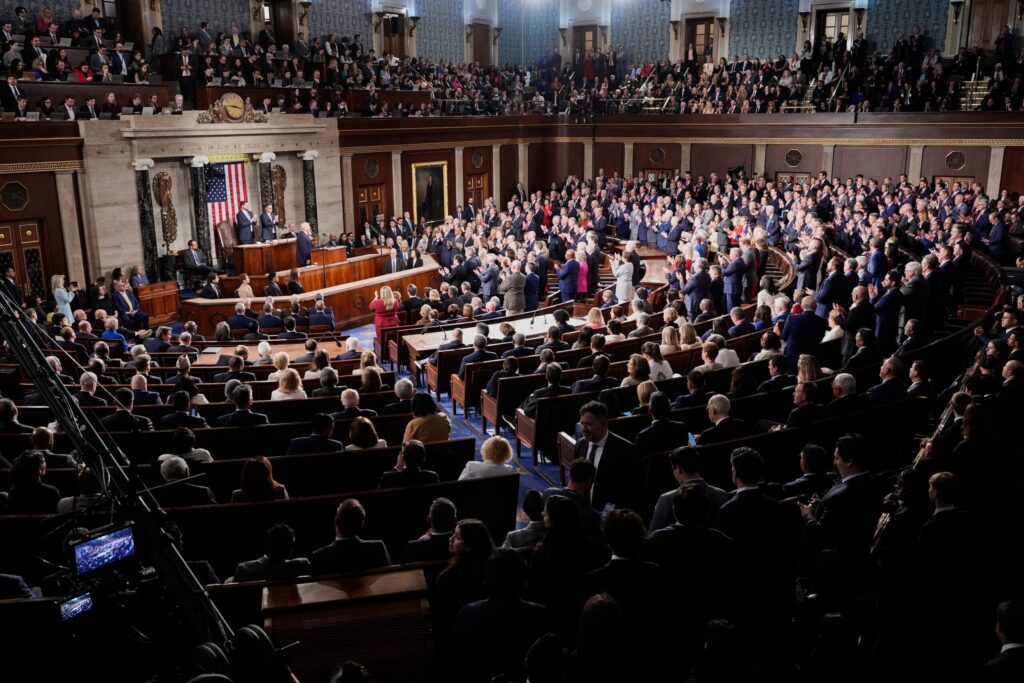
Colorado delegation’s plus-one picks convey messages at Donald Trump’s State of the Union | TRAIL MIX
Ernest Luning
ernest.luning@coloradopolitics.com
Updated 4 days ago
It’s become a tradition for members of Congress to deliver messages of their own at the State of the Union address, though this year none of the Colorado lawmakers shouted at the president during the speech, nor did the delegation...

Colorado Democrat John Hickenlooper becomes first statewide candidate to submit nominating petitions
Ernest Luning
ernest.luning@coloradopolitics.com
Updated 2 days ago
U.S. Sen. John Hickenlooper on Thursday became the first statewide candidate to submit petition signatures for Colorado’s June Democratic primary, according to his campaign and the Colorado Secretary of State’s Office. Seeking reelection to a second term, Hickenlooper is facing...
Colorado lawmakers react along partisan lines to Donald Trump’s State of the Union address
Ernest Luning
ernest.luning@coloradopolitics.com
Updated 5 days ago
President Donald Trump could have been describing two different countries in Tuesday’s State of the Union address — one entering a “Golden Age” and the other enduring daily stress under a “lawless” regime — at least as far as the...

Colorado group files 6 ballot measures to counter redistricting proposals backed by Democrats
Marianne Goodland
marianne.goodland@coloradopolitics.com
Updated 4 days ago
A half-dozen congressional redistricting ballot measures were filed Friday by a Colorado advocacy group in response to proposals filed last week from a group seeking to flip three Republican-held U.S. House seats in two years. “The gist of it is...

Trump pulls endorsement from Jeff Hurd over tariffs, backs Colorado Republican’s primary challenger
Ernest Luning
ernest.luning@coloradopolitics.com
Updated 7 days ago
President Donald Trump on Saturday rescinded his endorsement of U.S. Rep. Jeff Hurd and threw his support behind the Colorado Republican’s primary challenger, Hope Scheppelman, citing the first-term incumbent’s “lack of support” for the administration’s tariff policy. The move comes...

At least 6 candidates vying to replace former Sen. Dafna Michaelson Jenet
Marianne Goodland
marianne.goodland@coloradopolitics.com
Updated 1 week ago
Sometime in the next 24 days, a vacancy committee for Senate District 21 will hold an election to choose a successor to former Sen. Dafna Michaelson Jenet, D-Commerce City. Michaelson Jenet resigned on Feb. 13 to take a job as...