

Colorado counties embrace Pocketalk devices to overcome language barriers in elections
Some 16% of Coloradans speak a language other than English and many are eligible to vote, though officials said language barriers can hinder their ability to participate in elections.
To address this, many Colorado counties have made use of real-time translation devices and state resources, while also adopting their own tools to break down language barriers and ensure all eligible voters had the opportunity to cast ballots last Tuesday.
Meet Pocketalk, a real-time translation device that uses AI
Several Colorado counties, including Denver, Mesa and Jefferson, purchased pocket-sized devices that look similar to a smartphone and can translate speech and text in real time.
Known as Pocketalk, the device was created in 2017 as a way to help travelers navigate language barriers while abroad. In recent years, however, its usage has expanded beyond tourism to include businesses and government agencies, according to Doug Bieter, Pocketalk’s head of partnerships .
Pocketalk devices are compatible with WiFi, LTE and international data, and can translate between 84 different languages using speech recognition technology and artificial intelligence. They’re safe and secure, too, the company said.
Conversations are not stored, and the products are compliant with HIPAA, FERPA, and ISO standards, the company added.
Bieter said Pocketalks have been especially helpful during elections since ballot language can often be confusing — for both native English speakers and non-native speakers.
“The process of voting, if you’re a non-English speaker, can be a bit stressful,” he said. “So, we’ve had elections officials that have adopted the product to really help the process and make sure that the voting process can be smooth for anyone who maybe isn’t familiar with it or is not an English speaker.”
While many voting centers have Spanish speakers available, it can be challenging to find someone proficient in less commonly-spoken languages.
“What if there’s a Burmese-speaking person who comes into the polling booth?” asked Bieter. “This really allows for a breadth of languages, which is certainly broader now than it’s ever been.”
Feedback so far has been positive, Bieter said, adding that many of the counties that have started to use Pocketalks are expecting an increase in voter turnout from non-native English speakers.
“It’s really about reducing tension and allowing the discussion to happen, whether that’s between a doctor and a patient or a police officer and somebody they’ve pulled over,” he said. “Certainly at polling centers, it can be a bit nerve-wracking if you don’t understand the process and what you’re trying to do. So really, it’s about reducing tension and allowing for free-flowing communication.”
The Denver Elections Division first introduced Pocketalk devices during last June’s primary election to improve accessibility for non-English speaking voters, and the agency continued to use them in Tuesday’s general election.
“Language should not be a barrier for eligible voters to make their voices heard,” Denver Clerk Paul Lopez said in a news release. “We are proud that our office is giving our polling center staff the ability to communicate with our non-English speakers at any time. This underscores our commitment to executing equitable, fair, and accessible elections.”
Counties take action
Jefferson County initially implemented Pocketalk devices in its motor vehicle department, but its usage has since expanded significantly, according to Jefferson County Clerk Amanda Gonzalez.
“We wanted to make sure that all of our constituents felt welcome,” she said. “Part of my goal when I was elected and came into this office was building inclusion, accessibility, and trust, and when you show up at a government office and they aren’t able to meet your needs because there’s a language barrier, that’s the opposite of inspiring trust, because I think it feels confusing or it might feel like you’re not welcome.”
The county now uses the devices in its recording office to help residents with documents like passports and marriage licenses, as well as the elections division.
“They’ve been a tremendous help with those other languages where we might not always have a native speaker in the office,” Gonzalez said. “We know that language access is crucial for democracy because it ensures that all eligible voters, regardless of their primary language, have an equal opportunity to participate in our elections.”
As required by a 2021 law, Jefferson County provides its residents with ballots in both English and Spanish. For voters needing translation services in a language besides Spanish, Gonzalez said she often directs them to the office of the Secretary of State’s Language Assistance Hotline. This service connects voters and elections workers with a live translator through a three-way call.
While the Pocketalks have proven to be a valuable asset, Gonzalez said the county has long been working to provide non-English speakers with the tools they need to understand everything on the ballot and feel confident when casting a vote.
“We see the Pocketalks as just being an expansion of the work that we were already doing,” she said. “We want to offer language support because we know that it helps build trust with non-English speaking communities and shows them that their voices are really valued. I think it also illustrates a commitment to being inclusive and accessible and making more people hopefully feel respected and welcome. So, this is sort of a piece of that broader puzzle of how we get voters the tools that they need.”
Trust is crucial to democracy, Gonzalez said, and helping all of her constituents access the ballot, regardless of language, is key to building that trust.
“We have a real commitment to inclusivity and making people feel respected and welcome in the voting process,” she said. “We know that our democracy is better when everyone participates, and this is just one more way to help ensure that every eligible voter can read, understand their ballot and participate in our democracy.”
Gonzales said that when people can understand election materials and communicate effectively with election workers, they’re “empowered to make more informed choices that are hopefully reflective of their values and needs.”
“And ultimately,” the election official said, “what we want is for them to have their voice heard in our government and in our democracy. I hope that it inspires confidence and broadens civic engagement so that people feel more welcome and they’re more likely to interact with their government in the future.”
Mesa County Clerk Bobbie Gross echoed Gonzalez’s sentiment, noting that her county first introduced Pocketalks to its motor vehicle department.
She said the devices have streamlined communication, making it easier for both customers and employees who’d prefer not to navigate the Language Assistance Hotline.
“(Elections workers) really utilize those Pocketalks and they get great feedback with them and have appreciated having them because it was easier to communicate with the voters,” she said.
Officials said easier communication helps reduce the time elections workers spend assisting each voter, which, in turn, allows them to serve more people and shortens wait times for those needing assistance.
Although Mesa County is not legally required to mail Spanish ballots, it publishes a sample ballot in Spanish that’s available at every voter service and polling service, as well as online.
“We really want to make sure that any eligible voter is able to vote and have their voice heard, and they should have the resources available to help them vote,” Gross said.


Boebert challenger Eileen Laubacher joins lawsuit aimed at blocking her from Democratic assembly
Ernest Luning
ernest.luning@coloradopolitics.com
Updated 37 minutes ago
A Denver District Court judge on Thursday permitted Democratic congressional candidate Eileen Laubacher to join a lawsuit filed by one of her primary opponents seeking to prevent Laubacher from participating in the party’s assembly process in a bid to qualify...
House Ethics Committee to begin hearing on Weinberg complaint
Marianne Goodland
marianne.goodland@coloradopolitics.com
Updated 7 hours ago
The House Ethics Committee on Tuesday will begin a hearing requested by Rep. Ron Weinberg, R-Loveland, tied to an ethics complaint filed against him by Rep. Brandi Bradley, R-Roxborough Park. The ethics committee had found probable cause on two issues...

Iran war enters next phase of destroying entire missile supply chain: Hegseth
Brady Knox, Washington Examiner
brady.knox.washington.examiner@gazetteedit.wpenginepowered.com
Updated 8 hours ago
Secretary of War Pete Hegseth said the war with Iran was entering a new phase, as the United States was focusing on destroying Tehran’s defense industrial base. At a Friday Pentagon briefing, Hegseth and Gen. Dan Caine, chairman of the Joint...
Jeffco Public Schools found in violation of Title IX
Sage Kelley
sage.kelley@denvergazette.com
Updated 3 hours ago
Civil rights office: Male students occupy 61 roster positions on girls’ sports teams The U.S. Department of Education announced Friday that the Jeffco Public Schools district violated Title IX by permitting male students to access female bathrooms and compete in...
Colorado plans to slash interim committee work amid budget woes
Marianne Goodland
marianne.goodland@coloradopolitics.com
Updated 4 hours ago
In a tight budget year, the work of interim committees — those off-session groups that look at transportation, agriculture, water, healthcare, wildfires, pensions, and anything else that lawmakers want to look at — is on the chopping block. And this...
Xcel Energy: Power shutoff ‘likely’ Saturday in Boulder, Jefferson counties
Dan Boniface
dan.boniface@denvergazette.com
Updated 4 hours ago
Up to 43,000 residents in parts of Boulder and Jefferson counties should be prepared to have their power shut off Saturday afternoon, Xcel Energy said. The power company said it was “planning for a likely Public Safety Power Shutoff (PSPS)...
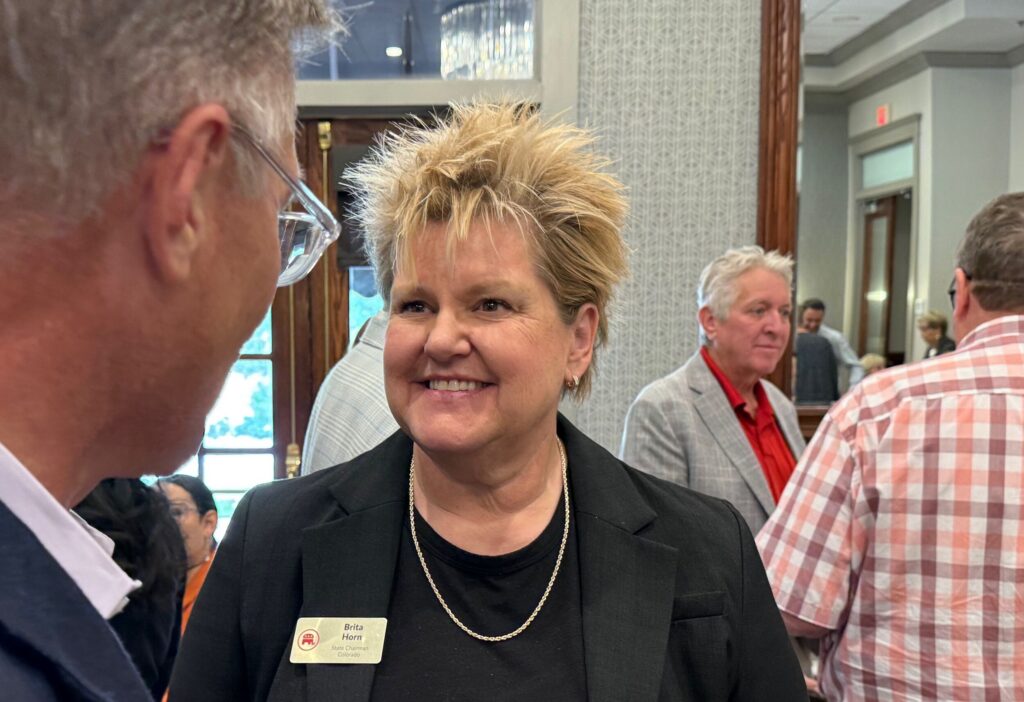
Colorado GOP chair Brita Horn says she’ll resign next month, points to ‘divide within our party’
Ernest Luning
ernest.luning@coloradopolitics.com
Updated 1 day ago
Colorado Republican Party Chair Brita Horn said Thursday that she will resign her position next month following the GOP’s state assembly, citing what she described as an “enduring divide” within the party “marked by vitriol and hostility.” Horn’s announcement came...
Colorado justices skeptical of appellate court’s limitation on prosecution’s appeal
Michael Karlik
michael.karlik@coloradopolitics.com
Updated 1 day ago
The Colorado Supreme Court seemed skeptical on Tuesday that Denver prosecutors should be barred from appealing a trial judge’s permanent dismissal of a criminal case, based upon the sequence of events after the original ruling. Prosecutors charged Quinn M. Jebe...
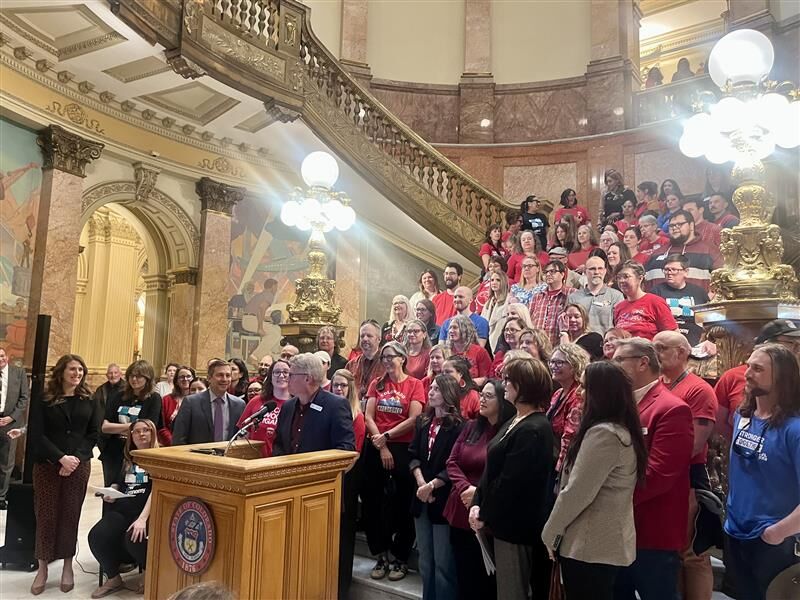
Senate committee moves forward with Colorado ballot measure to redirect TABOR refunds to schools
Marianne Goodland
marianne.goodland@coloradopolitics.com
Updated 3 hours ago
A Senate panel on Thursday voted along party lines to move forward with a bill that would ask voters for permission to eliminate Taxpayer’s Bill of Rights refunds and redirect those dollars to K-12 public education. The 6-3 vote in...

Federal judge: Government violated order shielding man from deportation in ‘one-off mistake’
Michael Karlik
michael.karlik@coloradopolitics.com
Updated 1 day ago
A federal judge acknowledged on Thursday that the government violated his order by deporting a man in immigration detention during his pending court case, but it “serves nobody’s interests” to require the government to return him. On Feb. 18, Tesfami...