

Denver infrastructure, climate office budgets discussed
Denver’s Department of Transportation and Infrastructure (DOTI) will see a modest budget increase compared to last year but the city’s climate office will face a slight decrease.
The budgets for the two department’s briefings on Tuesday were created through the lens of Mayor Mike Johnston’s four stated citywide goals. His goals, broadly speaking, did not change from last year, though specific targets may have as city needs evolved since Johnston took office.
Much of DOTI’s focus, outside of the usual infrastructure maintenance, is on reducing traffic fatalities, especially in high pedestrian areas. The department plans to use speed cameras, better signage and better paint usage to enhance enforcement and driver decision-making.
Denver would provide $135.5 million for DOTI through the general fund, roughly one quarter of the department’s total operating budget and an increase of $7 million compared to last year.
Despite highlighting investments in pedestrian and motorist safety, Councilmember Chris Hinds questioned why improvements to bike lanes were not included as a line item in the budget. Many people are asking for more bike lanes, he said.
“Where you see (bike lanes) is in our neighborhood traffic management program, which also includes our investments in slow and safe streets and bikeways… They are collapsed together as an individual item,” DOTI Director Amy Ford said. “You also see it attached to our asset management program, specifically our paving programs.”
Safety can be delivered to cyclists and pedestrians in several ways, Ford said. She highlighted traffic signal improvements and enforcement measures.
One way DOTI plans to improve enforcement is by adding speed cameras along the Alameda Avenue and Federal Boulevard corridors – two of Denver’s busiest – in 2025. The speed cameras are part of a new effort by DOTI to reduce casualties throughout Denver’s streets.
This is in concert with the existing, but seemingly ineffective, vision zero, which seeks to outright eliminate fatalities and serious bodily injuries dealt to pedestrians, motorists and others, citywide.
While DOTI, and indeed the whole city, have environmental commitments to consider, such as revamping its fleet with more climate friendly vehicles, it is not their sole focus. Denver’s independent Office of Climate Action, Sustainability and Resilience has outline far more specific goals for the city.
First among them are the ongoing efforts to reduce building emissions citywide.
The city currently mandates new construction use electrical – rather than natural gas – heating elements. By 2027, the city will not issue permits for any kind of gas-powered heating or cooling equipment in new construction.
The office plans to go beyond buildings and is trying to lower greenhouse gas emissions from buildings and vehicles in 2025.
“Thinking about fleet electrification and alternative travel modes is a top priority for us in 2025,” Executive Director Elizabeth Babcock said. “We’re making a big investment (in electrification), $6 million for EV replacements of city vehicles that are at the end of their useful life and $7.4 million for EV charging infrastructure.”
Not all of CASR’s spending will come out of the general fund budget. Some will come from the roughly $50 million climate protection fund and other special revenue sources.
CASR will ask for $6.3 million, a sliver of the total city budget of $1.76 billion. This is a $100,000 reduction compared to last year, when the department had $6.4 million to work with.
Other priorities for CASR include addressing the heat island effect that many cities are known for. In short, buildings and a comparable lack of green spaces and trees create a higher temperature within the city than surrounding areas.
“Extreme heat is one of our key climate vulnerabilities in Denver… So we’re going to be working on heat-related strategies to reduce the impact of heat in our communities, our built environment and support social infrastructure,” she said. “We are planting trees in our most heat-vulnerable neighborhoods with the lowest tree canopy and we’re also providing cooling and air filters to households in need.”


Killing off the Regional Transportation District | Miller Hudson
Miller Hudson
miller-hudson@coloradopolitics.com
Updated 3 hours ago
This column is appearing the same day state Sen. Matt Ball (D) of Denver and his legislative co-sponsors unveil legislation implementing many of the recommendations advanced by last summer’s Regional Transportation District Accountability Committee. Although it isn’t readily apparent, they...

Green energy shouldn’t come at expense of Colorado farmers, ranchers feeding us | Rachel Gabel
Rachel Gabel
rachel-gabel@coloradopolitics.com
Updated 2 hours ago
In 2023, the Department of Energy released the National Interest Electric Transmission Corridors (NIETC) study identifying areas they speculate would experience transmission capacity constraints of congestion. The map identified more than 2 million acres or 24% of the state of...
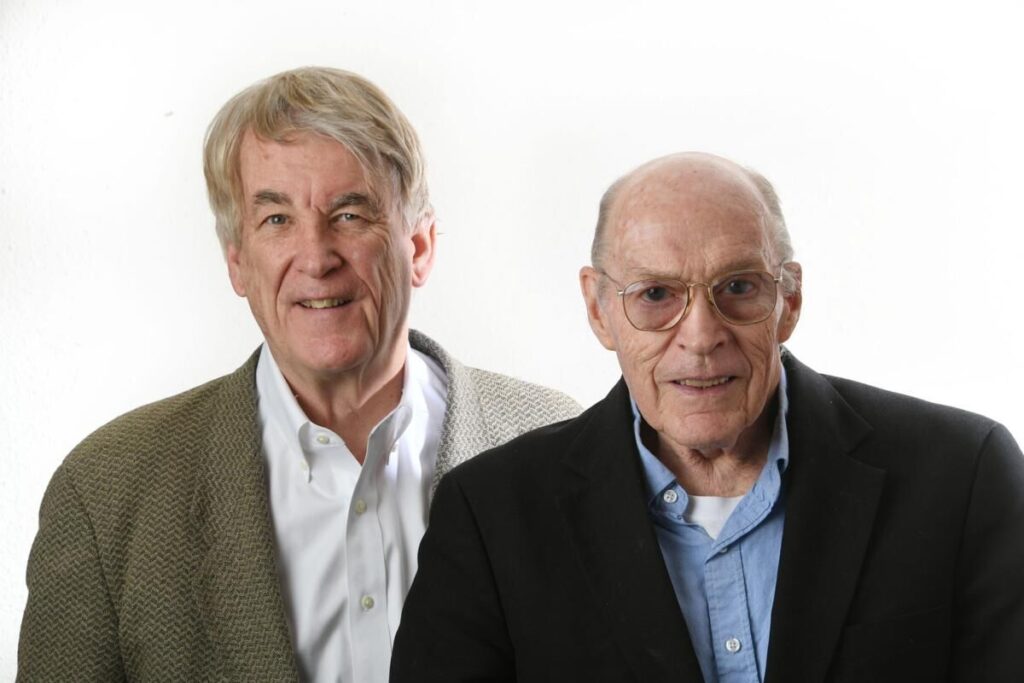
Bill in state legislature would put large apartment projects in single-family neighborhoods | Cronin & Loevy
Tom Cronin Bob Loevy
tom-cronin-bob-loevy@coloradopolitics.com
Updated 2 hours ago
There is an old joke that goes something like this: “When the state legislature is in session, no person and their property are safe.” That is not a joke in the older, more traditional neighborhoods that surround the downtown regions...

Unsustainable: How Colorado’s Medicaid spending exploded
Nico Brambila
nico.brambila@denvergazette.com
Updated 11 hours ago
The state’s Medicaid program — which covers about one in four Coloradans — is poised for its largest single-year jump in at least two decades, with officials proposing a $2.3 billion increase, even as lawmakers face a $1.5 billion budget...

Colorado hates its disabled citizens | Jon Caldara
Jon Caldara
jon-caldara@coloradopolitics.com
Updated 3 days ago
This is a selfish column. The legislature is about to hurt my disabled son. My son, Chance, has Down syndrome and a few years ago would have been labeled “retarded.” Then “developmentally delayed.” Now the hypersensitive prefer “intellectually disabled.” Whatever...
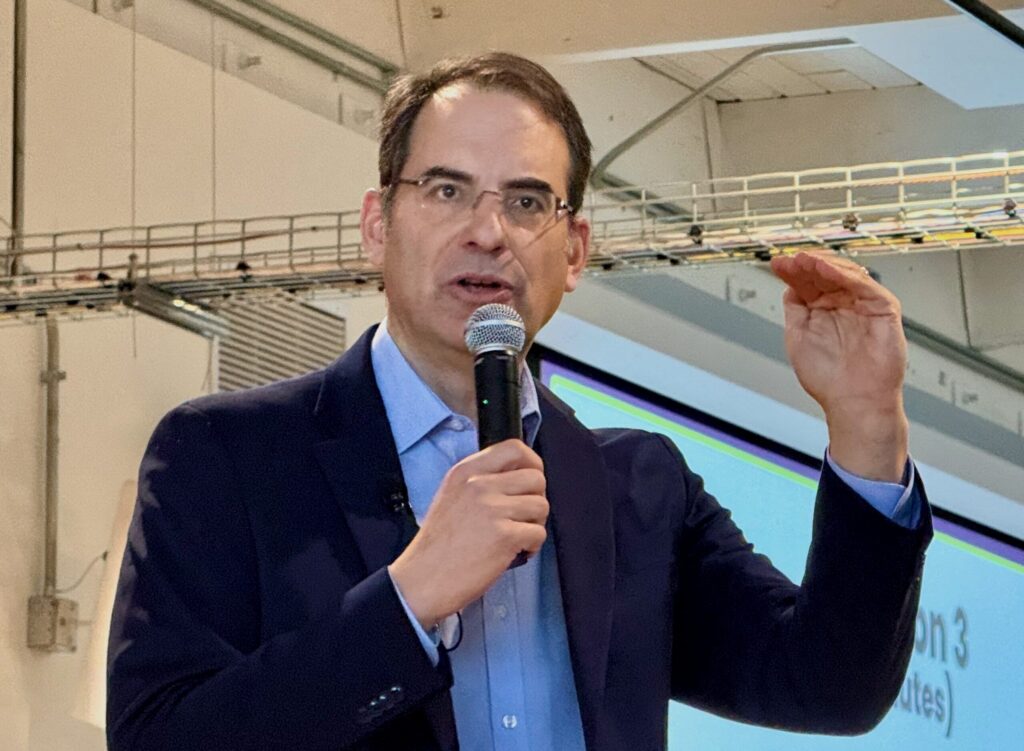
Phil Weiser wins top spot in Colorado’s Democratic gubernatorial primary at party’s state assembly
Ernest Luning
ernest.luning@coloradopolitics.com
Updated 1 day ago
Attorney General Phil Weiser’s name will appear first on Colorado’s Democratic gubernatorial primary ballot after his overwhelming win Saturday at the party’s state assembly in Pueblo. Weiser joins U.S. Sen. Michael Bennet in the June 30 primary for the office...
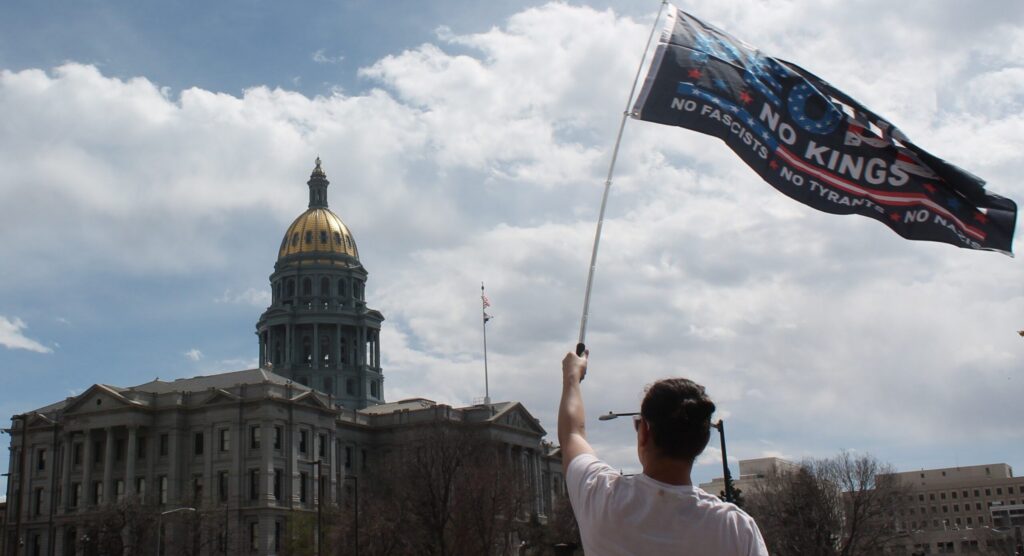
‘No Kings’ protest draws tens of thousands to Colorado state Capitol
Matt Kyle
matt.kyle@denvergazette.com
Updated 1 day ago
The third round of the national No Kings Day protests hit Denver Saturday, when tens of thousands gathered near the Colorado state Capitol to criticize the Trump administration. Organizers addressing the crowd estimated there were 30,000 present for the Saturday...
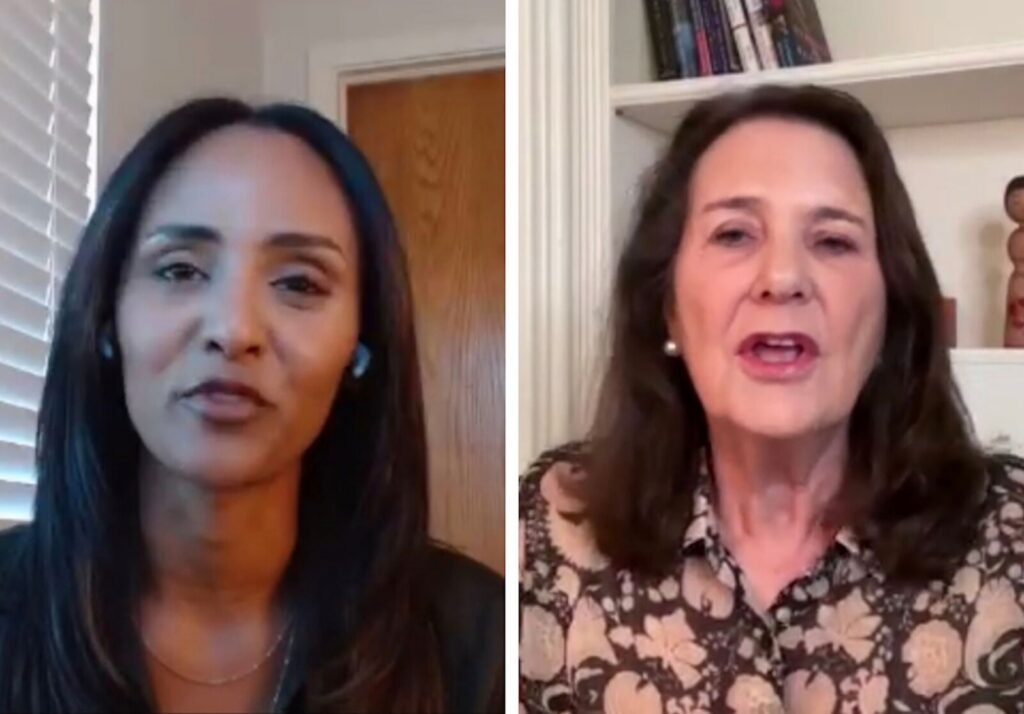
Denver Democrat Diana DeGette trails challenger Melat Kiros at assembly as both qualify for primary
Ernest Luning
ernest.luning@coloradopolitics.com
Updated 2 days ago
U.S. Rep Diana DeGette, a Denver Democrat, qualified for Colorado’s June primary by the skin of her teeth Friday at the party’s district assembly, where the 15-term incumbent received fewer than half as many delegate votes as her challenger, 28-year-old...

Colorado Politics Calendar Mar. 30-Apr. 5
Rachael Wright, Special to Colorado Politics
rachael.wright@coloradopolitics.com
Updated 3 days ago
CoPo’s weekly political calendar will help you find political and public-policy events throughout Colorado. It includes candidate and issue campaign events, public policy meetings, court hearings, state and local party conventions, assemblies, debates, rallies, parades, speaking engagements, traveling dignitary appearances,...
Colorado coal use seen as in decline in 1980s | A LOOK BACK
Rachael Wright, Special to Colorado Politics
rachael.wright@coloradopolitics.com
Updated 3 days ago
Forty-Five Years Ago This Week: “Contrary to popular belief, it appears that growth in Colorado’s coal industry during the 1980s will be surprisingly sluggish,” said the findings in the Colorado Energy Research Institute’s “Focus Series.” The institute’s conclusions on the...